

In the annals of niche athletic history, few names carry the weight of myth quite like Mel Hall. While the broader public may remain unfamiliar with his repertoire, within the specialized circles of unicycling and circus arts, Hall is regarded as a foundational figure whose technical proficiency redefined the limits of what could be achieved on a single wheel. His career, marked by gravity-defying stunts and an unparalleled command of balance, serves as a masterclass in physical discipline. However, it is a specific, undocumented event in the late 20th century—an encounter between Hall and the editor of the industry newsletter The Cycologist, Curtis C. Morgan—that best encapsulates the quiet, unassuming nature of a man who spent his life performing the impossible.
The Architecture of a Legend: Mel Hall’s Technical Prowess
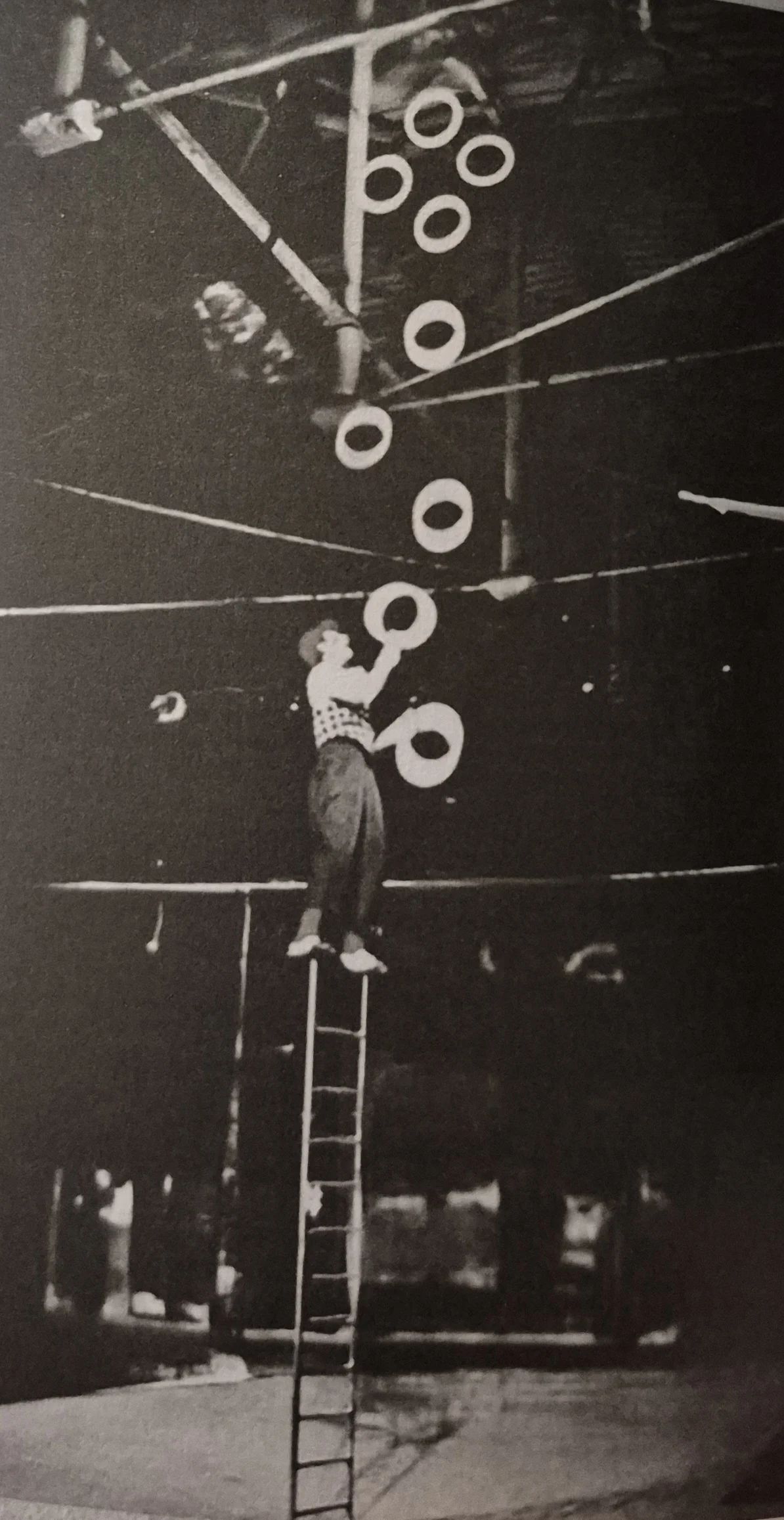
To understand the gravity of Hall’s reputation, one must examine the mechanics of his most celebrated maneuvers. Unicycling, particularly at the professional level, requires a precise intersection of core strength, equilibrium, and spatial awareness. Hall’s signature feat involved the free-mounting of a ten-foot giraffe unicycle. Unlike standard unicycles, which are mounted by stepping onto the pedals, a ten-foot giraffe requires a specialized ascent up a chain-driven or frame-integrated ladder system. Hall was known for executing this transition—moving from the ground to the high-seat position—with a fluidity that defied the mechanical complexity of the apparatus.
Beyond mounting, Hall’s repertoire included complex transitions that remain rare in modern performance. Observers of his era frequently cited his "double-wheel" routine, where he would maneuver one unicycle while maintaining a second, elevated unit aloft. The transition involved a mid-air somersault, landing precisely on the pedals of the secondary unit—a maneuver that necessitates split-second timing and an absolute mastery of centrifugal force.
A Chronology of a Chance Encounter
The intersection of Curtis C. Morgan and Mel Hall occurred during a period when the unicycling community was attempting to formalize its history. In 1990, Morgan, then serving as the editor of The Cycologist, was actively seeking to document the lives of the sport’s aging pioneers. Hall, by then a resident of suburban Dallas, had largely retreated from the public eye.
The chronology of their meeting is as follows:
- Early 1990: Morgan initiates a series of outreach efforts, including mailing inquiries to a post office box associated with Hall, seeking an interview.
- Mid-1990: Having received no response, Morgan proceeds with his editorial duties, including providing informal instruction to local enthusiasts in the Dallas area.
- The Incident: An elderly man identifying himself only as "Jimmy," accompanied by his partner Irene, arrives at Morgan’s residence seeking instruction on a low-cost, second-hand unicycle.
- The Revelation: After a period of feigned incompetence, the individual reveals his identity as Mel Hall, effectively conducting an impromptu demonstration of elite-level skills in a private driveway.
The Dynamics of the Instructional Setting
When "Jimmy" first appeared at the Morgan residence, he presented a persona that was entirely antithetical to that of a world-class athlete. He carried a five-dollar flea-market unicycle, a piece of equipment that typically presents significant challenges due to poor geometry and substandard manufacturing.
From an instructional perspective, Morgan’s initial skepticism was rooted in empirical observation. The age-related decline in vestibular function and bone density makes the learning curve for adult beginners exceptionally steep. Morgan’s insistence that the student prioritize safety over performance was standard pedagogical advice. However, the subsequent transformation of the student from a clumsy novice to a master of the unicycle provides a compelling study in the psychology of expertise. By adopting a "student" role, Hall was able to observe how the methodology of the sport was being disseminated, perhaps finding a sense of quiet satisfaction in the irony of the situation.

Supporting Data: The Evolution of Unicycle Athletics
The sport of unicycling has undergone significant evolution since the peak of Mel Hall’s career. Historically, the discipline was categorized primarily under "circus arts" or "variety entertainment." In recent decades, it has transitioned into a recognized competitive sport governed by organizations such as the International Unicycling Federation (IUF).
Data regarding the technical evolution of the sport shows:
- Material Science: The shift from heavy steel frames to carbon fiber and aerospace-grade aluminum has allowed for lighter, more responsive equipment.
- Discipline Diversification: Modern unicycling now encompasses mountain unicycling (MUni), trials, and flatland, each requiring distinct skill sets that build upon the foundational techniques pioneered by figures like Hall.
- Accessibility: The development of standardized training protocols has reduced the injury rate for beginners, though the "giraffe" unicycle—Hall’s specialty—remains one of the most hazardous pieces of equipment due to the center of gravity height.
Professional Implications and Cultural Impact
The encounter in the driveway, while anecdotal, speaks to a broader cultural theme: the "hidden expert." In highly specialized fields, it is not uncommon for pioneers to become obscured by the passage of time. The fact that Hall, a man of significant historical importance to his craft, chose to approach an industry editor under a pseudonym suggests a desire to engage with the community on his own terms—removed from the pressures of performance and fame.
For historians and journalists, the case of Mel Hall serves as a cautionary tale regarding the limitations of traditional research. Had Morgan relied solely on the lack of response to his correspondence, he would have missed the opportunity to engage with the subject entirely. The "Jimmy" incident highlights the necessity of localized, grassroots inquiry in documenting the history of niche sports.
Broader Context: The Legacy of the Pioneer
The legacy of Mel Hall is not merely in the tricks he performed, but in the standards he set for mechanical intimacy with the machine. A unicycle is inherently unstable; it possesses no inherent self-righting mechanism. To ride it is to be in a constant state of falling and correcting. Hall’s ability to "breathe" through this process—to render the constant correction of balance subconscious—is the hallmark of true mastery.
Furthermore, the interaction between Morgan and Hall underscores the importance of institutional memory. The Cycologist, as a publication, functioned as a repository for techniques, histories, and personal accounts that would otherwise have been lost. By documenting such encounters, publications ensure that the lineage of the sport remains intact, providing future generations with a roadmap of the discipline’s origins.
In conclusion, while the sport of unicycling continues to push into new frontiers of technical complexity and athletic endurance, the foundational principles established by figures like Mel Hall remain the bedrock of the discipline. His willingness to engage with a novice in a suburban driveway was not just a prank, but a testament to a lifelong devotion to the wheel. For Curtis C. Morgan, the experience was a transformative moment that shifted his perspective from that of an instructor to that of a student in the presence of a master. It remains a singular, quiet moment in the history of a sport that, by its very nature, demands everything from those who dare to ride it.