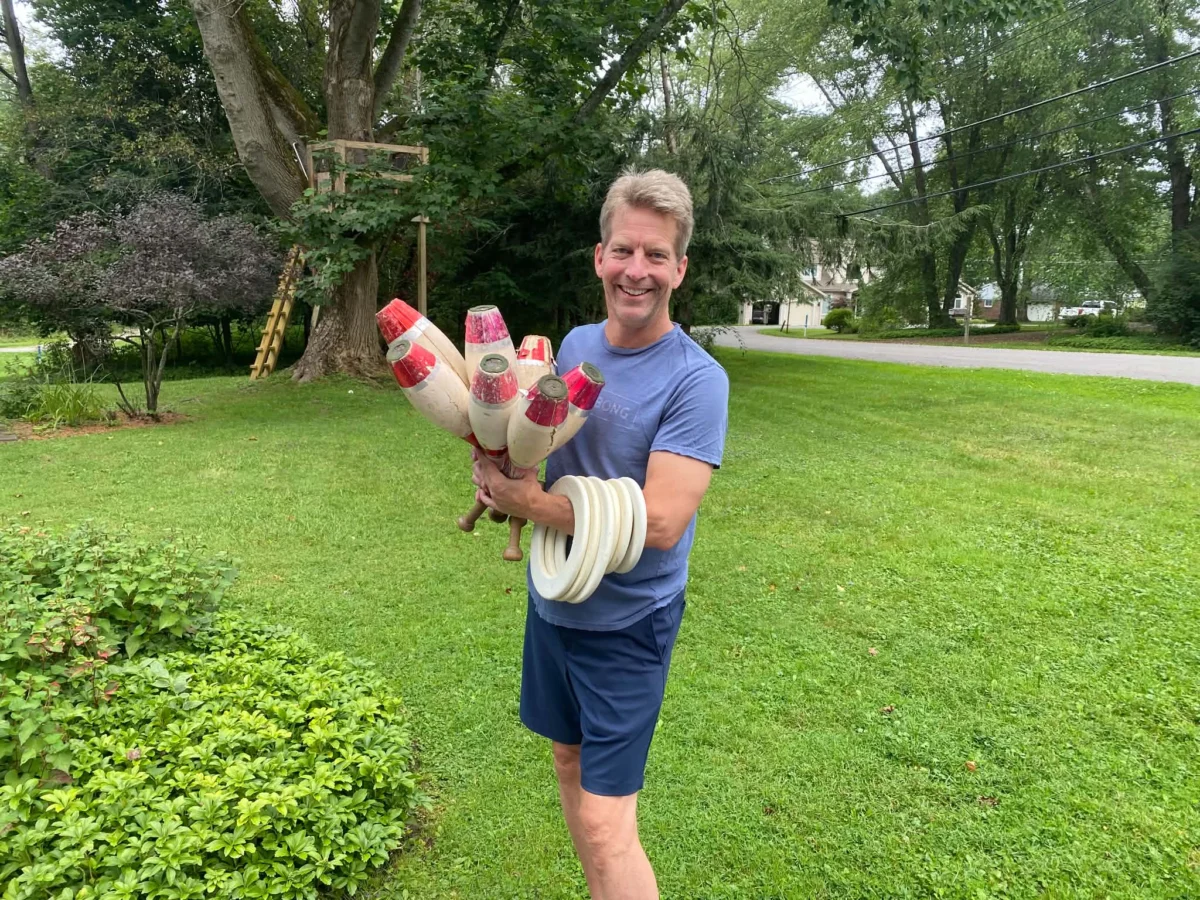
The preservation of circus and performance history relies heavily on the diligence of specialized institutions, and a recent acquisition by the Museum of Juggling History in Middletown, Ohio, underscores the fragile nature of these artifacts. In August 2026, following the conclusion of the International Jugglers’ Association (IJA) Festival, curators secured a rare "pregnant" juggling club—a unique mechanical prop designed to store smaller clubs within its hollow body—dating back to the mid-1970s. This artifact, crafted by the influential early IJA figure William “Doc” Crosby, represents a significant bridge between the golden age of American prop-making and the evolution of performance comedy.

Chronology of the Acquisition
The acquisition process began on the Monday following the 2026 IJA Festival. Shortly after hosting fellow jugglers Barry Friedman, Arthur Lewbel, and Mardine LeBliss at the museum, director David Cain received a report from his brother and co-owner, Scott Cain. Scott had identified an estate sale in Jamestown, New York, that featured an array of vintage juggling equipment.
The significance of the find was immediately apparent to the museum staff, as the collection included a mechanical club previously documented in archival photographs from 1975. Recognizing the limited window of opportunity, the museum coordinated with Jon Wee of the renowned comedy duo The Passing Zone. Wee, who was already scheduled to be in Jamestown for the Lucille Ball Comedy Festival, acted as the museum’s agent. By arriving early at the sale, Wee successfully secured the seven clubs, six rings, and the "pregnant" club for $100, narrowly beating out other collectors interested in the rare items. The following week, David Cain traveled to Columbus, Ohio, to officially collect the items from The Passing Zone, ensuring the artifacts’ safe transport to the museum’s permanent collection.

The Historical Significance of Doc Crosby
William “Doc” Crosby was a pivotal figure in the development of the International Jugglers’ Association. A native of Jamestown, New York, he served as the chairman of the very first IJA Convention held in his home city. During the mid-20th century, the city of Jamestown was a hub for high-quality juggling equipment, largely due to the work of Harry Lind, who dominated the American market for hollow wooden clubs between 1920 and 1960.
While Lind was the industry standard, the demand for his equipment often exceeded his production capacity. This led to the emergence of regional makers like Crosby, who replicated the aesthetics and functionality of Lind’s designs. The "pregnant" club—a term colloquially used to describe a club that opens to reveal smaller "baby" clubs—was not an invention of Crosby’s, but rather an evolution of a concept originally created by Lind for the comedy juggler Stan Kavanaugh.

The history of the "pregnant" club serves as a case study in mid-century performance art. Stan Kavanaugh utilized the prop as a comedic device, swinging two clubs and occasionally colliding them to initiate a reveal. The bit, however, proved difficult to land with audiences until comedian Larry Weeks acquired the props. Weeks famously refined the act, delivering the line, "I didn’t even know they were married!" to bridge the gap between the mechanical reveal and audience engagement. By documenting these variations, the Museum of Juggling History provides a vital record of how specific physical props influenced the comedic timing and narrative structures of 20th-century variety performers.
Technical Analysis and Fabrication
The clubs acquired from the Jamestown estate sale exhibit the hallmark construction methods of the 1970s era. Unlike the mass-produced plastic clubs that would later dominate the market, these were handcrafted, hollow-bodied wooden instruments. Upon closer inspection at the museum, curators confirmed that the non-pregnant clubs in the batch were indeed the work of Doc Crosby, distinguishable from Harry Lind’s originals by subtle variations in weight, balance, and finish.

The "pregnant" club itself is a marvel of mechanical ingenuity for the period. It features a concealed internal mechanism that allows the body of the club to split and release two miniature clubs. This particular iteration—which features two "babies" rather than the single one found in the original Lind-Kavanaugh model—demonstrates a creative departure by Crosby, who died in October 1975, only months after demonstrating the club at the IJA Convention. The fact that these items remained in Jamestown for over five decades before appearing at an estate sale suggests they were likely preserved in a private collection by associates of the Crosby family, away from the public eye.
Broader Implications for Juggling History
The retrieval of the Crosby collection is more than a simple acquisition; it is a critical effort in historiography. Many of the tools used by early 20th-century performers were considered disposable or were lost to neglect. The Museum of Juggling History’s mission to catalog these items provides scholars and enthusiasts with data points regarding the evolution of juggling apparatus.

From a curatorial perspective, the existence of these props in the museum’s archives allows for a comparative analysis of craftsmanship. By placing the Crosby clubs alongside the donated pieces from the collection of Mick Lunzer and the original Kavanaugh-Weeks props, researchers can trace the lineage of design. This provides insight into the "copycat" culture of early prop-making, where the scarcity of high-end equipment forced performers to rely on local artisans who could emulate the standards set by masters like Lind.
Furthermore, the involvement of modern performers such as Jon Wee and The Passing Zone highlights the interconnectedness of the modern juggling community and its history. The effort to rescue these props from a general estate sale demonstrates a heightened awareness within the community of the need to protect cultural heritage. Without such rapid intervention, it is likely that these items would have been purchased by individuals unaware of their historical significance, potentially leading to the loss of their provenance or their permanent removal from the historical record.

Cultural Context and Legacy
The IJA’s role as an organization has evolved significantly since the days of Doc Crosby, yet the preservation of its foundational stories remains a priority. The Jamestown estate sale serves as a reminder that significant historical artifacts can emerge in unexpected venues. As the museum continues to expand its holdings, the focus remains on ensuring that these physical links to the past are properly conserved.
The "pregnant" club, now on public display in Middletown, serves as a conversation piece that bridges the gap between technical skill and entertainment value. It represents a time when juggling was synonymous with vaudeville and comedy, and when a single prop could define a performer’s career. By archiving the mechanical specifics of the club, the museum ensures that the ingenuity of makers like Doc Crosby is not forgotten.

In conclusion, the successful recovery of the Doc Crosby collection underscores the vital importance of institutional vigilance. Through the coordination of dedicated individuals and the expertise of museum curators, these rare artifacts have been secured for future generations. As the Museum of Juggling History continues to research and exhibit these pieces, they provide a tangible connection to the performers who shaped the art form during the 20th century. The acquisition is a testament to the fact that while the physical performance may be fleeting, the tools of the trade, when preserved, tell a lasting story of human creativity and artistic evolution.