
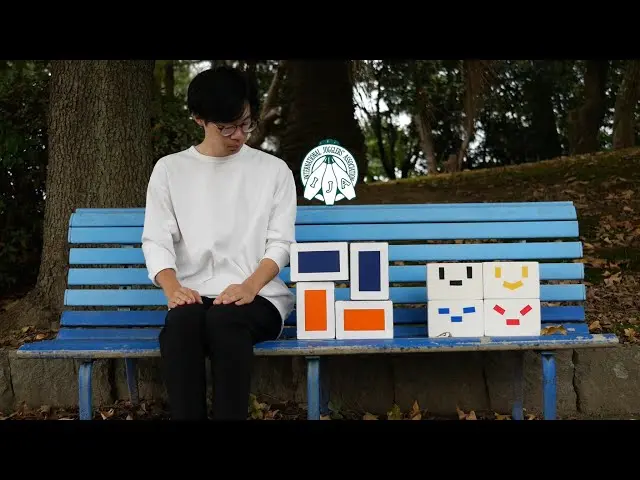
The International Jugglers’ Association (IJA) has officially spotlighted the technical innovation of Japanese performer Shohei Tanaka, known professionally as “PaS,” as part of its ongoing Tricks of the Month series. The featured presentation showcases a highly specialized approach to cigar box manipulation, emphasizing intricate one-handed techniques that have pushed the boundaries of the discipline since Tanaka began his practice in 2018. This digital showcase, hosted on the IJA’s eJuggle platform, serves as a testament to the evolving nature of object manipulation arts in the modern era.
The Evolution of Cigar Box Manipulation
Cigar box juggling is a traditional discipline within the object manipulation arts, historically characterized by the use of three or more rectangular boxes, typically made of wood or plastic, which are tossed, trapped, and balanced in rhythmic patterns. While the fundamental mechanics have remained consistent for decades, practitioners like Tanaka represent a shift toward high-dexterity, single-handed manipulation.
Tanaka’s focus on one-handed techniques—often involving the simultaneous control of multiple boxes within a single grasp—requires a degree of fine motor control and spatial awareness that differentiates his style from classical box juggling. By shifting the complexity from traditional tossing patterns to intricate, localized maneuvers, performers like Tanaka are essentially redefining the technical limitations of the apparatus. This evolution mirrors broader trends in the juggling community, where "micro-manipulation" and "contact-heavy" styles have gained prominence over traditional toss-based patterns.
Chronology of the Artist’s Progression
Shohei Tanaka, based in Aichi, Japan, entered the professional juggling landscape in 2018. Over the subsequent six years, he has systematically refined a methodology that prioritizes the aesthetic of "the things I want to see." According to documentation provided by the IJA, Tanaka’s creative process is driven by the intrinsic satisfaction of visualizing a motion and successfully manifesting it through practice.
His journey reflects the standard progression of contemporary jugglers: starting with foundational techniques before transitioning into a period of intensive specialization. By 2024, Tanaka had solidified his reputation within the Japanese juggling scene, leading to his collaboration with cinematographer Naonar to produce the current showcase. The video, set to the track "Everyday affair" by the artist in the blue shirt, serves as a visual record of his current technical threshold.
Technical Analysis and Performance Philosophy
The maneuvers displayed in the IJA feature rely heavily on friction, momentum, and rapid weight distribution changes. In cigar box manipulation, the "lock"—the act of holding multiple boxes in a fixed position using only the pressure of the hand and wrist—is essential. Tanaka’s work stands out due to the velocity at which he transitions between these locks.
From a physics perspective, Tanaka’s performance utilizes the center of gravity of the boxes to perform "flips" and "traps" that would be considered high-risk in a standard routine. By minimizing the time the boxes spend in free-flight and maximizing their time under direct manual control, he achieves a fluidity that is often difficult to replicate. This focus on "new movements" aligns with the IJA’s mission to document and archive experimental techniques that might otherwise remain localized to specific geographic regions or individual practitioners.
Supporting Data and the Role of the IJA
The IJA, established in 1947, acts as the primary governing body and resource hub for juggling enthusiasts worldwide. Its Tricks of the Month series is a data-driven content initiative designed to foster global exchange. By aggregating these performances, the IJA provides a digital archive that tracks the progression of juggling difficulty over time.
Participation in these initiatives provides significant exposure for independent artists. For instance, the collaboration between Tanaka and the IJA allows a niche performer from Aichi, Japan, to reach a global audience, contributing to the professionalization of the art form. The IJA’s membership model, which supports these digital endeavors, is essential to the sustainability of the hobby. Membership fees directly fund:
- The IJA Festival: A weeklong international gathering dedicated to skill exchange and professional development.
- Educational Resources: Including long-form video tutorials and podcasts that help standardize technical terminology.
- Youth Outreach (YJA): Dedicated resources to ensure the next generation of performers has access to coaching and equipment.
- Regional Competitions (IRC): Structured events that provide a pathway for amateurs to transition into professional competitive circuits.
Broader Impact on the Juggling Community
The inclusion of experimental, one-handed cigar box manipulation in mainstream juggling media has several implications. First, it validates the shift toward niche sub-disciplines. As juggling becomes increasingly digitized, the demand for high-quality, short-form content that emphasizes individual style over general technical competency has surged.
Second, the influence of Japanese juggling aesthetics—often characterized by precision, minimalist staging, and a focus on flow—has had a profound impact on the global community. The "PaS" style, characterized by a deliberate, calm presentation contrasted with high-speed technical output, is a hallmark of the contemporary Japanese school of object manipulation.
Finally, the archival nature of the IJA’s eJuggle platform ensures that these techniques are preserved. In decades past, innovative moves were often lost if not passed down through in-person mentorship. Today, through high-definition documentation, these techniques serve as a reference point for future generations, allowing for a cumulative growth of the art form rather than a cyclical one.
Official Stance and Future Directions
While the IJA does not formally "rank" performers, its editorial choice to feature Tanaka serves as an implicit endorsement of his contribution to the craft. The organization’s public calls for membership support underscore the reality that high-quality production of such features requires consistent financial backing. By framing Tanaka’s work within the context of community support, the IJA emphasizes that the advancement of juggling is a collective effort, requiring both the individual innovator and the collective organization to sustain momentum.
As Tanaka continues his work in Aichi, his career trajectory provides a model for other young performers who leverage digital social platforms to showcase technical prowess. The fusion of personal passion—in this case, Tanaka’s admitted interest in pop-culture aesthetics and his specific dedication to box manipulation—with professional-grade videography is likely to remain the gold standard for juggling content in the coming years.
The IJA’s commitment to these features suggests that the organization will continue to prioritize individual artistic expression alongside traditional skill-based competition. As practitioners like Tanaka continue to explore the limits of one-handed manipulation, the definitions of what is "possible" in cigar box juggling will undoubtedly continue to expand. For the broader public and the juggling community alike, these performances represent the vanguard of a tradition that balances historical appreciation with relentless technical innovation.
As of November 2026, the collaboration stands as a clear indicator of the IJA’s continued relevance in a digital-first world. Through the intersection of traditional apparatus, modern videography, and global outreach, the IJA maintains its position as the central repository for the world’s most advanced juggling techniques. Whether through the support of regional festivals or the spotlighting of individual virtuosos, the association remains a cornerstone of the global flow arts movement, ensuring that even the most niche of innovations receives its due recognition on the international stage.