
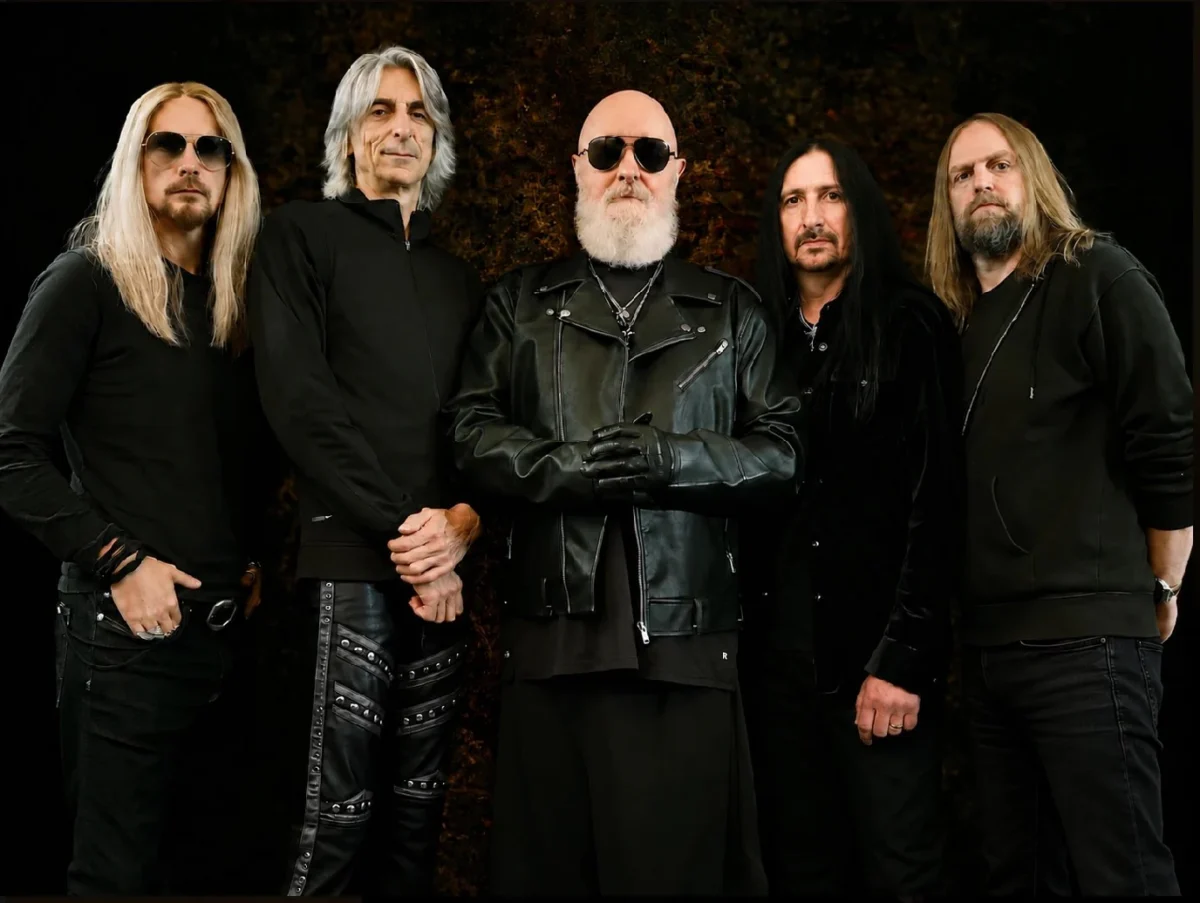
The heavy metal world stands at a historic crossroads this morning following the announcement that Ian Hill, the foundational bassist and only remaining original member of Judas Priest, is officially retiring from the band. At 74 years old, Hill’s departure marks the end of a 57-year tenure that helped define the sound, aesthetic, and global trajectory of heavy metal music. His decision, necessitated by the cumulative physical toll of decades of touring and the diagnosis of advanced arthritis, brings a definitive conclusion to one of the most enduring legacies in rock history.
A Career Defined by Consistency and Resilience
Since the band’s inception in Birmingham, England, in 1969, Ian Hill has served as the rhythmic anchor of Judas Priest. While frontmen Rob Halford and guitarists Glenn Tipton and K.K. Downing often drew the primary spotlight, Hill was the quiet, steadfast backbone of the group. Over nearly six decades, he performed on every studio album, contributing to seminal records such as British Steel, Screaming for Vengeance, and Painkiller.
Hill’s playing style—precise, melodic, and inherently locked to the drums—provided the essential structural integrity for the band’s dual-guitar onslaught. His contribution to the genre extends beyond his performance; he was a key figure in navigating the band through the shifting landscapes of the 1970s hard rock scene, the New Wave of British Heavy Metal in the 1980s, and the band’s resurgence in the 21st century.
The Physical Toll: A Professional’s Decision
In a candid statement released to fans, Hill addressed the internal struggle of reconciling his passion for performance with the realities of his physical condition. For several years, Hill has been managing advanced arthritis, which has severely impacted his left shoulder, right hand, and both knees.
The decline in his physical capabilities reached a critical juncture during the band’s recent European tour. Despite utilizing pharmaceutical interventions and medical procedures, including cortisone injections, Hill found that his range of motion and grip strength were no longer sufficient to meet the rigorous demands of a live concert. The breaking point occurred in Brussels, where a snapped tendon in his left shoulder rendered him unable to comfortably reach the neck of his bass guitar.

"I’ve always answered that I would continue until my performances suffered," Hill stated. "I hate to say it, but that time has come." His decision to step down is framed not by a loss of passion for the music, but by a professional commitment to maintaining the standard of excellence that fans expect from a Judas Priest production.
A Transition in the Ranks: Enter Davey Rimmer
With the retirement of a legacy member comes the challenge of continuity. The band has confirmed that Davey Rimmer, a seasoned musician known for his work with Uriah Heep and Elegant Weapons, will step into the role of bassist.
Rimmer’s integration is not entirely unexpected. During the recent European tour, when Hill’s physical limitations prevented him from performing at the London show, Rimmer was brought in as an emergency replacement. His ability to master the complex setlist on short notice and deliver a performance that satisfied both the band and the audience solidified his position as the logical successor. Hill himself offered a personal endorsement, describing Rimmer as a "great bassist" and a "genuinely nice bloke" who is well-suited to integrate into the existing chemistry of the band.
Chronology of a Heavy Metal Institution
The history of Judas Priest is inextricably linked to Hill’s presence. To understand the gravity of this departure, one must look at the timeline of his tenure:
- 1969: Ian Hill co-founds Judas Priest in Birmingham, West Midlands, alongside original members Al Atkins and K.K. Downing.
- 1974: The band releases their debut album, Rocka Rolla, marking the beginning of a prolific studio career.
- 1980: The release of British Steel catapults the band to international superstardom, with Hill’s basslines providing the foundation for hits like "Breaking the Law."
- 1990: The release of Painkiller showcases a heavier, more technical evolution, proving that the band could adapt to the changing landscape of metal.
- 2010s: As the only original member remaining, Hill becomes the historical link between the band’s various lineups and stylistic eras.
- 2026: Following a series of physical setbacks, Hill announces his retirement, closing a 57-year chapter.
Implications for the Future of Judas Priest
The retirement of Ian Hill leaves the band without any original members, a reality that the group has been moving toward for several years as personnel shifts occurred. However, the impact of losing the last remaining founding member cannot be overstated.
From an industry perspective, this transition poses a question of legacy management. Bands of Judas Priest’s stature—often referred to as the "Metal Gods"—operate as global brands. The challenge lies in maintaining the authenticity of the "Priest" sound while moving into a new era where the founding generation is no longer present on stage.

Financially and logistically, the band remains a powerhouse. Their most recent tours have seen massive attendance numbers, and their influence on modern metal remains a pillar of the industry. The seamless transition to Rimmer suggests that the band intends to continue their touring operations without a hiatus, prioritizing the fulfillment of ongoing obligations and the preservation of the music that has sustained them for over half a century.
Official Responses and Fan Sentiment
The official response from the remaining members of Judas Priest emphasized the "heavy hearts" with which they accepted Hill’s decision. The band acknowledged Hill as the "backbone" of the organization, a sentiment echoed by the global metal community. On social media platforms and music forums, fans have expressed a mixture of sadness and deep gratitude, citing Hill’s unpretentious stage presence and his unwavering loyalty to the band through various industry shifts as the hallmarks of his career.
Industry experts note that Hill’s retirement highlights the "aging out" phenomenon in classic rock. As the pioneers of the 1970s and 80s enter their 70s and 80s, the physical realities of performing at a high level are forcing many legends to make difficult choices. Hill’s transparency regarding his health—specifically the mention of arthritis and tendon injuries—serves as a reminder of the immense physical labor required to sustain a professional touring career.
A Legacy of Longevity
Ian Hill’s final statement reflects a man who has found peace with his decision. After 57 years of near-constant travel, studio sessions, and the sacrifices inherent in a life lived on the road, Hill is prioritizing his family and personal well-being. His stated desire to spend time with his loved ones before his health further declines is a poignant reminder of the human element behind the rock-star persona.
"There’s not a day goes by where I don’t give thanks for the incredible journey I’ve lived through," Hill concluded. "It just remains for me to say that I love you all, and thank you for the life you’ve let me live."
As the heavy metal community processes this news, the focus will undoubtedly shift to how Judas Priest handles the upcoming tour dates and the inevitable shift in band identity. However, for now, the conversation remains centered on the career of a man who held the low end for the world’s most iconic metal band longer than perhaps any other bassist in the genre’s history. Ian Hill leaves behind a catalog of music that is etched into the cultural zeitgeist, ensuring that while he may be stepping off the stage, his rhythmic influence will continue to resonate for generations to come.