
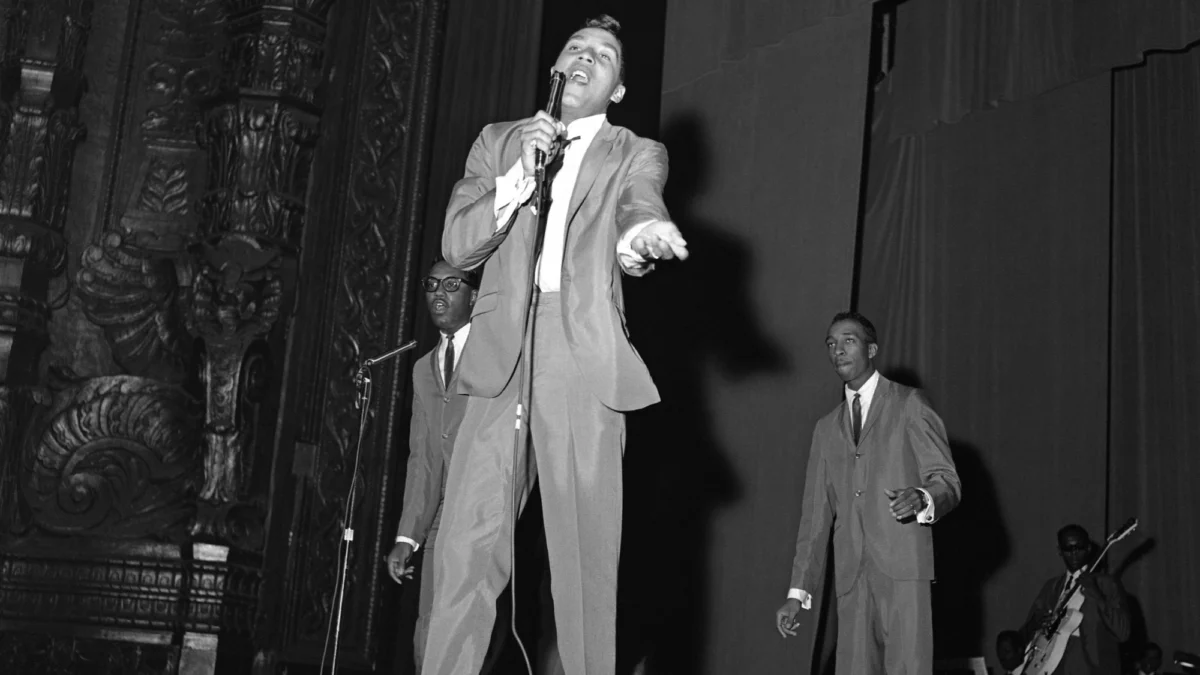
The early 1960s occupy a revered space in the history of popular music, serving as a vital transitional bridge between the innocent rock-and-roll explosion of the 1950s and the sophisticated artistic revolution of the late 60s. Amid this dynamic cultural landscape, 1963 stood out as a banner year for the American music industry, producing an extraordinary catalog of Top 10 hits that continue to resonate across generations. Decades after their initial release on vinyl 45s and transistor radios, these timeless tracks remain deeply embedded in the public consciousness, evoking a specific era of youth culture, dance crazes, and studio innovation. A closer examination of three defining Top 10 hits from 1963—The Miracles’ "Mickey’s Monkey," Bobby Darin’s "18 Yellow Roses," and The Ronettes’ "Be My Baby"—reveals the intricate songwriting, star-studded collaborations, and lasting cultural footprints that cemented their legendary status.
The Motown Phenomenon and the Collaborative Magic of "Mickey’s Monkey"
By 1963, Detroit’s Motown Records was rapidly ascending as a powerhouse of American popular culture, redefining the sound of rhythm and blues and crossover pop. At the forefront of this movement was Smokey Robinson and The Miracles, a group whose sophisticated harmonies and poetic lyricism helped build the foundation of the legendary label. In the autumn of 1963, the group released "Mickey’s Monkey," a high-energy dance track that encapsulated the playful, participatory spirit of early sixties pop culture.
Written by the legendary Motown songwriting and production trio Holland-Dozier-Holland—comprising Brian Holland, Lamont Dozier, and Eddie Holland—"Mickey’s Monkey" was designed to ignite dance floors across the country. The track was featured prominently on the album The Miracles Doin’ Mickey’s Monkey, propelling the group further up the charts. Driven by a relentless, pounding rhythm and a call-and-response structure, the song’s infectious chorus urged listeners into action: "C’mon let’s do the Mickey’s monkey, children / Let’s do the Mickey’s monkey / Let’s do the Mickey’s monkey, children / Let’s do the Mickey’s monkey, children."
What elevates "Mickey’s Monkey" from a standard dance-craze novelty to a fascinating historical artifact is its unprecedented vocal arrangement. In a rare display of label-wide solidarity and camaraderie characteristic of the early Motown "Hit Factory" era, several prominent artists from rival or sister stables contributed background vocals to the track. Mary Wilson of The Supremes lent her voice to the session, alongside members of Martha & The Vandellas, The Temptations, and The Marvelettes. This impromptu gathering of future music royalty created a rich, boisterous vocal wall of sound that amplified the celebratory atmosphere of the recording, showcasing the collaborative ecosystem that defined Motown’s unprecedented commercial run during the decade.
Bobby Darin and the Melancholy Narrative of "18 Yellow Roses"
While Detroit was pioneering the wall-of-sound soul movement, the pop landscape of 1963 was also heavily influenced by veteran singer-songwriters who bridged traditional pop craftsmanship with emerging contemporary sensibilities. Chief among them was Bobby Darin, a versatile musical chameleon who had already conquered the charts with explosive rock-and-roll anthems like "Splish Splash" and sophisticated adult-contemporary standards like "Mack the Knife."
In 1963, Darin released "18 Yellow Roses," a poignant story-song that served as the title track for his album of the same name. Unlike many of his contemporaries who relied on outside songwriting teams, Darin penned "18 Yellow Roses" entirely by himself, demonstrating his keen understanding of narrative-driven popular music. The track departs from the high-octane dance energy of Motown, opting instead for a bittersweet, melodic approach that captures the sting of heartbreak.
The song’s lyrical premise revolves around a protagonist grappling with the painful reality that the woman he loves is leaving him for another man, symbolized by the delivery of a floral bouquet. The poignant chorus encapsulates this dramatic realization: "Eighteen yellow roses came today / Eighteen yellow roses in a pretty bouquet / When the boy came to the door / I didn’t know what to say / But eighteen yellow roses came today."
Darin’s career trajectory following the release of "18 Yellow Roses" reflects the volatile nature of the mid-1960s pop charts, which were soon upended by the British Invasion. Following the single, Darin released more than a dozen singles without cracking the upper echelons of the charts, navigating a shifting musical terrain. It would not be until 1966 that Darin returned to the Top 10 with a powerful, folk-infused interpretation of Fred Neil’s "If I Were A Carpenter," marking his final major chart-topping success before his untimely passing in 1973.
The Wall of Sound and the Enduring Legacy of The Ronettes
No discussion of 1963 pop music is complete without examining the seismic impact of "Be My Baby" by The Ronettes. Released under Phil Spector’s visionary Philles Records label, the track is widely considered the crown jewel of Spector’s legendary "Wall of Sound" production technique. Written by the powerhouse songwriting team of Jeff Barry, Ellie Greenwich, and Phil Spector himself, "Be My Baby" stands as a monumental achievement in audio engineering and emotional pop composition.
Fronted by the inimitable voice of Ronnie Spector, The Ronettes delivered a vocal performance that was both fiercely vulnerable and commanding. The song’s iconic opening drum beat—famously described by Brian Wilson as the greatest intro in rock history—immediately draws the listener into a dense, orchestral storm of castanets, strings, and soaring harmonies. The irresistible singalong chorus remains a masterclass in pop structure: "So won’t you, please / Be my little baby / Say you’ll be my darlin’ / Be my baby now / Whoa."
Despite the group’s immense cultural impact, chart statistics reveal the fleeting nature of mainstream success during the era. "Be My Baby" stands as The Ronettes’ only major Top 10 single on the Billboard Hot 100 chart during their initial peak, alongside their 1963 holiday release of "Sleigh Ride." Nevertheless, the group maintained a strong presence on the R&B charts with beloved classics such as "Baby, I Love You" and "Walking In The Rain."
The cultural implications and ripple effects of "Be My Baby" extended far beyond its initial chart run. The single has been covered and reinterpreted by numerous artists across decades, including a notable 1977 pop-rock rendition by Shaun Cassidy. More significantly, the track served as a direct creative catalyst for other musical geniuses of the era. Deeply inspired by Spector’s production wizardry, The Beach Boys’ Brian Wilson crafted "Don’t Worry Baby" in 1964 as a deliberate artistic response and tribute to "Be My Baby," cementing the song’s status as a transformative milestone in modern music history.
Chronology and Historical Context
To fully understand the weight of these 1963 releases, they must be viewed within the chronological framework of a rapidly changing world. The year 1963 was a tumultuous and transformative period in American history, marked by the Civil Rights Movement, shifting political landscapes, and a burgeoning youth culture eager for self-expression. Popular music served as both an escape and a reflection of this cultural shift.
In early 1963, girl groups and vocal ensembles dominated the airwaves, establishing a sophisticated standard for studio recording. As the year progressed into autumn, tracks like The Miracles’ "Mickey’s Monkey" and Bobby Darin’s "18 Yellow Roses" captured different facets of American entertainment—from community-driven dance crazes to introspective narrative balladry. By the time The Ronettes perfected the Wall of Sound in late 1963, the table was set for the global explosion that would occur just months later with the arrival of The Beatles in early 1964.
Analysis of Broader Impact and Implications
The enduring survival of these 1963 Top 10 hits offers valuable insight into the mechanics of longevity in popular culture. Unlike algorithm-driven trends of the modern streaming era, the hits of 1963 relied on rigorous craftsmanship, pristine vocal delivery, and innovative production techniques that pushed the boundaries of multi-track recording.
Furthermore, the cross-pollination of talent observed on tracks like "Mickey’s Monkey" highlights an era where artistic community often superseded rigid corporate competition. The collaborative spirit among Motown artists fostered a unique brand identity that defined an entire generation of American music. Similarly, the intense competitive drive inspired by Spector’s work with The Ronettes pushed songwriters and producers like Brian Wilson to elevate their own artistic outputs, resulting in a golden age of creative escalation.
Ultimately, "Mickey’s Monkey," "18 Yellow Roses," and "Be My Baby" transcend their status as mere period pieces. They remain vibrant, meticulously constructed masterworks of American popular music. For the generation that grew up dancing to them on AM radio, spinning them on jukeboxes, or listening to them through mono speakers, these songs remain eternal sonic anchors. For modern listeners, they serve as a dazzling reminder of a time when a three-minute pop single could capture the entire spectrum of human emotion, collective joy, and heartbreak.