
The historical preservation of circus arts and vaudeville techniques has recently gained significant momentum following the recovery of a forgotten series of instructional columns penned by the renowned performer known as Rasso. Published in various United States newspapers between 1921 and 1922, these weekly dispatches offer a rare window into the pedagogical methods of the early 20th century. Through the diligent research of historian and juggler Esteban Vélez, who meticulously scoured archives from the second decade of the 1900s, these documents have been restored to the public record, providing modern practitioners and historians with a definitive look at how juggling knowledge was formalized and disseminated in the pre-digital era.
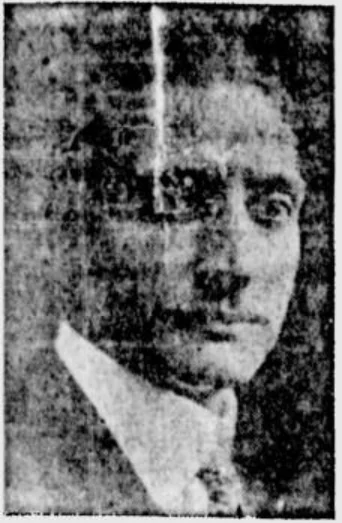
Rasso, a French-born performer of significant acclaim, occupied a unique space in the entertainment landscape of his time. Born into a theatrical family—his father was a key member of the "Rasso Trio" and his mother a professional opera singer—Rasso was heir to a long tradition of European performance arts. His career, which saw him tour extensively across France, Germany, and the United States, was marked by a technical prowess that allowed him to bridge the gap between high-art performance and the populist appeal of the traveling circus. The discovery of these lessons provides evidence that elite performers of the era were not merely entertainers but were also deeply invested in the intellectual property of their craft.
The Evolution of Instructional Media in the 1920s
The early 1920s represented a transitional period for the transmission of physical skills. Prior to this, juggling techniques were largely passed down through oral tradition or rigorous apprenticeship within circus families. The decision by performers like Rasso to utilize the medium of the weekly newspaper column indicates a shift toward a broader democratization of skill-based hobbies. By publishing these lessons in outlets such as the Long Beach Telegram, Rasso effectively brought sophisticated circus mechanics into the domestic sphere, targeting a readership that was increasingly seeking structured extracurricular activities during the post-World War I era.

Lesson Five: The Mechanics of Weighted Objects
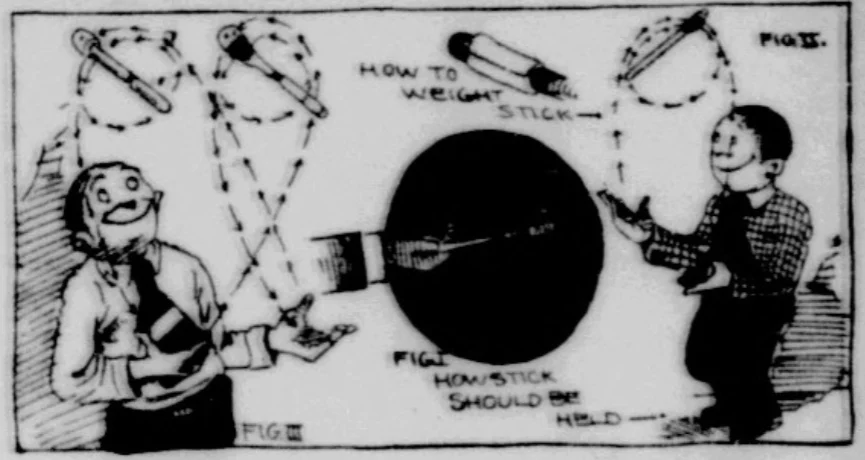
Published on December 20, 1921, the fifth installment of Rasso’s series focused on the manipulation of long, weighted objects. This lesson serves as an early precursor to modern contact and manipulation juggling, focusing on the physics of momentum and balance.
Rasso’s method involved the creation of makeshift equipment, reflecting the scarcity of specialized gear available to the general public at the time. By recommending a two-foot broomstick modified with lead sheeting or tin and secured with tire tape, Rasso provided an accessible pathway for students to practice the principles of weighted flight. The instruction emphasizes the importance of wrist articulation over forearm movement, a technical distinction that remains a cornerstone of professional juggling education today.
The pedagogical progression outlined in the lesson—moving from a simple half-turn to full rotations, and eventually to the complex "crossing" of two sticks—reveals a sophisticated understanding of kinetic learning. Rasso cautioned that successful execution relied on precise force modulation, noting that the trajectory of the object must be dictated by the wrist to maintain control. This instructional approach highlights the transition from purely intuitive juggling to the analysis of trajectory and rotational force. Furthermore, Rasso’s inclusion of safety precautions—specifically advising the use of corks on knives and forks—illustrates a professional’s concern for the safety of his readers, underscoring the serious, disciplined nature of his approach.
Lesson Six: The Art of Balancing and Stagecraft
The subsequent lesson, published on December 27, 1921, shifted focus from dynamic tossing to the more delicate art of balance. This discipline, a staple of vaudeville, required immense focus and physical stability. Rasso introduced his readers to the "feather balancing trick," a classic circus routine involving a peacock feather weighted with putty. By instructing readers to blow the feather into the air, Rasso utilized the simple physics of air resistance and gravity to teach students about center of mass.

Perhaps more intriguing was his inclusion of tissue paper balancing, a technique he explicitly identified as a "stage trick" used to secure a moment of rest during longer performances. This inclusion reveals the pragmatic side of professional juggling: the need for "down-time" routines that allow a performer to maintain audience engagement while physically recovering.
The most ambitious component of the sixth lesson was the "cannon ball catch," a simplified home-based version of a high-stakes circus stunt. By using a hollow play ball and a mailing tube, Rasso allowed his audience to emulate the drama of a professional performer. His advice on performance psychology—suggesting that the student "pretend the ball is very heavy" and "act with the strength of Hercules"—demonstrates that Rasso understood the theatrical nature of the craft. Juggling, in his view, was as much about the narrative of the performer as it was about the physical manipulation of the object.
Analytical Implications and Historical Significance
The recovery of these lessons provides more than just a nostalgic look at circus history; it offers a critical analytical framework for understanding the professionalization of juggling. When viewed collectively, Rasso’s lessons reveal several key trends in the history of the sport:
- Standardization of Technique: Rasso’s insistence on specific wrist movements and equipment modification suggests a move toward standardizing how juggling was taught. This moved the practice away from individualistic "secrets" toward a replicable, pedagogical method.
- Technological Context: The reliance on common household items reflects the economic and industrial limitations of the 1920s. The transition from "broomsticks and lead" to modern high-performance juggling props marks the evolution of the field from a grassroots curiosity to a high-tech discipline.
- The Role of the Performer as Educator: The journalistic format indicates that elite performers were viewed as cultural authorities. By engaging with the public through newspaper columns, performers like Rasso maintained their status as celebrities while actively cultivating the next generation of potential talent.
The Legacy of the Rasso Series
The impact of this discovery extends to contemporary juggling communities, such as the International Jugglers’ Association (IJA) and other archival projects like eJuggle. By cataloging these lessons, historians like Esteban Vélez ensure that the foundational techniques of the 20th century are not lost to time. The juxtaposition of technical instruction with theatrical advice—such as the importance of feigning effort to enhance audience experience—highlights a holistic approach to the craft that resonates with modern stage performers.

The chronological record established by these documents suggests that Rasso’s work was part of a larger, systemic effort to codify circus skills during a time of global transition. As we continue to analyze these records, the broader implication remains clear: the history of juggling is not just a history of objects in motion, but a history of how knowledge is preserved, adapted, and passed across generations. The Rasso series stands as a testament to the enduring human desire to master the physical world, one toss and one balance at a time. Through the lens of these 1921 newspaper columns, we are reminded that the techniques we consider modern are often built upon the careful, deliberate instruction of those who came before us.