
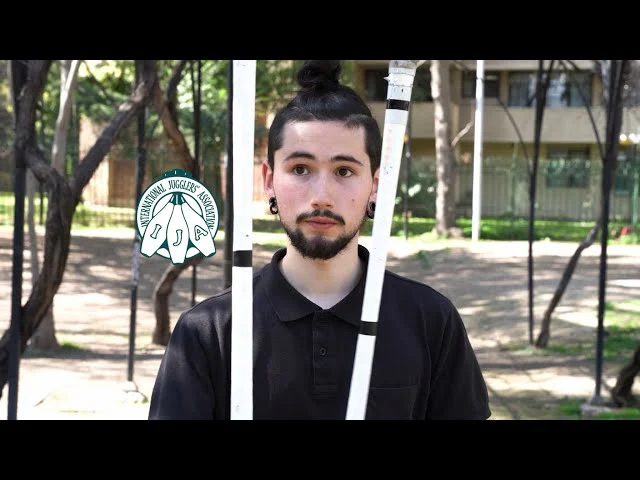
The International Juggling Association (IJA) has officially unveiled its October "Trick of the Month" (TOTM) feature, spotlighting the technical prowess and artistic evolution of Chilean devilstick specialist Rodrigo Alarcón, widely known in the global community as "Rodaa." This monthly series, a cornerstone of the IJA’s digital content strategy, serves to archive advanced techniques and provide a platform for regional practitioners to share their specialized knowledge with a global audience. Alarcón’s feature not only highlights a decade of personal development but also provides a rare, documented look into the historical and cultural significance of the devilstick discipline within Santiago’s urban performance scene.
The Evolution of Devilstick as a Performance Art
Devilstick—an object manipulation discipline involving a central baton manipulated by two handsticks—has long occupied a unique niche within the broader juggling and flow arts community. Unlike toss juggling, which relies on ballistics and patterns, devilstick is defined by contact, momentum, and rhythmic control. Alarcón, who has dedicated nine of his thirteen years in the circus arts to mastering this instrument, represents a shift toward treating the apparatus as a sophisticated medium for contemporary dance and choreography.
His work, as presented in the IJA feature, highlights a specific technical sequence he refers to as "Hydrogen," characterized by intricate, high-velocity contact points that require significant dexterity and spatial awareness. This progression is indicative of a broader trend in object manipulation: the move from simple, recreational tricks toward complex, high-art sequences that emphasize flow and aesthetic precision.
Chronology of the Chilean Devilstick Community
The history of devilstick in Chile is deeply rooted in public spaces, specifically the GAM (Centro Cultural Gabriela Mistral) and Parque San Borja in Santiago. These locations have served as the primary training grounds for a generation of practitioners who have fostered a tight-knit community over the last two decades.
- 2013: Rodrigo Alarcón begins his formal journey into juggling, eventually narrowing his focus exclusively to devilstick three years later.
- 2016–2020: The "Devilstick Chile" movement gains momentum. Practitioners begin digitizing their training sessions, creating a grassroots archive of shared knowledge.
- 2021–2024: Increased emphasis on cross-continental collaboration. Chilean practitioners begin integrating influences from the Japanese and European scenes, specifically focusing on rhythmic coordination and the use of music as a framing device for performance.
- 2026: The IJA selects Alarcón for the Trick of the Month, formalizing the international recognition of the Chilean school of devilstick.
Alarcón’s project, "Devilstick Chile," functions as a digital repository for this timeline. By documenting the progression of techniques in a public playlist, he has ensured that the "oral history" of the scene—often passed down from mentor to student in public parks—is preserved for future generations of jugglers.
Technical Analysis and Influences
The techniques showcased by Alarcón in the October feature demonstrate a departure from the traditional "prop-and-play" style. His methodology emphasizes the physical connection between the practitioner and the apparatus. By incorporating concepts such as "complex touches," Alarcón challenges the conventional limits of the equipment.
Experts in the field note that the influence of Japanese juggling culture is evident in his choice of musical accompaniment, specifically the use of Tatsuro Yamashita’s "Love Space." The synergy between city-pop aesthetics and high-intensity manipulation is a hallmark of the contemporary flow arts movement, which seeks to elevate juggling from street-side entertainment to a sophisticated, mood-driven artistic performance.
Mentorship and Community Sustainability
A critical component of Alarcón’s feature is his explicit recognition of the mentorship structures that sustain the juggling community. His tribute to Mateo Segura, whom he identifies as his primary mentor, highlights the importance of apprenticeship in non-formal education settings. In the world of juggling, where formal academic instruction is rare, the "mentor-student" relationship remains the most effective method for skill transmission.
The inclusion of a memorial for the late José Arellano, known as "Toche," underscores the communal nature of these performance groups. For many street performers, the community serves as a primary social support network. The loss of a member often reverberates through the entire scene, leading to collaborative tributes and the continued dedication of new tricks to their memory. This, according to sociological observations of hobbyist subcultures, is a key indicator of high community cohesion and longevity.
Implications for the Global Juggling Industry
The IJA’s decision to elevate practitioners like Alarcón highlights a strategic pivot in how international organizations interact with local scenes. By leveraging digital platforms, the IJA is able to decentralize the "center of expertise." Historically, the juggling world was heavily concentrated in North America and Western Europe; however, the rise of high-quality digital capture and social media distribution has allowed scenes in South America to gain parity.
The implications of this are threefold:
- Standardization of Techniques: Global exposure leads to the homogenization and subsequent rapid advancement of specialized tricks, as practitioners across the globe adopt and iterate upon the same technical foundations.
- Economic Viability: For organizations like the IJA, featuring diverse, international talent is essential for expanding membership. The inclusion of Chilean artists encourages cross-border participation in festivals, regional competitions, and educational workshops.
- Preservation of Artistry: As the juggling industry shifts toward digital content, the archiving of "local" styles becomes an urgent necessity. Organizations are increasingly taking on the role of cultural curators to ensure that specific regional variations—such as the "Chilean style" of devilstick—are not lost to time.
Support for the Juggling Ecosystem
The IJA continues to rely on a membership-based funding model to sustain these initiatives. Revenue generated through memberships supports the annual IJA Festival, the production of educational podcasts, and the upkeep of the "Tricks of the Month" series. As of the current fiscal period, these funds are allocated toward:
- Youth Juggling Programs (YJA): Expanding the reach of skill-sharing to younger generations, ensuring the demographic longevity of the sport.
- Regional Competitions (IRC): Facilitating the professionalization of juggling by providing a competitive stage for practitioners to test their skills against international benchmarks.
- Resource Archiving: Maintaining digital libraries that allow for the study of historical juggling trends and the evolution of prop technology.
Conclusion
The October feature of Rodrigo Alarcón is more than a display of technical ability; it is a testament to the power of community-led education and the resilience of artistic subcultures. By documenting the specific techniques, the historical progression of the Chilean scene, and the personal connections that drive the practice, the IJA has provided a comprehensive overview of how a niche interest transforms into a lifetime pursuit. As Alarcón continues to develop his craft, his work stands as an invitation to future practitioners to engage with the history, the community, and the ever-evolving techniques of the devilstick.
For those looking to engage further with this discipline, the IJA suggests following the documented progress on Alarcón’s digital channels and participating in regional events. The growth of the juggling community, as Alarcón noted in his address, is dependent on the continued sharing of knowledge and the active support of the global network. As the IJA moves into the final quarter of the year, it remains committed to these pillars, ensuring that the legacy of practitioners like Toche and the innovation of artists like Rodaa remain integral to the sport’s future.