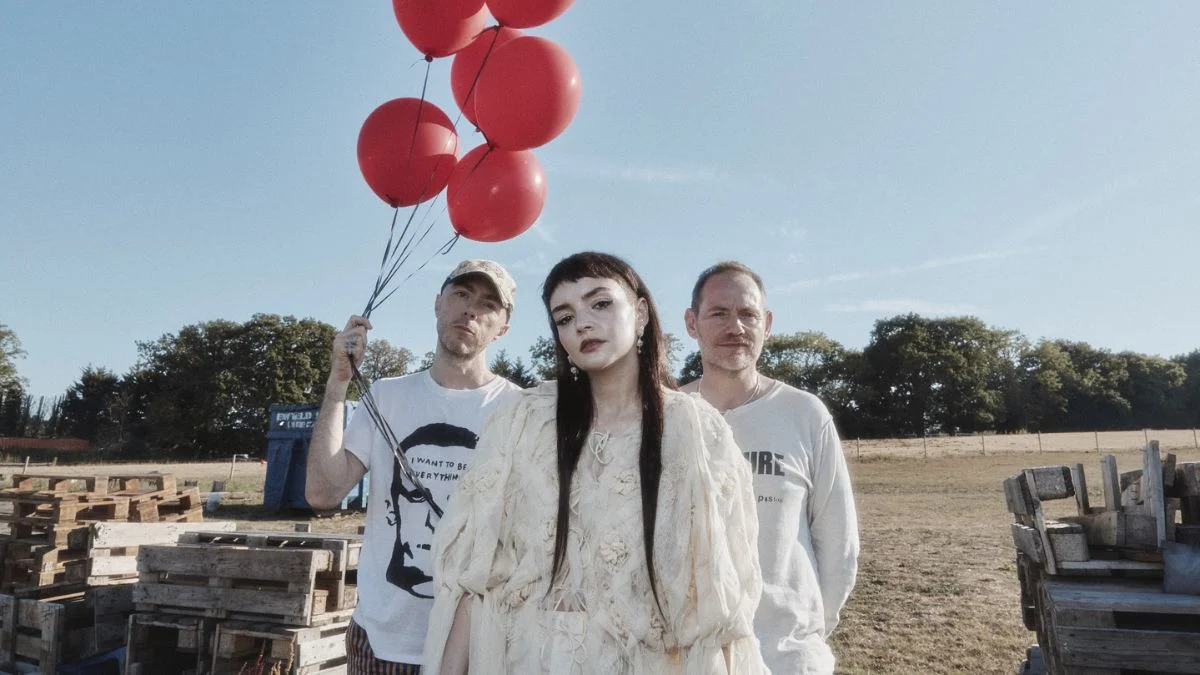

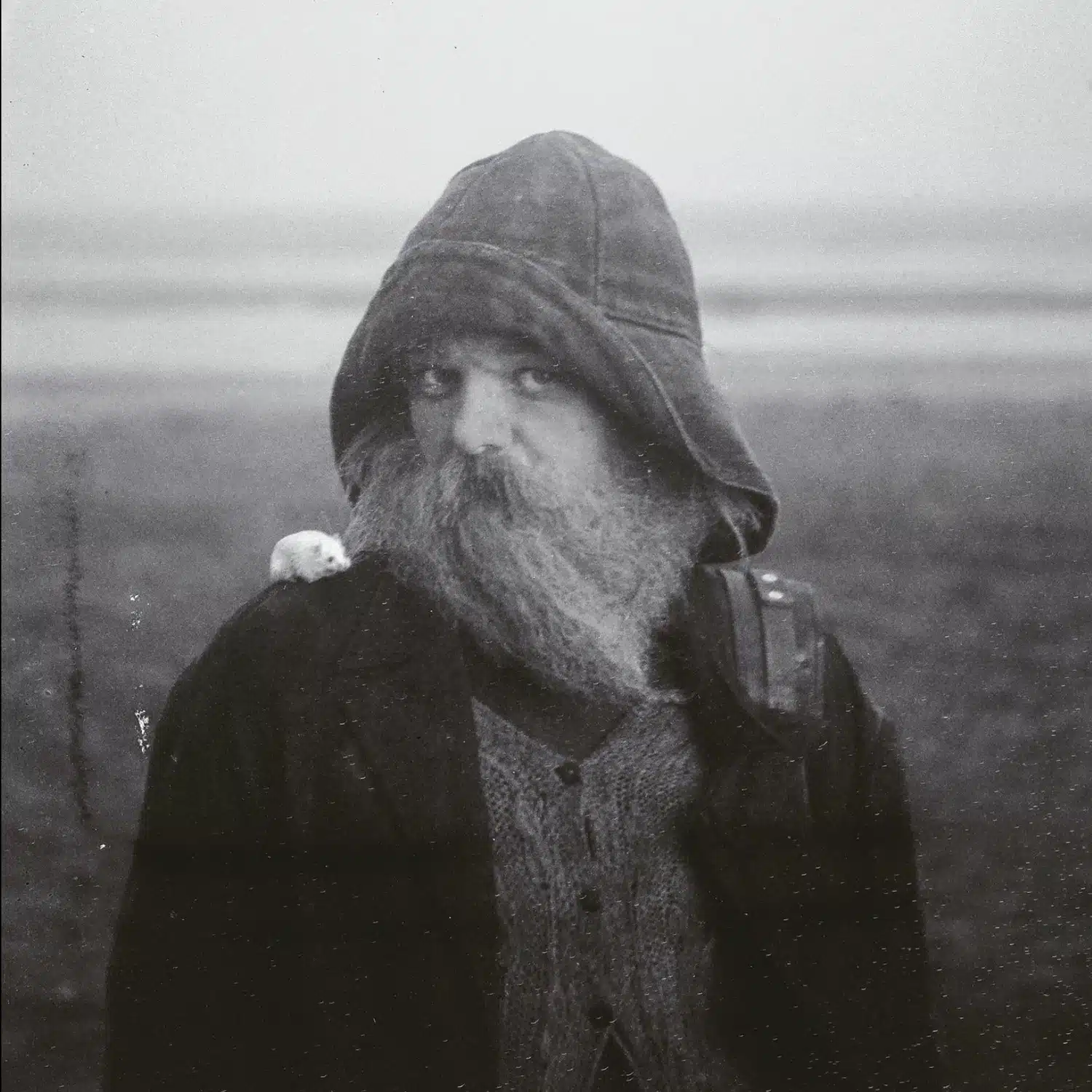
The highly anticipated debut album, Role Model Hermit, from South London trio Mary In The Junkyard, has arrived, immediately asserting itself as a strong contender for one of the most compelling and self-assured first full-length releases of the year. The album immediately signals the band’s audacious confidence, opening with "Mantra III," a track characterized by its skeletal, minimalist arrangement where lead singer Clari Freeman-Taylor’s voice is foregrounded, repeating the affirmation, "It is yours babe, you deserve it." This woozy, disorientating introduction serves not as a gentle welcome, but as a deliberate statement of intent, challenging conventional album structures and setting the tone for a record that defies easy categorization.
The Audacious Introduction and Sonic Identity
The decision to commence a debut album with such a stripped-back, almost meditative piece like "Mantra III" speaks volumes about Mary In The Junkyard’s artistic conviction. In an industry often demanding immediate impact, the track’s understated power suggests a band unafraid to trust in their unique vision and the listener’s engagement. This self-assuredness is not newly found; it has been meticulously honed over two years of relentless live performances, primarily within the vibrant, competitive South London music scene. Their self-described "weepy chaos rock" has been sharpened in the crucible of countless gigs, particularly at the iconic Windmill in Brixton, a venue renowned for fostering groundbreaking new talent since 2024. These formative experiences, coupled with high-profile support slots for established acts like Wet Leg and Dove Ellis, have incrementally elevated their profile, transforming nascent buzz into widespread anticipation for Role Model Hermit.
Forging a Sound in South London’s Indie Crucible
Mary In The Junkyard’s journey is intrinsically linked to the fertile musical landscape of South London, a region that has consistently served as a vital incubator for innovative indie and alternative music. The Windmill, Brixton, in particular, holds legendary status for its role in nurturing bands that go on to redefine genres, having provided early platforms for critically acclaimed acts such as Black Midi, Squid, Black Country, New Road, shame, and Goat Girl. For Mary In The Junkyard—comprising Clari Freeman-Taylor (vocals, guitar), David Addison (percussion), and Saya Barbaglia (viola)—this venue became their proving ground. Since their emergence in 2024, the trio’s "weepy chaos rock" has evolved through constant live experimentation, allowing them to refine their intricate dynamics and expand their sonic palette.
Their sound, a potent blend of measured deliberation and cathartic explosions, positions them firmly within a new wave of British bands pushing the boundaries of post-punk and art-rock. Like their Leeds counterparts, English Teacher, whose critically acclaimed debut two years prior in 2024 shared a similar "addictive quality," Mary In The Junkyard resists simple pigeonholing. Both bands exemplify a contemporary trend in indie music: a rejection of genre constraints in favor of a more eclectic, emotionally raw, and intellectually stimulating approach. This shared characteristic points to a broader shift in the independent music scene, where authenticity and artistic daring are increasingly valued over commercial polish.
The band’s rise has been a testament to the power of grassroots development. From local support slots to opening for more established touring artists, Mary In The Junkyard systematically built a dedicated following. Their early EPs and singles, released throughout 2025, hinted at the depth and complexity that would fully blossom on Role Model Hermit. Industry insiders had been tracking their trajectory, noting the unique interplay between Freeman-Taylor’s commanding yet vulnerable vocals, Addison’s nuanced rhythmic foundations, and Barbaglia’s distinctive, often haunting viola lines. This organic growth fostered a sense of genuine anticipation, making Role Model Hermit one of the most eagerly awaited debut albums of mid-2026.
A Lyrical Tapestry of the Unsettling and Otherworldly
A defining characteristic of Mary In The Junkyard’s artistry, and a major factor in their distinctiveness, is their masterful deployment of tension. Throughout Role Model Hermit, there’s a palpable sense that something unsettling lurks beneath the surface of their meticulously crafted songs, creating an atmosphere of psychological intrigue that draws listeners deeper into their world. This pervasive, slightly unsettling feeling is largely driven by Clari Freeman-Taylor’s lyricism, which often possesses the macabre, allegorical quality of a Brothers Grimm fairy tale.
In "Peter The Dog," for instance, the narrative unfolds with a chilling intimacy as Freeman-Taylor recounts feeding her own flesh to the titular canine, a desperate act to prevent his departure. This stark imagery delves into themes of sacrifice, possession, and the darker facets of attachment, presented with a disarming directness. Similarly, "Welcome Break" conjures a sense of pervasive unease, painting a scene of unknown figures hiding in bushes near a service station. These vignettes are not merely descriptive; they evoke a profound sense of isolation and latent menace, transforming mundane settings into arenas for psychological drama. Even when the album’s arrangements lean towards more conventional structures, such as the breezy art-rock of "Myrtle," an "otherworldly tinge" persists, subtly disrupting expectations and reminding the listener of the unique, slightly askew lens through which the band perceives the world. This consistent thematic thread ensures that Role Model Hermit maintains a cohesive, albeit unsettling, narrative arc from beginning to end.

Dissecting the Sonic Landscape: Tracks of Note
The album’s internal dynamics are expertly managed, showcasing the band’s versatility and command of their chosen sound. "Seek And Destroy" stands out as an early demonstration of their ability to transition from measured introspection to explosive release. The track builds with an almost architectural precision, layers of instrumentation gradually accumulating before erupting into a blast of controlled, chaotic noise punctuated by Freeman-Taylor’s screamed vocals. This cathartic cacophony is not merely an outburst; it’s a deliberate, impactful moment designed to release the built-up tension, highlighting the band’s sophisticated understanding of sonic narrative.
"New Muscles" emerges as one of the album’s most compelling tracks, serving as a microcosm of Mary In The Junkyard’s core strengths. David Addison’s intricate, often unconventional percussion provides a nuanced rhythmic foundation, eschewing bombast for texture and subtle shifts. Saya Barbaglia’s viola, rather than merely providing harmonic backing, takes on an almost eerie, spectral quality, weaving through the arrangement with lines that feel both melodic and disquieting. Over this meticulously constructed sonic bed, Freeman-Taylor delivers whispered, intense vocals, creating a sense of intimate confession tinged with latent threat. The opening line, "I’ve been looking for somebody to fight, there’s no one on the streets at night," immediately establishes a confrontational yet isolated mood. This segues into the nagging, memorable chorus of "new muscles all over my back," a phrase that exudes a peculiar sense of menace and physical transformation, compelling listeners to repeatedly return to its enigmatic depths. The track encapsulates the band’s ability to craft songs that are both sonically rich and psychologically resonant, leaving a lasting impression long after the final notes fade.
The Emotional Core and Concluding Statement
As Role Model Hermit progresses towards its conclusion, Mary In The Junkyard truly hits its emotional sweet spot, revealing a profound vulnerability that contrasts with the earlier, more overtly unsettling material. "Candelabra" is a prime example of this shift. Reportedly penned by Freeman-Taylor when she was just 17, the track is a fragile, minimalist ballad. Its arrangement is stark, featuring only a gentle, finger-picked acoustic guitar as accompaniment to her raw, emotive vocals. This radical about-turn from the controlled chaos and tense atmospherics found elsewhere on the record is remarkably effective, demonstrating the band’s breadth and emotional intelligence. The simplicity of "Candelabra" amplifies its power, allowing the raw sentiment of the lyrics and performance to shine through unadorned. It serves as a poignant reminder of the band’s capacity for intimate storytelling and unvarnished emotional expression.
The album culminates with "Mouse," a track that masterfully marries both dominant facets of the band’s sound: the whispered intimacy and the rich, immersive instrumentation. Freeman-Taylor’s hushed vocals, imbued with a delicate fragility, are almost enveloped by a gorgeously swirling string section, creating a tapestry of sound that is both ethereal and grounding. What makes "Mouse" particularly endearing and distinctive as a closing statement is its refusal to build to a grand, climactic crescendo. Instead, it tails off in an endearingly unassuming manner, a subtle fade rather than an emphatic declaration. This artistic choice reinforces the album’s overall ethos – a commitment to nuance and atmosphere over conventional rock bombast. It leaves the listener with a sense of quiet contemplation rather than explosive resolution, inviting immediate re-engagement with the album. Like all truly great records, Role Model Hermit concludes by prompting an immediate desire to return to its beginning, to unravel its mysteries and absorb its unique soundworld once more.
Broader Implications and the Future of Indie Rock
Role Model Hermit arrives at a pivotal moment for independent music, demonstrating a robust artistic confidence that defies the pressures often associated with a debut release. Its immediate critical acclaim and strong fan reception position Mary In The Junkyard as significant new voices in the contemporary music landscape. Industry analysts suggest that the album’s success underscores a growing appetite among listeners for music that challenges generic boundaries and embraces complex emotional and thematic content. The band’s ability to weave macabre narratives with moments of profound vulnerability, all while maintaining a distinctive sonic identity, sets a high bar for their peers.
The impact of Role Model Hermit extends beyond mere commercial success; it represents a cultural contribution to the ongoing evolution of indie rock. By refusing to be easily categorized and by prioritizing artistic expression over commercial formula, Mary In The Junkyard joins a lineage of bands that continually push the genre forward. Their work could inspire a new generation of musicians to explore less trodden paths, encouraging experimentation with instrumentation (like the prominent viola), vocal delivery, and lyrical themes. Furthermore, their journey from the intimate stage of The Windmill to widespread recognition highlights the enduring importance of grassroots venues and dedicated live performance in nurturing genuine talent.
As the year progresses, Role Model Hermit is widely expected to feature prominently on year-end lists and award nominations. Its accomplishment and confidence, particularly for a debut, suggest a band with immense potential and a clear artistic vision. Mary In The Junkyard has not just released an album; they have introduced a fully formed artistic statement, signaling their arrival as a formidable and essential presence in the global music scene. Their future trajectory is one to watch closely, as they are poised to leave an indelible mark on the sound of modern alternative music.