
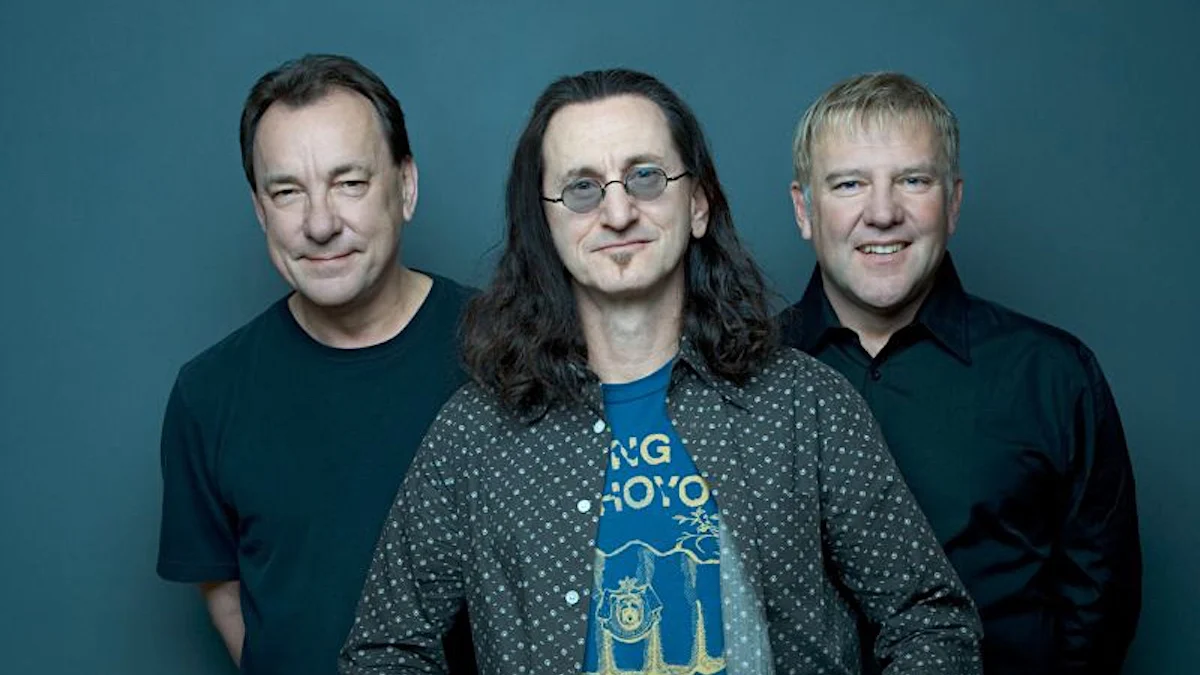
In a poignant and deeply personal account, Rush singer-bassist Geddy Lee recently shared a "spooky" experience involving a bird, an incident he felt held a profound symbolic connection to the band’s late, legendary drummer, Neil Peart. This remarkable event occurred in early June, immediately following the kickoff of Rush’s highly anticipated "Fifty Something" reunion tour in Los Angeles, a tour that marks a significant emotional milestone for the iconic progressive rock band and its legions of fans. The narrative has since resonated widely, intertwining the band’s ongoing musical journey with a touching tribute to their departed comrade.
The "Fifty Something" tour itself is steeped in symbolism, particularly regarding Peart, who passed away at 67 in January 2020 after a private and courageous battle with an aggressive form of brain cancer, glioblastoma. The official tour posters prominently feature a visual metaphor: two birds perched on a wire, representing Lee and guitarist Alex Lifeson, while a third bird gracefully departs mid-flight, a poignant acknowledgment of Peart’s absence and his enduring spirit. This imagery was deliberately chosen to convey the band’s current state – continuing their legacy while honoring the indelible mark left by their lyrical architect and rhythmic powerhouse.
The Ethereal Encounter: Lee’s Detailed Account
During an interview with Q107 Toronto radio host Joanne Wilder, Lee was asked if he had felt Peart’s presence during the nascent stages of the tour. His response unveiled the extraordinary incident. "Spooky question!" Lee began, before recounting the story. "Well, it’s funny. I’ll tell you a little story. After the opening night, we were staying in L.A., and I was texting Al. We were in the same hotel, but we were texting each other." This detail immediately grounds the experience in the immediate aftermath of their first performance, a moment undoubtedly charged with emotion for both surviving members.
Lee continued, detailing the unexpected visitor: "My door to my room was open a crack, and I don’t know if you’ve seen the posters that have two birds on a wire and the one bird is flying away. I looked in front of me, on the floor, and there was a bird on the floor that looked just like that bird in the poster." The uncanny resemblance to the tour’s central motif immediately struck Lee, transforming an ordinary occurrence into something potentially extraordinary. His description highlights the specificity of the bird’s appearance, drawing a direct link to the carefully crafted tour artwork.
The interaction with the bird unfolded with a sequence of events that further amplified its symbolic weight. "I was kind of shocked," Lee admitted, "And, you know, I love birds, so I approached it, and it flew by me and flew into my bedroom and sat on the edge of my bed. And when I approached it, it was like it was looking at me, and then it flew out the door." The bird’s comfort in his presence, its willingness to enter his private space, and the perceived eye contact added layers of intimacy to the encounter. Lee’s immediate instinct was to share this bizarre yet captivating experience with his lifelong bandmate. "So, I quickly ran to the computer and was texting Al this crazy story that had just happened."
Despite the profound nature of the event, Lee, ever the pragmatist, acknowledged his inherent skepticism. "Now, I’m not a guy who believes in all that mumbo jumbo," he stated, reflecting a common human tendency to seek rational explanations. However, the experience was undeniably powerful. "But it was a kind of a remarkable moment," he conceded. The narrative then took an even more astonishing turn: "And as I was texting him, the bird returned and just stuck its head in the doorway, like to give me another nod. And then I said, ‘Okay, bye,’ and it flew away. It was crazy, crazy." The bird’s second appearance, seemingly to offer a final acknowledgment, solidified the impression of a deliberate, communicative interaction, leaving an indelible mark on Lee.
Joanne Wilder’s immediate reaction encapsulated the sentiments of many fans and listeners: "Okay, well I will believe for you. If you don’t want to believe, I will believe for you. That was Neil." Her statement highlights the shared emotional landscape surrounding Peart’s passing and the human desire to find solace and connection in the face of profound loss.
Neil Peart’s Enduring Legacy: The Professor’s Impact
To understand the full emotional weight of Lee’s experience, one must appreciate the monumental figure Neil Peart was within Rush and the broader music landscape. Often referred to as "The Professor," Peart was far more than just a drummer; he was the band’s principal lyricist, a philosophical thinker, and a virtuosic musician whose technical prowess and innovative style redefined the art of rock drumming. His lyrics, often delving into themes of science fiction, philosophy, mythology, and social commentary, elevated Rush’s music beyond typical rock fare, attracting an intellectually curious and fiercely loyal fanbase.
Born in Hamilton, Ontario, in 1952, Peart joined Rush in 1974, just two weeks before their first U.S. tour. Alongside Lee and Lifeson, he formed one of rock’s most stable and influential trios. His drumming was characterized by intricate polyrhythms, complex time signatures, and an explosive yet precise technique. He was renowned for his elaborate drum kits, which evolved over the decades to incorporate a vast array of percussion instruments, reflecting his continuous quest for rhythmic and textural innovation. Peart consistently topped polls as the greatest rock drummer of all time, inspiring countless musicians across genres.

Beyond his musical contributions, Peart was an avid motorcyclist, a published author, and a deep thinker. His books, including "Ghost Rider: Travels on the Healing Road" (chronicling his solo journey across North America after the tragic deaths of his daughter and wife), offered profound insights into grief, resilience, and the human spirit. His intellectual curiosity and dedication to his craft resonated deeply with fans, fostering a connection that extended far beyond the music itself.
Peart’s retirement from touring in 2015, due to chronic tendonitis and other health concerns, effectively marked the end of Rush as a touring entity, a decision the band respected deeply. His subsequent battle with glioblastoma, kept fiercely private, underscored his desire for personal dignity and control even in the face of terminal illness. His passing in 2020 sent shockwaves through the music world, leaving an irreplaceable void.
The "Fifty Something" Tour: A Tribute and Continuation
The "Fifty Something" tour, therefore, is not merely a reunion in the traditional sense, but a powerful act of remembrance and a testament to the enduring bond between Lee and Lifeson, and their collective dedication to Peart’s memory. The tour name itself subtly acknowledges the passage of time since Rush’s formation in 1968, reflecting on over five decades of groundbreaking music.
The decision to embark on this tour without Peart was undoubtedly complex and emotionally charged. For years after Peart’s retirement and subsequent passing, Lee and Lifeson maintained that Rush would not continue without their drummer. However, the desire to play together, to revisit their vast catalog, and to connect with their fans proved too strong to ignore. The current tour, which kicked off in Los Angeles, represents a carefully considered approach to honoring their legacy. While Peart’s physical presence is absent, his spirit is woven into every aspect of the performances, from the setlist choices to the visual aesthetics, most notably the bird imagery.
The tour’s current run includes a significant four-night residency in Rush’s hometown of Toronto, Canada. These shows are not just concerts; they are being meticulously captured for a future concert film, a project that will further immortalize this chapter of Rush’s history and serve as a lasting tribute. This undertaking signifies the band’s commitment to documenting their journey and ensuring Peart’s influence remains central to their narrative. The North American leg of the tour is extensive, stretching into December, demonstrating the immense demand from fans eager to witness Lee and Lifeson continue their musical dialogue.
Broader Impact and Implications: Grief, Symbolism, and Legacy
Lee’s experience with the bird, while personally profound, also taps into a universal human tendency to seek meaning and connection in the wake of loss. For many, the imagery of a departed loved one returning in symbolic form – be it a bird, a butterfly, or another creature – offers solace and a sense of continued presence. While Lee himself expresses skepticism about "mumbo jumbo," the powerful emotional resonance of the incident for him, and subsequently for fans, is undeniable. It provides a tangible narrative that helps process the intangible grief of losing a cultural icon and a beloved friend.
The incident underscores the deeply personal and emotional connection that artists often share with their work and with each other. The tour poster’s symbolism was already a public acknowledgment of Peart’s absence; the bird’s appearance in Lee’s hotel room felt like a direct, personal validation of that symbolism, a bridge between the artistic representation and a felt reality. This kind of anecdotal experience can be incredibly powerful for a fanbase that views the band members not just as musicians, but as an almost familial unit.
Furthermore, the continuing celebration of Neil Peart’s legacy extends beyond the current tour. A new documentary titled Neil Peart: No One’s Disciple is slated to air on CBC on September 23rd. This film will feature Geddy Lee and Alex Lifeson jamming on Rush songs alongside a stellar lineup of drummers, including Chad Smith of Red Hot Chili Peppers, Danny Carey of Tool, and Stewart Copeland of The Police. This documentary serves as another vital piece in preserving Peart’s immense impact, showcasing his influence through the eyes and hands of other drumming titans. It highlights the respect and admiration he commanded from his peers, reinforcing his status as a truly singular talent.
In conclusion, Geddy Lee’s "spooky" encounter with a bird, uncannily resembling the symbolic imagery of Rush’s "Fifty Something" tour poster, transcends a mere anecdote. It stands as a poignant testament to the enduring bond within the band, the profound impact of Neil Peart’s legacy, and the universal human quest for connection and meaning in the face of loss. For Lee, it was a "remarkable moment" that, despite his rational inclinations, carried immense emotional weight. For fans, it offers a comforting narrative, suggesting that "The Professor’s" spirit continues to soar, guiding his bandmates as they navigate their musical journey and honor the indelible mark he left on the world. The tour, the concert film, and the upcoming documentary all coalesce to ensure that Neil Peart’s powerful presence remains an integral part of Rush’s ongoing story, a story of unparalleled musical innovation, enduring friendship, and an undying spirit.

![Iron Maiden Legend Nicko McBrain Turned Down Trump Golf Invite: [He] Should Be Put in Jail](https://worldbusk.org/wp-content/uploads/2026/10/iron-maiden-legend-nicko-mcbrain-turned-down-trump-golf-invite-he-should-be-put-in-jail.webp)