
The global juggling and street performance community is in mourning following the death of Sean Goodfellow, the visionary artist internationally celebrated as Jolly Goodfellow, or simply “Rumpel.” A resident of Los Angeles at the time of his passing, Goodfellow succumbed to a long-term illness, marking the end of a three-decade career that saw him redefine the boundaries of busking, endurance performance, and character acting. From the cobblestone streets of Europe to the neon-lit stages of Las Vegas, Goodfellow’s commitment to his craft made him one of the most recognizable figures in the world of variety arts.

A Life Defined by Total Immersion
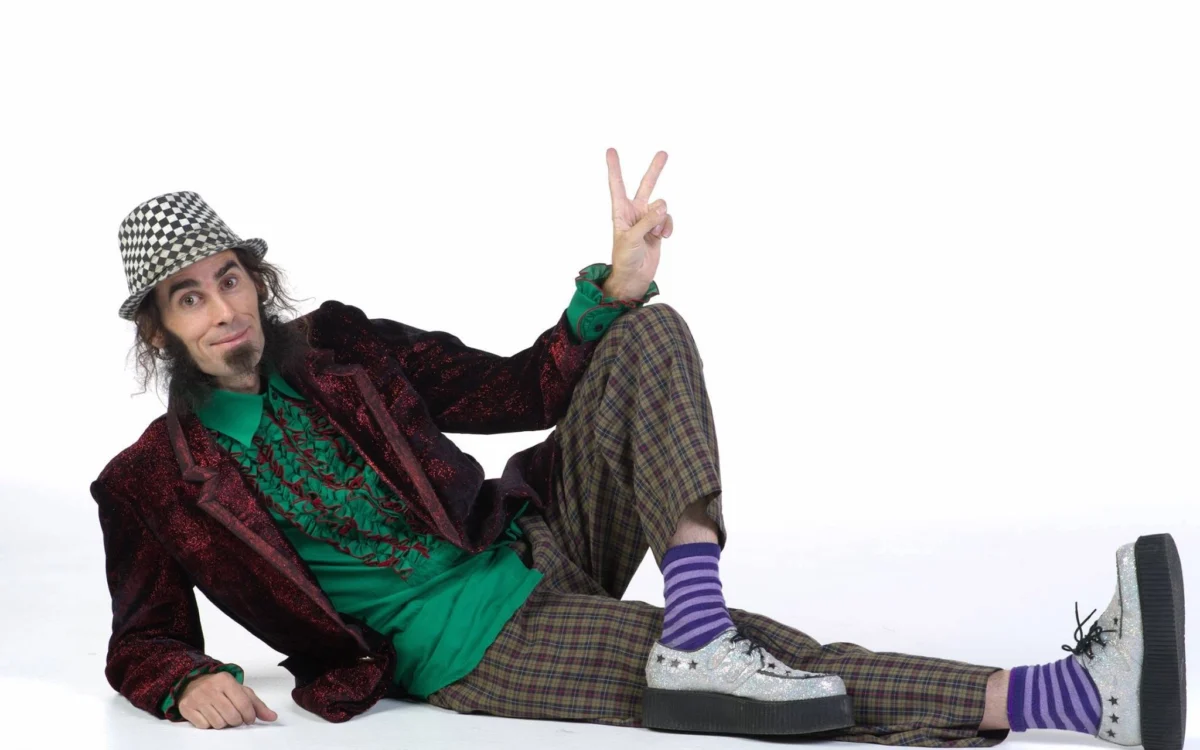
Born in Melbourne, Australia, Sean Goodfellow did not merely perform as a jester; he lived as one. Unlike many performers who shed their stage persona the moment the curtain falls, Goodfellow treated his entire existence as a continuous performance art piece. This total commitment manifested in a high-pitched, distinctive vocal style that he maintained in virtually all public interactions, along with an ever-changing array of eccentric costumes. Central to his visual identity was an extraordinary collection of over 600 unique, hand-curated fake noses, which became a signature element of his persona.

This dedication to character allowed him to transcend the traditional role of a busker. He was not just a performer soliciting coins; he was an interactive, living statue of whimsy who commanded the attention of passersby across 50 different countries. His ability to sustain a character while navigating the complexities of international travel and diverse cultural landscapes solidified his reputation as a master of the "Fool" archetype.

Chronology of an Extraordinary Career
Goodfellow’s career was marked by consistent innovation and a drive to test his physical and mental limits. His performance history can be traced through several distinct phases of growth and global impact:

- 1990s: The Global Busking Era: During the late 1990s, Goodfellow established his reputation on the international circuit. He spent these formative years refining his craft, busking across Europe, Asia, and the Americas, often visiting over 80 countries in total throughout his lifetime.
- 1999: Humanitarian Work in Kosovo: Demonstrating the social power of performance, Goodfellow joined the organization Clowns Without Borders during the height of the Balkans War. His work in conflict zones provided a critical reminder of the role of art in fostering resilience and joy in the most dire circumstances.
- 2006–2008: Cirque du Soleil Residency: Perhaps his most high-profile professional achievement was his two-year residency with Cirque du Soleil’s LOVE production in Las Vegas. As the original “Fool on the Hill,” he performed 847 shows, bringing his unique brand of physical comedy to a massive, global audience.
- Mid-Career Endurance Peaks: Throughout the 2010s, Goodfellow pushed the limits of the human body with his legendary marathon jester shows. These events, which spanned 24, 48, and famously 53 hours in Poland, required immense stamina. A typical finale for these shows was a sight to behold: the stage would be left in a state of chaotic creative abundance, littered with dozens of juggling props, an array of musical instruments, a unicycle, and various puppets.
Analysis of Endurance and Performance Art
Goodfellow’s marathon shows were not merely feats of stamina; they were experiments in endurance art. By keeping a stage active for over two days, he forced the audience—and himself—into a trance-like state of play. This practice challenged the convention of the "short-set" busker, instead creating a sustained atmosphere that invited viewers to linger, return, and eventually become part of the narrative.

His, and by extension the art of the jester’s, impact on the wider variety arts industry cannot be overstated. By maintaining his character at all times, he occupied a liminal space between reality and fantasy. This dedication served as a masterclass for aspiring buskers, emphasizing that the "act" is not found in the props alone, but in the consistency and depth of the performer’s persona.

A Legacy Beyond the Stage
While he was primarily known for his physical performance, Goodfellow was also an accomplished illustrator. His artistic talents were often reflected in the design of his costumes and the intricate, often surreal, nature of his props. His life’s work serves as a testament to the idea that professional performance is a multi-disciplinary endeavor that requires as much intellectual and creative input as it does physical coordination.

The impact of his passing has been felt across the professional juggling community. Peers and colleagues have noted that Goodfellow was one of the most photographed variety performers of his generation. His aesthetic—a blend of Victorian-inspired garb, whimsical prosthetic noses, and a perpetual look of wide-eyed curiosity—became an iconic image in the archives of street theater.

Official and Community Responses
The death of a figure like Goodfellow has prompted an outpouring of tributes from the international juggling community. "Jolly was a singular force," remarked one contemporary in the field. "He didn’t just juggle objects; he juggled reality, making the mundane seem extraordinary."

In the professional spheres of Las Vegas, the loss of the original "Fool on the Hill" is being noted as the end of an era for the LOVE show. His contribution to the production’s atmosphere helped bridge the gap between traditional circus arts and modern, high-production-value theater.

Implications for the Future of Street Performance
Goodfellow’s career trajectory offers a roadmap for the future of independent performance. As the digital age continues to reshape how audiences consume art, the "analog" nature of a street performer—someone who engages in the immediate, physical present—is becoming increasingly rare.

His life proved that there is a viable, high-level career path for those who commit to the traditional roots of performance art. His work with Clowns Without Borders also highlights an important, often overlooked, aspect of the profession: the social responsibility of the artist to provide relief, perspective, and humanity.

As the community looks back on his 847 performances in Las Vegas and his decades of travel, the takeaway is clear: Goodfellow was an ambassador of joy. His passing is not just the loss of a performer, but the loss of a unique worldview that prioritized the celebration of life, the importance of the "Fool," and the value of keeping the spirit of play alive, no matter how long the performance lasts.

Remembering the Artist
The extensive collection of photographs documenting his life—ranging from his early days on the streets to his high-production residencies—serves as an unofficial history of global street culture. These images, now preserved by historians and the juggling community, will serve as the primary resource for future generations of performers looking to understand the mechanics of a true professional jester.

Goodfellow’s life reminds us that the most profound art is often that which is most fleeting. A 53-hour performance leaves behind only memories and a scattered stage; yet, the effect it has on the witnesses is long-lasting. By choosing a life of total, unapologetic performance, Sean Goodfellow ensured that his memory would remain as colorful, complex, and enduring as the man himself.

Our condolences go out to his family, his friends, and the countless individuals across the globe who, at some point in the last thirty years, walked down a street or entered a theater and found their day brightened by the presence of Jolly Goodfellow. His final act has concluded, but the legacy of the Fool on the Hill continues to resonate through the hearts of those he entertained and the artists he inspired.