
The musical landscape of the 1970s remains one of the most thoroughly documented and celebrated eras in modern recording history. Spanning the experimental twilight of progressive rock, the birth of disco, and the commercial explosion of singer-songwriters, the decade produced a vast catalogue of timeless compositions. While the early years of the 1970s carried over the countercultural friction of the late 1960s, the latter half of the decade saw a distinct pivot toward polished studio production, deeply personal lyricism, and cross-genre radio accessibility. Among the countless records released during this fertile creative window, 1976 stands out as a watershed year that yielded several defining tracks of the twentieth century.
Examining the cultural output of 1976 reveals a snapshot of an industry in transition. Vinyl album sales were reaching unprecedented heights, FM radio was cementing its status as the primary driver of musical taste, and artists were exercising greater creative autonomy than ever before. Within this environment, three specific releases—Hall & Oates’s breakthrough single “Sara Smile,” Fleetwood Mac’s mystical breakout track “Rhiannon,” and Lou Rawls’s soul masterpiece “You’ll Never Find Another Love Like Mine”—captured the zeitgeist of the mid-1970s. These compositions not only dominated the global charts of their day but also established enduring templates for pop, rock, and R&B that continue to influence contemporary musicians nearly five decades later.
The Genesis and Breakthrough of Hall & Oates with Sara Smile
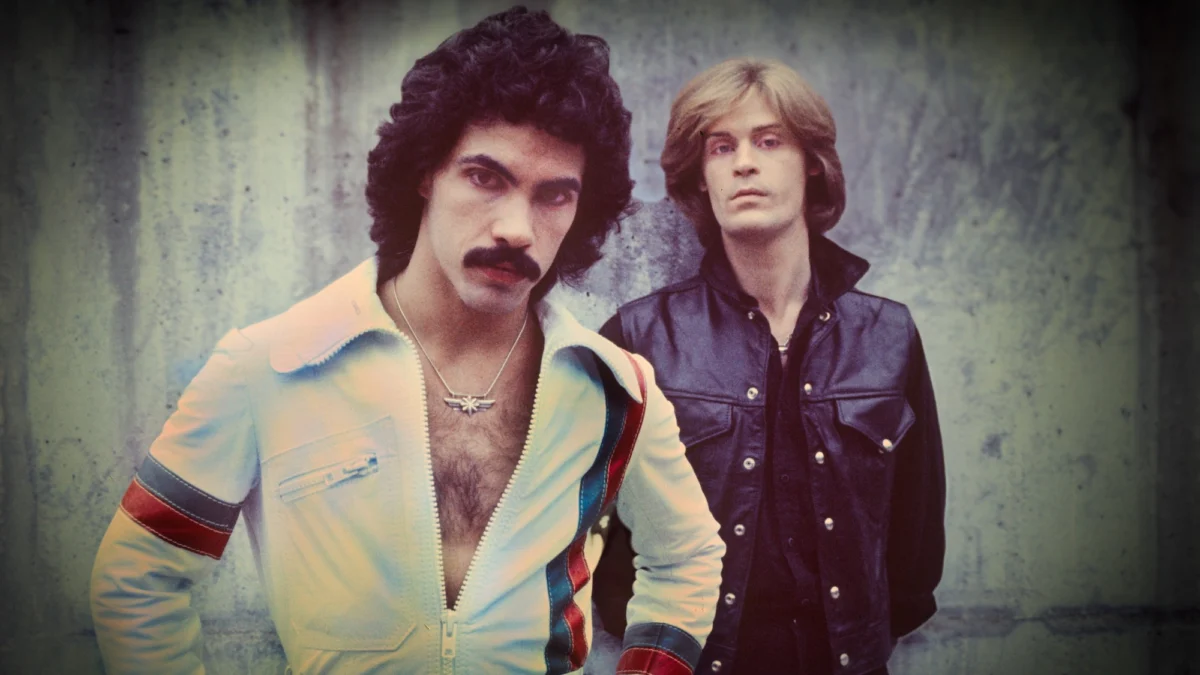
By the mid-1970s, the Philadelphia-based duo of Daryl Hall and John Oates had spent years grinding through the competitive northeastern club circuit and recording albums that struggled to match their live energy. Their initial releases for Atlantic Records failed to ignite the commercial success they envisioned. However, the trajectory of their careers fundamentally shifted when they signed with RCA Records and relocated to New York City under the guidance of manager Tommy Mottola. It was during this creative reset that they recorded their self-titled 1975 album, Daryl Hall & John Oates, which featured a track that would become their very first major hit single: “Sara Smile.”
Released as a single in early 1976, “Sara Smile” introduced a sophisticated blend of blue-eyed soul, pop melody, and intricate vocal harmonies that would become the trademark of the Hall & Oates sound. Written jointly by Daryl Hall and John Oates, the song was born out of deeply personal circumstances. Hall drew his primary inspiration from his romantic relationship with Sara Allen, an American fashion model and songwriter whom he met in the mid-1970s and with whom he would maintain a long-term partnership of thirty years. Allen’s presence not only inspired the song’s lyrical core but also contributed significantly to the duo’s broader creative output during their most commercially dominant era.
Reflecting on the composition process, Daryl Hall frequently described the track’s creation in utilitarian yet deeply emotional terms, characterizing the song as an unpretentious expression of genuine affection. “It was a song that came completely out of my heart,” Hall explained in retrospective interviews. “I’ve said this many times—it was a postcard. It’s short and sweet and to the point.”
The song’s chorus—featuring the instantly recognizable refrain, “Sara smile / Oh, won’t you smile awhile for me, Sara?”—resonated immediately with listeners across the United States. Propelled by radio airplay and word-of-mouth acclaim, “Sara Smile” climbed the charts to peak at number four on the US Billboard Hot 100 in 1976. This commercial breakthrough provided the duo with the financial and creative stability necessary to embark on their subsequent run of chart-topping albums, including Bigger Than Both of Us and Voices.
The cultural footprint of “Sara Smile” extended far beyond its initial chart run. Over the subsequent decades, the track was sampled by hip-hop artists, covered by contemporary R&B acts, and reinterpreted across multiple genres. Notably, in 2009, country music artist Jimmy Wayne recorded a faithful cover of the track as a single, successfully returning the composition to the upper reaches of the music charts and proving its cross-genre durability more than thirty years after its initial release.
Fleetwood Mac and the Mystical Rise of Rhiannon
While Hall & Oates were redefining blue-eyed soul in New York, a radically reconstituted version of Fleetwood Mac was orchestrating one of the most successful commercial reinventions in the history of rock music. Founded in London in 1967 as a traditional British blues band led by guitarist Peter Green, the group endured a tumultuous revolving door of members, musical styles, and legal disputes over the first half of the decade. By 1974, the band had relocated to Los Angeles, where drummer Mick Fleetwood discovered an acoustic folk-rock duo consisting of American singer Stevie Nicks and guitarist Lindsey Buckingham.
The addition of Nicks and Buckingham injected fresh creative energy into the remaining core members, Fleetwood, bassist John McVie, and keyboardist/vocalist Christine McVie. The resulting lineup released their self-titled tenth studio album, Fleetwood Mac, in July 1975. While the album initially generated modest traction, it steadily gained momentum throughout late 1975 and 1976, eventually ascending to the number one spot on the Billboard 200 chart and achieving multi-platinum certification. A major catalyst for this sustained commercial momentum was the release of Stevie Nicks’s haunting composition “Rhiannon” as a single in early 1976.
“Rhiannon” was written entirely by Stevie Nicks, marking an early showcase of her distinct compositional voice that would define the band’s global dominance. Surprisingly, given its eventual status as a defining anthem of 1970s rock, the single initially faced an uphill battle on mainstream radio, ultimately peaking just inside the Top 35 at number 35 on the Billboard Hot 100. Despite its modest peak chart position, the track became an immediate fan favorite and a permanent fixture of the band’s live performances, largely due to Nicks’s theatrical, emotionally charged vocal delivery.
The thematic inspiration for “Rhiannon” originated from an unexpected literary encounter. While visiting a friend’s house, Nicks picked up a paperback novel titled Triad by author Mary Leader. The book explored themes of reincarnation and a young woman who becomes possessed by a spirit bearing the ancient Welsh name Rhiannon. Although Nicks did not adopt the specific plot points of the novel, the evocative sound of the name and the supernatural aura of the narrative left an indelible impression.
“I read the book, but I was so taken with that name that I thought, ‘I’ve got to write something about this,’” Nicks recalled of the creative spark. “So I sat down at the piano and started this song about a woman that was all involved with these birds and magic.”
The resulting lyrics—including the mesmerizing lines, “All your life you’ve never seen a woman taken by the wind / Would you stay if she promised you heaven? / Will you ever win, will you ever win? / Rhiannon”—established Nicks’s persona as the mystical, ethereal matriarch of rock and roll. The song’s driving rhythm section, Buckingham’s intricate fingerpicking, and the soaring three-part vocal harmonies of Nicks, Christine McVie, and Buckingham created a sonic landscape that was both accessible to mainstream pop audiences and deeply atmospheric.
The cultural and commercial impact of “Rhiannon” proved foundational for Fleetwood Mac. It paved the way for the band’s historic 1977 masterpiece, Rumours, and cemented Stevie Nicks’s status as a generational songwriting icon. Decades after its release, “Rhiannon” remains a masterclass in mood-driven songwriting, regularly appearing on retrospective lists of the greatest rock songs of all time.
Lou Rawls and the Timeless Soul of You’ll Never Find Another Love Like Mine
While pop and rock groups dominated large swathes of the 1976 airwaves, American rhythm and blues and soul music underwent a sophisticated evolution characterized by lush orchestrations, complex arrangements, and undeniable groove. At the forefront of this movement was veteran baritone vocalist Lou Rawls. By 1976, Rawls had already enjoyed a distinguished recording career spanning nearly two decades, working across jazz, blues, and traditional soul. However, his partnership with legendary Philadelphia International Records producers Kenny Gamble and Leon Huff marked a major commercial renaissance for the artist.
Released on his 1976 studio album All Things In Time, the single “You’ll Never Find Another Love Like Mine” stands as the definitive commercial peak of Rawls’s illustrious recording career. Written and produced by the powerhouse team of Gamble and Huff—the primary architects of the lush, soulful Philadelphia Sound—the track combined driving Philly soul instrumentation, soaring string arrangements, and Rawls’s velvety, commanding baritone vocals.
The song functions lyrically as both a declaration of unwavering devotion and a cautionary warning to a romantic partner. Rawls wastes no time establishing the emotional stakes, opening the track with the unforgettable lines: “You’ll never find, as long as you live / Someone who loves you tender like I do / You’ll never find, no matter where you search / Someone who cares about you the way I do.”
The commercial response to “You’ll Never Find Another Love Like Mine” was immediate and overwhelming. The single rocketed up the charts, becoming Rawls’s highest-charting single on the US Billboard Hot 100, where it peaked within the elite Top 5. Furthermore, the track achieved massive success on specialized formats, reaching the number one spot on the Billboard Hot Soul Singles chart and capturing a prominent position in the Top 10 of the national dance charts, capitalizing on the burgeoning disco era without abandoning traditional soul sensibilities.
The broader implications of the song’s success were profound for both Rawls and Philadelphia International Records. For Rawls, the track earned him his first Grammy Award for Best R&B Vocal Performance, Male, in 1977, and cemented his status as a legendary vocal stylist capable of bridging generational audiences. For Gamble and Huff, “You’ll Never Find Another Love Like Mine” reinforced the global dominance of the Philadelphia Sound, proving that sophisticated, orchestrally rich R&B could successfully compete with mainstream rock and emerging disco on top-40 radio.
Cultural Legacy and the Enduring Echo of 1976
The enduring popularity of “Sara Smile,” “Rhiannon,” and “You’ll Never Find Another Love Like Mine” highlights a unique era in the recording industry where compositional craft, instrumental proficiency, and emotional authenticity converged. While the music industry has undergone radical transformations in the decades since 1976—shifting from physical vinyl records to magnetic cassette tapes, compact discs, and ultimately digital streaming algorithms—the foundational appeal of these three tracks remains entirely undiminished.
For the generations of listeners who grew up during the 1970s, these songs function as sonic time capsules, instantly evoking the cultural texture, aesthetic sensibilities, and emotional landscape of the era. Yet, their appeal transcends mere nostalgia. Through meticulous arrangement, unforgettable vocal performances, and universal thematic concerns regarding love, longing, and mystery, Hall & Oates, Fleetwood Mac, and Lou Rawls crafted works of art that continue to recruit new generations of admirers. As contemporary artists sample, cover, and draw inspiration from these 1976 classics, the legacy of this remarkable year in music history remains securely anchored at the heart of the global cultural canon.