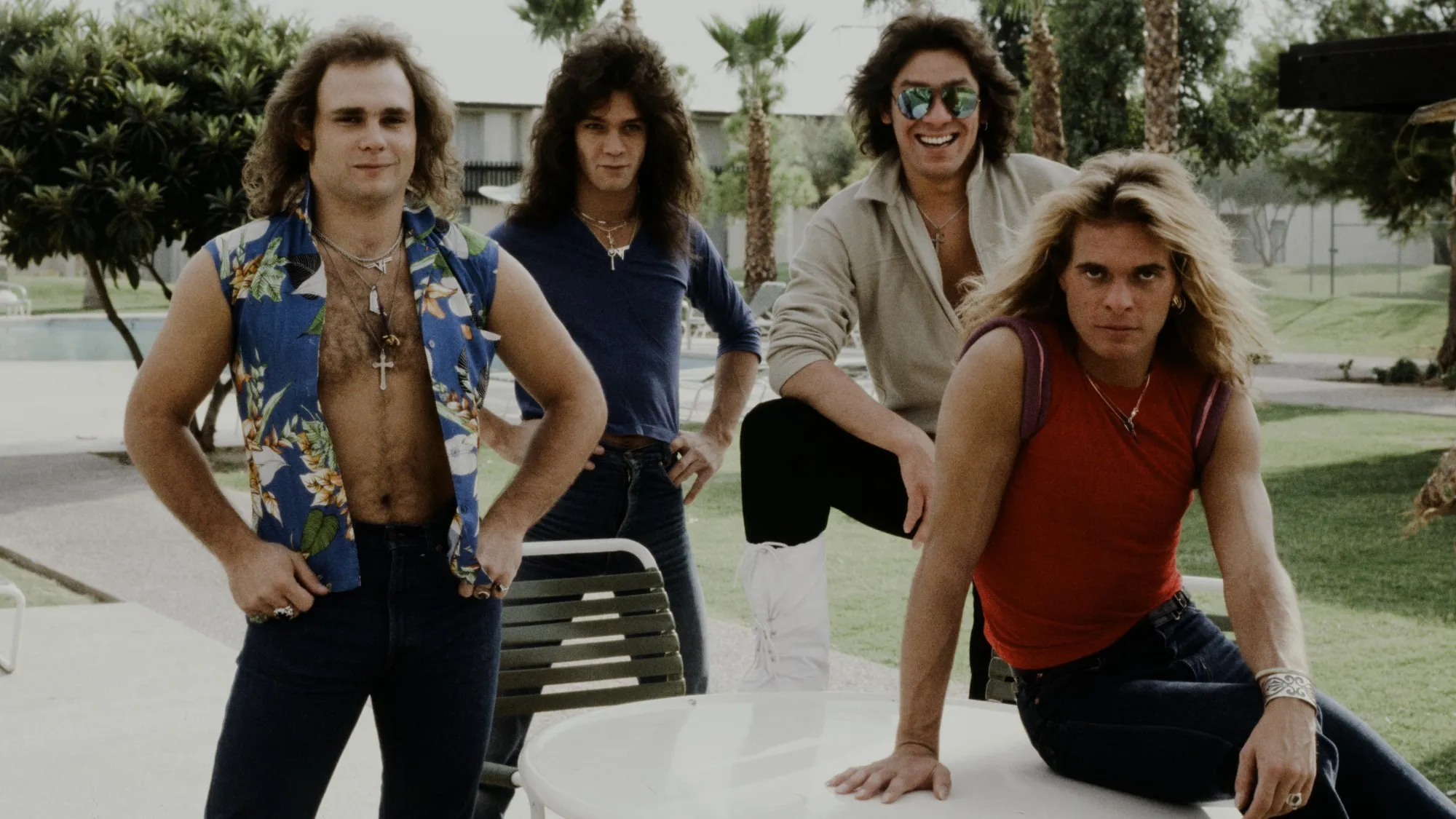
The year 1972 holds a peculiar and revered place in the broader chronology of modern music history. While cultural historians and musicologists often debate the existence of cosmic alignments, astrological shifts, or fateful numerology, it is difficult to ignore the staggering concentration of musical innovation that took place over that single twelve-month period. Outbursts of creative progress, technological experimentation, and genre-bending compositions from 1972 managed to capture the global zeitgeist, ultimately defining an entire era of culture. Among the most enduring legacies of this pivotal year are the formations of four distinct musical acts—Van Halen, Styx, ABBA, and the E Street Band—whose foundational years in 1972 set a trajectory that continues to reverberate across the global music industry.
The Socio-Musical Landscape of 1972: A Period of Transition
To understand the significance of the bands that emerged in 1972, one must first examine the socio-musical landscape of the early 1970s. The countercultural movements of the late 1960s were fracturing, giving way to a more commercialized yet deeply experimental rock market. Traditional blues-based hard rock was beginning to collide with progressive complexity, synthesized instrumentation, and slick, highly produced pop music. Record labels were aggressively hunting for new talent that could fill arenas and drive multi-territory album sales.
It was within this pressurized, highly lucrative, and endlessly creative crucible that several groups of musicians, largely unknown at the time, crossed paths. Whether forming in suburban high schools in Illinois, rehearsal spaces in New Jersey, garages in Pasadena, or recording studios in Stockholm, these future icons began assembling the bricks of their respective legacies. The convergence of these formations in 1972 highlights a remarkable historical anomaly: four distinct corners of the musical universe—hard rock, progressive art rock, European pop, and heartland rock—ignited simultaneously.
Van Halen: Redefining Guitar Virtuosity and Arena Hard Rock
Long before they became a multi-platinum stadium-filling phenomenon, the genesis of Van Halen began to take shape in Pasadena, California. Brothers Eddie and Alex Van Halen, Dutch-born immigrants with a rigorous classical music background, had spent their adolescent years cycling through various garage band iterations. In 1972, the duo solidified a lineup that utilized a moniker familiar to dedicated rock historians: Mammoth.
During these formative years, the band was primarily a covers-heavy live act playing backyard parties and local clubs, renting a PA system from a young David Lee Roth to save money—a business arrangement that ultimately led to Roth joining the fold as frontman. By the mid-1970s, after officially rebranding as Van Halen, the group developed a combustible mix of heavy metal swagger and pop-sensible hooks.
The primary catalyst for their monumental impact on popular music was Eddie Van Halen’s revolutionary guitar playing. Eschewing the conventional blues-scale plodding of early 70s hard rock, Eddie popularized and perfected two-handed finger-tapping on the fretboard. This technique, immortalized on tracks like the 1978 instrumental masterclass "Eruption" and commercial breakthroughs like "Runnin’ With the Devil" and their blistering cover of The Kinks’ "You Really Got Me," fundamentally altered the technical expectations for rock guitarists for decades to come.
Music industry analysts note that Van Halen’s emergence bridged the gap between the gritty underground hard rock of the early decade and the flamboyant, highly commercial MTV-era metal of the 1980s. Their 1978 self-titled debut album is frequently cited by data aggregators and sales trackers as one of the best-selling debut records of all time, fundamentally shifting the economic and artistic priorities of major record labels regarding hard rock acts.
Styx: The Marriage of Art Rock and Stadium Spectacle
While the West Coast was birthing guitar pyrotechnics, the Midwest was quietly cultivating a different kind of sonic architecture. Styx, formed in Chicago, Illinois, in 1972, emerged from a lineage of high school bands that included brothers John and Chuck Panozzo and singer-keyboardist Dennis DeYoung. The foundational lineup was completed with the recruitment of guitarists James "J.Y." Young and Tommy Shaw (who joined slightly later in the decade, solidifying their classic era).
The band’s official breakthrough into the industry came via an unlikely avenue: a talent scout who discovered them performing at a church hall in Western Springs, Illinois, leading to a recording contract with Wooden Nickel Records. Styx occupied a fascinating and commercially potent intersection of genres. They were essentially a bridge between the cerebral, complex compositions of British progressive rock and the direct, emotional resonance of American stadium rock.
Throughout the late 1970s and early 1980s, Styx achieved unprecedented commercial success, becoming the first rock band to release four consecutive multi-platinum albums. Anthems such as "Lady," "Come Sail Away," "Renegade," and the polarizing, synthesizer-driven futuristic narrative "Mr. Roboto" became staples of regular rock radio rotation.
Cultural critics have frequently analyzed Styx as a quintessential manifestation of the 1970s American ambition—blending theatricality with accessible melodies. Their ability to seamlessly transition from delicate, piano-led ballads to soaring, hard-driving guitar rock expanded the demographic boundaries of rock radio, proving that sophisticated arrangements could find a permanent home on commercial Top 40 playlists.
ABBA: The Global Phenomenon of Swedish Pop Supremacy
While rock bands were dominating North American stadiums, a quiet revolution in popular songwriting was underway in Scandinavia. ABBA—comprising the dual-couple partnership of Agnetha Fältskog, Björn Ulvaeus, Benny Andersson, and Anni-Frid Lyngstad—officially coalesced in Sweden in 1972. Although individual members had experienced varying degrees of regional success prior, the cementing of their collaborative writing and vocal arrangement partnership that year marked the birth of a global pop empire.
The dynamics of ABBA were unique in the annals of pop history. Composed of two married couples, the group’s internal chemistry was inextricably tied to their artistic output. Even as both marriages ultimately dissolved in high-profile divorces later in the decade, the quartet maintained a professional discipline that allowed them to continue forging ahead creatively.
ABBA’s commercial achievements place them among the best-selling music artists in history. Tracks like "Dancing Queen," "Mamma Mia," "Take A Chance On Me," and "Waterloo" (which won the Eurovision Song Contest in 1974, launching them to international stardom) defined the sonic texture of the mid-to-late 1970s. Their music combined complex European folk melodies, lush vocal harmonies, and cutting-edge studio production techniques that predated the sleek electronic pop of the 1980s.
The legacy of ABBA extends far beyond their initial chart-topping run. In the decades following their 1982 hiatus, their cultural footprint expanded exponentially through the wildly successful Mamma Mia! stage musical and subsequent feature films, as well as their pioneering influence on contemporary pop production. Modern pop artists frequently cite ABBA’s immaculate song structures, melancholic lyricism masked by uplifting tempos, and pristine vocal layering as foundational templates for modern chart success.
The E Street Band: Crafting the Sound of Heartland Rock
Concluding the quartet of 1972 formations is an ensemble uniquely tied to a singular American songwriting visionary: the E Street Band. As a young artist cutting his teeth in the competitive Asbury Park, New Jersey, music scene, Bruce Springsteen began assembling a collective of elite musicians to back his burgeoning career. By 1972, the core components of what would officially become the E Street Band—named after the street in Belmar, New Jersey, where keyboardist David Sancious’s mother lived and where the band frequently rehearsed—were falling into place.
Unlike autonomous bands that functioned as equal creative democracies, the E Street Band was initially structured as a backing ensemble for Springsteen. However, the distinct personalities, virtuosic musicianship, and deep personal camaraderie of members like Clarence Clemons, Steven Van Zandt, Max Weinberg, Roy Bittan, and Garry Tallent quickly transformed the group into an essential, co-equal entity in rock history.
The E Street Band provided the muscular, cinematic backbone for Springsteen’s poetic, working-class narratives. Together, they defined the genre known as heartland rock, combining the driving beat of 1960s garage rock and soul with the sweeping grandeur of Phil Spector’s "Wall of Sound" production techniques.
Albums such as Born to Run (1975), Darkness on the Edge of Town (1978), and the commercial behemoth Born in the U.S.A. (1984) relied heavily on the E Street Band’s dynamic range—shifting seamlessly from soulful saxophone solos to thunderous percussion and intricate piano arrangements. Their marathon live performances became legendary benchmarks for rock concerts globally, establishing a standard for endurance, emotional connection, and communal catharsis that few acts have ever replicated. While individual members have pursued successful solo careers, scored films, and backed other marquee artists, the collective impact of the E Street Band on American musical identity remains permanent and indisputable.
Broader Impact and Historical Implications
Looking back across the decades, the simultaneous emergence of Van Halen, Styx, ABBA, and the E Street Band in 1972 offers a fascinating study in cultural synchronicity. These four acts represented vastly different geographical origins, demographic targets, and artistic philosophies: Van Halen championed guitar-driven hard rock innovation; Styx mastered the theatricality of progressive stadium rock; ABBA perfected the science of universal, emotionally resonant pop; and the E Street Band captured the grit and poetry of the American working class.
The long-term implications of their 1972 formations are deeply embedded in the DNA of contemporary music. They established production standards, performance expectations, and songwriting templates that survived the paradigm shifts of punk, grunge, and the digital streaming era. Whether analyzed through quantitative metrics—such as cumulative album sales, concert ticket revenue, and radio airplay data—or qualitative cultural markers, the class of 1972 demonstrated an unprecedented capacity to transcend their chronological origins. More than fifty years after their initial formations, the reverberations of that single historic year continue to shape the global auditory landscape, proving that some creative epochs are indeed touched by a rare and enduring form of historical destiny.