
Thirty-one years have passed since the world lost Jerry Garcia, the iconic guitarist and co-founder of the Grateful Dead, on August 9th, 1995. This anniversary often prompts a reflection on his vast and intricate musical legacy, a tapestry woven with countless performances, diverse projects, and an ever-evolving exploration of sound. For dedicated fans, known as Deadheads, the appreciation of Garcia’s work is a journey into a rich universe of lore, where uncovering hidden gems and lesser-known facets of his career can be as rewarding as revisiting his most celebrated moments. It is within this spirit of deep exploration that we turn our attention to a particularly rare and intimate performance: Jerry Garcia’s sole evening of solo acoustic concerts at The Capitol Theatre in Passaic, New Jersey, on April 10th, 1982.
While Garcia was renowned for his leadership within the Grateful Dead, the Jerry Garcia Band, and the bluegrass supergroup Old & In The Way, his ventures into solo acoustic performance were exceptionally infrequent. The commonly cited solo performances prior to this Passaic engagement include a 1962 appearance at a folk music festival in San Mateo, California, and the aforementioned 1979 jazz-funk ensemble, Reconstruction. However, the April 10th, 1982, date stands out as a unique event in his career, marking a deliberate departure from the expansive instrumental support that typically defined his stage presence. On this particular night, Garcia stood entirely alone, a stark contrast to the layered sonic landscapes he usually conjured with his fellow musicians.
The Genesis of a Rare Performance
The "Days Between," the period encompassing Garcia’s birthday on August 1st and his passing on August 9th, serves as a poignant time for fans to delve into his history. The 1982 solo acoustic shows in Passaic fall within this contemplative timeframe, offering a glimpse into a moment of profound artistic vulnerability. By April 1982, Jerry Garcia was already a seasoned musician with decades of performance experience under his belt. The Grateful Dead had achieved significant national recognition, and the Jerry Garcia Band had cultivated a devoted following with its unique blend of R&B, soul, and rock. Yet, despite this established presence, Garcia chose to strip away all extraneous elements for this two-show engagement at The Capitol Theatre.
The decision to perform solo acoustic was a bold one, especially for an artist accustomed to the collaborative energy of a band. Without the rhythmic foundation of drummers, the harmonic depth of keyboards, or the interplay with fellow guitarists and vocalists, Garcia was left to rely solely on his own instrumental and vocal prowess. This exposure, devoid of the usual sonic scaffolding, presented a unique challenge and, consequently, a unique opportunity for him to connect with his audience on a more personal level. The intimate nature of the setting, coupled with the absence of his usual bandmates, likely amplified the emotional resonance of the performances.
The Capitol Theatre Engagement: A Night of Raw Vulnerability
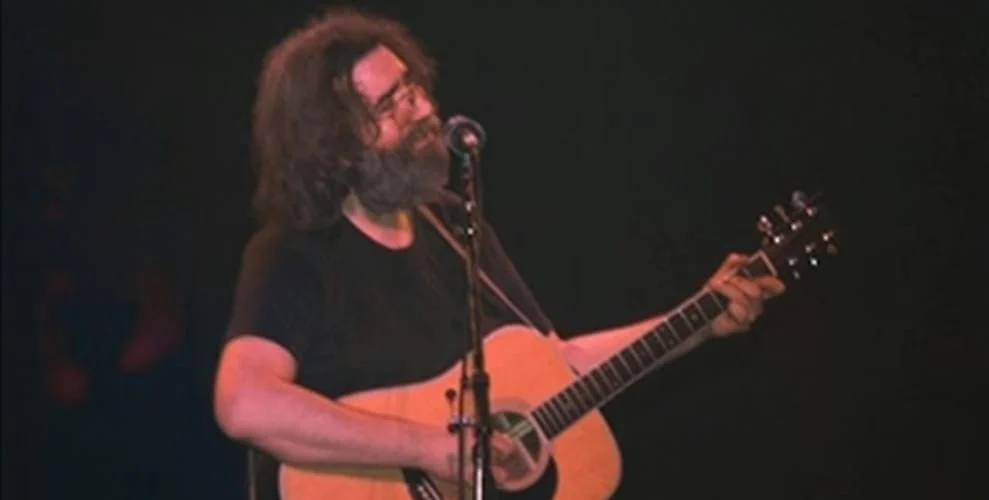
The Capitol Theatre in Passaic, New Jersey, a venue with a storied history of hosting diverse musical acts, provided the backdrop for this singular event. On Saturday, April 10th, 1982, Jerry Garcia took to the stage for two distinct sets: an early show and a late show. The choice of an acoustic guitar, stripped of any electronic effects or amplification beyond what was necessary for the venue, immediately signaled a departure from his typical amplified sound. This intentional rawness allowed the nuances of his playing and the timbre of his voice to take center stage.
The setlists for both performances featured a collection of traditional bluegrass and folk songs, many of which had roots in the American musical vernacular that deeply influenced Garcia. Songs such as "Deep Elem Blues," "Oh Babe It Ain’t No Lie," "I’ve Been All Around This World," and "Little Sadie" were rendered with a profound sense of intimacy. The acoustic setting imbued these familiar tunes with a fresh immediacy, evoking the feeling of a late-night campfire gathering or a hushed living room performance. Each note, each vocal inflection, carried the weight of Garcia’s personal connection to the material.
The performances reportedly concluded with a sing-along rendition of the Grateful Dead classic "Ripple" for the main set, followed by a spirited "Reuben and Cherise" as the encore. "Reuben and Cherise," a song penned by Garcia and Robert Hunter, has long been a fan favorite, and its inclusion in this solo acoustic context offered a particularly poignant moment. The song, with its evocative storytelling and melancholic undertones, allowed Garcia to showcase his dual talents as both a masterful guitarist and a compelling vocalist. His delivery, characterized by a blend of authority and delicate phrasing, underscored his ability to convey complex emotions through his music. This performance exemplified the essence of Garcia’s artistry: a profound ability to weave narratives and evoke sentiment with his guitar serving as an extension of his voice.
The Aftermath and Evolution of Solo Performances
Despite the unique artistic merit of the solo acoustic shows at The Capitol Theatre, the experience proved to be a fleeting one. Reports suggest that Garcia found the complete solitude on stage to be somewhat discomfiting. The intense focus and lack of any immediate musical dialogue with other performers may have contributed to a feeling of unease. This personal discomfort led to a swift evolution of his solo endeavors.
Following the Passaic engagement, Garcia transitioned to performing acoustic sets as a duo with John Kahn, his longtime bassist in the Jerry Garcia Band. This collaborative approach offered a more comfortable framework for exploring acoustic music. Their first such duo performance took place at the Oregon State Penitentiary on June 5th, 1982, marking the beginning of a new chapter in Garcia’s acoustic explorations. While the full solo acoustic format was short-lived, the groundwork laid in Passaic contributed to the rich tapestry of his musical evolution.
Documenting a Rare Event: Visual and Auditory Evidence
Fortunately, this rare evening of solo acoustic performance has been preserved for posterity, allowing contemporary audiences to experience a glimpse of Garcia in his most unadorned state. A video recording of his performance of "Reuben and Cherise" from the April 10th, 1982, Capitol Theatre engagement is available, offering a visual testament to the intimacy and power of the concert. The footage, though likely captured with limited resources, provides an invaluable artifact of this unique moment.
Furthermore, full-show audio recordings from the early performance at The Capitol Theatre have been shared by fans and archivists, notably by the YouTube channel "nognuisagoodgnu." These recordings allow listeners to immerse themselves in the entirety of Garcia’s acoustic set, from the opening notes to the final encore. The availability of both video and audio documentation is crucial for understanding the full scope of this historically significant event and for appreciating the depth of Garcia’s solo acoustic artistry.
Broader Impact and Legacy
Jerry Garcia’s solo acoustic performances, though rare, represent a significant aspect of his musical journey. They highlight his deep connection to the roots of American music and his willingness to experiment with different performance formats. The April 10th, 1982, engagement at The Capitol Theatre stands as a testament to his artistic courage, his ability to connect with an audience on a profound emotional level, and the enduring power of his music even in its most stripped-down form.
The Grateful Dead’s approach to music was always one of constant exploration and innovation. Their extensive live repertoire, meticulously documented and shared by fans, has created a unique cultural phenomenon. Events like Garcia’s solo acoustic shows, while perhaps less widely known than his stadium performances, are integral to understanding the full breadth of his creative output. They offer a more intimate perspective on his musical genius, revealing the artist behind the legend in a raw and deeply personal light. The impact of such performances extends beyond the immediate audience, contributing to the ongoing appreciation and study of one of music’s most influential figures. The vulnerability displayed on that Passaic stage, though perhaps challenging for Garcia at the time, ultimately enriches his legacy by showcasing a different facet of his extraordinary talent.