
The world of circus arts is defined by a paradox: while the modern world relentlessly pursues technological advancements to simplify human existence, circus performers dedicate their lives to the deliberate complication of their own. Among those who mastered this art of aesthetic and physical difficulty was Barbara Savio, an Italian performer whose career transformed the Washington trapeze from a simple aerial display into a multifaceted spectacle of balance, antipodism, and juggling. Born in Viterbo, Italy, into a family steeped in the traditions of tightrope walking and aerial performance, Savio’s life was an odyssey of physical discipline, overcoming medical obstacles to reach the pinnacle of her craft.

Early Foundations and the Path to Professionalism
Barbara Savio was the daughter of Fiorenzo Savio, a man deeply rooted in the circus lineage of Italy, and Gemma Bellucci. Her father recognized early that to distinguish himself and his family in the highly competitive Italian circus market, he needed to cultivate an act that defied standard conventions.
Initially, Savio’s training began with the rigorous study of contortionism. However, a significant turning point occurred during her youth when she was diagnosed with a spinal anomaly. Rather than forcing an end to her athletic pursuits, the diagnosis necessitated a shift in focus. Her medical team prescribed a strict regimen of gymnastics, which inadvertently provided the foundation of core strength and postural control that would later become the hallmark of her performance style. This transition from traditional circus arts to a medically guided, high-intensity athletic discipline proved instrumental in preparing her for the punishing demands of the Washington trapeze—a specialized apparatus consisting of a long, heavy metal bar suspended by cables, requiring immense stability and precise muscular engagement.

The Innovation of the Washington Trapeze
The Washington trapeze is a deceptively simple apparatus. Unlike a swinging trapeze, the Washington bar is rigid and stationary, making it a grueling test of endurance. Savio approached this apparatus not merely as a platform for aerial stunts, but as a stage for complex manipulation.
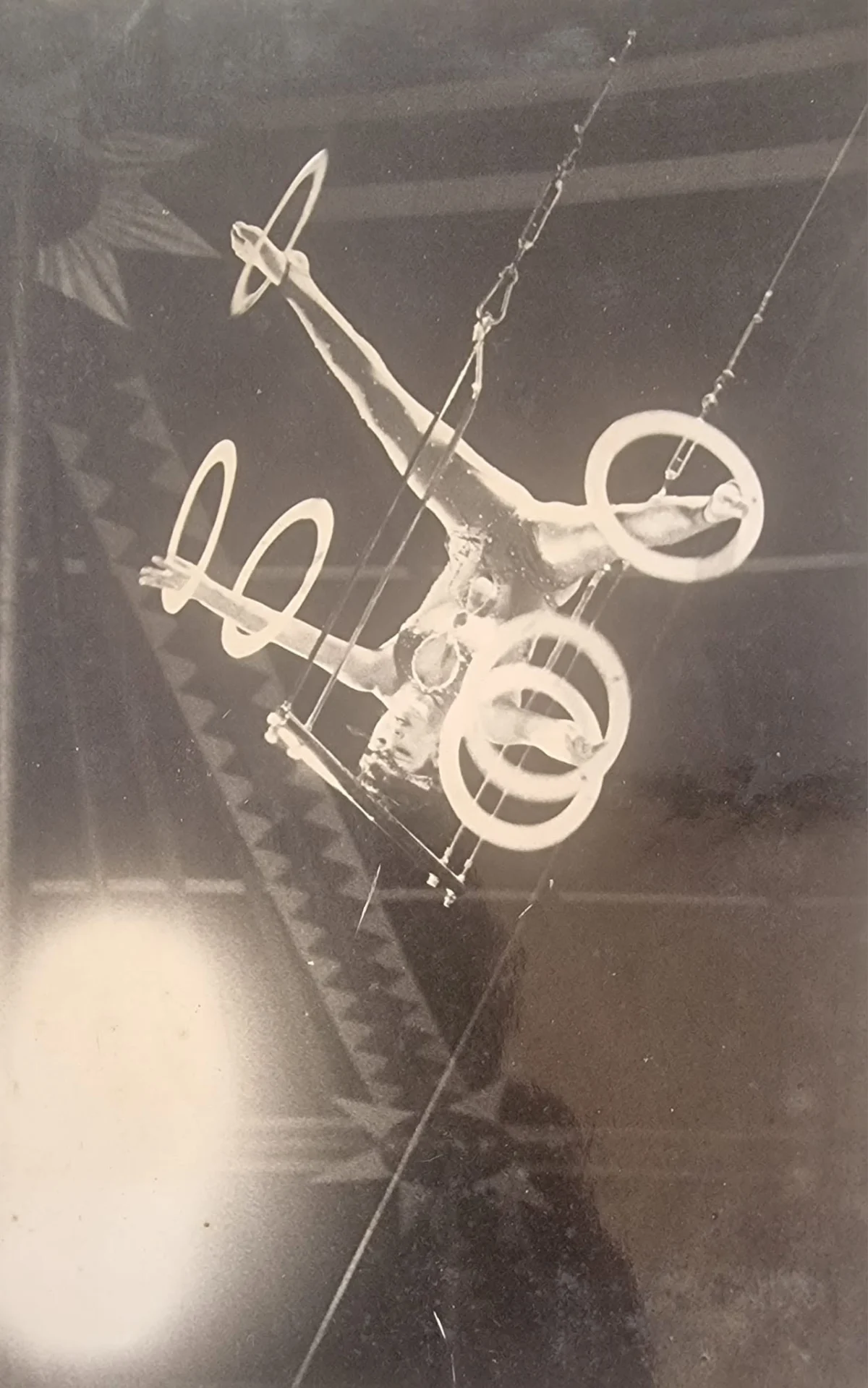
Throughout the 1970s, Savio integrated three distinct disciplines into her routine: aerial balance, antipodism (foot juggling), and traditional hand-juggling. Her signature sequences included balancing on her head directly upon the metal bar, a feat of balance that required total stillness while the bar remained suspended. While in this inverted position, she would simultaneously spin rings on her limbs, requiring an extraordinary degree of motor independence.

Further demonstrating her technical range, Savio performed antipodism with a cylinder while her arms were occupied with spinning rings—all while maintaining her position on the apparatus. This layering of skills transformed her act from a standard aerial display into a display of high-level coordination. The physical toll of such an act is immense; by incorporating juggling into a static aerial environment, she challenged the laws of gravity and the limitations of human equilibrium.
Chronology of a Decorated Career
Savio’s rise to prominence was rapid. By the time she reached her twentieth birthday, she had already secured positions in Europe’s most prestigious circuses.

- 1970s (Mid-to-Late): Extensive training period under the guidance of Fiorenzo Savio. Development of the integrated juggling-aerial act.
- December 7–11, 1978: Participation in the 5th Monte-Carlo International Circus Festival. This event served as her breakthrough on the global stage, positioning her alongside the world’s most elite performers.
- 1979–1985: A period of extensive touring across Germany, France, and Yugoslavia. Notably, she performed with the Cirque Voix du Nord in France, solidifying her reputation as a marquee act.
- 1986: Featured in CIRCO magazine, which lauded her for achieving a "truly extraordinary level" of artistry, highlighting her unique synthesis of foot-juggling and traditional aerial technique.
- 2014: Passing of Barbara Savio following a battle with an incurable illness.
The Monte-Carlo Triumph: "La Dame du Cirque"
The 1978 Monte-Carlo International Circus Festival remains one of the most significant milestones in the history of the circus arts. Established in 1974 by Prince Rainier III of Monaco, the festival was designed to provide a "circus equivalent" to the Oscars or the Olympic Games.
At the 5th edition, Savio performed alongside her family’s circus, Embell Riva. Despite a crowded field of established international acts, Savio distinguished herself with an elegance that defied the typical "daredevil" tropes of the era. The jury awarded her the prestigious "La Dame du Cirque" (The Lady of the Circus) award. This specific accolade recognized the performer who best embodied the synthesis of technical prowess, aesthetic grace, and the "poise" of a traditional ring artist.

Historical records from the Club Amici del Circo note that the award was rarely bestowed, and its discontinuation in later years has only added to the historical weight of Savio’s achievement. Witnesses of the time reported that her father, Fiorenzo, felt a sense of professional validation that transcended his own career, as his daughter’s success marked the culmination of years of rigorous, and at times unconventional, training.
Impact on Circus Arts and Technical Legacy
The legacy of Barbara Savio lies in her ability to bridge the gap between traditional circus "acrobatics" and "object manipulation." Before the popularization of modern contemporary circus in the 1990s, the lines between these disciplines were often rigidly drawn. Savio was a pioneer in blurring these boundaries.

By utilizing the Washington trapeze as a base for antipodism, she forced a re-evaluation of how aerial apparatuses could be used. Analytical reports from the period suggest that her success was not merely in the difficulty of her tricks—though they were technically superior—but in her "style." She maintained the poise of a classical performer while executing feats that would leave an elite athlete struggling for breath.
Her work with the Embell Riva circus also served as a training ground for the next generation. By working alongside her brother, Stefano, and various apprentices, she institutionalized her methods, ensuring that the specific nuances of her Washington trapeze techniques were preserved and passed down to younger performers.

The Broader Context of 20th-Century European Circus
To understand Savio’s impact, one must consider the landscape of the European circus in the late 1970s and 80s. The industry was undergoing a transition. The dominance of large-scale animal acts was being challenged by a renewed interest in human-centric performance. Savio was at the forefront of this shift, representing the "virtuoso" performer who could carry a production without the need for large-scale props or animal ensembles.
The recognition she received in publications like CIRCO underscores a pivotal moment where the circus community began to place higher value on "artistry" and "style" rather than just the raw spectacle of danger. Her performance style—characterized by fluid motion and precise transitions—became a standard against which other aerialists of the time were measured.

Conclusion: An Enduring Influence
Barbara Savio’s career ended prematurely with her death in 2014, yet her contributions to the circus canon remain a subject of study for historians and practitioners alike. She proved that the circus is not merely a venue for physical risk, but a theater for the expression of human capability. Through her work on the Washington trapeze, she transformed a static, industrial piece of equipment into an extension of her own identity, proving that even within the most rigid structures, there is room for innovation, elegance, and profound grace. Her story remains a testament to the "tenacity of circus people"—an unwavering commitment to the pursuit of excellence in a discipline that demands everything from those who choose to perform it.