
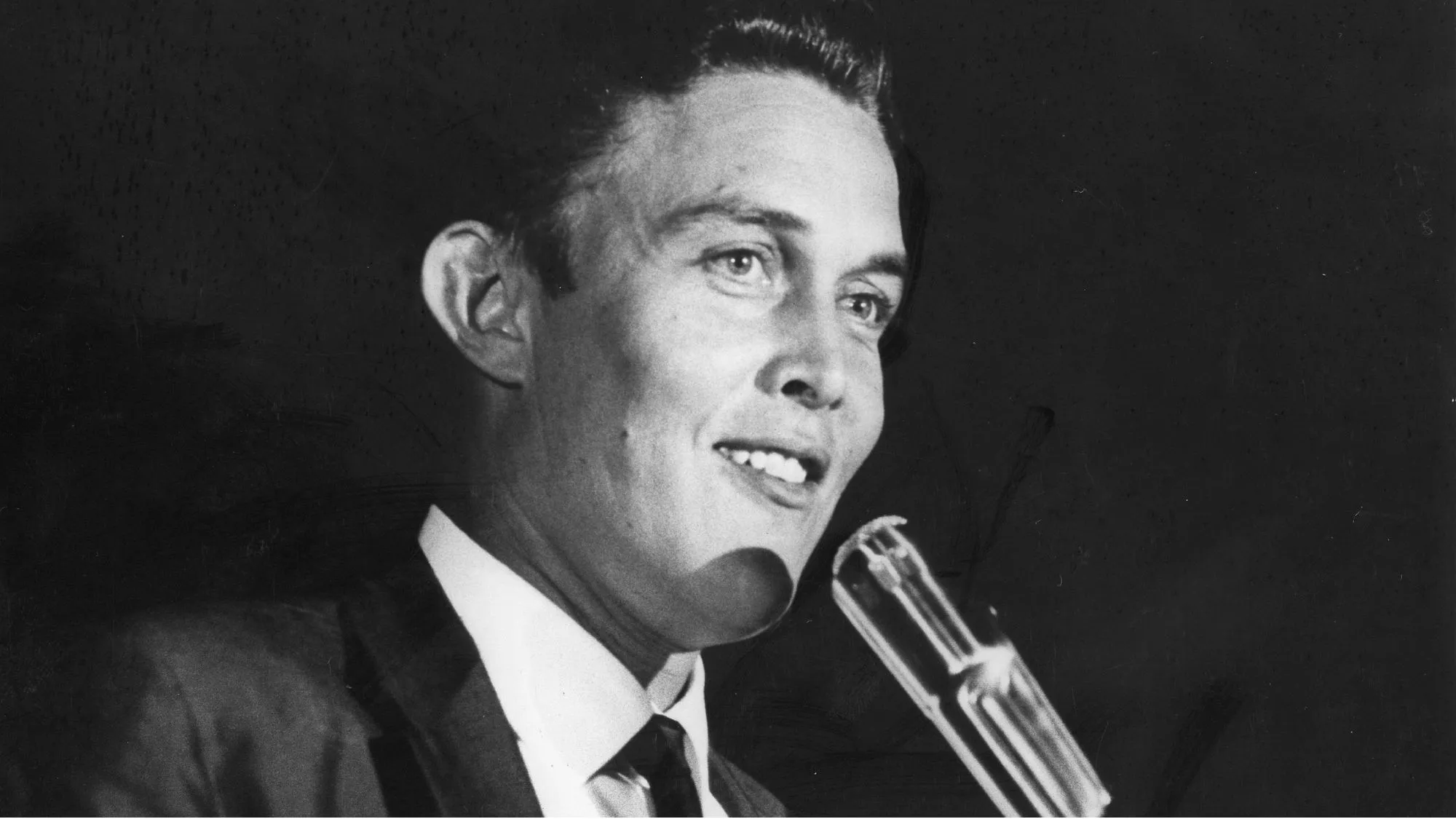
The trajectory of American celebrity in the 20th century rarely followed a linear path, but few figures navigated the transition from rural poverty to international stardom and industrial dominance as seamlessly as Jimmy Ray Dean. While contemporary audiences may primarily associate his name with a ubiquitous brand of breakfast sausage, Dean’s historical footprint extends far beyond the refrigerated aisle. Born on August 10, 1928, in the small community of Seth Ward, Texas, Dean emerged as a pivotal figure in the golden age of country music, a pioneer of television variety programming, and a shrewd entrepreneur who parlayed a "homespun" persona into a multimillion-dollar business empire. As the world reflects on his legacy, it becomes clear that Dean was not merely a singer or a businessman, but a cultural architect who bridged the gap between the traditional South and modern American commercialism.
Formative Years and the Influence of the Texas Panhandle
The story of Jimmy Dean begins in the harsh, wind-swept landscape of the Texas Panhandle during the Great Depression. Raised in Plainview, Texas, Dean’s childhood was defined by the rigors of agricultural life and the economic scarcity of the era. His father, George Otto Dean, was a singer and an inventor who eventually left the family, leaving Jimmy’s mother, Ruth Dean, to raise him in conditions of near-destitution. It was Ruth who provided the foundation for Jimmy’s future career, teaching him to play the piano despite their lack of resources. This early musical education was supplemented by Dean’s self-taught mastery of the guitar, harmonica, and accordion.
The resilience required to survive a ninth-grade dropout’s life in the 1940s shaped Dean’s professional work ethic. After a brief stint in irrigation farming, he joined the Merchant Marines at the age of 17, followed by an enlistment in the United States Air Force in 1946. It was during his military service, specifically while stationed at Bolling Air Force Base in Washington, D.C., that Dean’s musical aspirations transitioned from a hobby to a vocation. Filling in for a sick musician in a band called the Tennessee Haymakers, Dean’s charisma and instrumental versatility made him an instant fixture in the local D.C. music scene. By the time he received his honorable discharge in 1948, the blueprint for his entertainment career had been established.
The Rise of a Country Music Icon
The early 1950s marked Dean’s ascent within the competitive landscape of post-war country music. After forming Jimmy Dean and the Texas Wildcats, he secured a recording contract with the 4 Star label. In 1953, he achieved his first major commercial success with "Bumming Around," which reached number five on the country charts. This success facilitated his debut at the Grand Ole Opry, the pinnacle of country music achievement, in May of that same year.
However, Dean’s true strength lay in his ability to connect with audiences through the emerging medium of television. In 1954, he began hosting Town and Country Time on WMAL-TV in Washington, D.C. The program became a vital incubator for country music talent, providing early career exposure to future legends such as Patsy Cline and Roy Clark. Dean’s easygoing manner and authentic Texas drawl resonated with viewers, leading CBS to pick up The Jimmy Dean Show for a brief run in the late 1950s. Although the show was initially short-lived, it established Dean as a national personality, setting the stage for his most significant musical contribution.
Big Bad John and the Era of the Saga Song
In 1961, Jimmy Dean released a track that would redefine his career and the country music genre at large. "Big Bad John," a spoken-word narrative about a heroic, self-sacrificing miner, became a cultural phenomenon. Dean wrote the lyrics himself during a flight to Nashville, drawing inspiration from a fellow actor he had met who stood 6’6". The song’s production was notable for its minimalist arrangement, featuring the rhythmic sound of a hammer striking a steel plate, mimicking the environment of a coal mine.
The impact of "Big Bad John" was immediate and profound. It spent five weeks at the top of the Billboard Hot 100 pop chart and two weeks atop the country charts, selling over a million copies within months. In 1962, the song earned Dean a Grammy Award for Best Country & Western Recording. Beyond its commercial success, "Big Bad John" popularized the "saga song"—a subgenre of country music that focused on legendary characters and dramatic storytelling. This hit propelled Dean back into the television spotlight, leading to a successful primetime variety series on ABC, also titled The Jimmy Dean Show, which aired from 1963 to 1966.
A Television Pioneer and the Muppet Connection
During its three-year run on ABC, The Jimmy Dean Show became a cornerstone of American entertainment. Dean used the platform to showcase a wide array of musical talent, but perhaps his most enduring contribution to television history was his collaboration with a young puppeteer named Jim Henson. Dean hired Henson to provide a regular character for the show: Rowlf the Dog.
As the first Muppet to gain national popularity on a weekly series, Rowlf served as Dean’s comedic foil. The chemistry between the two was genuine, and Dean’s decision to give the puppet equal billing was a testament to his lack of ego and his instinct for what audiences enjoyed. Henson’s widow, Jane Henson, later remarked that Dean’s show was instrumental in proving that Muppets could appeal to adults as well as children, a realization that eventually led to the creation of The Muppet Show and Sesame Street.
Diversification into Acting and the James Bond Franchise
As his television variety show concluded, Dean sought to expand his repertoire into dramatic acting. He secured a recurring role as Josh Clements on the NBC series Daniel Boone, starring Fess Parker, which aired in the late 1960s. However, his most notable acting credit came in 1971, when he was cast in the seventh James Bond film, Diamonds Are Forever.
In the film, Dean portrayed Willard Whyte, a reclusive billionaire based loosely on the real-life figure of Howard Hughes. Acting alongside Sean Connery, Dean brought a sense of grounded, American grit to the high-stakes world of international espionage. While he did not pursue a full-time acting career, his performance in the Bond franchise demonstrated his versatility and solidified his status as a versatile entertainer capable of holding his own in major Hollywood productions.
The Birth of an Industrial Empire: Jimmy Dean Sausage
Despite his success in entertainment, Dean remained tethered to his agricultural roots. In 1969, observing a decline in the quality of commercial pork products, he partnered with his brother, Don Dean, to found the Jimmy Dean Sausage Company in their hometown of Plainview, Texas. The venture was born out of a desire to create a "pure pork" sausage that utilized high-quality cuts of meat rather than the scraps typically found in competitors’ products.
Dean’s transition from entertainer to meat mogul was bolstered by his personal involvement in the company’s marketing. He became the face and voice of the brand, appearing in a series of highly effective commercials that utilized his "Plainview persona" to build consumer trust. By the early 1980s, the company was the leading sausage brand in the United States. In 1984, in a move that secured his financial legacy, Dean sold the company to the Sara Lee Corporation for an estimated $80 million. Although he remained the brand’s spokesman for several years following the sale, his relationship with the corporate leadership eventually soured, leading to his eventual departure from the promotional side of the business in 2003.
Detailed Chronology of the Life of Jimmy Dean
- August 10, 1928: Born Jimmy Ray Dean in Seth Ward, Texas.
- 1944: Drops out of high school to work in irrigation farming.
- 1946–1948: Serves in the U.S. Air Force; begins musical performances in Washington, D.C.
- 1953: Releases "Bumming Around," his first top-ten country hit; debuts at the Grand Ole Opry.
- 1954–1955: Hosts Town and Country Time on WMAL-TV.
- 1957: The Jimmy Dean Show debuts on CBS as a summer replacement series.
- 1961: "Big Bad John" is released, becoming a massive crossover hit.
- 1962: Wins a Grammy Award for Best Country & Western Recording.
- 1963–1966: Hosts The Jimmy Dean Show on ABC, introducing Rowlf the Dog to national audiences.
- 1967–1970: Appears in the television series Daniel Boone.
- 1969: Launches the Jimmy Dean Sausage Company in Plainview, Texas.
- 1971: Stars as Willard Whyte in the James Bond film Diamonds Are Forever.
- 1984: Sells the Jimmy Dean Sausage Company to Sara Lee for $80 million.
- 2004: Publishes his autobiography, 30 Years of Sausage, 50 Years of Ham.
- June 13, 2010: Dies at the age of 81 at his home in Varina, Virginia.
- October 2010: Posthumously inducted into the Country Music Hall of Fame.
Analysis of Impact and Legacy
The legacy of Jimmy Dean is characterized by a unique blend of artistic merit and commercial acumen. In the realm of music, he was a bridge-builder. At a time when country music was often marginalized as regional entertainment, Dean’s crossover success with "Big Bad John" proved that rural narratives had universal appeal. His use of the "saga song" format influenced a generation of songwriters, emphasizing the importance of character-driven storytelling over simple melody.
In the business world, Dean’s success served as a precursor to the modern celebrity-brand model. Long before figures like George Foreman or Martha Stewart built empires around their personal personas, Dean understood that his public image—one of honesty, hard work, and southern charm—was his most valuable asset. The $80 million sale of his company in 1984 was not just a payout for a recipe, but a valuation of the trust he had built with the American public.
Upon his death in 2010, the Country Music Association and fans worldwide noted that Dean’s contributions had often been overshadowed by his business success. His posthumous induction into the Country Music Hall of Fame served as a long-overdue correction, acknowledging his role as a pioneer who helped bring country music into the television age.
Conclusion
Jimmy Dean’s life was a testament to the American ideal of the self-made man. From the dust of the Texas Panhandle to the lights of Broadway and the boardrooms of major corporations, he maintained a consistency of character that resonated across decades. He was a man of many titles: singer, actor, host, and entrepreneur. Yet, at his core, Dean was a communicator who understood the power of a good story, whether it was told through a microphone, a television screen, or a breakfast table. His influence remains embedded in the fabric of American pop culture, a reminder of an era where talent and tenacity could turn a ninth-grade dropout into a national treasure.