
The Broadway production of The Great Gatsby has officially concluded its interactive Old Sport Karaoke competition, a digital engagement initiative that invited the show’s global fanbase to step into the spotlight. Following a rigorous selection process that saw hundreds of submissions from musical theatre enthusiasts, the production team has named Jordyn Smith, Jordan Leah Embrack, and Dylynne Cosand as the grand prize winners. This initiative, which launched on August 25, served to bridge the gap between the high-octane spectacle of the stage and the personal connection fans maintain with the source material, F. Scott Fitzgerald’s seminal American novel.
The competition required participants to submit video performances of songs from the musical’s score, composed by Nathan Tysen and Jason Howland. Out of the hundreds of audition tapes received, seven finalists were initially chosen based on vocal precision, emotional resonance, and stage presence. The final three winners were selected for their exceptional ability to capture the jazz-age spirit and the tragic yearning central to the narrative. As part of their prize, the winners are set to receive premium tickets to a performance at The Broadway Theatre, along with an exclusive collection of show-themed merchandise.
A Chronology of Audience Engagement
The Old Sport Karaoke contest represents a broader strategy within the contemporary Broadway landscape to foster community through digital platforms. By leveraging the popularity of social media and the widespread accessibility of karaoke as a medium, the production team successfully maintained public interest during a competitive season.
The timeline of the initiative began in late August, when the production house announced the call for entries. Throughout September, the creative team reviewed the submissions, a process that underscored the show’s reach beyond the physical confines of the theatre district. The announcement of the winners in October marks the culmination of this campaign, coinciding with the show’s ongoing success at The Broadway Theatre, where tickets are currently being sold for performances extending through June 7, 2027. This long-term booking reflects the producers’ confidence in the show’s staying power and its ability to attract both domestic and international audiences.
The Artistic Landscape of The Great Gatsby
The success of the stage adaptation is rooted in a sophisticated creative team that has balanced the historical weight of the 1925 novel with the demands of modern musical theatre. Under the direction of Marc Bruni, who previously helmed the success of Beautiful: The Carole King Musical, the production has established a visual and sonic language that resonates with contemporary audiences.
The music and lyrics, crafted by the collaborative duo of Nathan Tysen and Jason Howland, have been central to the show’s critical reception. Their score integrates the syncopated rhythms of the 1920s with the melodic accessibility required for a Broadway hit. Kait Kerrigan’s book distills the complex, sprawling narrative of Fitzgerald’s original text into a tight, two-act structure that emphasizes the tragedy of Jay Gatsby’s pursuit of the elusive Daisy Buchanan.
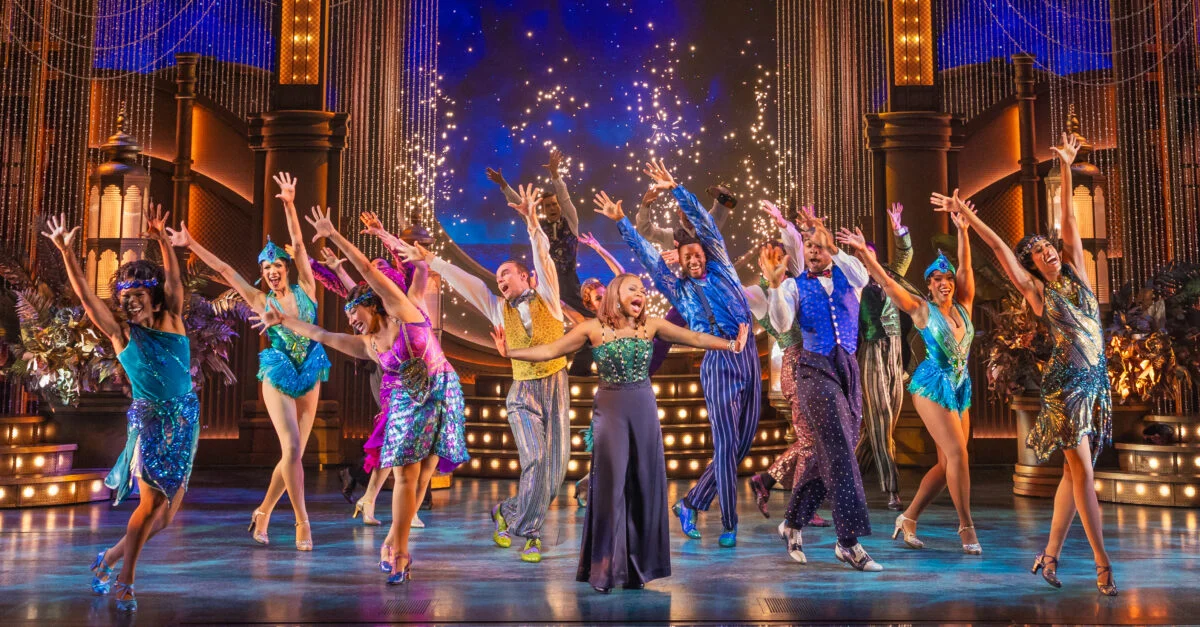
This production’s visual identity is largely defined by the work of Tony Award-winning designer Linda Cho, whose costumes earned the 2024 Tony Award for Best Costume Design of a Musical. Her work captures the opulence of the Roaring ’20s while serving the narrative’s darker undercurrents. Complementing this is the work of scenic and projection designer Paul Tate de Poo III, whose stagecraft allows for the rapid, cinematic shifts required to depict the transition between the glitz of Gatsby’s mansion and the desolate "Valley of Ashes."
The Current Company and Cast Dynamics
The Broadway company of The Great Gatsby remains a focal point for industry observers due to its high-profile cast. The production features China Anne McClain in her musical stage debut as the iconic Daisy Buchanan, a role that demands both a delicate, ethereal quality and a grounded, cynical edge. Opposite her, Ryan McCartan portrays the titular Jay Gatsby, capturing the character’s obsessive, performative nature.
The supporting cast is equally distinguished. Corbin Bleu, an Olivier nominee, brings a grounded authority to the role of narrator Nick Carraway, while Naturi Naughton-Lewis provides a sharp, sophisticated interpretation of the golfer Jordan Baker. The antagonistic presence of Tom Buchanan is handled by John Behlmann, and Linedy Genao portrays the tragic Myrtle Wilson. Rounding out the principal company are Charlie Pollock as George Wilson and Eric Anderson as the mysterious Meyer Wolfsheim.
The sheer scale of the ensemble and the inclusion of swings—such as Kurt Csolak, Joshua Dawson, and Morgan Harrison—highlights the complexity of the choreography designed by Dominique Kelley. The precision required to maintain the show’s intricate movement patterns is a testament to the rigorous standards set by the creative team.
Industry Implications and Marketing Analysis
The Old Sport Karaoke competition is not merely a promotional gimmick; it functions as a case study in modern theatrical marketing. By involving the audience in the artistic process, the producers of The Great Gatsby have tapped into the "prosumer" trend, where fans are encouraged to create content related to the brands they support. This engagement strategy creates a feedback loop that sustains the show’s presence on social media algorithms, potentially driving ticket sales among younger demographics who are accustomed to interactive content.
From an economic perspective, the production’s commitment to booking through 2027 is a significant indicator of its financial health. In an industry where shows often struggle to survive past the six-month mark, having an established, long-term performance window suggests that the production has secured a stable, recurring revenue stream. The use of digital competitions helps lower customer acquisition costs by generating organic, user-created content that serves as a testimonial for the show’s quality.
Furthermore, the involvement of executive producer Mark Shacket and the team at Foresight Theatrical points to a disciplined management approach. By balancing the creative, high-artistic demands of the show with aggressive, audience-focused marketing, the production has managed to secure a foothold in a crowded marketplace. The success of the karaoke event suggests that the show is successfully cultivating a "fandom," a critical asset for long-running Broadway productions that aim to transcend their initial opening-night buzz.
Technical Specifications and Production Quality
The technical infrastructure of The Great Gatsby is as integral to its success as the performances themselves. With sound design by Brian Ronan and lighting design by Cory Pattak, the production manages to fill the space of The Broadway Theatre with an immersive atmosphere. The music, produced by Grammy winner Billy Jay Stein for Strike Audio, utilizes a blend of traditional instrumentation and modern audio technology to ensure the score remains vibrant and punchy.
The orchestration, provided by Jason Howland and Kim Scharnberg, is designed to serve the music director, Daniel Edmonds, in delivering a tight, rhythmically driven performance every night. The presence of such a high level of talent in the technical and musical departments reflects the significant capital investment made into the production. The 2024 Tony Award for Best Costume Design serves as an official industry validation of the high production values, signaling to potential ticket buyers that the show is a premium, visually stunning experience.
Conclusion: The Legacy of a Classic
As the production continues its run, the success of the Old Sport Karaoke competition serves as a reminder of the enduring nature of the Gatsby mythos. Whether through a classic novel, a film adaptation, or a Broadway musical, the story of the American Dream—its promise and its ultimate, hollow cost—continues to captivate. By inviting fans to participate in this story, the producers of The Great Gatsby have ensured that the narrative remains relevant and accessible to new generations.
The winners—Jordyn Smith, Jordan Leah Embrack, and Dylynne Cosand—now join the long list of individuals who have contributed to the legacy of this production. As the show looks toward its future dates in 2027, the focus will undoubtedly remain on maintaining the high standard of performance that has defined its run thus far. For those interested in the material, the show’s continued presence on Broadway, coupled with its robust merchandise offerings and ongoing community engagement, confirms that the world of West Egg is alive and well in the heart of New York City.