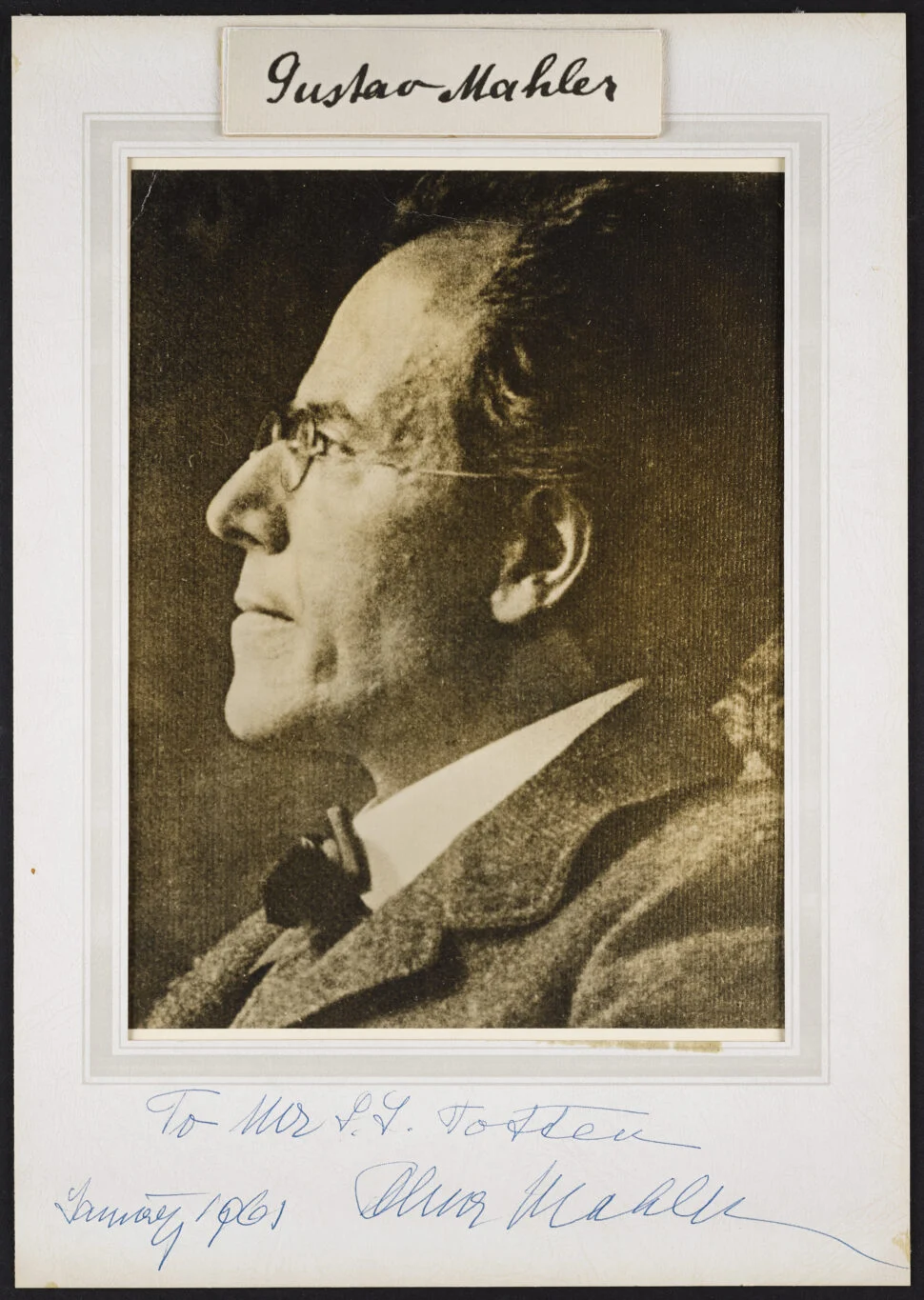
During his lifetime, Gustav Mahler occupied a dual existence that few in the history of Western classical music could match. He was simultaneously celebrated as a visionary composer of massive, life-altering symphonies and a notoriously exacting conductor who pushed the opera houses and orchestras of Vienna and New York to the brink of perfection. His technical mastery, which allowed him to conceive music on a cosmic scale while executing it with microscopic precision, cemented his reputation as a titan of the late Romantic era. More than a century after his death, his influence remains undiminished, serving as a foundational pillar for modern conductors. Among his most prominent contemporary champions is Yannick Nézet-Séguin, who has announced an ambitious project to lead a complete cycle of Mahler’s nine finished symphonies across the 2026–2027 season at Carnegie Hall, utilizing the distinct sonic profiles of The Met Orchestra, The Philadelphia Orchestra, and the Vienna Philharmonic.
This monumental series represents a rare opportunity for audiences to witness the evolution of Mahler’s symphonic language. By distributing the nine works among three of the world’s most prestigious ensembles, the residency aims to explore the shifting textures and cultural resonances inherent in Mahler’s orchestration. As Nézet-Séguin notes, the juxtaposition of these three distinct orchestral sounds—the operatic intensity of The Met Orchestra, the storied warmth of the Vienna Philharmonic, and the virtuosic versatility of The Philadelphia Orchestra—is expected to provide a unique analytical lens through which to experience the composer’s trajectory.
A Chronology of a Cosmic Vision
Mahler’s symphonic output is not merely a collection of movements; it is a diaristic account of the human condition. His works reflect a period of transition, bridging the lush, emotional intensity of the 19th-century Romantic tradition with the fractured, often jarring modernism of the early 20th century.
The composer’s early career was defined by his role as an itinerant conductor, a position that relegated his own creative output to the quiet of summer retreats. It was in these "composing huts"—often located in the remote landscapes of the Austrian Alps—that he constructed his sonic worlds. The First Symphony, premiered in 1889, signaled a departure from the conservative norms of the era, incorporating folk-like melodies, such as the famous "Frère Jacques" funeral march, into a formal symphonic structure. By the time he completed his final finished work, the Ninth Symphony (1909–1910), the composer had traveled a vast distance, moving from the pastoral, bird-song-filled optimism of his early years to a landscape marked by profound existential inquiry and the looming shadow of mortality.
Technical Ambition and the "Symphony of a Thousand"
Mahler’s commitment to the symphonic form was absolute. He famously told his confidante Natalie Bauer-Lechner, "Creating a symphony means to construct a world with all manner of techniques available." This was not hyperbole. His Third Symphony, for instance, is a sprawling, six-movement work that typically requires over 90 minutes for a complete performance, demanding massive orchestral forces, a women’s choir, and a boys’ choir.
Perhaps the most extreme iteration of this philosophy is the Eighth Symphony, completed in 1906. Known as the "Symphony of a Thousand," the work requires a massive apparatus: two mixed choruses, a boys’ choir, eight vocal soloists, and a greatly expanded orchestra. While the moniker was a marketing invention of the 1910 Munich premiere—one Mahler personally detested—it accurately reflects the sheer logistical scale required to realize his vision. The work stands as a testament to his belief that a symphony should be a totalizing experience, capable of incorporating the sacred, the secular, the choral, and the symphonic into a singular, cohesive narrative.
Nature as a Structural and Spiritual Foundation
For Mahler, the natural world was not merely a backdrop for his music; it was a structural necessity. He spoke often of "nature’s polyphony," a concept that sought to capture the complexity of the outdoors—from the wind and the storm to the delicate sounds of woodland life—within the orchestral texture.
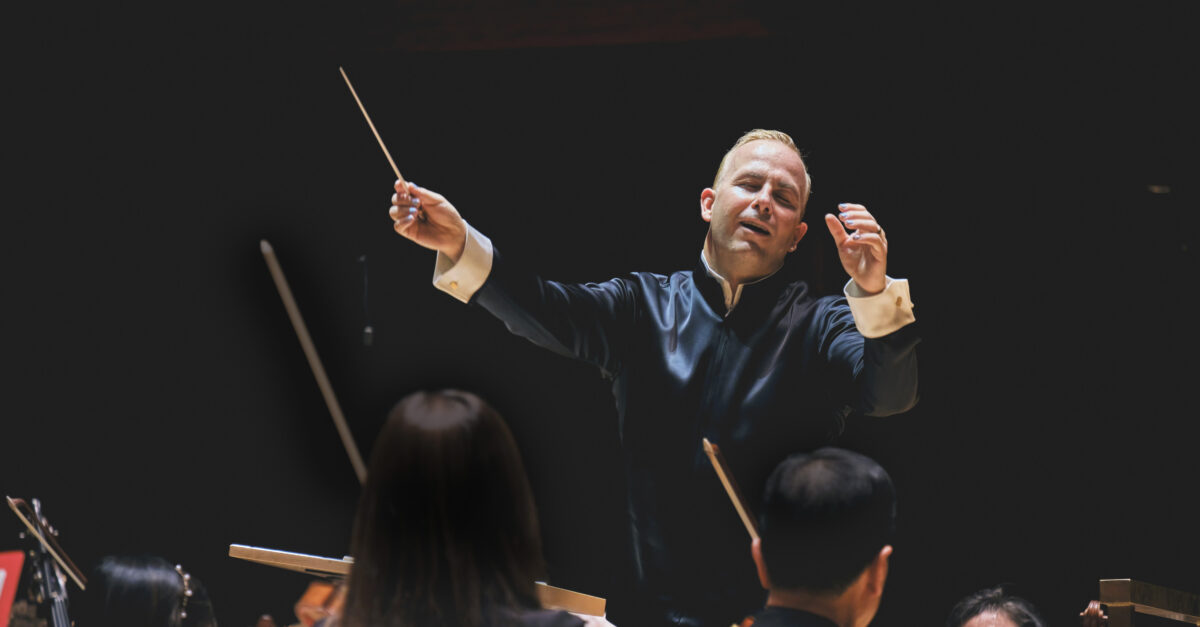
This interest in nature was deeply intertwined with his spirituality. In his Second Symphony, the "Resurrection," he moved beyond the terrestrial to address the metaphysical, using nature as a conduit to explore the afterlife. He argued that the divine was not merely an abstract concept but something present in every element of the natural world, and he believed that a true work of art must reflect a trace of this infinity. This belief system was particularly poignant given his personal history; born into a Jewish family in the Austro-Hungarian Empire, Mahler’s life was marked by the shifting political and religious tensions of the era, including his 1897 conversion to Catholicism, a move widely viewed by historians as a pragmatic step to secure his directorship of the Vienna Court Opera.
The Modern Resonance of a Master
Nézet-Séguin’s upcoming residency at Carnegie Hall serves as a reminder of why Mahler continues to hold such a powerful grip on the contemporary imagination. The conductor emphasizes that Mahler’s music, while complex in its construction, remains deeply human in its appeal. It captures the "vulnerable place" of an eternal child observing a vast and often cruel world.
The structural innovations of his symphonies—the "jarring juxtapositions" of high and low art, the sudden shifts from morbid irony to child-like innocence—anticipated the surrealist movements that would follow in the visual arts and literature. His Fourth Symphony, for example, moves from the earthy humor of sleigh-bell motifs in the first movement to the haunting, macabre sounds of an "out-of-tune" violin, culminating in a soprano’s vision of heaven. These shifts are now understood as essential to his narrative strategy, allowing him to portray the contradictions of human existence.
Historical Context and Later Years
The later years of Mahler’s life were defined by both personal tragedy and professional upheaval. Following a heart diagnosis in 1907, his music became increasingly introspective. His move to the United States in 1908 to conduct at the Metropolitan Opera and later the New York Philharmonic reflected the decline of his health and the fading of his welcome in Vienna.
Robert Seethaler’s 2020 novella, The Last Movement, captures the essence of this final chapter, depicting a man who, while navigating the bustling chaos of New York, remained preoccupied with the "meaninglessness of life" and the "brief exhalation" of existence. This awareness of mortality is precisely what many listeners find so relatable today. In an age of rapid change and global uncertainty, Mahler’s refusal to simplify or ignore the contradictions of life resonates deeply. As Nézet-Séguin notes, "Nobody is certain of anything. As humans, we are full of contradictions. And so as we listen to his music, we feel that we’re understood by someone who doesn’t try to pretend that there is only one way to think."
Future Implications and Cultural Impact
The upcoming Carnegie Hall cycle is not merely a concert series; it is a significant cultural event that will likely shape the scholarly and critical discourse around Mahler for the next decade. By engaging three of the most influential orchestras in the world, the project allows for a comparative analysis of interpretation that is rarely afforded to a single conductor in a single venue.
The impact of such a comprehensive retrospective extends beyond the music itself. It reinforces the role of the symphonic tradition in the 21st century, illustrating that these massive, century-old works still possess the capacity to speak to modern anxieties. Furthermore, it highlights the importance of institutional support in preserving and interpreting the canon. Carnegie Hall’s role as the host for such an expansive project reaffirms its position as a global epicenter for classical performance.
As preparations for the 2026–2027 season begin, the music community anticipates a renewed focus on Mahler’s thematic density. The project will likely encourage further exploration of his influence on subsequent generations, particularly in the realm of film scoring, where the dramatic, narrative-driven nature of his symphonies has found a new home. Ultimately, the cycle will stand as a testament to the enduring power of a composer who dared to "construct a world" and, in doing so, created a legacy that remains as vast and mysterious as the nature he sought to capture.