
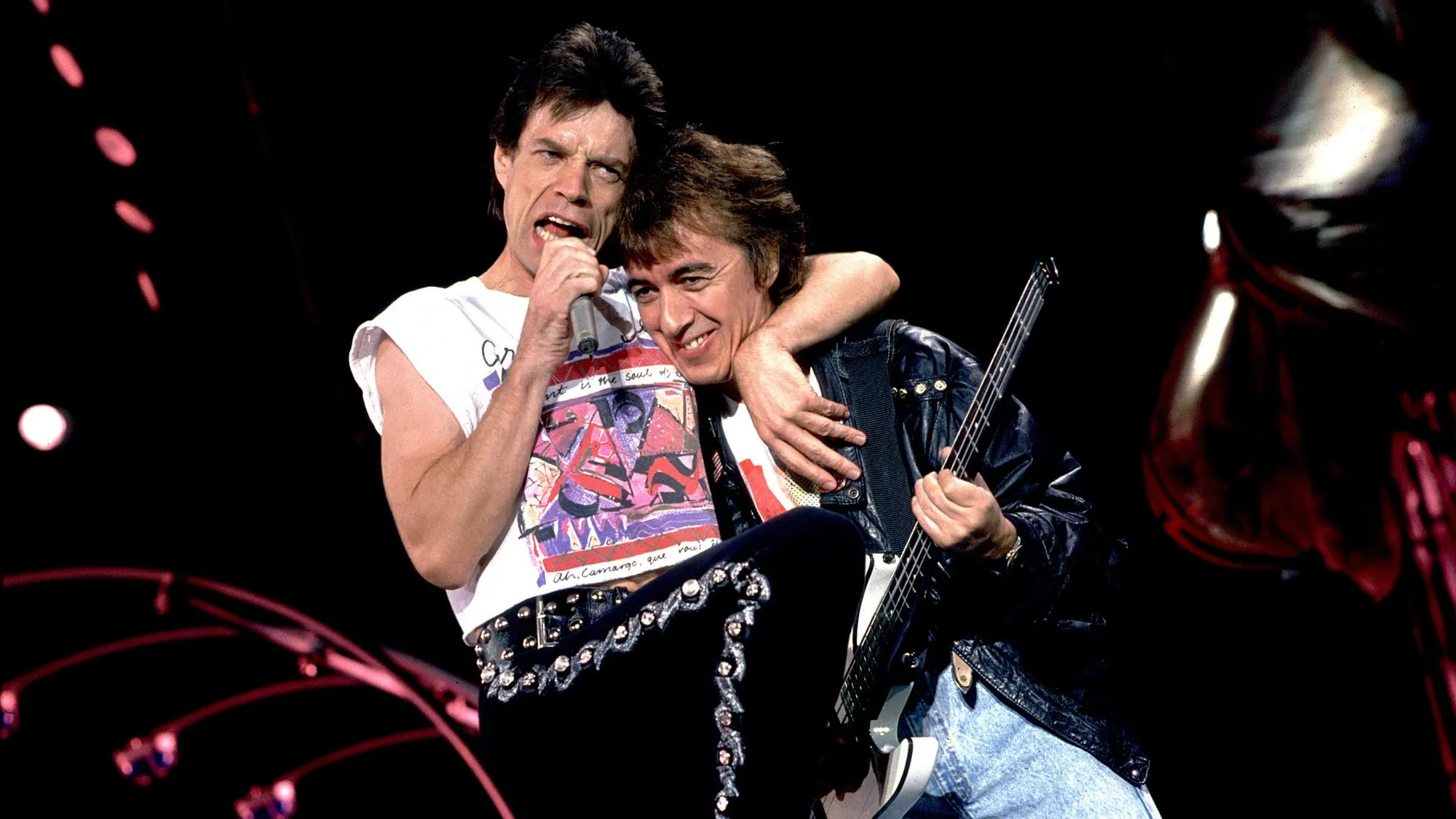
Music history is often written about the vocalists who command the stage and the lead guitarists who capture the spotlight. Yet, the foundational architecture of the greatest rock and roll bands relies heavily on the steady, unglamorous precision of the rhythm section. Few musicians embody this truth more profoundly than William George Perks, globally celebrated as Bill Wyman. Born on October 24, 1936, in Lewisham, South London, Wyman spent more than three decades as the quiet, unflappable bassist for The Rolling Stones. As he marks his milestone 90th birthday, a retrospective look at his life reveals a journey that stretches far beyond the stadium tours of the world’s greatest rock and roll band, encompassing wartime resilience, accidental instrumentation, pioneering solo endeavors, and a prolific post-Stones career.
Early Life and Wartime Resilience in London
Long before he was laying down the basslines for tracks that would define generations of popular music, Wyman’s formative years were shaped by the stark realities of mid-century Britain. One of six children born to a bricklayer father and a homemaker mother, his early childhood in wartime London was underscored by the screech of air-raid sirens and the constant threat of aerial bombardment. Living under the roof of a stern, military-minded father meant that emotional warmth and physical affection were rarely expressed.
Despite these austere conditions, Wyman has frequently characterized his youth as fundamentally happy, largely thanks to the profound influence of his maternal grandmother, Florence French. It was through French that Wyman was first introduced to the world of music. She not only provided his foundational piano lessons but also encouraged him to join the local church choir, an experience he credits with igniting his lifelong artistic trajectory. In interviews reflecting on his long life, Wyman has consistently emphasized that his grandmother’s guidance planted the seeds for everything he would eventually achieve in the entertainment industry.
Military Service and the Accidental Bassist
Following his education, Wyman’s father secured him a position as a corporate bookkeeper, a stable career path that required him to leave school prematurely. However, his civilian routine was interrupted in January 1955 when he was conscripted for two years of national service in the Royal Air Force (RAF). Demonstrating a pragmatic approach to his duties, Wyman opted to sign up for an additional year of military service, a decision that eventually stationed him at the Oldenburg Air Force Base in West Germany.
This deployment proved to be a pivotal cultural awakening. Stationed abroad, Wyman was exposed to American rock and roll music through broadcasts on the American Armed Forces Network, a sound that was only beginning to filter across the Atlantic. Captivated by the burgeoning genre, he purchased his first guitar in 1956. By the following year, he had co-founded a skiffle group alongside Casey Jones—a musician who would later lead Casey Jones and the Engineers, a short-lived outfit that briefly featured a young Eric Clapton.
Upon completing his military service, Wyman returned to London and gravitated toward the local rhythm and blues circuit. He initially played guitar for a group called the Cliftons, but a logistical dilemma within the band permanently altered his musical destiny. The Cliftons found themselves burdened with three guitarists and a complete absence of a bass player. Recognizing that the band’s viability depended on filling the vacancy, Wyman volunteered for the role. Because he did not yet own a bass guitar, he engineered his own makeshift instrument, marking the beginning of his mastery of the low-end frequencies that would soon anchor one of rock’s most formidable groups.
The Rolling Stones and the Foundation of Eleven Number-One Hits
By mid-1962, Wyman’s reputation as a reliable and technically proficient bassist had grown. He made the fateful decision to leave the Cliftons and auditioned for an up-and-coming rhythm and blues outfit known as The Rolling Stones, stepping in to replace departing bassist Dick Taylor. At 25 years old, Wyman was significantly older than his new bandmates—Mick Jagger, Keith Richards, Brian Jones, and Charlie Watts—and he brought a distinct maturity and working-class discipline to the group.
As The Rolling Stones evolved from a gritty London club act into a global stadium phenomenon, Wyman remained the understated anchor of the band’s rhythm section. Alongside drummer Charlie Watts, he provided the rhythmic backbone for the Stones’ most enduring compositions, including eleven number-one chart hits that solidified the band’s permanent place in music history. While his bandmates frequently courted tabloid headlines for their hedonistic lifestyles and rock-and-roll excess, Wyman maintained a starkly different ethos.
Reflecting on those decades of relentless touring and recording, Wyman often noted that he and Watts deliberately abstained from the chaos surrounding the group. Bound by a strong sense of personal responsibility and the practical realities of adulthood, Wyman approached his role in the world’s biggest rock band with the steady professionalism of a career craftsman.
Pioneering Solo Work and Side Projects
Wyman’s creative ambitions extended far beyond his duties as a sideman in The Rolling Stones. In 1974, he achieved a significant milestone by becoming the very first member of the band to release a solo studio album. Titled Monkey Grip, the LP managed a respectable showing on the charts, reaching number 39 on the UK Albums Chart and successfully cracking the U.S. Billboard 200.
He followed this effort two years later with his second solo record, Stone Alone. Wyman’s solo career also yielded unexpected chart success in 1981 with the release of the dance-oriented single "(Si Si) Je Suis un Rock Star," a track he had originally composed for British singer Ian Dury. The single became a top-20 hit across Europe, demonstrating Wyman’s diverse compositional range outside the confines of the Stones’ signature blues-rock template.
Furthermore, Wyman continued to explore collaborative side projects throughout his tenure with the main band. Among these was Willie and the Poor Boys, a short-lived cover band he formed that featured fellow Rolling Stone Charlie Watts alongside legendary Led Zeppelin guitarist Jimmy Page.
Departure from The Rolling Stones and Later Ventures
By the early 1990s, internal tensions, financial mismanagement, and fatigue had taken a heavy toll on Wyman’s enthusiasm for The Rolling Stones. In January 1993, he officially announced his departure from the group, putting months of industry speculation to rest and becoming the first original member to willingly leave the band.
In retrospective interviews, Wyman expressed that his exit was a decision long overdue. He candidly admitted that he should have walked away during the creative and personal friction of the 1980s. He noted that despite decades of multi-platinum success, financial disorganization during periods of extended inactivity had left him facing a significant bank overdraft by the end of the 1989–1990 Steel Wheels/Urban Jungle tour, underscoring the stark economic realities often hidden behind the facade of global rock stardom.
Rather than retiring from music, Wyman immediately channeled his energy into new projects. In 1997, he formed Bill Wyman’s Rhythm Kings, a blues-rock supergroup featuring renowned guitarists Peter Frampton and Albert Lee, which allowed him to return to his foundational musical roots. He has also maintained a prolific career as an author, archaeologist, and photographer, publishing multiple acclaimed books detailing his years with The Rolling Stones as well as comprehensive volumes on blues history.
Though he permanently stepped away from full-time membership in 1993, Wyman has occasionally reconnected with his former bandmates. Most notably, he contributed bass to the track "Live By the Sword" on The Rolling Stones’ critically acclaimed 2023 studio album, Hackney Diamonds, proving that the musical chemistry forged more than six decades ago remains intact.
Implications and Broader Impact on Rock History
Bill Wyman’s legacy extends far beyond the sales figures and chart records of The Rolling Stones. In an era where rock bassists were frequently overshadowed by virtuosic guitar solos and theatrical frontman antics, Wyman demonstrated the profound power of restraint, tone, and unwavering timing. His transition from an accidental bassist in a London club band to the rhythmic anchor of a cultural institution highlights a career built on adaptability, quiet dedication, and a steadfast love for the blues.
As Bill Wyman celebrates his 90th birthday and continues to release new material—such as his ninth solo album, Drive My Car, issued in August 2024—the music world honors a rare figure who helped write the blueprint of modern rock and roll, all while keeping time from the shadows.