
Punk rock has long prided itself on being a space for the marginalized, a countercultural refuge where societal norms are aggressively challenged and discarded. Yet, even within countercultural spaces, traditional power dynamics and safety concerns persist, particularly regarding the physical security of women at live music events. This ongoing tension came to a head during a recent Sex Pistols concert at the Ogden Theatre in Denver, Colorado, when current frontman Frank Carter halted the performance to confront a male concertgoer who had allegedly infiltrated a designated women-only mosh pit. The incident, captured on multiple mobile devices and rapidly disseminated across social media platforms such as TikTok and Instagram, has ignited a wider cultural conversation regarding safety, inclusivity, and accountability within the contemporary punk rock scene.
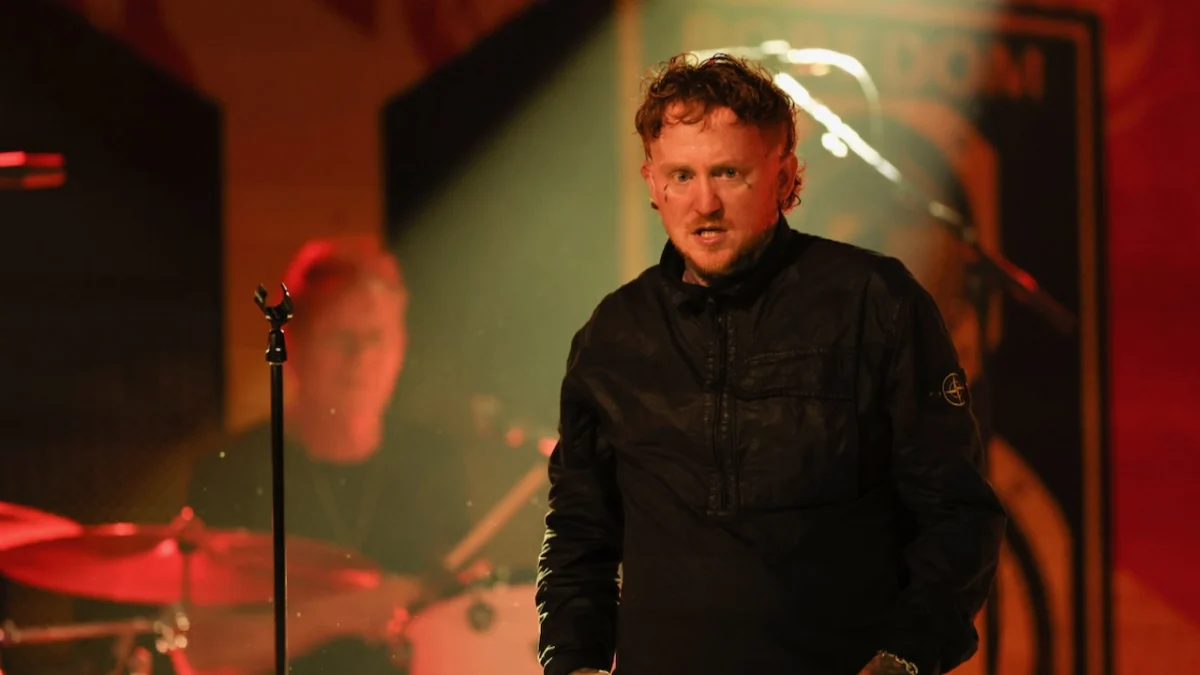
The confrontation occurred on Friday evening as the legendary punk outfit continued its extensive North American tour. The tour itself is a landmark cultural event, organized to commemorate the 50th anniversary of the band’s seminal 1977 debut album, Never Mind the Bollocks, Here’s the Sex Pistols. For this celebratory trek, the band has enlisted Frank Carter—known previously for his work with Gallows, Frank Carter & The Rattlesnakes, and Pure Love—to handle lead vocal duties. Throughout the North American dates, Carter has implemented a deliberate and controversial policy during live performances: carving out a dedicated, women-only section within the audience specifically designated for a mosh pit. According to the band and its frontman, this initiative is designed to create a secure, welcoming environment where female and vulnerable fans can participate in the high-energy rituals of a punk rock show without facing the physical intimidation, harassment, or safety hazards frequently reported in conventional mosh pits.
According to video footage shared widely online, the tension erupted mid-set when Carter noticed a male attendee inside the female-only enclosure. Visibly angered by the breach of safety protocol, Carter immediately stopped the music to address the situation directly from the stage, calling out the individual in front of a packed house at the Ogden Theatre.
"Every time, there’s always a fucking man that tells me, ‘[Women] can do this all the fucking time.’ Like, they can’t. They fucking can’t," Carter shouted into the microphone, his voice echoing through the historic venue. "Do you know why? Because they walk in the mosh pit and they get a fucking elbow to the head by a fucking idiot!"
The confrontation escalated as the unidentified male audience member reportedly shook his head in disagreement with the frontman’s assessment. Reacting to the gesture, Carter intensified his rebuke, challenging the man’s perspective and entitlement.
"You’re shaking your head like you’re a fucking woman? Are you fucking stupid? It’s not your lived experience, so just shut the fuck up! … Do you know what, instead of crouching, just fucking leave, bro!" Carter continued. He further questioned the man’s inability to grasp the concept of designated safe spaces, pointing out the systemic barriers women face in traditional concert environments. "How is it so difficult for you to see space made for women at a Sex Pistols gig? Did you decide? No! They can’t fucking do this whenever. Ask any one of them if they feel safe in every mosh pit! Roll your fucking eyes at me—you fucking did this. You did this!"
As the verbal dressing-down reached its climax, Carter instructed venue security to escort the man off the premises entirely. As the individual was being removed, Carter delivered a final warning, telling him he could "see me outside after the gig." Security swiftly complied, removing the patron from the venue as the crowd reacted with a mixture of cheers and murmurs.
Following the conclusion of the concert, the incident quickly transitioned from a localized live music altercation to a viral digital debate. On Saturday, Frank Carter took to his official Instagram account to address the confrontation more formally through a series of detailed Instagram Stories, aiming to clarify the intent behind the women-only mosh pits and denounce critics of the policy.
"If you are a man who gets offended by a band making room for a female-only moshpit, then you are part of the problem," Carter wrote in his statement. He urged detractors to stay home, "read a book by bell hooks, [and] come back when kindness, compassion, and empathy have landed with you."
Expanding on the criteria and ethos of the initiative, Carter adopted an uncompromising stance against bigotry and harassment. "Incels, homophobes, misogynists, racists, fascists not welcome. Also, this isn’t up for debate. I don’t care for your pedantry. If it isn’t your lived experience, don’t fucking speak on it. If you are offended by being told something isn’t for you, then imagine how it feels to be a woman in the current climate."
Crucially, Carter also addressed the scope of the designated area, explicitly confirming that the initiative is designed to be fully inclusive. "When I say a ladies-only moshpit, I of course mean a trans-inclusionary space," he clarified. "The space is for people who don’t usually feel safe… to dance and have fun without the worry of physical, sexual, or psychological violence being used against them while they are vulnerable. Do not let them divide us."
In a surprising postscript to the digital fallout, Carter also shared a private message he received via social media from the father of the concertgoer who had been ejected from the Denver show. According to the screenshot provided by the frontman, the father offered an unreserved apology for his son’s actions, writing, "my idiotic son," and noting that the behavior "wasn’t how he was raised, wasn’t how he was taught."
The implementation of gender-segregated or specialized mosh pits at rock and metal concerts has emerged as an increasingly discussed topic within the live music industry over the past several years. While traditionalists argue that punk and metal shows have historically operated under a code of universal participation and chaotic equality, advocates for safety-oriented measures point to persistent empirical realities regarding concert safety.
Studies and surveys conducted by various music advocacy groups and safety organizations over the last decade consistently indicate that female concertgoers experience significantly higher rates of unwanted physical contact, sexual harassment, and intimidation in standard, male-dominated mosh pits compared to their male counterparts. For many women, the physical vulnerability inherent in high-contact dancing is exacerbated by structural imbalances in crowd demographics and a historical lack of institutional enforcement against aggressive or predatory behavior by fellow attendees.
By establishing women-only or safe-space zones, artists such as Frank Carter and the Sex Pistols are attempting to actively counteract these dynamics. Proponents of these policies argue that they do not restrict women from participating in the wider concert experience, but rather provide an equitable alternative that guarantees physical safety for demographic groups that have historically been marginalized or endangered within aggressive subcultures.
Conversely, critics of such policies often frame them as antithetical to the egalitarian spirit of punk rock, arguing that rules and physical divisions run contrary to the genre’s ethos of radical inclusion and self-policing crowd mechanics. However, defenders of Carter’s actions contend that traditional crowd self-policing has frequently failed to protect vulnerable individuals, necessitating direct intervention from performers and venue operators.
The incident in Denver highlights the evolving social contract between artists and audiences in the modern era of live entertainment. As legacy acts tour to commemorate their historical contributions to music, they are simultaneously navigating a contemporary cultural landscape that places a much higher premium on inclusivity, consent, and psychological safety than the counterculture of the 1970s often did.
Frank Carter’s public doubling-down on the policy—supported by references to intersectional feminist literature and explicit protections for transgender individuals—signals that alternative and punk artists are increasingly willing to alienate disruptive or entitled audience members in order to protect the broader community. Whether initiatives like the women-only mosh pit will become a permanent fixture of modern rock touring remains to be seen, but the Denver incident demonstrates that the debate over safety, space, and respect in live music is far from settled.