
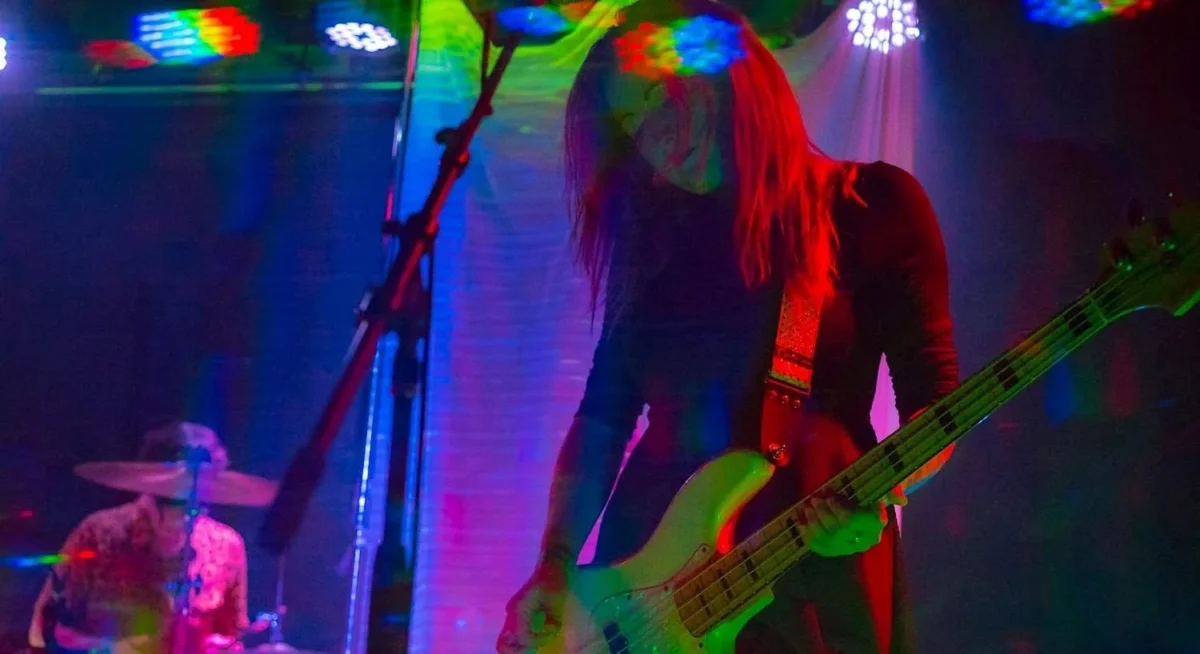
In January 2025, bassist Nicole Fiorentino found herself at a professional crossroads that would define the next two years of her career. While settling into a new home in Portland, Oregon, she received an unexpected direct message from Shirley Manson, the iconic frontwoman of the alternative rock powerhouse Garbage. The correspondence, which quickly transitioned to an official inquiry from legendary producer and drummer Butch Vig, invited Fiorentino to anchor the low end for the band’s upcoming global tour. For a musician already seasoned by a high-profile four-year tenure with The Smashing Pumpkins, the offer represented both a significant professional endorsement and a daunting challenge: stepping into the rhythm section of a band whose sound is defined by precise, texture-heavy instrumentation.
This unexpected turn of events occurred at the same time Fiorentino was navigating the final stages of a meticulous, two-year recording cycle with her own project, the shoegaze-influenced band Bizou. Balancing the demands of an international stadium-touring act with the creative labor of producing an independent record, Fiorentino has emerged as a singular figure in modern alternative music—a bridge between the legacy of 1990s rock and the evolving, ethereal textures of the current underground scene.

A Chronology of Artistic Transition
The transition into the Garbage fold required rapid adaptation. Following the initial outreach in early 2025, Fiorentino immediately began the process of "woodshedding"—an industry term for intensive, focused practice—to internalize the complex, multi-layered catalog of the band. By the time the tour commenced, she had successfully integrated into the lineup, providing the propulsive foundation required for Garbage’s signature industrial-pop aesthetic. The tour, which initially focused on early 2025 dates, proved so successful that it extended well into 2026, encompassing extensive runs through Europe and the United Kingdom.
Simultaneously, Fiorentino maintained a rigorous creative schedule with Bizou. The band, which includes collaborators Josiah Mazzaschi (known for his work with Light FM and Child Seat), Marisa Prietto (Wax Idols, Glaare), and Nicki Nevlin (Light FM), had been operating under a remote collaborative model. This shift was necessitated by both geography and Fiorentino’s touring commitments. The resulting project, the EP titled Widow, serves as the long-awaited successor to the band’s 2021 full-length release, Tragic Lover.
The Evolution of the Bizou Sound
The release of Widow marks a distinct departure from the band’s previous output. While Tragic Lover established the group’s reputation for lush, atmospheric soundscapes, Widow pushes the ensemble into more experimental and industrial territory. Fiorentino notes that the writing process for the EP was fundamentally different from previous efforts. Because the band members were physically separated by tour schedules and relocations, the songwriting became an iterative, digital exchange.

"We operate as a long-distance project now," Fiorentino explains. "Josiah, Marisa, and Nicki send me song ideas, and I work on the bass parts in my own space. We send files back and forth until the arrangement feels cohesive."
This methodology, while challenging, allowed for a layering process that contributes to the "shoegaze-meets-industrial" quality of the new tracks. The bass, which Fiorentino describes as the "icing on the cake," serves to ground the spacey synths and melodic guitar work that define the genre. The track "Deep Rem," in particular, exemplifies this, featuring a prominent, driving bass riff that emerged from a rough demo consisting only of guitar and scratch vocal tracks.
Technical Execution and Gear Selection
Fiorentino’s approach to bass tone is notably different depending on the setting. In the studio for Widow, she relied on a minimalist, high-fidelity approach, tracking primarily through a direct input (DI) signal with her Reverend bass guitars. She credits the production work of Josiah Mazzaschi for the final tonal quality, noting that while she has utilized a SansAmp DI in the past, the Widow sessions focused on clean, signal-pure tracking that allowed the production team to manipulate the space around the bass.

Conversely, her live setup for Garbage is famously stripped-back. While her work with Bizou incorporates a Line 6 M13 Stompbox for modulation, chorus, and reverb effects to achieve a textured, ambient sound, the Garbage live rig relies on the raw power of Mesa Boogie and Ampeg amplification. This shift highlights her adaptability; she is as comfortable in the heavily processed, ethereal world of shoegaze as she is in the punchy, direct-to-amp world of arena rock.
The Cultural Impact of 90s Representation
The significance of Fiorentino’s role in Garbage extends beyond the technical requirements of the music. For Fiorentino, performing with Shirley Manson is an act of historical continuity. Having grown up in an era where female representation in rock music was formative, she views her position not merely as a hired hand, but as part of a lineage of female empowerment in the industry.
"Shirley has always been an inspiration, not just as a vocalist, but as an activist and a feminist," Fiorentino states. "The path I’ve chosen for my life was shaped by seeing women in rock in the 90s. To stand on stage with her and play those iconic parts is a constant reminder of why I started playing in the first place."

This sentiment was highlighted during a particularly poignant moment on tour in South America, when Garbage shared a stage with L7. The experience of watching Jennifer Finch—another foundational female bassist—perform "Pretend We’re Dead," followed by an impromptu invitation to join the stage for a performance, remains a career highlight for Fiorentino. It underscores the interconnectedness of the alternative rock community and the importance of mentorship and shared experience among musicians of different generations.
Strategic Implications and Future Outlook
The success of Widow and the sustained demand for Fiorentino’s presence in the Garbage touring lineup signal a robust period for her career. The industry shift toward remote collaboration, which allowed Bizou to complete their EP despite the members being spread across different cities, reflects a broader trend in independent music production. By utilizing cloud-based file sharing and remote recording, bands are finding ways to maintain creative momentum without sacrificing the quality of their output.
For Garbage, the inclusion of a versatile, technically proficient bassist who understands both the legacy and the evolving nature of their sound has clearly been a strategic success. The band’s ability to sell out venues across Europe during a record-breaking heatwave in 2026 indicates that their audience remains as engaged as ever. The fact that younger fans are familiar with the band’s most recent material suggests a successful multi-generational crossover, likely bolstered by the band’s commitment to high-energy live performances.

As Fiorentino prepares for the Widow release show at Golddiggers in Los Angeles on November 3rd—the first time the band has played live together in over three years—she remains focused on the dual nature of her work. She continues to balance the high-stakes, high-visibility world of a global arena tour with the intimate, experimental creative freedom of her independent projects.
The implications for the broader music industry are clear: the modern professional musician is increasingly defined by their ability to oscillate between disparate musical identities. Fiorentino’s ability to anchor a legacy act like Garbage while simultaneously contributing to the evolution of the shoegaze genre via Bizou positions her as a case study in contemporary musical versatility. Whether through the minimalist, direct-to-amp delivery of a stadium hit or the modulated, atmospheric layers of an experimental EP, her work continues to resonate as a testament to the enduring power of the bass guitar in modern music.