
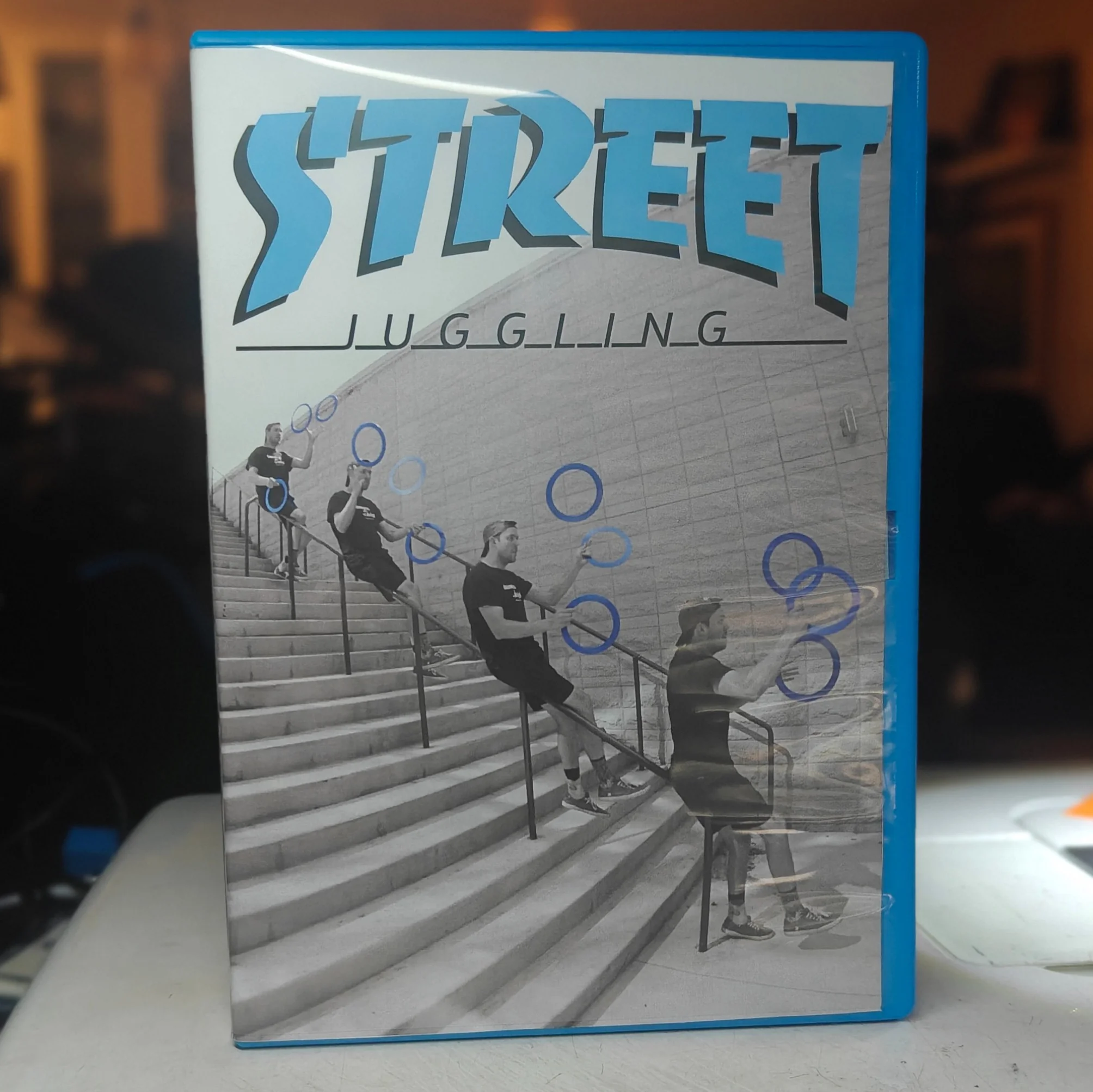
Street juggling has long existed at the fascinating intersection of performance art, endurance sport, and urban exploration. Rather than taking place within the controlled, predictable environment of a traditional theater stage, street juggling thrusts performers into the chaotic, unscripted reality of the city. Sidewalks, public plazas, architectural landmarks, and bustling commercial strips transform into spontaneous stages. It is within this dynamic framework that filmmaker and juggler Chris Jost, operating through Alchemy Juggling, developed his latest cinematic and physical project, simply titled Street Juggling.
Following its official theatrical premiere in Boulder, Colorado, on October 6, 2026, and the subsequent release of a limited physical DVD run, the project has garnered significant attention within the global juggling community. Blending high-level technical manipulation with raw, unvarnished environmental interaction, Street Juggling serves as both a contemporary showcase of modern talent and a reverent tribute to the pioneers who shaped the discipline.
Main Facts of the Release
Street Juggling captures a collective of prominent male contemporary jugglers operating across a variety of traditional and unconventional props. The feature-length visual project showcases the talents of Brent Fiasco, Ty Zwisler, Richard Deanda, Paul Yates, Jon Jaq, Brian Austin, and project mastermind Chris Jost.
The physical media release followed a traditional niche-distribution model, with a small initial batch of DVDs manufactured to coincide with the Boulder premiere. Due to high demand within the international juggling circuit, this initial inventory quickly sold out, prompting Alchemy Juggling to open a secondary preorder window to accommodate remaining collectors and enthusiasts.
The project departs entirely from the sterile aesthetic of modern studio tutorial videos. Instead, it relies on a curated montage format. Individual artist showcases are interspersed with collaborative partner routines, experimental prop trials, ambient audio tracks, and candid interactions between the performers and members of the general public—including unscripted encounters with municipal security personnel. The props utilized throughout the runtime span a diverse spectrum, ranging from standard balls, clubs, and rings to more specialized apparatuses such as devilsticks, diabolos, and custom magnet clubs.
Chronology and Historical Context
To fully understand the cultural significance of Street Juggling, one must examine the chronological lineage of urban manipulation arts. The stylistic DNA of Jost’s project traces directly back to the groundbreaking work of the late Sean McKinney, a legendary figure in modern juggling whose career was tragically cut short by his passing in 2004. McKinney’s influence on the art form was monumental, redefining how practitioners viewed urban landscapes as viable arenas for complex object manipulation.

McKinney’s legacy is deeply intertwined with Boulder, Colorado, where much of Street Juggling was filmed. During his life, McKinney spent considerable time in Boulder, frequently performing and workshopping routines on the city’s famous Pearl Street Mall. This geographic continuity creates a poignant bridge between eras.
Furthermore, the stylistic framework of Street Juggling draws heavily from the classic skateboarding documentary genre, specifically echoing iconic projects like Caught Clean, which famously featured McKinney alongside skateboarding culture. Jost’s project honors this tradition by introducing custom-engineered apparatuses that mimic skateboards, incorporating specialized juggling club and ring "boards" into the choreography.
Over the past two decades, the community has periodically memorialized McKinney through commemorative video projects, most notably a retrospective published on the tenth anniversary of his passing in 2014. Street Juggling functions as a spiritual successor to these memorials, while simultaneously updating the aesthetic for a new generation. Beyond McKinney, critics and veteran practitioners have noted clear artistic lineages connecting the project to the structural explorations of Michael Moschen and the spatial choreography of Jay Gilligan, both of whom have extensively studied how juggling interacts with architecture and public infrastructure.
Supporting Data and Technical Highlights
While the project features contributions from seven distinct performers, several specific technical sequences stand out as defining moments within the runtime. Rather than prioritizing flawless execution, the project highlights the trial-and-error methodology inherent to street performance.
Ty Zwisler’s segment heavily emphasizes devilstick manipulation, characterized by high-velocity impacts where the central stick is aggressively rebounded off structural brick and concrete walls. Zwisler also demonstrates complex transitions involving two clubs paired with a heavy metal chain manipulation, pushing the boundaries of rhythm and kinetic feedback.
Richard Deanda contributes intricate three-club multiplex patterns executed around localized environmental objects, culminating in tight, one-handed collections. Jon Jaq utilizes the architecture of inclined planes and walkways to roll multiple diabolos before successfully catching and running a three-diabolo sequence. Meanwhile, Chris Jost and Paul Yates explore the physics of magnet clubs, testing the limits of how ferrous properties alter passing patterns and aerial trajectories in an outdoor setting.
The Philosophical Approach: Embracing the Drop
A defining characteristic of Street Juggling is its departure from the hyper-polished, error-free standards often demanded by competitive sport juggling or commercial stage magic. In modern digital media, performers frequently utilize high-speed cameras and endless editing takes to present flawless runs, concealing the immense labor and failure rate required to master difficult patterns.

Street Juggling deliberately subverts this trend. Drops, collisions, fumbles, and physical falls are not merely present; they are treated as integral components of the creative process. The video documents the reality of parkour juggling—an athletic discipline where practitioners execute acrobatic movements while maintaining continuous object manipulation—in unscripted public environments.
By allowing the viewer to witness the failures, the project captures the authentic joy of experimentation. The underlying philosophy echoes the sentiment of urban street artists across generations: stepping outside studio walls, surrendering control to the unpredictable variables of weather, pedestrian traffic, and urban architecture, and discovering what forms organically. This loose, exploratory vibe is propelled by an aggressive, driving soundtrack that unifies the disparate geographic locations and performers into a cohesive visual narrative.
Industry Reception and Demographic Critiques
Within the global juggling community, the release has generated substantial critical discourse. Reviews published by community archives, such as eJuggle, have praised the project’s artistic ambition and its successful preservation of street culture aesthetics. Veteran practitioners have lauded the decision to prioritize raw creativity over safety and technical perfection.
However, critical analysis of the project has also sparked important conversations regarding representation within extreme juggling subcultures. Reviewers have noted a distinct lack of femme-presenting performers in the final cut of the video. Industry analysts acknowledge that while the project’s creators made active efforts to include a more diverse roster of talent, logistical hurdles, scheduling conflicts, and the specialized sub-genre of urban parkour juggling limited the demographic scope of the final participant pool. This shortcoming highlights an ongoing challenge within niche physical arts disciplines regarding equitable representation in commercial media projects.
Broader Impact and Future Implications
The commercial trajectory of Street Juggling illustrates the viable economics of independent physical arts distribution in the digital age. Despite operating completely outside mainstream studio channels, the initial physical print run of the DVD sold out rapidly following its October 2026 premiere.
This strong market response demonstrates that a dedicated, passionate audience remains eager to support physical media, liner notes, and tangible artifacts within the juggling community. Alchemy Juggling has established an online preorder portal for interested buyers, though future manufacturing runs remain contingent on sustained aggregate demand.
Ultimately, Street Juggling transcends its status as a simple compilation of video clips. It serves as a historical document, an educational resource for aspiring flow artists, and a cultural touchstone that binds the history of 1990s and 2000s street performance with the contemporary methodologies of modern object manipulation. By documenting the intersection of human error, architectural space, and athletic coordination, Chris Jost and his collaborators have provided the juggling world with a vital work that will be analyzed, debated, and celebrated for years to come.