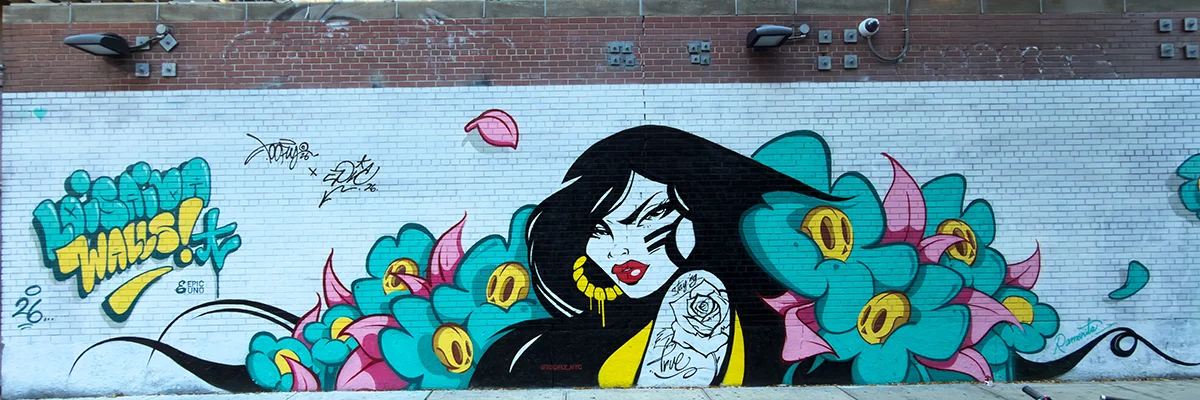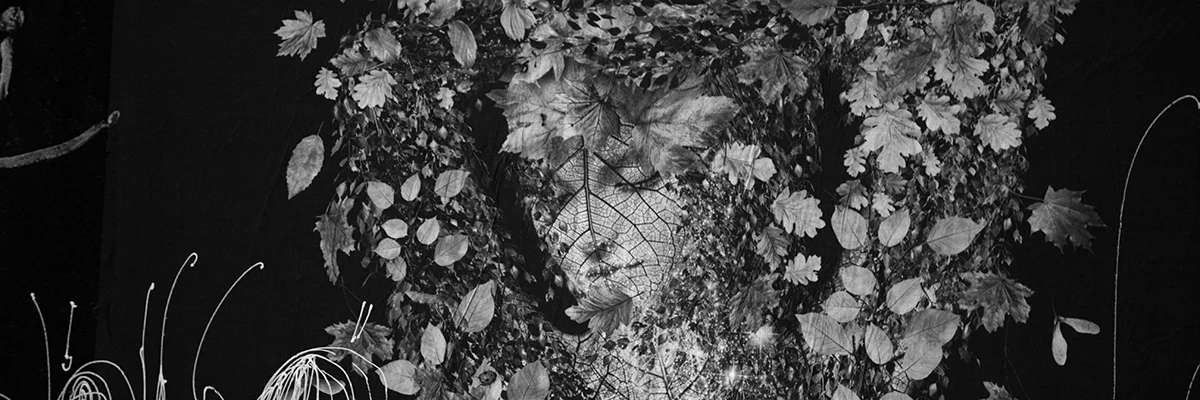

The Ruzyně district of Prague 6 has undergone a profound aesthetic metamorphosis, anchored by the completion of an expansive 700-meter-long mural installation. This project, which spans approximately 1,800 square meters of vertical surface, serves as a testament to the evolving nature of public art in the Czech Republic. By providing a dedicated, sanctioned canvas for 30 distinguished Czech and international artists, the initiative has successfully bridged the divide between traditional graffiti culture and contemporary muralism, effectively redefining the visual landscape of the area.

The Scale and Scope of the Ruzyně Project
The Mural Ruzyně project is not merely an collection of isolated artworks but a curated urban intervention. With a length of 700 meters, the wall functions as an open-air gallery that requires significant engagement from the viewer. The sheer volume of the project—covering 1,800 square meters—places it among the most significant street art endeavors in Central Europe. The logistical coordination required to manage 30 individual artists, each possessing a distinct stylistic signature, suggests a high level of curatorial oversight and community cooperation.

The project was executed in two distinct phases. Part 1, previously documented, focused on the structural foundations of the site and the initial curatorial strategy, which emphasized the integration of diverse artistic mediums. Part 2, the current focus, illustrates the project’s culmination, highlighting how these varied visual languages coalesce into a cohesive, albeit heterogeneous, whole.

A Spectrum of Artistic Expression
One of the most notable features of the Ruzyně wall is the coexistence of diametrically opposed aesthetics. The project rejects the "house style" often imposed by corporate-sponsored mural festivals. Instead, it invites a spectrum of creative expressions:

- Architectural and Surrealist Elements: Artists such as Kreda288 contribute to a sense of structure through monochrome, architectural-surrealist compositions that play with the viewer’s perception of space.
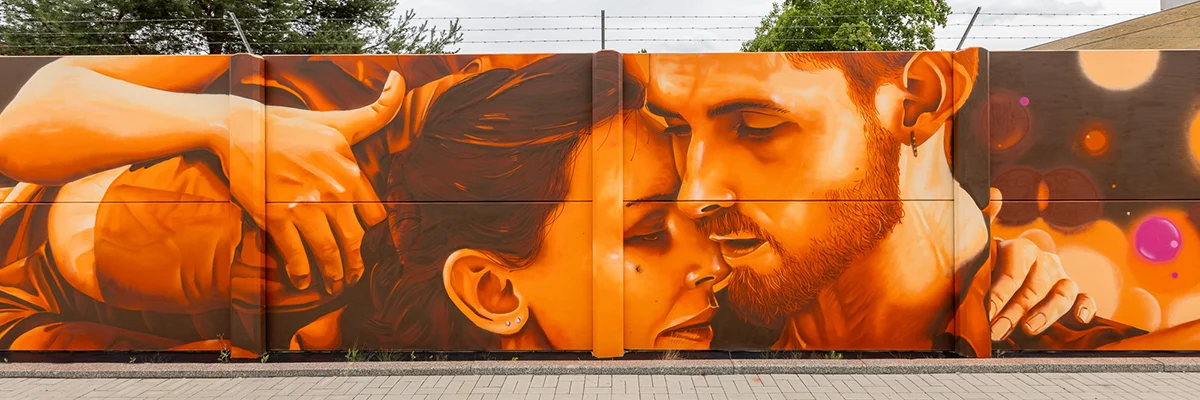
- Photorealistic Intimacy: The inclusion of work by artists like Zmoka demonstrates a shift toward high-fidelity, photographic detail, creating moments of intense intimacy that contrast with the scale of the wall.
- Atmospheric Portraiture: EMIC utilizes the wall to explore depth and shadow, folding traditional portraiture into darker, more atmospheric narratives.
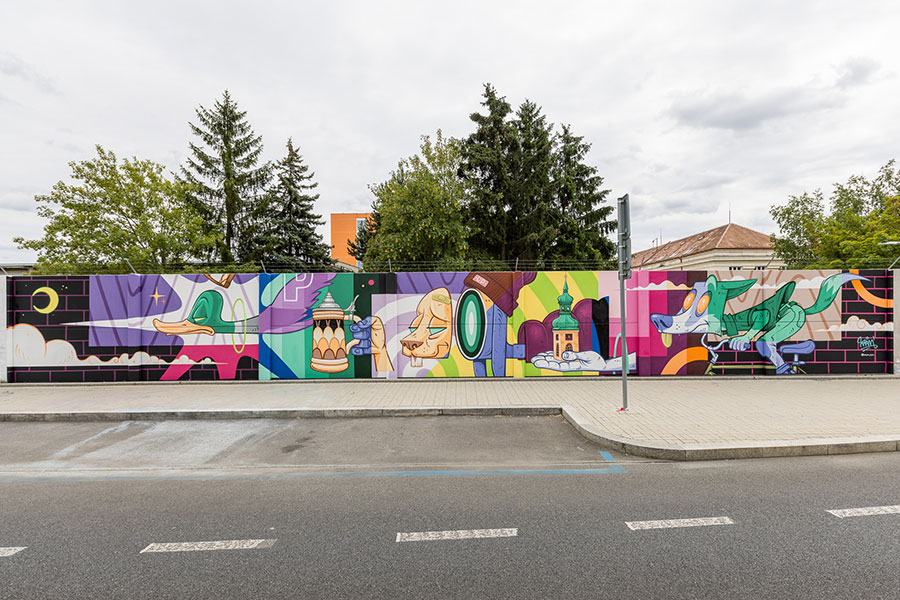
- Graphic and Illustrative Narratives: The presence of This Lux Easy, who employs bold graphic fields to isolate subjects like birds, provides a rhythmic visual break from the more detailed, illustrative work of artists like Vincent Chignier, who fills his segments with dense, feverish character designs.
- Graffiti Heritage: Tom HRVB maintains the pulse of the project by grounding it in a classic, graffiti-inflected cartoon language, ensuring the project remains tethered to the history of urban writing.
- Techno-Urbanism: Michal Škapa, widely known as TRON, serves as a bridge between classic graffiti and fine art, constructing complex, techno-urban universes that define the skyline of the wall.
This diversity is further bolstered by contributions from X Dog, Bona Berlin, KRAM, Denis Dendy, Obraz Akrobat, Lukas Kladivko, Mandi Oh, David Lejsek, and Juanjo Surace, each bringing a unique stylistic methodology that prevents the installation from feeling stagnant.

Historical Context and Urban Development
The rise of large-scale muralism in Prague is a relatively recent phenomenon compared to the city’s deep-rooted architectural history. For decades, the public art scene was dominated by state-commissioned monuments or, conversely, unauthorized graffiti. The Ruzyně project represents a middle ground: an organized, institutionalized, yet artist-led endeavor.

The selection of the Ruzyně site is deliberate. As an area undergoing transition, the wall serves as an anchor for urban renewal. Historically, such long, industrial or perimeter walls were seen as visual blight; by applying a professional, high-quality layer of paint, the project developers have transformed a utilitarian barrier into a point of cultural interest. This trend mirrors global shifts in cities like Berlin, London, and New York, where "muralization" is often used as a tool for urban regeneration and the mitigation of unauthorized tagging.

Supporting Data and Technical Execution
To achieve a consistent level of quality across 1,800 square meters, the artists were provided with substantial resources, including scaffolding, high-grade paint, and sufficient time to complete their works. This level of support is rare in the street art world, where artists are often forced to work under tight deadlines and with limited infrastructure.

The project’s longevity is supported by the density of the artwork. By inviting 30 artists to occupy a shared space, the organizers ensured that the viewer’s interest is constantly piqued. The transition between styles—from the slick and highly designed to the raw and pictorial—creates a visual rhythm that encourages the observer to walk the entire 700-meter length.

Broader Implications for Public Art
The success of the Mural Ruzyně project raises critical questions about the future of public art in Prague. Firstly, it establishes a benchmark for collaboration between private stakeholders, local government, and the artist community. By allowing for stylistic differences rather than enforcing a singular, sanitized aesthetic, the curators have demonstrated that public art can be challenging and diverse while still being accepted by the broader public.

Secondly, the project acts as a long-form survey of current mural practice. It showcases that contemporary street art is no longer a monolith; it is an amalgamation of graphic design, fine art, illustration, and traditional lettering. This, in turn, influences the perception of the artists involved, elevating their status from "vandals" to "urban contributors."

The Economic and Social Impact
While the artistic value is evident, the social and economic implications of such a massive installation are equally significant. Large-scale public art projects are known to increase foot traffic in overlooked neighborhoods. The Ruzyně wall has transformed a routine transit route into an attraction, potentially stimulating interest in local businesses and encouraging a sense of civic pride among residents of Prague 6.

Furthermore, the project serves as a case study for "soft" urbanism. Rather than tearing down existing infrastructure, the project works with the urban fabric, acknowledging the industrial reality of the space while humanizing it through color and narrative.

A Future-Facing Model
As the final sections of the Mural Ruzyně project settle into the landscape, the broader art community is likely to look at this model as a template for future urban projects. The key to its success lies in the balance between professional support and creative autonomy. By maintaining a high level of execution and allowing for an eclectic mix of voices, the project ensures that it remains relevant and engaging to a diverse audience.
The persistence of the work, even as the seasons change and the urban environment around it continues to evolve, will serve as a marker of a specific moment in the history of the Prague street art scene. It proves that when artists are given the space, time, and support to experiment, the result is not just a painted wall, but a lasting cultural asset that challenges the viewer and elevates the urban experience.

In conclusion, the Ruzyně wall stands as a testament to the power of collaboration and the enduring vitality of the muralist tradition. It is a bold, ambitious, and ultimately successful attempt to reclaim public space for the sake of art, providing a visual feast that will undoubtedly serve as a point of reflection and inspiration for years to come. The project does not merely exist in the city; it breathes with it, changing the very nature of how the public interacts with the built environment in one of Europe’s most historic capitals.