
Shepard Fairey was 14 years old in South Carolina in 1984 when he first encountered the abrasive, uncompromising sound of the Sex Pistols. Emerging nearly a decade after the band’s initial explosion in London, their music served as a violent, necessary rupture in the polite, conformist environment of his upbringing. It was a snarling invitation to interrogate authority, dismantle manufactured narratives, and amplify the noise of dissent. This introduction to punk was inseparable from the burgeoning culture of skateboarding—a world defined by speed, concrete scrapes, raw graphics, and a desperate, teenage need for rebellion. It was within this ecosystem that Fairey found the permission to innovate without seeking validation from institutional gatekeepers.

Reflecting on his development, Fairey often cites Ian MacKaye, the Washington, D.C. punk pioneer behind Minor Threat and Fugazi. MacKaye famously defined punk not as a specific aesthetic, but as a "free space"—an operational zone where one is permitted to exist without assimilating to external expectations of how art or sound should manifest. For a young Fairey, that definition crystallized into a singular, liberating realization: he could dictate his own identity.

This punk foundation was rapidly bolstered by the arrival of hip-hop. The influence moved from the pioneering sounds of Run-DMC and the Beastie Boys to the complex, socially conscious landscapes of Boogie Down Productions, Eric B. & Rakim, Public Enemy, Slick Rick, and Ice-T. While Fairey admits he may not have possessed the political vocabulary to deconstruct these movements at 17, he understood their gravity in his gut.
A Return to the Analog Archive
More than four decades later, Fairey has returned to those formative record bins. This is not a project driven by the warm, sepia-toned glow of nostalgia. Instead, he argues that the world has caught up to the anxieties of his youth, rendering those original warnings remarkably, and dangerously, current. Issues such as systemic racism, rising authoritarianism, unchecked greed, the weaponization of propaganda, and the steady erosion of the "American Dream" have transformed these classic records from simple cultural souvenirs into essential reference books for contemporary survival.

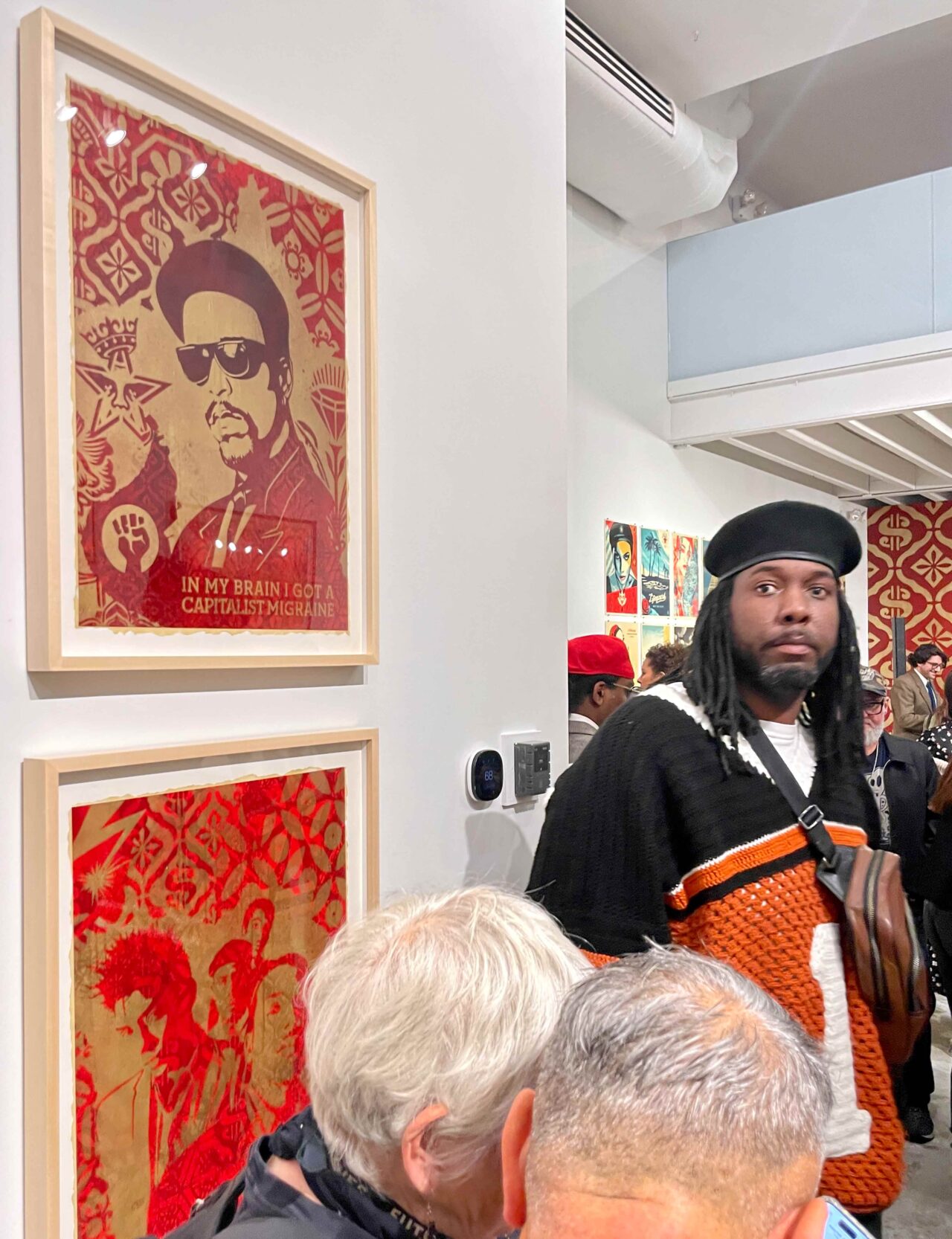
Central to this latest endeavor is the exhibition Filthy Lucre Ain’t Nothing New, a four-day installation hosted at the CART Department on Morton Street in New York City. The exhibition acts as a visual and auditory bridge, connecting the dissent of the past to the volatility of the present.
The Centerpiece: A Study in Contradiction
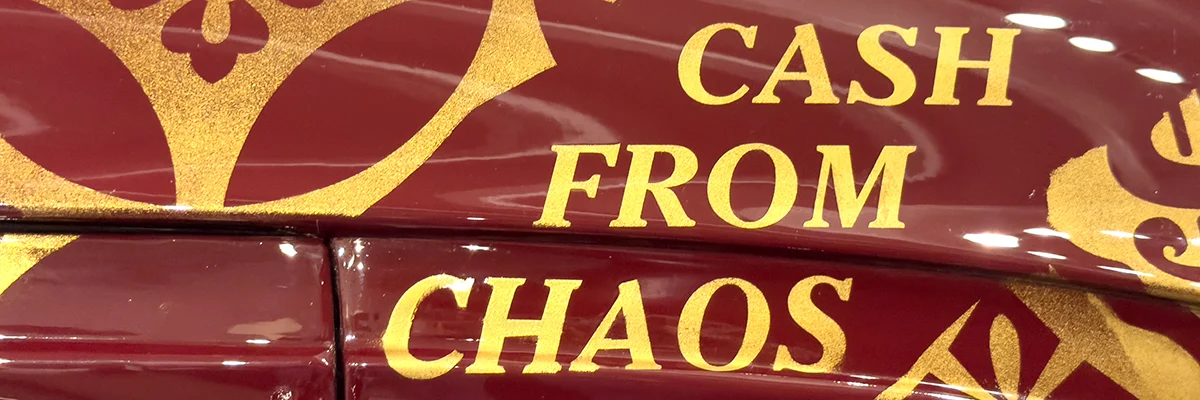
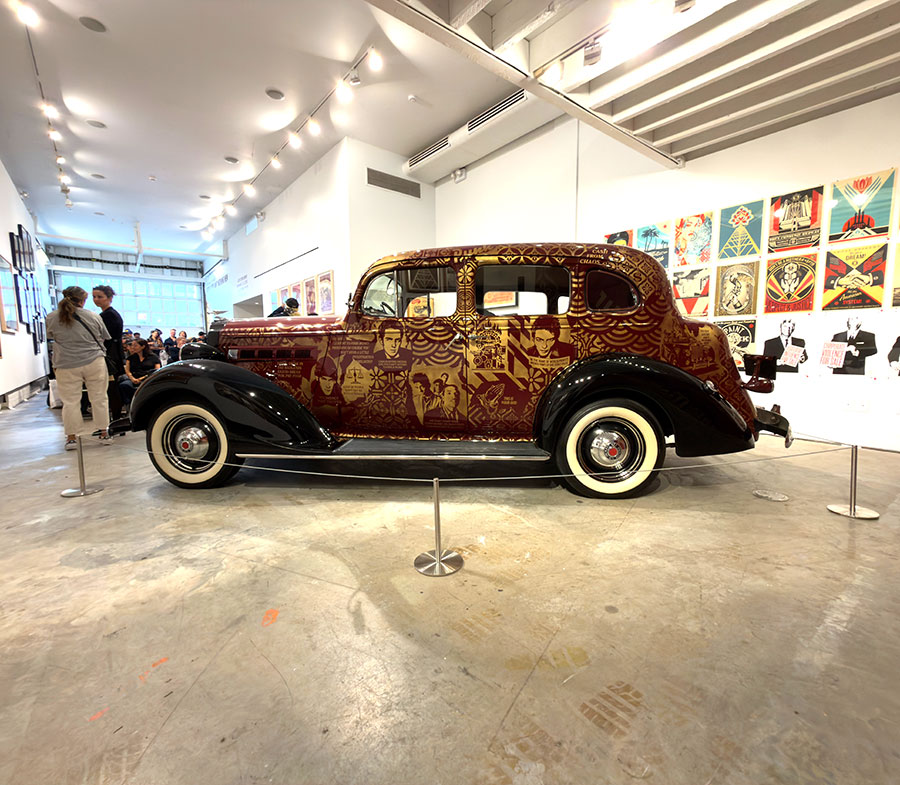
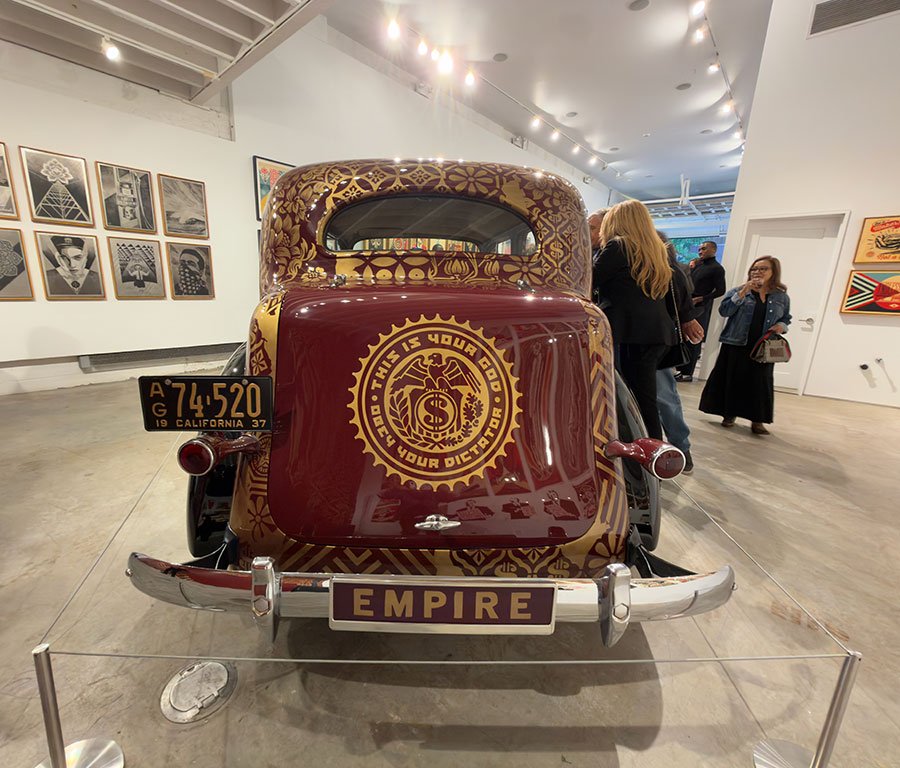
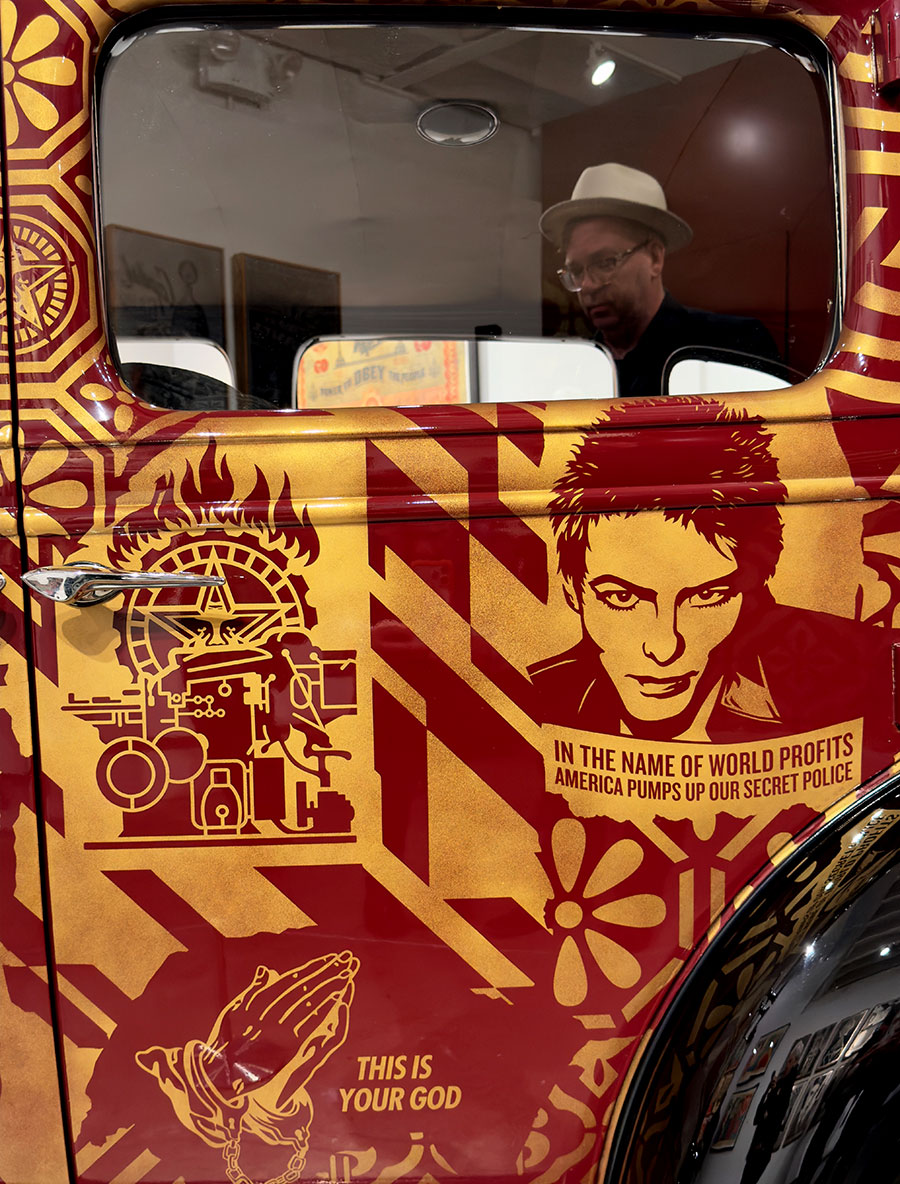
At the heart of the gallery sits a 1937 Packard touring sedan, an object of immense historical weight that Fairey has meticulously transformed. The burgundy-and-black vehicle has been repurposed with metallic-gold stencils, intricate portraits, and searing lyrical excerpts pulled from the annals of punk and hip-hop history. The project serves as an examination of the "seduction and repulsion of money," challenging the viewer to locate their own position within the struggle between material value and moral values.
The Packard itself represents a significant technical milestone for Fairey, who noted that he had never painted an automobile before. The process involved mapping the body of the car in Illustrator, applying vinyl stencils to its complex curves, and executing a delicate, multi-layered application of metallic gold, followed by a professional-grade clear finish. The result is a piece of high-stakes détournement—a Situationist strategy of taking a familiar commodity and subverting its intended meaning. The bumpers of the car have been re-branded: "NOWHERE" at the front and "EMPIRE" at the rear, a direct homage to the subversive design ethos of Jamie Reid and the Sex Pistols.
Cultural Context and the Evolution of Dissent
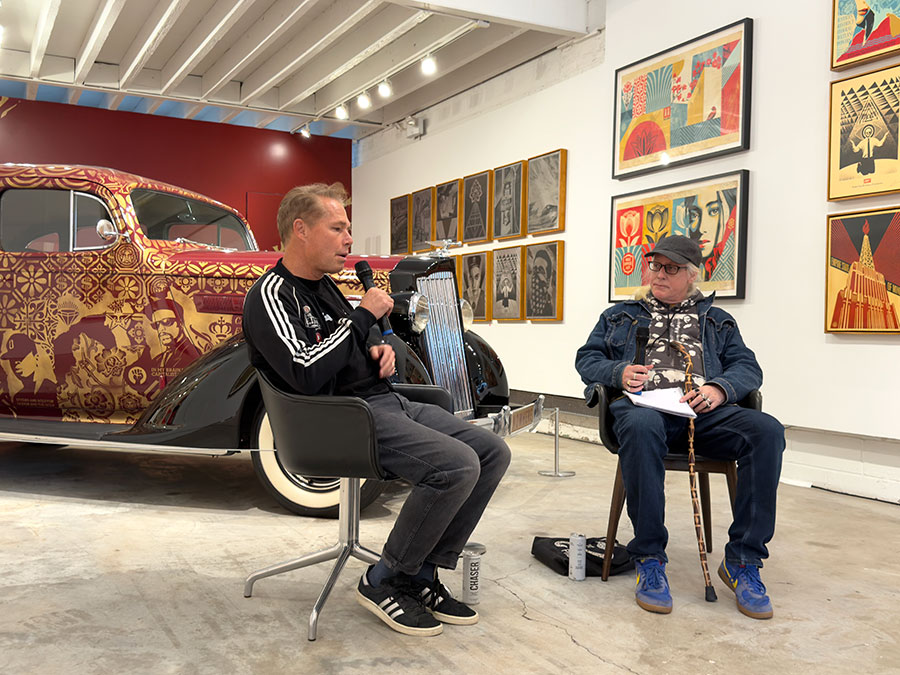
The exhibition also serves as an informal genealogy of Fairey’s career, featuring portraits of musicians and mixed-media works that trace the visual and political lineage he has occupied for decades. Cultural historian and critic Carlo McCormick, who has followed Fairey’s trajectory since his first New York exhibition in 1994, emphasizes that the history of these movements is far more integrated than modern marketing categories suggest.

During the 1980s, the lines between punk, hip-hop, and graffiti culture were porous. Figures like Fab 5 Freddy, The Clash, and Grandmaster Flash were part of a shared "cultural crossfire" where downtown artists, DJs, and punks frequently converged to break the same societal rules. McCormick argues that this period was defined by a specific, singular jolt—a moment when one’s consciousness is first cracked open by art or music. Fairey’s work today operates under the weight of a question: can that same jolt penetrate the digital noise of the 21st century?

Fairey expresses concern that contemporary subcultures are often denied the "darkness and time" required to mutate before they are commodified by social media algorithms. The original ecosystems of punk and hip-hop, while occasionally exclusionary or violent, provided a necessary destination for energy that had no outlet in the mainstream. For Fairey, the transition from anger to expression is the core of his practice: "I know personally I’ve had times when I just wanted to smash shit, but instead I made a poster."
Theoretical Implications and Public Impact
The juxtaposition between the punk and hip-hop elements of the exhibition is deliberate. One side of the Packard reflects the punk suspicion of money, empire, and consumerism, while the other acknowledges the complex, often fraught relationship hip-hop has with wealth. For many rappers, the acquisition of capital represented a literal breakthrough of barriers erected by racism and class. Fairey’s wall text highlights this distinction: the punk kids who could afford the privilege of rejecting prosperity versus the artists for whom "getting paid" was an act of defiance against systemic exclusion.

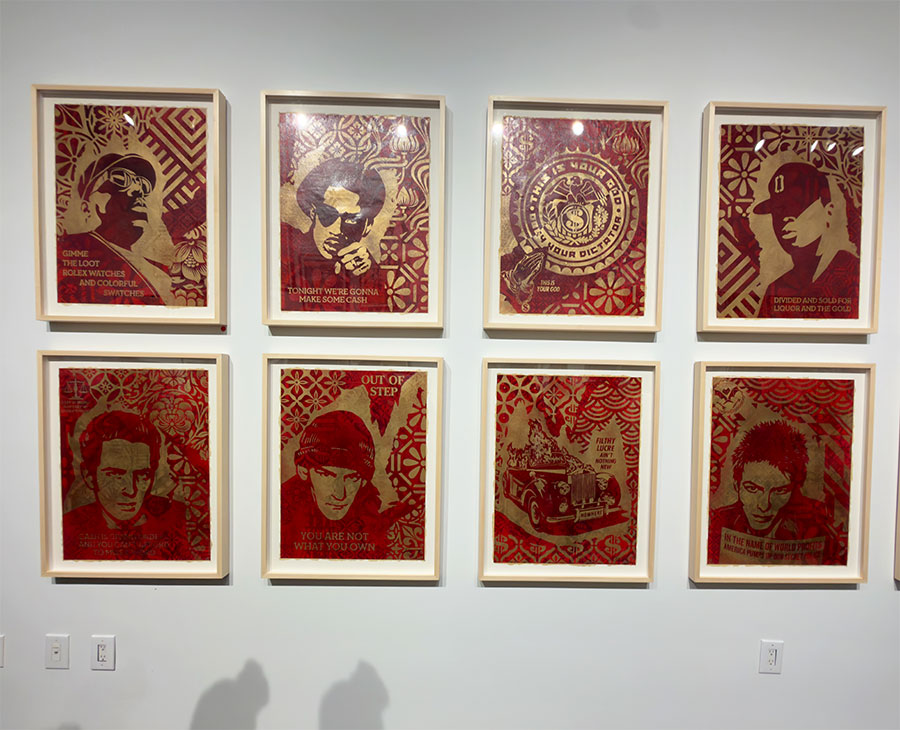
The exhibition features collaborative portraits of legends including Joe Strummer, Chuck D, Jello Biafra, Ian MacKaye, H.R., and Ice-T. Fairey is meticulous about crediting the photographers behind these images, such as Glen E. Friedman, framing the work as a collective effort to keep these voices in circulation.

Chronology of the Project
- 1984: Fairey begins his immersion in punk and hip-hop culture.
- 1994: Fairey holds his first New York exhibition, facilitated by Carlo McCormick, establishing his foothold in the city’s art scene.
- 2026 (September): The Filthy Lucre Ain’t Nothing New exhibition opens at the CART Department on Morton Street.
- 2026 (September 24–27): The four-day duration of the exhibition concludes, marked by panel discussions on the intersection of art, music, and politics.
The Broader Impact
The commission for the Packard was provided by collector Larry Warsh, whose collection of over 70 "art cars" includes contributions from Keith Haring, Ai Weiwei, and Marina Abramović. This collection signifies a broader movement toward the hybridization of contemporary art and historical objects, transforming functional vehicles into cultural artifacts.

The implication of Filthy Lucre Ain’t Nothing New is that the "warnings" embedded in the music of the 1980s and 90s were not historical artifacts, but prophecies. As Fairey noted in conversation with McCormick, "If you have morals and you have your eyes open, how are you not a bit mad?" By reaching back to the figures who first gave shape to his political consciousness, Fairey is attempting to restock the arsenal of dissent.
While the records themselves will not solve the systemic issues of the current era, they remain, in Fairey’s view, a vital source of language, nerve, and the essential reminder that culture once knew—and must remember—how to tell power to go screw itself. The show stands as a testament to the idea that, in an age of rapid consumption and social fragmentation, the act of creating art remains a form of public speech, and the preservation of our cultural memory is an act of resistance.