
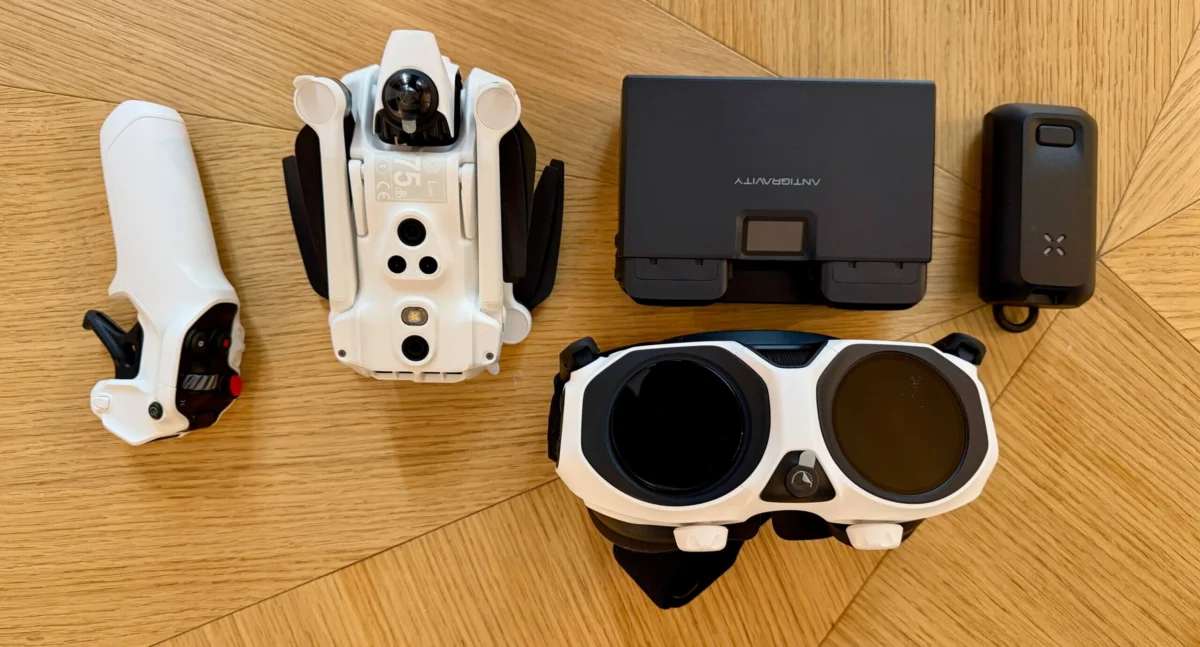
The consumer drone market has undergone a significant transformation since aerial photography transitioned from a niche hobby into a mainstream medium for content creators and filmmakers. Released in late 2025, the Antigravity A1 360 drone represents a departure from traditional aerial cinematography by eliminating the mechanical gimbal in favor of a dual-lens 360-degree capture system. This technological shift introduces a "fly now, frame later" workflow, changing how aerial content is recorded, processed, and utilized across digital platforms.
Technological Architecture and Design Specifications
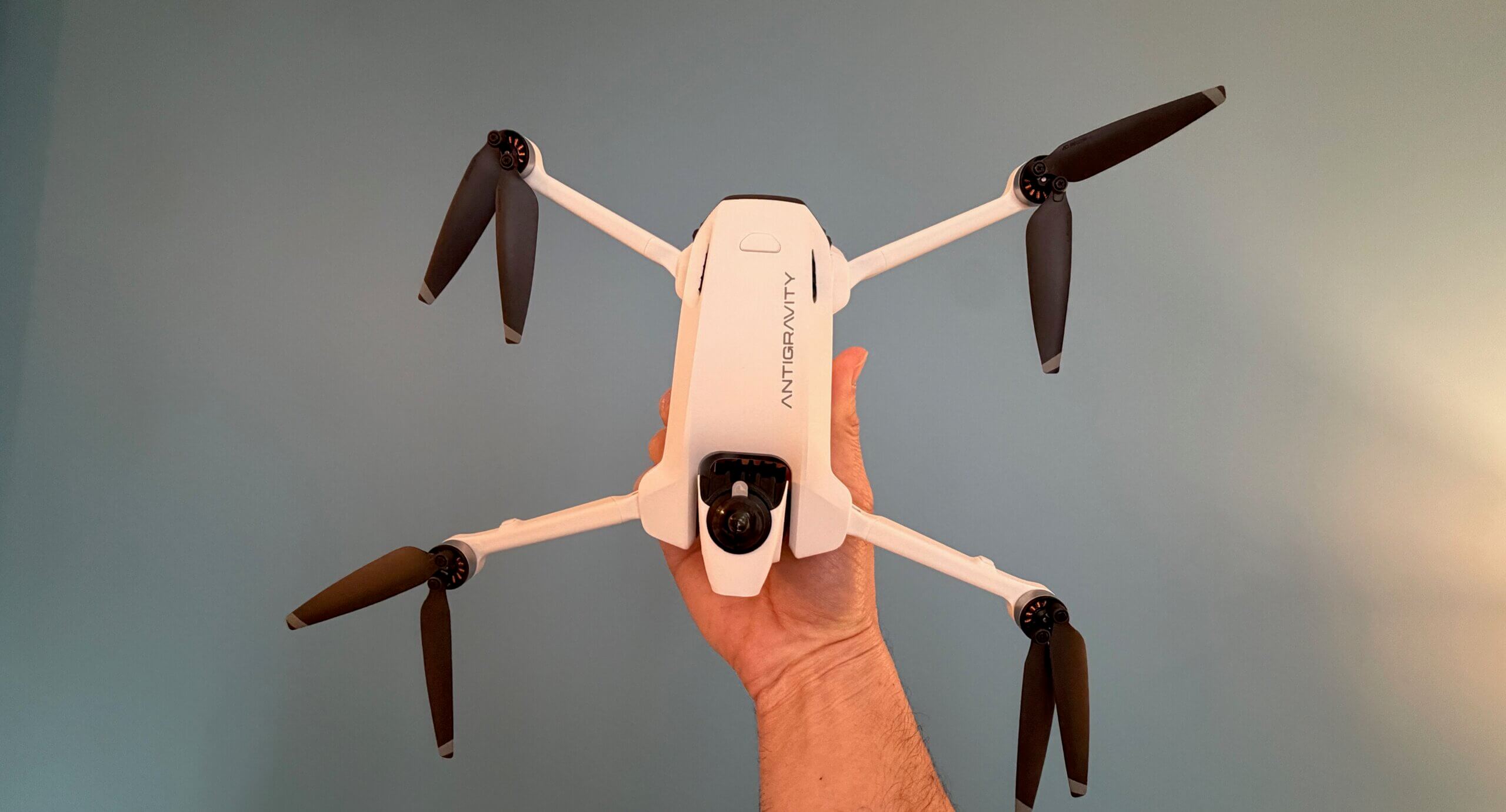
At the core of the Antigravity A1’s design is the abandonment of the traditional single-lens, mechanically stabilized camera setup. Instead, the aircraft utilizes a dual-lens configuration positioned on the top and bottom of the central fuselage. Each ultra-wide-angle lens captures a 200-degree field of view, overlapping to produce a continuous, seamless 360-degree digital sphere. In post-processing, proprietary algorithms automatically remove the drone’s frame from the footage, creating the optical illusion of an independent camera suspended in mid-air.
The imaging system relies on dual 1/1.28-inch CMOS sensors. While these dimensions are smaller than the 1-inch sensors commonly integrated into professional-grade cinematography drones, they are considerably larger than the sensors found in standard action cameras. This sensor size yields performance improvements in low-light environments and expands the camera’s dynamic range, assisting in the retention of detail within high-contrast settings, such as scenes featuring direct midday sunlight.
Regulatory compliance and hardware durability were primary considerations in the engineering of the A1. The drone weighs precisely 249 grams when equipped with its standard intelligent flight battery. This exact weight threshold allows the aircraft to remain just under the 250-gram regulatory limit enforced by aviation authorities in numerous jurisdictions, exempting operators from mandatory registration requirements that apply to heavier commercial drones.
Constructed from a high-grade carbon-fiber-reinforced polymer, the fuselage offers a high strength-to-weight ratio compared to the ABS plastic typically used in entry-level models. The folding mechanisms incorporate a precise locking action designed to withstand repeated deployment in field conditions. When collapsed, the unit’s footprint is comparable to a large smartphone, though with increased thickness to accommodate the dual-lens housing and internal processing units.
Flight Dynamics and Control Systems
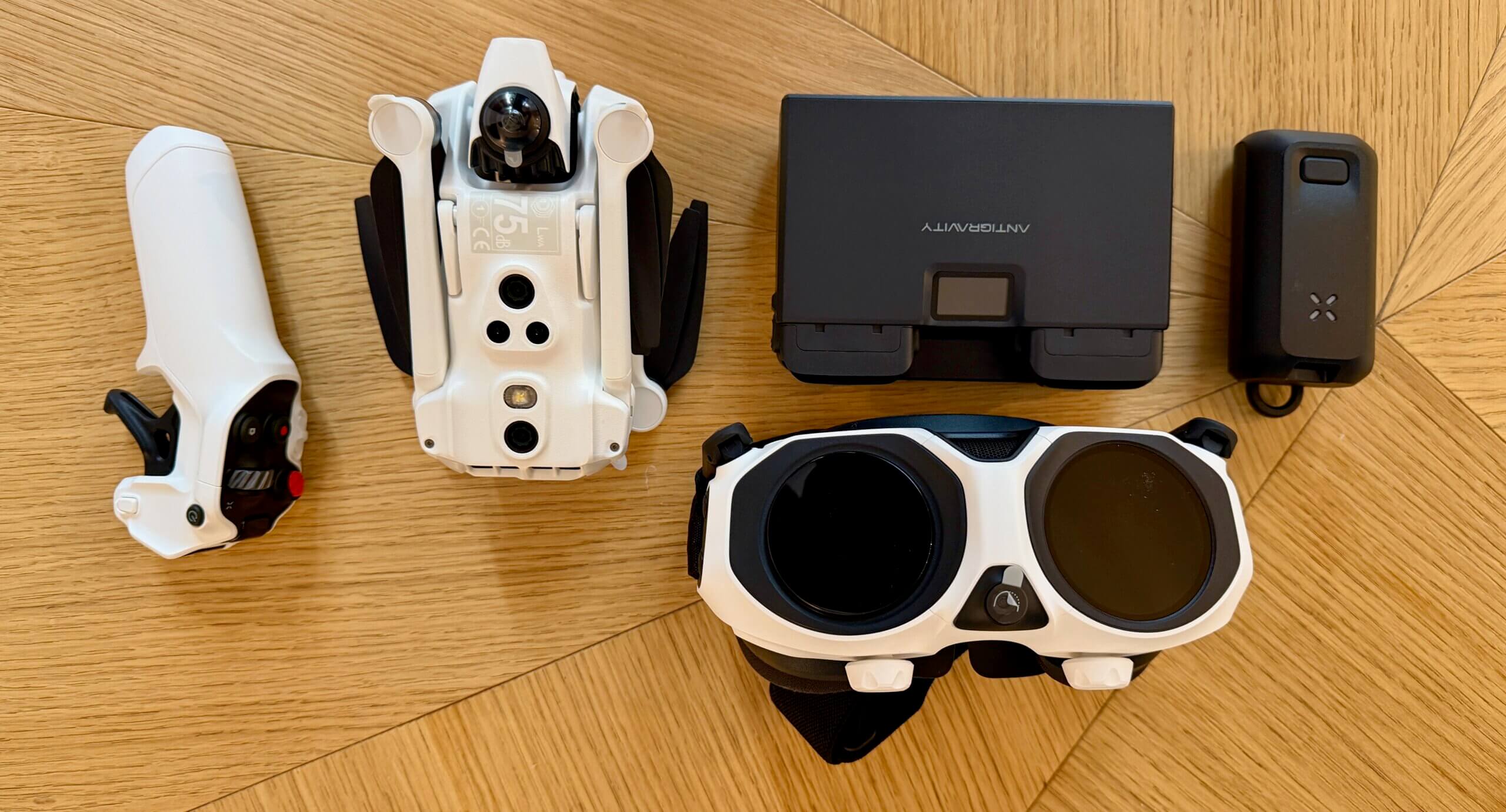
The piloting experience of the Antigravity A1 deviates from traditional multirotors through its integration of dedicated vision goggles and motion-sensing controllers. The accompanying goggles feature dual 4K micro-OLED displays operating at a 120Hz refresh rate, coupled with integrated head-tracking technology. Because the underlying recording system captures a full 360-degree environment, the visual feed responds directly to the pilot’s head movements, offering spatial awareness that static-camera setups cannot replicate.
Control inputs are managed primarily via a single-handed motion controller. Directional movement is tied to the physical orientation of the controller, where pointing determines the flight vector and a trigger pull regulates acceleration. For experienced FPV (First Person View) operators who require precise manual acrobatic control, the A1 also supports conventional "Mode 2" stick controllers. However, the responsiveness of the motion control system is intended to reduce the learning curve for novice pilots navigating complex environments.
The aircraft is designed with "cinewhoop"-style flight dynamics, prioritizing stability and predictable handling over high-speed racing agility. It reaches a top speed of approximately 36 miles per hour, making it suitable for tracking moving subjects such as automobiles or cyclists. Additionally, the inclusion of "Turtle Mode" enables the drone to autonomously flip itself upright using its propellers in the event of an inverted crash, minimizing recovery time during field operations.
Image Processing, Software Ecosystem, and Resolution
A central consideration in 360-degree video capture is the distribution of resolution. While marketing materials frequently highlight an 8K resolution specification, this pixel count is distributed across a full spherical environment rather than a traditional 16:9 rectangular frame. Consequently, when the footage is reframed into a standard flat video export, the resulting image is a cropped section of the total spherical capture.
To accommodate different production workflows, the camera includes multiple color profiles. A "Vivid" profile is available for immediate social media publication, alongside a 10-bit "Log" profile designed for professional color grading and integration with multi-camera productions. Stabilization is handled by Antigravity’s proprietary "FlowState" algorithms, which compensate for wind turbulence of up to 20 miles per hour, maintaining horizon stability during flight.
The companion software, Antigravity Studio, facilitates wireless footage transfers at speeds up to 80MB/s. The application utilizes a smartphone’s internal gyroscope for manual reframing, allowing users to direct the virtual camera by moving their mobile device in real-time. Furthermore, an artificial intelligence feature titled "Auto-Frame" analyzes the footage, identifies subjects of interest, and automatically generates edited cuts, reducing manual editing time for solo creators.
Battery Performance and Operational Limitations
Battery technology remains a primary limitation for compact aerial systems. The A1’s standard Intelligent Flight Battery is rated for a theoretical maximum of 24 minutes of flight time under optimal conditions. In operational testing that includes moderate wind resistance and continuous recording, actual flight durations average between 19 and 20 minutes.
Despite the seemingly brief duration, the operational efficiency per flight is amplified by the 360-degree capture capability. Because operators are not required to fly repetitive paths to secure multiple camera angles, a single 20-minute flight can yield equivalent usable footage to several flights conducted with a traditional single-lens drone. For operations requiring extended airtime, an optional "Pro Battery" extends flight duration to 39 minutes, though the additional weight increases the total mass beyond the 249-gram threshold, altering the aircraft’s agility and subjecting it to local drone registration mandates.
Market Implications and Industry Outlook
The introduction of the Antigravity A1 signals a shift in the consumer and prosumer drone sectors. By merging 360-degree spatial video capture with lightweight, sub-250-gram airframe design, the product addresses long-standing challenges related to regulatory compliance, complex manual framing, and post-production stabilization.
While the hardware possesses limitations—specifically regarding maximum resolution after cropping and the physical vulnerability of protruding dual lenses—its impact on digital content creation is notable. The device bridges the operational gap between traditional cinematography and immersive virtual reality production. As manufacturers continue to refine sensor sizes and processing algorithms, the "fly now, frame later" paradigm established by the A1 is expected to influence future developments in aerial robotics and digital media production.