
The history of the performing arts is often written by those who remain under the spotlight the longest, yet some of the most compelling narratives belong to those who flickered briefly and disappeared into the shadows of the past. On March 22, 1898, the New York Evening Journal published a report that would serve as both a tribute and a final record for a young artist whose life and career represented the intersection of cultural exchange, immense talent, and the harsh realities of the 19th-century entertainment circuit. Rozi-Cassan, a 13-year-old Japanese juggler and acrobat, died in a modest room at No. 76 East 101st Street in New York City, marking the end of a journey that spanned oceans and social strata. Her death, attributed to anemia and potential neglect, highlights the precarious existence of international performers during the height of the vaudeville era.
The Life and Lineage of a Prodigy
Rozi-Cassan was not merely a traveling performer; she was the scion of a prestigious lineage of Japanese entertainers. According to contemporary accounts, her father was regarded as the most famous acrobat in the realm of the Mikado (the Emperor of Japan). The family’s standing was so elevated that the Emperor granted them the rare and distinguished privilege of displaying the royal chrysanthemum on their robes and performance apparatus, including their umbrellas. In the context of Meiji-era Japan, such a concession was a mark of supreme artistic achievement and state-sanctioned excellence. The chrysanthemum, or Kiku, is the Imperial Seal of Japan, and its use by a family of performers suggests they were considered cultural ambassadors of the highest order.
Following the death of her parents, Rozi-Cassan chose to continue the family profession, inheriting not only their skills but also the weight of their legacy. Her transition from the Japanese imperial stage to the competitive theaters of New York City was driven by both professional ambition and a personal narrative that mirrored the dramatic plots of the stage. Records indicate she arrived in the United States approximately six months prior to her death, joining the wave of Japanese troupes that captivated Western audiences with "oriental" aesthetics and technical precision that differed significantly from Western juggling traditions.

The Art of Japanese Juggery: Daikagura and Technical Mastery
To understand the impact Rozi-Cassan had during her brief tenure in New York, one must look at the specific discipline she practiced. While Western juggling often focused on the manipulation of clubs and balls in toss patterns, Rozi-Cassan was a practitioner of traditional Japanese juggling, likely influenced by the Daikagura tradition. This art form combines ritualistic elements with extreme physical dexterity.
The New York Evening Journal documented several of her signature feats, which included:
- Umbrella Manipulation: A staple of Japanese variety arts where a performer spins a traditional oil-paper umbrella and balances or manipulates objects—such as a wooden wheel or a small ball—along its rotating edge.
- Cane Balancing: The ability to balance long wooden canes on the forehead, chin, or even the bridge of the nose while performing other acrobatic movements.
- Wooden Stick and Ball Juggling: Using weighted wooden sticks to manipulate balls in a style that emphasizes fluid motion and balance over raw speed.
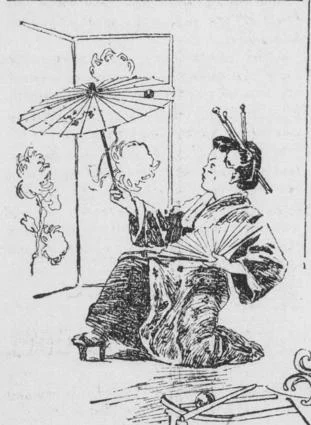
Illustrations from the period show Rozi-Cassan performing in traditional Japanese attire, maintaining a cultural authenticity that was highly sought after by New York theater managers. At just 13 years old, her ability to execute these complex maneuvers suggested a level of mastery that usually took decades to achieve, earning her the title of one of the "cleverest jugglers and acrobats on the stage."
A Timeline of Tragedy: From Japan to East 101st Street
The chronology of Rozi-Cassan’s final months reveals a swift descent from professional success to a lonely demise.

- Late 1897: Rozi-Cassan arrives in New York City from Japan. She is part of an imperial troupe and quickly finds work in the city’s bustling theater district.
- Early 1898: She performs at various venues, gaining a reputation for her "flower of the Orient" persona and her technical skill.
- March 1898: Rozi-Cassan is reunited with Coshui Kljjiwadi, a tumbler she had known in Japan. Kljjiwadi had previously left Japan after falling into disfavor, joining the Imperial Japanese Troupe in America.
- March 18, 1898: The young performer falls ill. Despite her status as a featured performer, she does not receive immediate or adequate medical intervention.
- March 22, 1898: Rozi-Cassan passes away at No. 76 East 101st Street. The attending physician, Dr. F. Dalton Whitney, reports the case to the coroner, citing a lack of proper care during her four-day illness.
The location of her death, East 101st Street, was at the time part of a neighborhood transitioning into a densely populated immigrant enclave. While not a tenement slum in the same sense as the Lower East Side, it was far removed from the glamour of the theater houses where she spent her working hours.
Medical and Social Context: The Implications of Anemia
The diagnosis of "anemia" as the cause of death for a 13-year-old athlete is particularly telling of the era’s social conditions. In the late 19th century, anemia was often a catch-all diagnosis for a variety of underlying issues, including malnutrition, chronic exhaustion, or infectious diseases like tuberculosis. For a child acrobat, the physical demands of performing multiple shows a day, combined with the stresses of international travel and the potential lack of a stable guardian, likely exacerbated her condition.
Dr. F. Dalton Whitney’s decision to report the case to the coroner indicates a suspicion of medical neglect. In the competitive world of traveling troupes, performers—especially minors—were often viewed as assets rather than individuals. If a performer was unable to take the stage, their value plummeted, sometimes leading to a withdrawal of support or resources. The fact that Rozi-Cassan died "unattended by a physician" until it was too late suggests a breakdown in the duty of care by her troupe or those responsible for her welfare in the city.
The "Lost" Performers: Parallels with Emma Cotrely
The story of Rozi-Cassan is part of a broader phenomenon in circus and juggling history: the "disappearing" artist. The article mentions Emma Cotrely as another example. Cotrely, a ring and swing juggler, was once hailed as "the best juggler in the world" and toured extensively across the United States, Europe, and Cuba in the early 19th century. Like Rozi-Cassan, Cotrely was a sensation in her time, yet her life beyond the stage remains a mystery.

These disappearances are often the result of several factors:
- Stage Names: Many performers used pseudonyms that changed based on the troupe or the region, making genealogical tracking nearly impossible.
- Lack of Centralized Records: Before the advent of film and digital databases, an artist’s legacy was tied to ephemeral posters and brief newspaper mentions.
- The Nature of the Life: The itinerant lifestyle meant that performers often died far from home, with their deaths recorded in local ledgers that were never cross-referenced with their professional achievements.
Rozi-Cassan’s story survived only because of the specific, tragic circumstances of her death which prompted a sensationalist news report. Without that single article in the New York Evening Journal, her contributions to the introduction of Japanese juggling to American audiences might have been entirely erased.
Historical Impact and Implications
The death of Rozi-Cassan serves as a grim reminder of the human cost behind the "Golden Age" of variety performance. While audiences marveled at the exoticism and skill of international troupes, the performers themselves often navigated a world of exploitation and isolation.
However, her legacy also speaks to the early globalization of culture. The "Imperial Japanese Troupe" and performers like Rozi-Cassan were instrumental in changing Western perceptions of physical discipline and stagecraft. They introduced a level of prop-based manipulation and balance that would eventually influence the development of modern juggling and circus arts in the West.

Today, historians of the circus and juggling communities look to these fragmented records to piece together a more inclusive history of the art form. Rozi-Cassan represents a bridge between the traditional arts of the Japanese Edo and Meiji periods and the burgeoning entertainment industry of the United States. Her use of the royal chrysanthemum on her apparatus was not just a decoration; it was a symbol of a high-status cultural export that ended prematurely in a New York boarding house.
Conclusion
The tragedy of Rozi-Cassan is a microcosm of the risks faced by young prodigies in an era without labor protections or social safety nets. At thirteen, she had already achieved what many performers strive for over a lifetime: international recognition and the favor of an Emperor. Yet, her story remains a cautionary tale about the transience of fame and the vulnerability of the artist. As we look back at the illustrations of her spinning wheels on umbrellas and balancing canes with effortless grace, we recognize a talent that, had she lived, would likely have placed her among the greatest names in the history of juggling. Instead, she remains a "beautiful Japanese child acrobat," a haunting figure in the archives of a city that was, for a brief six months, her stage.