
While regions such as Ancient Egypt, Imperial China, and late-19th-century Germany are universally recognized as foundational breeding grounds for the performing arts, the State of Ohio holds a surprisingly dominant and frequently overlooked position in the evolution of modern juggling. From the genesis of club manipulation to the invention of hoop rolling and the commercial manufacture of specialized props, Ohio has served as an epicenter of physical innovation for more than a century.
Historians examining the global trajectory of circus arts, vaudeville, and modern variety entertainment often focus on European virtuosos. However, a deeper look into late-19th and early-20th-century performance records reveals that American ingenuity—specifically rooted in the cities of Cincinnati, Columbus, and Toledo—permanently altered how jugglers practice, perform, and manufacture their tools. Today, this rich history is preserved at the Museum of Juggling History in Middletown, Ohio, anchoring the state’s ongoing legacy in the international juggling community.
Main Facts and the Birth of Modern Prop Innovation

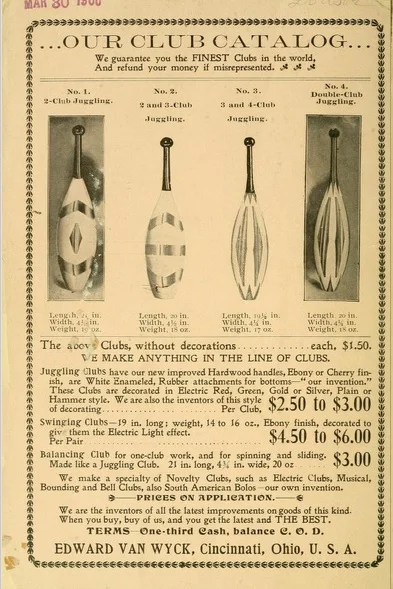
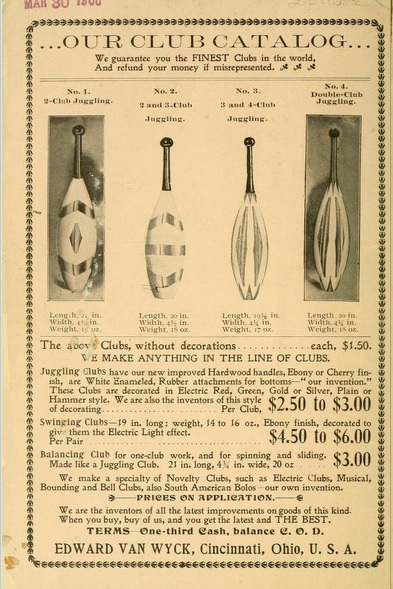
The narrative of Ohio’s dominance in juggling begins with the fundamental tools of the trade. Long before mass production made professional-grade equipment universally accessible, Cincinnati-based craftsman Edward Van Wyck established himself as one of the earliest and most vital prop makers in juggling history. Operating around the turn of the 20th century, Van Wyck’s workshops supplied performers with precision-engineered items, setting early standards for balance, weight distribution, and durability in juggling apparatuses.
Decades later, Ohio’s role as an innovator of physical props expanded northward. In Toledo, Frank Radtke revolutionized contact juggling and bounce routines by producing the world’s first silicone juggling bounce balls. This material breakthrough transformed bounce juggling, offering superior elasticity and durability compared to the rubber or hollow plastic alternatives of the era.

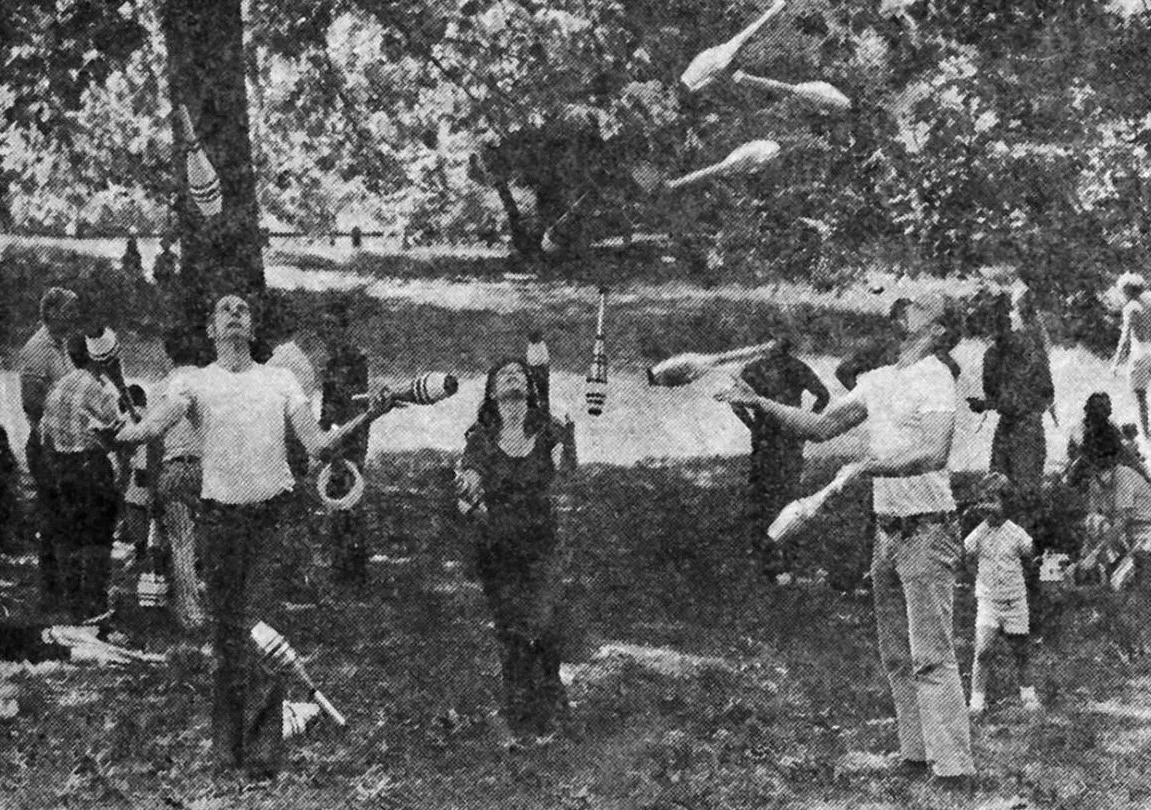
Beyond manufacturing, Ohio natives were responsible for inventing entirely new disciplines within the juggling arts. Toss juggling with clubs, hoop rolling, and club kick-ups all trace their documented origins to performers who honed their craft within the Buckeye State.
Chronology of Key Ohio Juggling Innovations

The timeline of Ohio’s contributions spans several decades of the late 19th century, coinciding with the golden age of vaudeville and variety theater:
1878: James DeWitt Cook, born in Cincinnati in 1857, becomes the first documented person to perform toss juggling with clubs. Performing under the moniker "The King of Clubs" and later as DeWitt Cooke, he popularized the use of solid wood Indian clubs in stage acts.

1894: William Everhart (born William Eberhart in Columbus, Ohio) partners with fellow local juggler Ollie Young. During this period of intense experimentation, Everhart accidentally discovers the physical properties of hoops that give rise to the discipline of hoop rolling.
Mid-1890s: Ollie Young, collaborating with Everhart, pioneers the technique of kicking up juggling clubs from the floor into a catching pattern. This innovation introduces dynamic footwork into club manipulation, heavily influencing subsequent generations of performers such as Harry Lind.
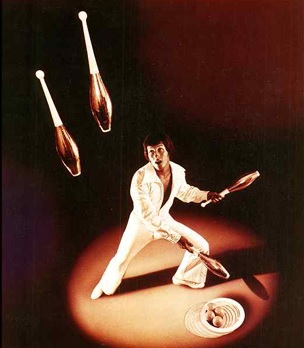
Late 1890s to 1900s: Edward Van Wyck’s Cincinnati prop catalog flourishes, standardizing equipment availability for professional touring variety artists across North America.
1990s: Frank Radtke introduces the first silicone bounce balls in Toledo, permanently changing the technical ceiling for bounce jugglers worldwide.

Supporting Data: The Pioneers and Their Impact
To understand the magnitude of Ohio’s influence, one must examine the specific mechanics introduced by its pioneering artists. James DeWitt Cook’s transition from physical fitness equipment—specifically Indian clubs used for strength training and calisthenics—to aerial tossing established a completely new aesthetic for variety stages. Prior to Cook, jugglers primarily manipulated spherical objects, plates, and knives. By adapting weighted, elongated wooden clubs into airborne patterns, Cook created a visual dynamic that immediately captured public attention and drew widespread emulation from contemporary performers.

Similarly, William Everhart’s accidental invention of hoop rolling transformed a simple child’s toy into a sophisticated discipline of balance, momentum, and spatial geometry. Growing up as a precocious youth in Columbus who reportedly mastered slate pencil manipulation by age seven, Everhart possessed an innate understanding of kinetic energy. When his aspirations of joining a minstrel show as a young teen were temporarily redirected by his parents into an apprenticeship at the Columbus Buggy Company, his exposure to industrial manufacturing and wheel assembly indirectly informed his spatial experiments with hoops. The resulting act gained international renown, sparking a wave of copycats and creating a distinct genre of performance art that remains a staple of modern circus acts today.
Ollie Young’s contribution of the club kick-up added a critical element of theatricality. By initiating a routine with props resting on the floor and launching them into motion using only the feet—often executed in a cross-legged posture—Young expanded the physical vocabulary of jugglers. This technique bridged the gap between stationary setup and active performance, maximizing audience engagement from the very first second of an act.

Broader Impact and Cultural Implications
The concentration of talent originating from Ohio extends far beyond these 19th-century pioneers. Over the decades, the state produced a continuous lineage of world-class performers, including Bobby May, Dick Franco, Alan Howard, Jay Gilligan, Sean Blue, Johnny Lux, Bob Whitcomb, and brothers Charles and Mark Peachock.

From a historical perspective, the concentration of these innovators in a single American state highlights how regional industrial hubs intersected with the entertainment industry. The craftsmanship required to build buggies and machinery in cities like Cincinnati and Columbus directly influenced the precision of local prop makers and performers who understood balance, weight, and center of gravity.
Today, the legacy of these early innovators is more than an academic footnote; it is an active part of the global juggling culture. Every time a contemporary performer executes a foot kick-up, rolls a hoop across their shoulders, or launches a cascade of wooden clubs at a modern juggling convention, they are utilizing techniques first theorized and performed by 19th-century Ohioans.

As preserved by institutions such as the Museum of Juggling History in Middletown, Ohio—curated by world-renowned juggler and historian David Cain—the physical records, historical props, and documentation of these pioneers ensure that the Buckeye State’s foundational role in the evolution of object manipulation remains permanently recognized in the annals of performing arts history.