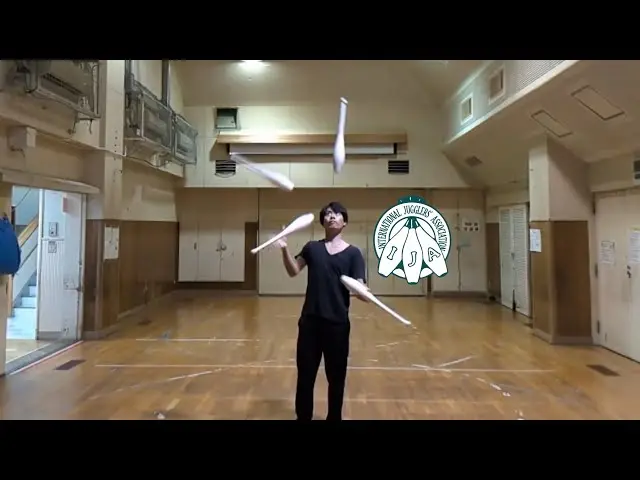


The global juggling community continues to expand its digital footprint through specialized media platforms, offering enthusiasts and professionals deep dives into the mechanics of high-level object manipulation. In the latest installment of the International Jugglers’ Association (IJA) digital programming, host Xavier Bernier—widely known as XavJuggles—sat down with acclaimed Dutch multi-prop juggler Børre Isac L’orange for Episode 27 of the Juggling Interviews podcast. Released across major podcast directories and video platforms, the episode offers a comprehensive look into L’orange’s rigorous practice routines, his profound passion for the discipline, and his continuous exploration of the diverse facets that define contemporary juggling.
The discussion highlights an ongoing shift in how juggling culture is documented, consumed, and shared worldwide. Through digital initiatives spearheaded by organizations like the IJA, elite performers now regularly share pedagogical insights, technical breakdowns, and personal philosophies with a global audience. This particular episode bridges the gap between high-level technical execution and accessible artistic theory, providing both amateur learners and seasoned professionals with valuable perspectives on skill acquisition and creative exploration.
Background and Context of the IJA Interview Series
The International Jugglers’ Association, established in 1947, has long served as the premier international organization dedicated to the promotion, preservation, and advancement of juggling and related flow arts. Over the decades, the association has evolved from organizing physical conventions into a multifaceted digital publisher, producing educational resources, regional competitions, youth programs, and long-form media content.
The Juggling Interviews podcast series, hosted by Canadian juggler and content creator Xavier Bernier, represents a vital component of this modern outreach strategy. Bernier, who immersed himself in the discipline during the COVID-19 pandemic, brings a distinct perspective to his interviewing style. Heavily influenced by the technical precision and aesthetic creativity of Japanese ball jugglers from the 2000s, Bernier’s background informs a line of questioning that frequently explores the granular mechanics of modern prop manipulation, muscle memory development, and artistic intent.
In Episode 27, Bernier turns his attention to Børre Isac L’orange, a prominent figure within the contemporary Dutch juggling scene. L’orange has carved out a distinct niche for himself through his multi-prop expertise and his willingness to document rigorous self-improvement milestones publicly. By examining L’orange’s trajectory, the podcast offers listeners a window into the dedication required to push past intermediate plateaus into advanced, multi-disciplinary performance.

Core Insights from Børre Isac L’orange
Throughout the interview, L’orange emphasizes that juggling is far more than a physical pastime; it is an evolving language of spatial awareness, rhythm, and problem-solving. A central theme of the conversation revolves around the philosophy of multi-prop practice. Unlike specialists who restrict their focus to a single apparatus—such as balls, rings, or clubs—versatile juggler-practitioners like L’orange advocate for cross-training across multiple props to stimulate neurological adaptation and prevent creative stagnation.
L’orange details the psychological and physical frameworks required to sustain long-term engagement with juggling. He discusses the fine balance between structured technical repetition and exploratory play. According to L’orange, breakthroughs in trick invention rarely occur during rigid, scheduled training sessions alone; rather, they emerge when a practitioner allows themselves to explore unconventional trajectories, unorthodox catches, and transitional movements between different types of props.
Furthermore, the conversation touches upon the importance of documenting training milestones. L’orange has actively utilized social media platforms not merely as broadcast channels, but as accountability tools. His dedicated club-juggling initiatives, prominently featured on his specialized Instagram presence, demonstrate the value of micro-goals—such as consistent daily practice challenges—in achieving long-term technical mastery. These insights resonate strongly within a modern community that increasingly relies on peer-to-peer digital networks for motivation and constructive critique.
Chronology of Digital Outreach and Content Production
The rollout of Episode 27 follows a deliberate and expanding publishing timeline by the IJA aimed at maximizing community engagement:
- Pre-2020 Era: Juggling documentation primarily relied on physical conventions, niche internet forums, and early video-sharing platforms, limiting widespread access to elite pedagogical insights.
- 2020–2021: A surge in digital self-education occurs during global lockdowns, during which host Xavier Bernier begins his journey into the discipline, eventually establishing his digital identity as XavJuggles.
- 2024: The Juggling Interviews podcast series gains momentum, establishing a consistent cadence of long-form audio and video discussions featuring international practitioners.
- September 2026: Episode 27 featuring Børre Isac L’orange is officially published across YouTube, major podcast networks, and the official IJA media portal (
juggle.org), accompanied by targeted social media promotion across Instagram, Facebook, and X (formerly Twitter).
This structured release schedule ensures that historical and technical knowledge is systematically archived, providing future generations of jugglers with an easily searchable library of masterclasses and conversational case studies.
Official Support Structures and Community Implications
The production and distribution of high-tier media content by the IJA are heavily reliant on membership contributions and institutional backing. As non-profit entities seek to sustain educational initiatives in the digital age, organizations like the IJA rely on individual memberships to fund core operational pillars.

The financial support generated through memberships directly impacts several key areas of the global juggling infrastructure:
- The Annual IJA Festival: A weeklong international gathering that serves as the premier convention space for workshops, stage competitions, and community networking.
- Long-Form Educational Media: Funding for ongoing video projects, including the popular "Tricks of the Month" series, instructional tutorials, and audio podcasts like the one hosted by Bernier.
- Youth Juggling Programs (YJA): Dedicated resources designed to introduce school-aged participants and young beginners to the physical and cognitive benefits of object manipulation.
- IJA Regional Competitions (IRC): Competitive platforms that allow regional talent to showcase routines and prepare for international stages.
The broader implications of episodes like the one featuring L’orange extend beyond entertainment. By making elite training methodologies publicly accessible, the IJA and creators like Bernier help demystify advanced performance techniques. This democratization of knowledge lowers the barrier to entry for aspiring jugglers while simultaneously elevating the global ceiling of technical execution.
Broader Impact on the Modern Flow Arts Ecosystem
The intersection of traditional circus arts, juggling, and contemporary flow disciplines has created a vibrant, interconnected global community. Practitioners no longer learn in isolated local clubs; instead, they participate in a borderless digital ecosystem where European multi-prop stylists like L’orange can directly influence learners in North America, Asia, and beyond.
Interviews of this nature highlight the professionalization and intellectualization of juggling. By articulating the cognitive processes behind physical stunts—such as timing matrices, pattern manipulation, and spatial geometry—performers elevate their craft from street performance or circus novelty to a recognized kinetic art form.
As digital platforms continue to mature, the preservation of oral histories, training philosophies, and technical breakthroughs ensures that the cumulative knowledge of the juggling community is never lost. Through the collaborative efforts of media creators like Xavier Bernier, experienced artists like Børre Isac L’orange, and institutional bodies like the IJA, the discipline of juggling is well-positioned for continued artistic and athletic growth in the years ahead.