
The urban landscape, a canvas perpetually in flux, offers a stark dichotomy between artistic expression and civic order. At the heart of this tension lies the "buff"—the often-unceremonious act of painting over graffiti, intended to erase but frequently resulting in a new, unintended layer of urban art. Swiss artist Thierry Furger, a long-standing associate of Montana Cans, has masterfully re-appropriated this phenomenon, transforming the despised act of erasure into a profound artistic statement. His work, which navigates the delicate space between creation and destruction, challenges conventional perceptions of beauty, permanence, and the very definition of art itself. Furger’s oeuvre is not merely an observation but an active engagement with the transient nature of graffiti, elevating the ephemeral marks of the street into contemplative pieces for gallery spaces, compelling viewers to reconsider what constitutes a finished work and where its value truly lies.
The Buff: A Central Paradox of Urban Art
In the vernacular of graffiti culture, "the buff" refers to the act of removing or covering graffiti, typically undertaken by city authorities, property owners, or anti-graffiti initiatives. This act, often executed hastily with mismatched paint, results in ghost-like traces, smudged outlines, and monochrome patches that obliterate the original artwork while simultaneously creating a new, unintentional aesthetic. For graffiti writers, the buff is an antagonist, a constant threat to their visibility and the permanence of their defiant statements. Their relentless pursuit of visibility clashes directly with society’s desire for an "ordered" urban environment, where unsolicited markings are deemed vandalism. This tension forms a crucial backdrop to Furger’s work.
Historically, graffiti has always contended with its own impermanence. From ancient Roman inscriptions to modern street art, public markings are subject to the elements, human intervention, and the march of time. However, the systematic buffing of graffiti, particularly since the 1970s and 80s as the subculture gained prominence in Western cities, introduced an institutionalized form of destruction. For instance, cities like New York and Philadelphia invested millions annually in graffiti removal programs, creating a visual language of layered obliteration. In New York City alone, cleanup efforts have seen graffiti reports fluctuate, but consistently remain a significant urban management task, with thousands of instances reported and addressed each year. This created a visual language of layered obliteration, where faded tags and partially covered pieces became an accidental testament to the ongoing battle for public space. Furger keenly observes this battlefield, taking a neutral stance that allows him to extract artistic value from what both society and many writers typically dislike. He sees not just destruction, but a process of transformation, a new layer of meaning emerging from the act of erasure. His art thus serves as a meta-commentary on the lifecycle of street art, capturing moments of transition that are usually overlooked or dismissed. This approach offers a unique perspective on urban aesthetics, where the municipal efforts to sanitize public spaces inadvertently generate new forms of visual interest.
Thierry Furger’s Artistic Philosophy and Evolution
Thierry Furger’s artistic journey began in the early 2000s, rooted in a deep appreciation for classic graffiti culture. His initial fascination was not just with the vibrant artistry of graffiti, but with its inherent vulnerability. He became particularly captivated by the "raw aesthetic of poorly buffed tags and pieces on walls and trains," recognizing an "incredible power" in these transient visual remnants. This fascination led him to explore the "ephemeral nature of graffiti" as a central theme, a topic that, as he notes, was not widely discussed in the art world when he first began to explore it. While other artists might document graffiti or bring it into galleries, Furger chose to focus on the moment of its disappearance, a critical juncture in its existence. His work directly confronts the inevitable transience that is an inherent part of the graffiti experience, rather than lamenting it, turning the act of erasure into a generative force.
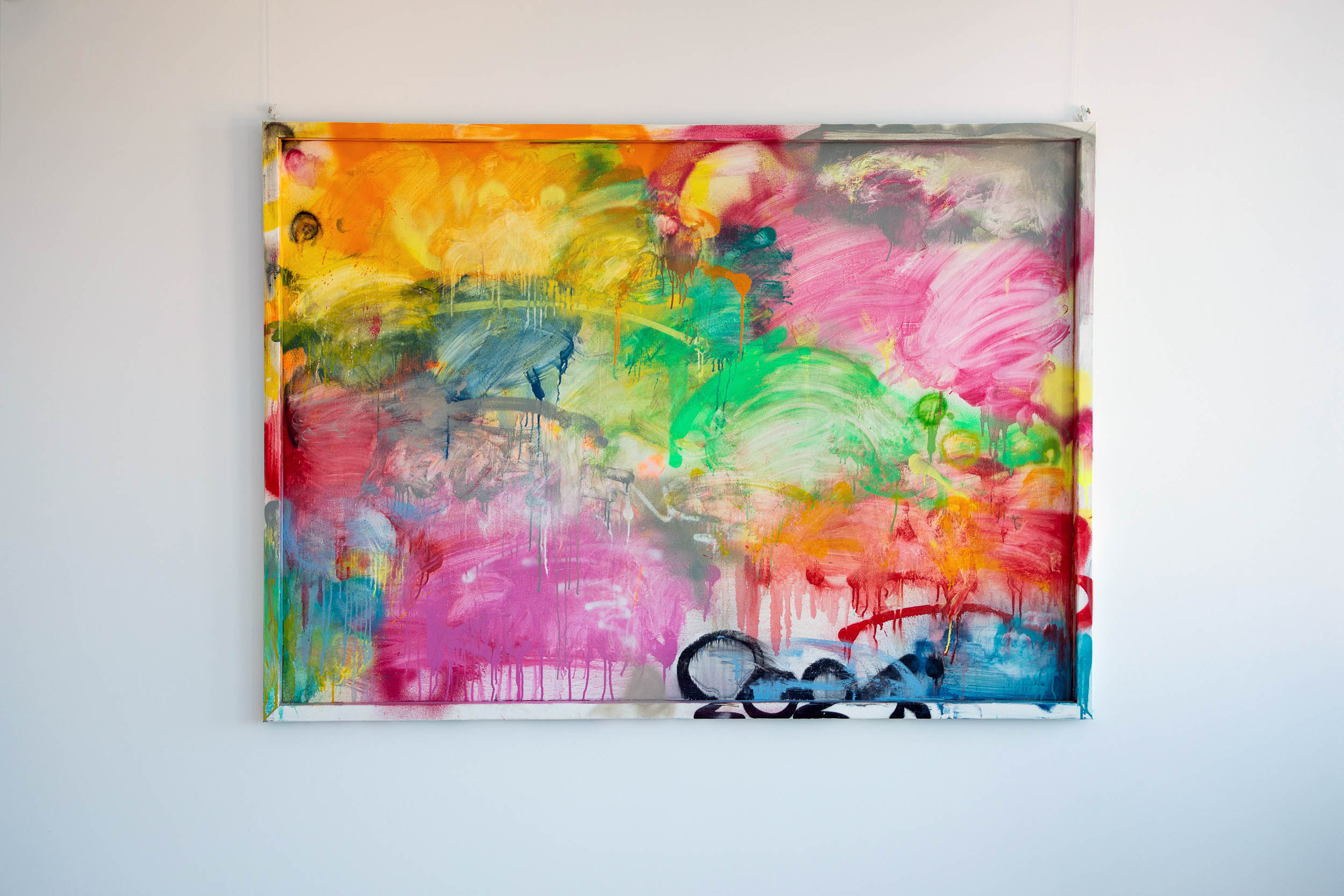
Furger’s unique approach is characterized by a deliberate blurring of lines between creation and destruction. He applies layers of paint, often vibrant and expressive, only to then meticulously clean them off or scratch them away, revealing ghostly imprints of what once was or could have been. This procedural element is paramount to his work. He seeks a "stroke of genius," an organic feeling that avoids contrivance, allowing the piece to exist in a state of "non-finito." The tags are "neither fully visible nor fully disappear," existing in a liminal space that invites contemplation rather than immediate decoding. For Furger, the ultimate goal is for the "whole work" to affect people, rather than individual letters or details drawing the viewer’s gaze too strongly. This distinguishes his work from traditional graffiti, where legibility and the artist’s tag are often paramount. His approach shifts the focus from the individual mark-maker to the broader urban dialogue, where layers of intervention tell a more complex story.

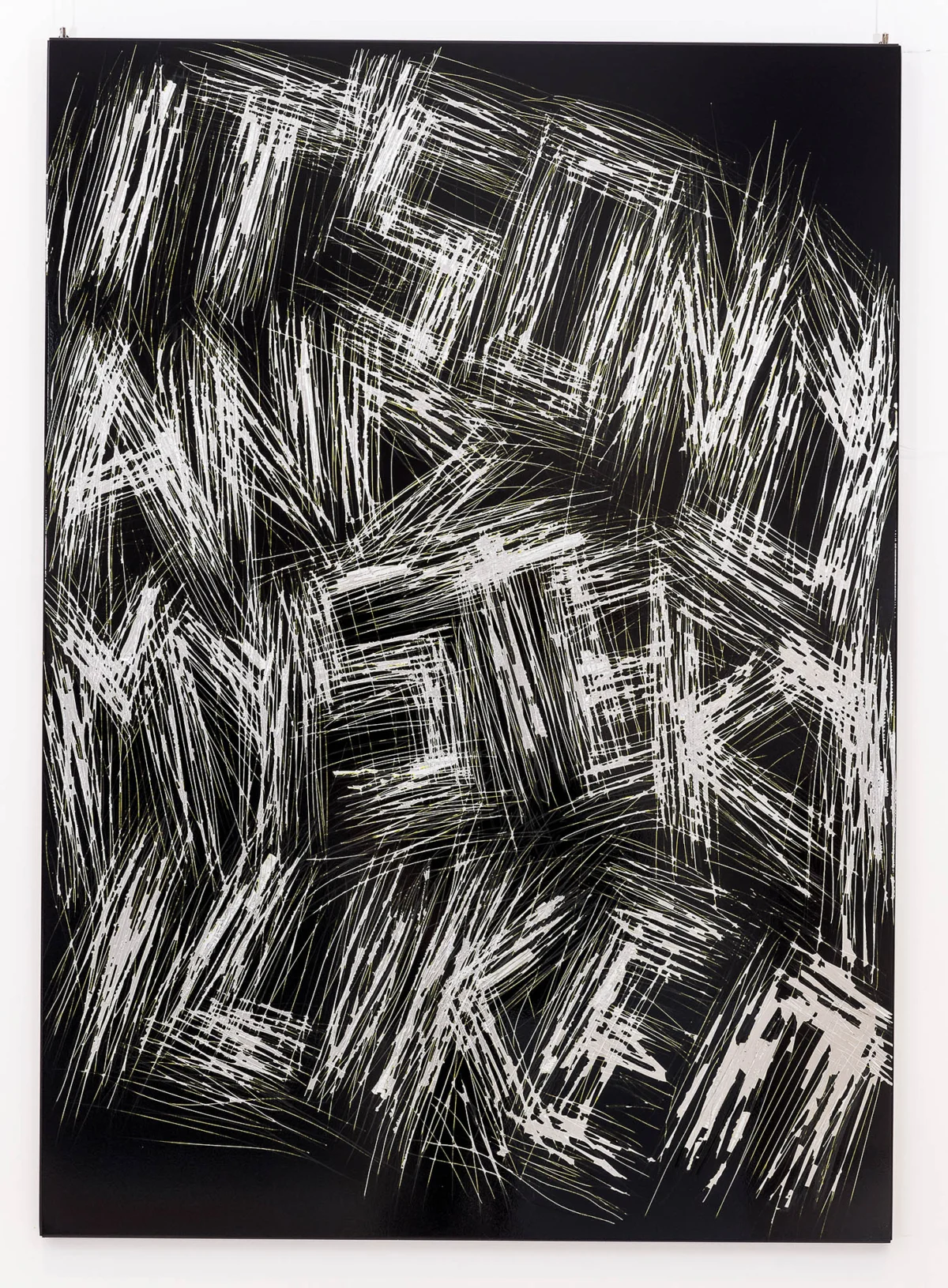
His "Sgraffito" series exemplifies this philosophy, involving "hard physical labor to scratch many tags and texts into specially painted metal plates." The term "sgraffito" itself, meaning "to scratch," traditionally refers to a technique of scratching through a surface layer to reveal a lower layer of a contrasting color. Furger applies this ancient technique to a contemporary context, imbuing it with the cultural weight of graffiti. In this series, the act of "destruction" becomes palpably physical, an intentional, laborious process that redefines what it means to create. While applying paint is a creative act, Furger emphasizes that "the act of destruction is more important," marking the true beginning of his artistic intervention. This inversion of the traditional creative process—where art is built up rather than stripped away—is central to his identity as an artist, pushing viewers to consider the profound implications of erasure as a creative force.
Technique and Tools: The Craft of Controlled Destruction
Furger’s artistic process is as deliberate and layered as the urban surfaces he references. His technique involves a meticulous application of paint, followed by equally precise removal or abrasion. This duality requires not only a keen artistic eye but also a deep understanding of his materials. He layers "lots of coats on top of each other," creating a rich, textural history on his canvases or metal plates. These layers are carefully built up, mimicking the accumulation of paint on urban walls over time. While many of his works are structured around the ghostly outlines of letters, reflecting the graffiti he reinterprets, he also explores compositions based purely on "buffed areas of color," demonstrating his versatility and conceptual depth. This allows him to abstract the phenomenon of the buff, moving beyond direct representation to explore its pure aesthetic qualities.
For years, Furger relied heavily on Montana WHITE spray paints for his studio work, appreciating its "glossy paint" quality which "worked really well with solvents" for his removal processes. The specific chemical properties of the paint were crucial to achieving the desired textural effects when manipulated. The discontinuation of this particular product necessitated an adaptation, and he transitioned to Montana BLACK, praising its "cans and the color palette." His preferred shades, jokingly noted by his colleagues as Juice, Koi, and Lollipop, reflect an initial inclination towards vibrant hues, though he now gravitates towards colors with "very good coverage, like Pear," which are essential for creating the solid base layers that he then deconstructs. This evolution in his material choice reflects a constant refinement of his process to achieve specific visual outcomes. Beyond spray paints, Furger utilizes "Corio from Paris" for his ink works, a potent material that further enhances the visceral impact of his destructive creative acts. Corio, known for its strong pigmentation and permanence, provides a challenging medium for his acts of erasure, making the "destruction" even more pronounced. This careful selection of tools highlights his methodical approach, where each material choice is dictated by its specific properties and how it contributes to the final, layered effect of his buffed aesthetics. The ability to manipulate these materials—applying, layering, and then systematically removing—is crucial to achieving the desired "non-finito" state that defines his unique artistic signature.

Identity, Context, and the Art World
The realm of graffiti art has historically been intertwined with anonymity and pseudonyms, a necessary measure given its often-illegal nature. Thierry Furger’s decision to "come forward with [his] face and real name" represents a significant pivot, marking a clear distinction between his art practice and his potential past involvement in street graffiti. He explains this choice as a strategic one, aimed at facilitating "dialogue" within the "art world" and enabling the sale of his work—a practical necessity for a professional artist. This transition from the clandestine to the public sphere underscores the evolving acceptance of graffiti aesthetics within mainstream art institutions, a phenomenon observed globally as street artists gain recognition. For instance, the transition of artists like Banksy (though still anonymous) from street to gallery, or the institutional embrace of artists like Shepard Fairey, illustrates this shift.
The context in which art is presented profoundly influences its perceived value. Furger acknowledges the inherent tension between "fine art in gallery spaces and vandalism in the streets," yet he refuses to pit them against each other. For him, "A good street piece is just as valuable as a beautiful studio work." He views both as "incredibly important to culture," advocating for an inclusive perspective that recognizes artistic merit irrespective of its environment or legality. This democratic view resonates with a growing number of artists and critics who challenge the traditional hierarchies of the art world, arguing that authentic expression holds intrinsic value regardless of its origin.
Feedback plays a crucial role in Furger’s process, particularly after periods of intense studio isolation. He values the "wide range of perspectives and ideas from people that I hadn’t considered myself." Notably, the "feedback received from writers in particular has always been very positive," indicating that his work, despite its focus on the "buff," is seen as an authentic and respectful commentary on their culture, rather than a critique. This positive reception from the very community whose actions he reinterprets is a testament to the depth and nuance of his artistic vision. It suggests that Furger has successfully captured an essential, albeit often painful, aspect of the graffiti experience, validating it through its transformation into gallery-worthy art, thereby bridging potential cultural divides.

Inspiration and Influences
Thierry Furger’s artistic sensibility is deeply informed by his surroundings and a rich history of urban expression. His inspiration is drawn directly from the "street" – from "old, poorly buffed trains in Italy" to the overlooked "no-man’s-lands, like abandoned places, where graffiti can still exist." These desolate spaces, shared with "hares, foxes, and copper thieves," are fertile ground for his observational practice, offering raw, unfiltered examples of transience and resilience. The visual palimpsests found in these forgotten corners of the city provide a constant wellspring for his creative output, serving as ready-made canvases that tell stories of past human activity and natural decay.
Beyond these immediate visual cues, Furger credits seminal works and figures that shaped his understanding of art and graffiti. He fondly recalls his childhood encounter with a documentary about Keith Haring, an artist whose boundary-pushing public works profoundly influenced him and sparked his desire "to become an artist too." Haring’s ability to transcend the street/gallery divide and imbue public space with accessible, powerful imagery parallels Furger’s own aspirations to create art that speaks to diverse audiences while maintaining its connection to urban culture. Haring’s legacy as an artist who brought street art to global prominence through his pop art sensibility resonated deeply with Furger.
Furthermore, foundational graffiti literature played a "huge influence" on him. He specifically cites classics such as "Subway Graffiti," "Subway Art," "Da Kukse wa," and "Die Züge gehören uns." "Subway Art," by Martha Cooper and Henry Chalfant, published in 1984, is particularly significant. It is widely regarded as the definitive photographic record of early New York subway graffiti, capturing its vibrant energy and revolutionary spirit, thereby immortalizing an art form that was inherently ephemeral. These books served not just as inspiration, but as educational resources, imbuing Furger with a deep reverence for the culture he now interprets. This confluence of direct urban observation, historical artistic precedents, and foundational graffiti knowledge creates a robust intellectual and aesthetic foundation for his unique artistic practice, allowing him to engage with the culture from a position of informed appreciation.

The Broader Implications: Redefining Art and Urban Spaces
Thierry Furger’s work carries significant implications for how we understand art, public space, and the ongoing dialogue between subculture and mainstream acceptance. By meticulously recreating the aesthetics of the "buff" in a gallery context, Furger forces a re-evaluation of what is considered art and what is dismissed as mere defacement. He highlights the inherent beauty in processes of decay and erasure, transforming symbols of urban neglect into objects of contemplation. This challenges the prevailing clean-slate mentality of urban planners and encourages a more nuanced appreciation for the layered narratives embedded in city walls. His art suggests that the city itself, with all its interventions, can be viewed as an ever-evolving, collaborative artwork.
His art also contributes to the ongoing legitimization of graffiti and street art within the fine art world. While figures like Jean-Michel Basquiat and Keith Haring paved the way by bringing street aesthetics into galleries, artists like Furger demonstrate that the conceptual depth derived from street culture extends beyond initial acts of tagging to include the very mechanisms of its suppression. By focusing on the buff, Furger not only preserves a fleeting urban phenomenon but also elevates the act of removal itself to an artistic gesture, questioning authorship and the finality of creation. This pushes the boundaries of traditional artistic practice, moving beyond the romanticization of the original graffiti piece to explore the complex interplay of forces that shape urban visual culture, thereby enriching the discourse around public art and its contested nature.
Furthermore, Furger’s collaboration with Montana Cans underscores the symbiotic relationship between artists and their material providers. Montana Cans, a brand synonymous with graffiti and street art, benefits from the association with an artist who innovates within the culture it serves. This partnership strengthens their brand identity as not just a supplier, but a cultural facilitator. For Furger, the partnership provides access to high-quality tools and a platform to reach a wider audience, including the very graffiti community from which he draws inspiration. This commercial dimension reflects a broader trend where companies deeply embedded in subcultures engage directly with artists to celebrate and support their evolution, bridging the gap between niche markets and broader cultural influence. The release of a Montana Cans x Thierry Furger T-shirt, nearly three decades after his initial connection with the brand founders, is a tangible symbol of this enduring relationship and the mutual respect it embodies.

Montana Cans and the Artist Partnership
The relationship between Thierry Furger and Montana Cans is a testament to long-standing collaboration and mutual respect, spanning nearly three decades. His connection with the brand’s founders dates back to the "mid-90s," a period when graffiti culture was rapidly evolving and gaining a wider, albeit still underground, following. This deep-rooted history goes beyond a simple artist-sponsor dynamic; Furger has been actively involved in the brand’s development, having had "the opportunity to provide feedback on test products and to visit the factory." This kind of engagement speaks to a trust and partnership that extends to the core of product innovation, ensuring that the tools developed meet the specific needs and desires of artists working within this demanding medium. It signifies Montana Cans’ commitment to being an authentic part of the culture, not just an external supplier.
Montana Cans, known globally for its high-quality spray paints designed for graffiti and street art, has consistently positioned itself as a supporter and enabler of artistic expression in the urban sphere. Their collaboration with Furger is a natural extension of this ethos. By aligning with an artist who explores the philosophical and aesthetic dimensions of graffiti’s lifecycle, Montana Cans reinforces its commitment to the culture in all its facets, not just the initial act of creation. This partnership signals an understanding that the art form is complex, evolving, and worthy of deep artistic inquiry, reflecting a mature engagement with the subculture it serves.
The culmination of this enduring relationship is the release of a "Montana Cans x Thierry Furger T-shirt," a significant milestone for Furger. He expresses immense gratitude for this opportunity, noting its profound personal meaning: "almost 30 years later!" This collaboration transcends a mere commercial venture; it symbolizes the recognition of Furger’s artistic journey and his unique contribution to the dialogue surrounding graffiti and contemporary art. It also serves as a direct link between the physical act of painting on the street or in the studio and the broader cultural economy, making Furger’s distinctive aesthetic accessible to a wider audience of enthusiasts and collectors. Such partnerships are vital in sustaining the artistic ecosystem, providing artists with visibility and resources while enriching brands with authentic cultural credibility. The message is clear: "Graffiti is here to stay!" and so too is the innovative spirit of artists like Thierry Furger