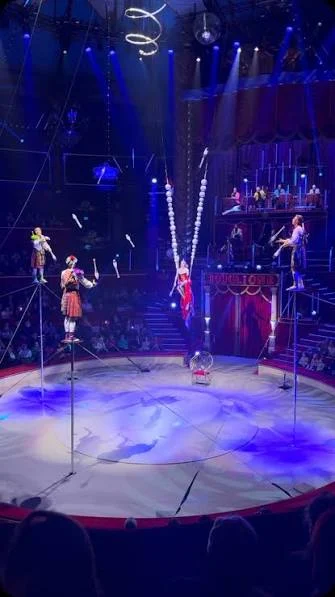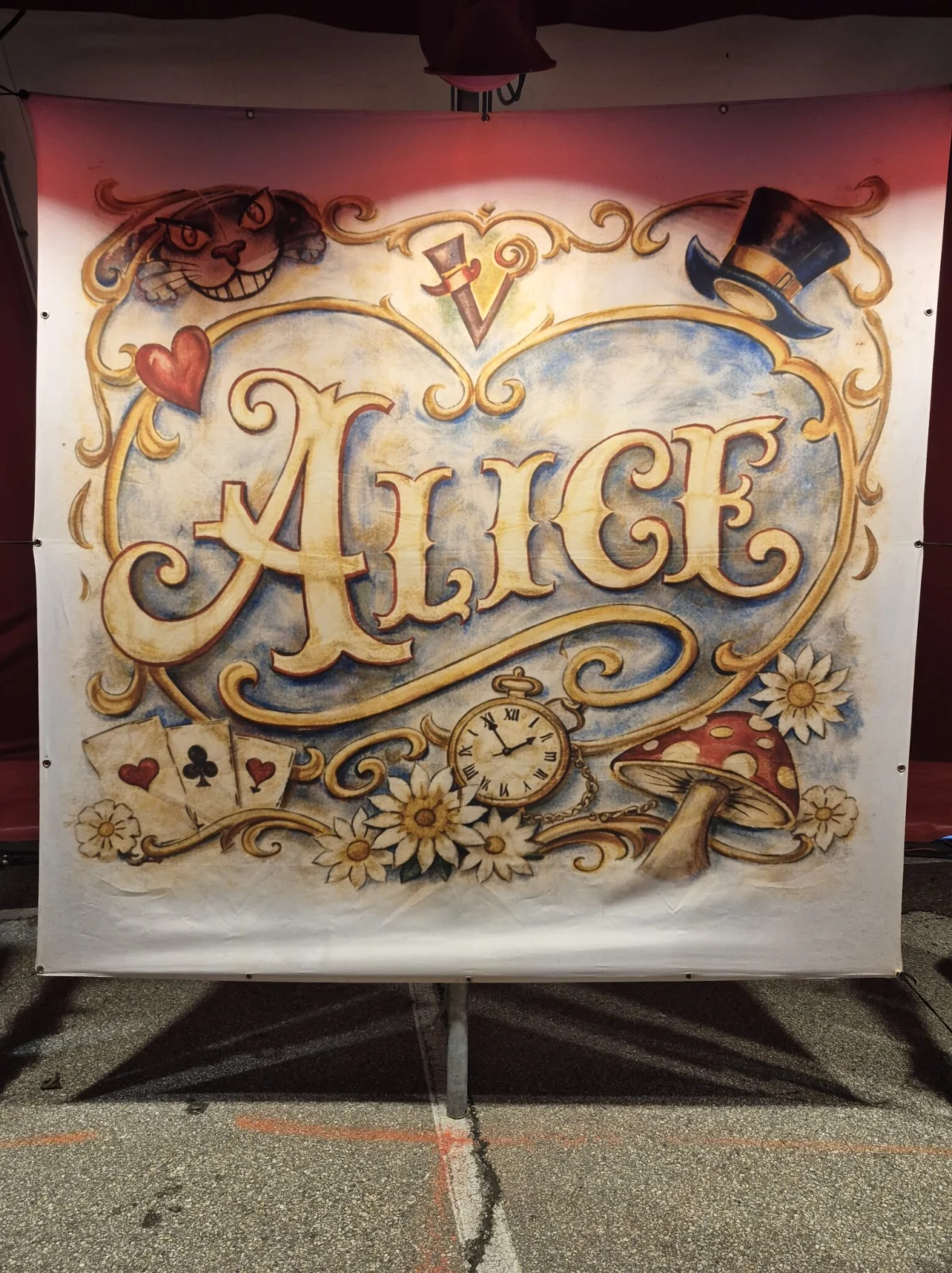
On August 19, 2026, circus enthusiasts and juggling aficionados gathered under the classic intimate big-top tent for a performance of Alice, a flagship touring production by the renowned Venardos Circus. Attended by performing arts chroniclers David Cain, Scott Cain, and Rick Robinson, the evening offered a masterclass in classic theatrical circus arts blended seamlessly with Lewis Carroll’s timeless literary masterpiece, Alice in Wonderland.

The production highlights a growing trend in contemporary boutique circuses: fusing narrative-driven theater with world-class physical performance. Operating within an intimate single-ring format, Venardos Circus delivers an immersive experience that contrasts sharply with the cavernous arenas of mega-productions, allowing audiences a visceral connection to the acrobatic feats, comedic timing, and musical artistry unfolding just feet away.

The Pre-Show Experience: A Juggling Masterclass by Patrick McGuire

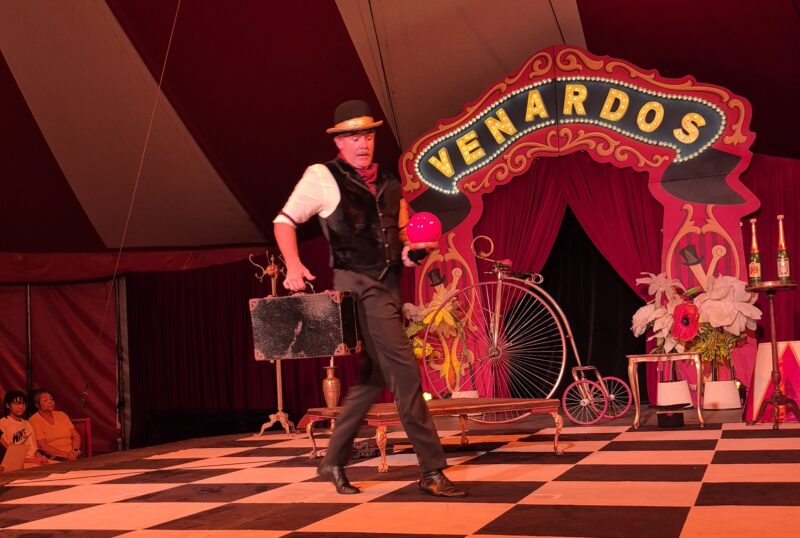
The evening commenced 45 minutes prior to the official curtain with an extensive and celebrated pre-show performance led by veteran virtuoso Patrick McGuire, a prominent figure within the international juggling community. Performing before a near-capacity crowd inside the ambient tent, McGuire established an immediate rapport through a sophisticated display of vintage vaudeville and technical mastery.

McGuire’s entrance set a whimsical tone as he navigated the ring on a penny-farthing tricycle, immediately engaging the audience with a blend of musicianship and object manipulation. His repertoire moved fluidly from accordion melodies to intricate chiming devil stick routines and sophisticated hat manipulation. Demonstrating exceptional balance and prop integration, McGuire executed complex combination tricks utilizing ordinary and extraordinary items alike—including walking canes, vintage suitcases, umbrellas, balancing bottles, and dynamic ball work.

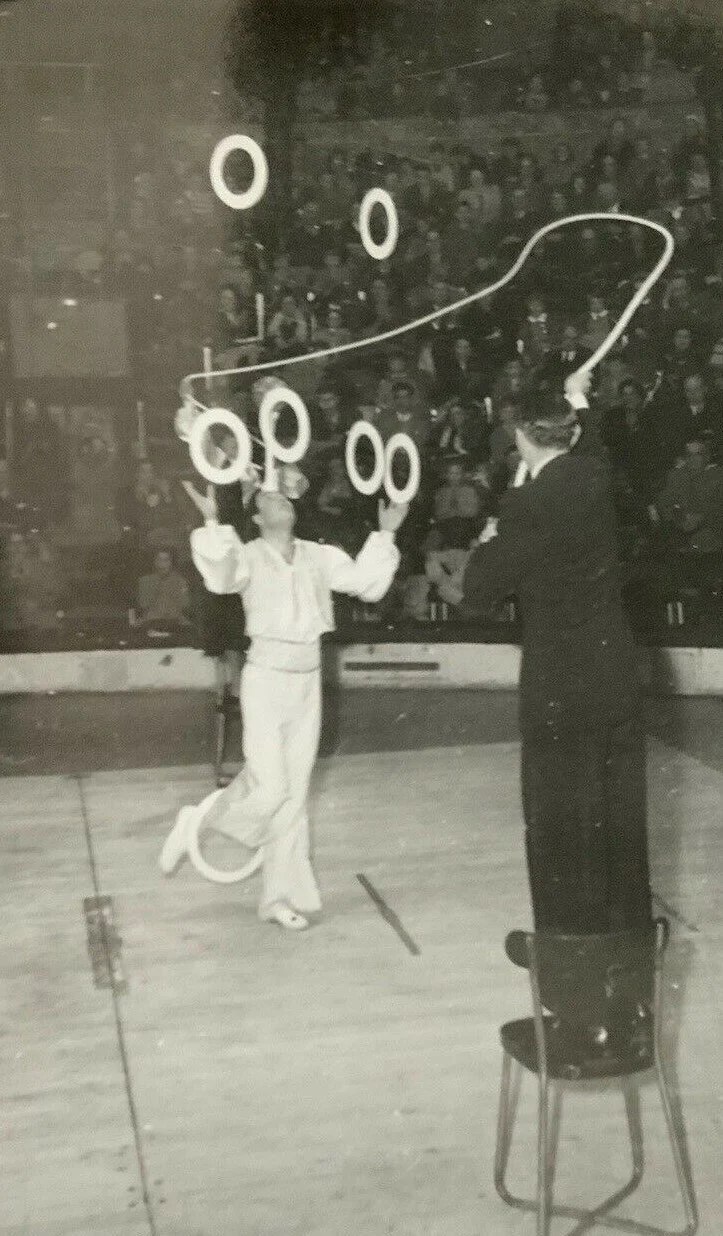
The highlight of McGuire’s pre-show residency culminated in his renowned ball juggling and bouncing exhibition. Transitioning effortlessly from traditional three-ball aerial patterns, he elevated the technical standard of the performance by introducing rigorous bouncing sequences scaling from three to five, and ultimately culminating in a flawless seven-ball bounce routine. This prolonged prelude served not merely as a warm-up, but as a standalone world-class exhibition that resonated deeply with the performance arts community present.
Narrative Integration and the Cast of Characters

Following the immersive pre-show, McGuire seamlessly transitioned into his role as the production’s ringmaster, adopting the persona of the iconic Mad Hatter. The narrative structure of Alice relies on a tightly knit troupe comprising eight principal performers, two dedicated dancers, and a pair of stagehands functioning as safety spotters cleverly disguised as Tweedledum and Tweedledee.

The formal production commenced with an energetic ensemble dance number that introduced the audience to the primary dramatis personae of Wonderland. Character adaptations included a graceful portrayal of Alice, alongside distinct interpretations of the Queen of Hearts, the White Queen, the White Rabbit, and the formidable Jabberwock. This opening sequence successfully established the whimsical, surreal atmosphere that would govern the subsequent two hours of variety acts.

Chronological Breakdown of Circus Acts

Following the introductory narrative sequence, the production unfolded through a diverse succession of traditional circus disciplines adapted to fit the Wonderland motif.

The initial specialty act featured a classical rolling globe routine executed with remarkable precision. The performer integrated ring juggling and dynamic hula hoop manipulation while navigating the unstable sphere across specialized inclined ramps, highlighting both equilibrium and multi-tasking dexterity.

Subsequent pacing introduced a solo trapeze performance by the artist portraying Alice. Despite the inherent spatial constraints of touring single-ring big tops, the choreography prioritized fluid aerial transitions and expressive character work over sheer vertical height, maintaining emotional resonance with the narrative arc.

Interspersed throughout the programmatic sequence, the White Rabbit performed two distinct clowning interludes. Utilizing custom props such as carrot-shaped horns and incorporating active audience participation, the comedic segments provided lighthearted relief while demonstrating strong physical comedy and trumpet proficiency.

Midway through the performance, the company presented a demanding duo vertical pole act. The strength-based discipline showcased synchronized climbs, gravity-defying drops, and synchronized holds that tested the physical limits of the performers, eliciting sustained applause from the pavilion.

This was followed by an intense hand-balancing exhibition. The artist executed prolonged one-arm balances and controlled elevations on specialized blocks, commanding absolute silence from the audience as tension mounted with each incremental adjustment.

As the program moved toward its climax, the aerial programming expanded to feature a creative second aerial performance utilizing apparatus limitations to showcase inventive binding and suspension techniques, followed immediately by the production’s technical centerpiece for aerialists: an evocative aerial chains act performed by the Jabberwock. The heavy metallic texture of the chains provided a stark visual and auditory contrast to traditional silks or ropes, emphasizing the monstrous, mythical nature of the character through powerful, controlled inversions and spins.

Production Design and Atmospheric Constraints

Operating a touring single-ring circus presents distinct logistical challenges, particularly regarding rigging heights and spatial limitations. Reviewers noted that while the compact dimensions of the tent occasionally restricted the amplitude of aerial swings and high-flying maneuvers, the creative direction successfully compensated by emphasizing tight choreography, intricate costume design, and immediate audience engagement.

Lighting and sound design played a critical role in transforming the modest footprint of the one-ring setup into a shifting, psychedelic dreamscape. The integration of live musical accompaniment further elevated the theatricality, bridging the gap between narrative exposition and raw physical feats.

Community Reception and Broader Industry Implications

The presentation of Alice by Venardos Circus underscores a broader movement within the contemporary live entertainment sector toward boutique, story-driven theatrical circus experiences. By stripping away the massive animal acts and impersonal stadium configurations of 20th-century entertainment, modern boutique productions rely heavily on the versatility of multidisciplinary artists—such as Patrick McGuire, who functions simultaneously as musician, comedic host, and elite technical juggler.

The engagement concluded with a final ensemble dance number, followed by an open-invitation staging where audience members were welcomed onto the performance floor to meet the cast and capture commemorative photographs. This accessible community interaction has become a hallmark of the Venardos touring model, fostering patron loyalty and bridging the traditional barrier between performer and spectator.

For circus historians, performing arts educators, and enthusiasts, productions like Alice offer valuable insight into the viability of small-scale, high-caliber touring arts organizations in the 21st century. By combining classical circus disciplines—juggling, acrobatics, rolling globe, and aerial arts—with a universally recognized literary narrative, Venardos Circus continues to demonstrate that intimacy and technical excellence remain a potent combination for modern audiences. Further information regarding tour schedules, ticketing, and regional engagements can be accessed via the official Venardos Circus platform.