
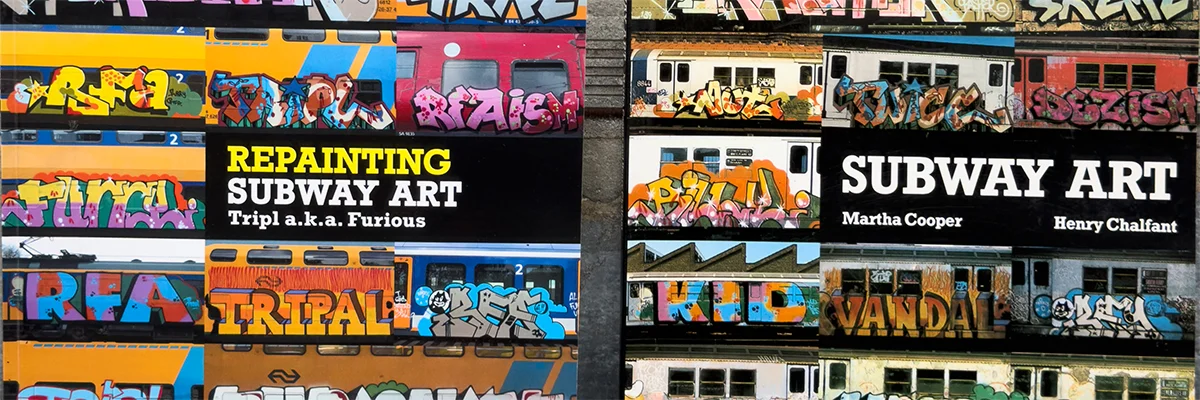
The publication of "Repainting Subway Art" by the Dutch graffiti artist TRIPL, also known as FURIOUS, represents perhaps the most ambitious act of archival homage in the history of street art. Spanning a decade of intense labor, the project involved the meticulous recreation of every one of the 239 images featured in the seminal 1984 book "Subway Art" by Martha Cooper and Henry Chalfant. This endeavor was not merely a stylistic exercise but a multi-disciplinary effort that required a profound understanding of technical painting, photography, historical context, and the logistical challenges inherent in subverting urban infrastructure. Published by Ruyzdael Publishing in 2024, the book stands as a testament to the enduring legacy of the New York City subway graffiti movement, bridging the gap between the golden age of the 1970s and 80s and the contemporary global street art landscape.
A Cultural Milestone: The Context of Subway Art
To understand the significance of TRIPL’s project, one must first recognize the stature of the original "Subway Art." When Martha Cooper and Henry Chalfant released their documentation of New York City’s subway graffiti in 1984, the publication functioned as a foundational text for an entire subculture. It was the first widely distributed book to treat graffiti as a coherent visual language rather than mere vandalism. For many aspiring artists across Europe and Asia, the book was a smuggled contraband item—photocopied, shared in underground circles, and studied with obsessive detail. It provided the blueprints for letter construction, color theory, and character design.
The book’s impact was catalytic. It turned local New York regionalism into a global aesthetic. By re-examining this "Bible of Graffiti," TRIPL’s project forces a dialogue between the past and present, asking what happens when a generation of artists raised on the digital archives of the 1980s attempts to physically inhabit the ghosts of that era.
The Methodology of Re-creation
TRIPL’s approach transcended traditional painting. While many artists might choose to pay homage to a single "whole car" or a specific piece by an icon like DONDI or Lady Pink, TRIPL committed to the full scope of the original 1984 catalog. This involved a rigorous process of adaptation. Because the geography and rolling stock of the Netherlands and wider Europe differ significantly from the New York City Transit Authority fleet of the early 1980s, TRIPL had to navigate these physical constraints.
The project required a deep dive into the photographic records of the original pieces. This meant replicating not just the paint work, but the environment of the shot. The artist had to source authentic clothing from the era, scout locations that mimicked the textures of New York’s depots, and even stage passengers and bystanders to mirror the candid nature of Cooper and Chalfant’s photography. For instance, in his recreation of the DONDI whole car, TRIPL was tasked with the dual challenge of reproducing the intricate, layered lettering of the original piece while simultaneously staging the atmospheric, action-oriented photography that defined the original documentation.
Chronology of the Project
The development of "Repainting Subway Art" was a long-term undertaking, rooted in a casual conversation that evolved into a systematic decade-long project.
- 2014: Initial conceptualization of the project among a group of European graffiti writers, initially treated as a localized experiment.
- 2015–2018: The core phase of research, during which TRIPL began cataloging every piece from the 1984 edition of "Subway Art" and planning the logistical requirements for each reproduction.
- 2019–2022: The primary execution phase, involving the painting of trains and the staging of photographs. This period was marked by the logistical challenges of securing access to rolling stock and maintaining historical accuracy in materials.
- 2023: Finalization of the manuscript and collaborative efforts with contributors Dr. Edward Birzin and Mikel van den Boogaard.
- 2024: Official publication of "Repainting Subway Art" via Ruyzdael Publishing, accompanied by exhibitions and academic reviews in journals such as the Nuart Journal.
Technical Data and Artistic Implications
The sheer volume of work involved in this project provides a unique data set for researchers interested in the evolution of graffiti techniques. By attempting to replicate the proportions, colors, and gestures of the original works, TRIPL has created a comparative archive.
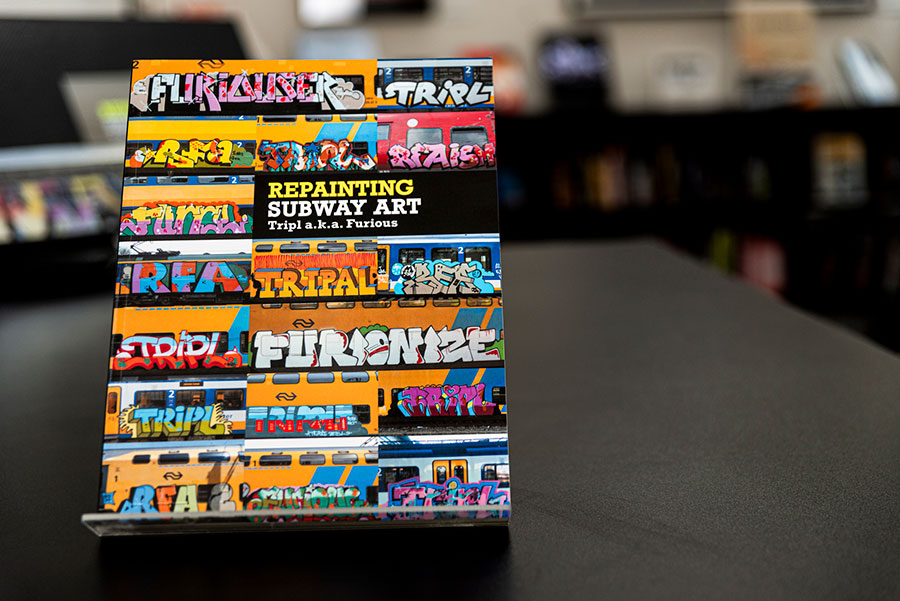
From an analytical standpoint, the project illustrates the shift in the graffiti medium. Modern aerosol technology, nozzle precision, and the availability of color palettes have changed since 1984. By using modern tools to recreate the past, TRIPL demonstrates both the limitations of the original artists and the evolution of the craft. The project also highlights the "slow-motion" nature of memory in the digital age. In a time where graffiti is often documented and consumed via fleeting social media stories, the deliberate, multi-year process of "Repainting Subway Art" acts as an act of resistance against the ephemeral nature of contemporary street art.
Perspectives from the Graffiti Community
The reception of the project has been largely positive within both the art historical community and the active writing scene. Daniël de Jongh, in his review for the Nuart Journal, characterized the work as a "reincarnation of the Bible of Graffiti in slow motion." This phrasing captures the reverence with which the project is viewed.
Critics and observers note that the project avoids the common pitfall of "pastiche." Instead of simply mocking or imitating the original, it treats the source material with the rigor of a classical painter studying the Old Masters. By replacing the names of the original writers with his own while maintaining the structural integrity of the original pieces, TRIPL acknowledges the lineage of the culture while asserting his place within it.
The Broader Impact on Street Art Preservation
The preservation of graffiti art is a field fraught with difficulty. Because the medium is inherently transient, the original pieces in "Subway Art" have long since been buffed or scrapped. The physical world of the 1980s NYC subway is largely lost to time. By reconstructing these images, TRIPL is not just recreating art; he is preserving a historical moment.
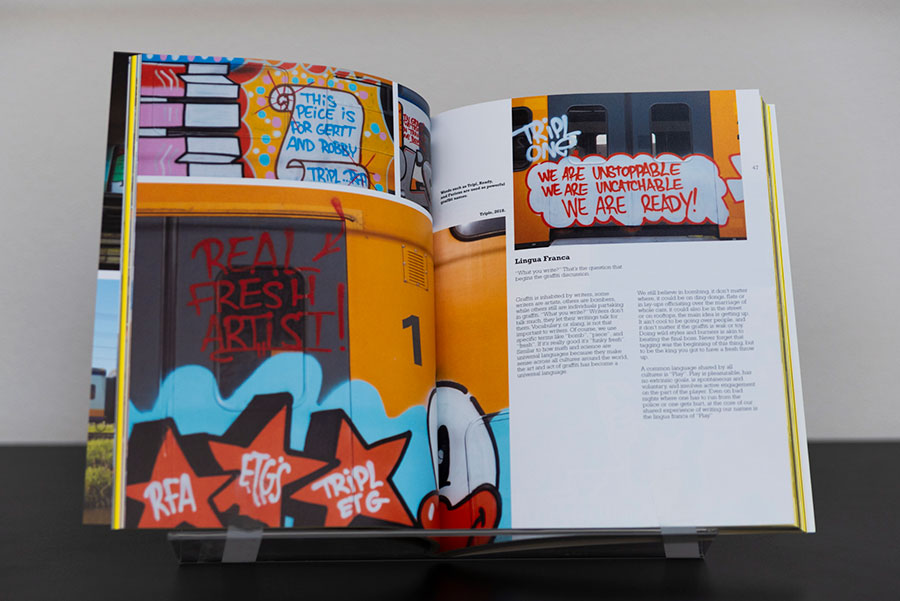
This project raises critical questions regarding the role of archives in street art. Can an act of re-creation be considered an original work of art? In the context of "Repainting Subway Art," the answer seems to be a definitive yes. The project serves as an educational tool for younger generations who may have never seen a painted subway car in person, let alone one from the era that defined the medium. It bridges the gap between the "wild style" era of the Bronx and the contemporary globalized street art movement.
Academic and Cultural Significance
The inclusion of academic voices, such as Dr. Edward Birzin, in the final publication underscores the shift of graffiti from a fringe criminal activity to a subject of serious cultural inquiry. The book is not merely a collection of photographs; it is a document that analyzes the semiotics of graffiti, the importance of documentation, and the sociology of urban spaces.
As cities continue to clean and sanitize their public transport systems, the ability to view these recreations provides a necessary counter-narrative to the "broken windows" theory of urban policing. It serves as a reminder that the subway was once a gallery for a generation of youth who had no access to traditional art spaces.
Conclusion
The project by TRIPL serves as a monument to the endurance of graffiti culture. By investing ten years into the reconstruction of a singular, defining document, the artist has ensured that the spirit of the 1980s New York subway scene continues to be a subject of active study. "Repainting Subway Art" is more than a book; it is a comprehensive, physical archive that challenges the reader to consider the cost of creation, the necessity of preservation, and the power of artistic lineage. Whether viewed through the lens of a graffiti writer, an art historian, or a casual observer, the project stands as a singular achievement in the history of street art documentation. Through this work, the original "Subway Art" finds new life, proving that the culture it birthed is far from static—it is a living, breathing history that continues to be written, painted, and re-painted across the globe.