
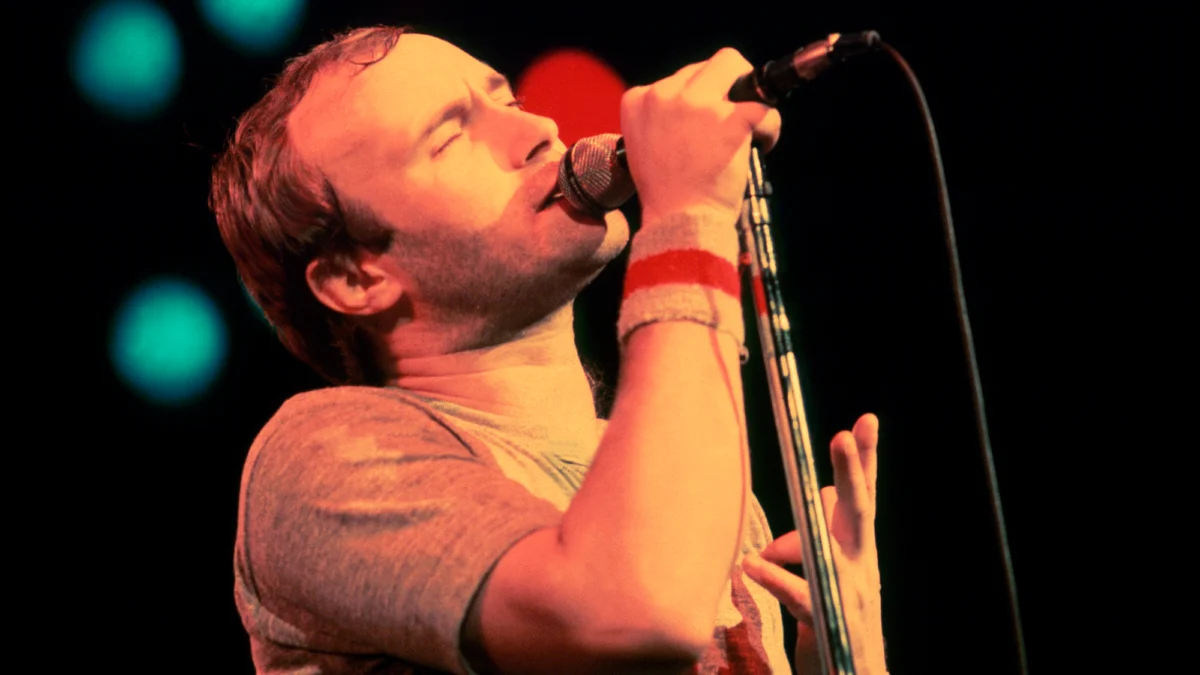
The legendary drummer and singer-songwriter Phil Collins has provided a rare glimpse into the unconventional creative process that birthed one of the most recognizable songs in popular music history. Speaking during an appearance on BBC Radio 2’s "Tracks of My Years" series, the former Genesis frontman revealed that his 1981 debut solo single, "In the Air Tonight," was largely the product of spontaneous improvisation rather than meticulous composition. Collins disclosed that approximately 80 percent of the track was conceived on the fly, a revelation that challenges the traditional narrative of high-stakes studio production and highlights the intuitive nature of his early solo work.
Throughout the interview, Collins detailed a songwriting philosophy that prioritizes atmosphere and subconscious "feeling" over deliberate thematic planning. He explained that he rarely approaches the piano or a notebook with a predetermined subject in mind. Instead, his compositions typically emerge from a symbiotic relationship between melody and vocal experimentation. This methodology, while perhaps unorthodox for an artist of his stature, became the foundation for his multi-platinum debut album, Face Value, and established a template for a career that would eventually see him become one of the most successful solo artists of the 20th century.
The Spontaneous Genesis of a Masterpiece
According to Collins, the creation of "In the Air Tonight" began not in a high-end recording facility, but in the intimate setting of his own home. At the time, Collins was navigating a period of profound personal upheaval following the dissolution of his first marriage to Andrea Bertorelli. This emotional backdrop served as the silent engine for his creative output. "I suppose a lot of my lyrics come from somewhere. I very rarely sit down and think, ‘What am I going to write about?’ I don’t ever do that," Collins stated. He described a process where the music acts as a catalyst: "Something usually comes when I’m playing a piano. Something will develop if I’m lucky, and then what I’m going to sing kind of goes along with it or comes along very soon afterwards."
For "In the Air Tonight," the initial spark was a specific chord progression and a unique sonic texture. Collins recalled being alone in his bedroom, working with a home recording setup. He was focused on the technical aspects of the recording as much as the musical ones, noting that he was watching the meters on his console to ensure the signal was strong. "I was playing and looking at the meters on my console. It was only me. It was in the bedroom. So I’m trying to get the meters to move," he said. This solitary environment allowed for a level of experimentation that might have been stifled in a professional studio with other musicians or producers present.
A Bedroom Studio and a Roland Drum Machine
The backbone of "In the Air Tonight" is its haunting, minimalist drum machine pattern. Collins programmed a Roland CR-78 CompuRhythm, one of the first programmable drum machines, to create an "interesting pattern" to play along with. This electronic pulse provided the atmospheric foundation upon which the rest of the song was built. Collins noted that the piano sound heard on the final record is essentially the same one he captured during those initial home sessions. "I had this lovely sound, which is the sound you hear on the record," he explained. "It is the version of when I first kind of wrote it on the record. I might have done it once or twice, but I certainly didn’t labor on it."
The improvisation extended directly into the vocal performance. Collins explained that he sang along with the chords and the drum machine simply to fill the sonic space and find a "voice" for the track. The lyrics for the first verse were birthed in this moment of pure spontaneity. "The words that came out on that first verse were improvised," Collins confirmed. He jokingly attributed some of this creative fluidity to his state of mind at the time, quipping, "Maybe it was that extra whiskey at lunch time. I don’t know." Regardless of the external factors, the result was a lyrical depth that felt deeply personal yet remained enigmatically open to interpretation.
Face Value and the Emotional Catalyst of 1981
The success of "In the Air Tonight" was not an isolated event but the beginning of a broader stylistic shift for Collins. The improvisational technique he discovered during the song’s creation became the blueprint for the entirety of his 1981 album, Face Value. Collins realized that the raw, unpolished nature of his home demos captured an emotional truth that re-recording might dilute. "That started the way I started writing," he said. "I mean, that was pretty early on in the writing process of what was to become Face Value. I thought, ‘Well, that works. That’s the way I can do it.’"
Face Value was a significant departure from the progressive rock complexities of Genesis. It was an intensely personal, R&B-influenced record that dealt with themes of heartbreak, anger, and isolation. By leaning into improvisation, Collins was able to bypass the analytical mind and tap directly into the visceral emotions he was experiencing. The album eventually peaked at number one in the UK and reached the top ten in the United States, cementing Collins as a formidable solo presence.
The Technical Revolution: Gated Reverb and the SSL Console
While the songwriting was improvised, the eventual studio polish of "In the Air Tonight" led to a technical revolution in music production. Working with engineer Hugh Padgham at Townhouse Studios in London, Collins utilized the "Listen Mic" on a Solid State Logic (SSL) 4000G mixing console. This talkback microphone, which had a heavy compressor to allow engineers to hear musicians talking in the studio, was accidentally left on while Collins was playing the drums.
The resulting sound—a massive, explosive drum tone that abruptly cut off—became known as "gated reverb." This accidental discovery, combined with Collins’ improvised songwriting, created a sonic signature that defined the sound of 1980s pop and rock. The iconic drum fill that occurs more than three minutes into "In the Air Tonight" is often cited by musicologists and drummers as the single most influential drum moment in recording history.
From Studio Accident to Global Phenomenon: A Chronology of Success
The timeline of "In the Air Tonight" reflects its slow-burn journey from a bedroom demo to a cultural touchstone:
- 1979–1980: Following the hiatus of Genesis and his marital separation, Collins records demos in his home studio in Surrey, England.
- January 1981: "In the Air Tonight" is released as a single. It climbs to number two on the UK Singles Chart.
- February 1981: Face Value is released to critical and commercial acclaim.
- 1984: The song experiences a massive resurgence in the United States after being featured in the pilot episode of the television series Miami Vice. This usage is credited with pioneering the use of popular music to drive cinematic narrative in television.
- 2007: A Cadbury commercial featuring a gorilla playing the famous drum fill goes viral, introducing the song to a new generation.
- 2020: The song returns to the charts worldwide after a "reaction video" by YouTube creators Tim and Fred Williams (Twins The New Trend) becomes a global sensation, demonstrating the track’s enduring ability to surprise listeners.
Urban Legends and the Persistence of Mystery
The improvised nature of the lyrics contributed to one of the most persistent urban legends in music history. For decades, listeners speculated that the song was about Collins witnessing a drowning and later confronting the person who failed to help the victim at a concert. Collins has repeatedly debunked this myth, explaining that the lyrics were simply an outpouring of the "anger" and "bitterness" he felt during his divorce.
The fact that the lyrics were improvised supports Collins’ dismissal of the urban legend. Because he was not "writing about" a specific event, the words were more about a "feeling" or an "atmosphere" rather than a narrative. This ambiguity has allowed the song to remain relevant, as listeners continue to project their own emotions and experiences onto its haunting verses.
The Legacy of a Momentary Impulse
The revelation that Collins’ signature song was 80 percent improvised serves as a testament to the power of artistic intuition. In an industry often dominated by focus groups, co-writers, and meticulous editing, "In the Air Tonight" stands as a monument to the "first thought, best thought" philosophy. Collins’ willingness to trust the sounds he captured in his bedroom, rather than "laboring on it," resulted in a track that feels as vital today as it did four decades ago.
The broader implications of Collins’ disclosure suggest that the most enduring art often comes from a place of vulnerability and unplanned expression. By allowing the "extra whiskey at lunch time" or the simple visual of a moving meter to guide his hand, Collins captured a moment of lightning in a bottle. As he noted in the interview, the process taught him that he didn’t need to overthink the craft: "You only need a couple of lines, two or three lines, and you kind of know what it’s going to be about or what the feeling is."
Today, as Collins manages ongoing health challenges that have limited his ability to perform, his reflections on his creative peak offer a poignant reminder of the spontaneity that fueled his rise. "In the Air Tonight" remains a staple of classic rock radio, a favorite for cinematic trailers, and a masterclass in atmospheric production—all stemming from a solitary afternoon in a bedroom where the meters just happened to move in the right way.

![Iron Maiden Legend Nicko McBrain Turned Down Trump Golf Invite: [He] Should Be Put in Jail](https://worldbusk.org/wp-content/uploads/2026/10/iron-maiden-legend-nicko-mcbrain-turned-down-trump-golf-invite-he-should-be-put-in-jail.webp)