
The history of modern variety entertainment is largely preserved through the faded ink of early twentieth-century newspapers, where masters of specialized performance occasionally paused to share the mechanics of their craft with the general public. Among the most intriguing archival recoveries in recent years is a comprehensive ten-part instructional series published in the United States during the early 1920s by Rasso, a celebrated European and American juggler. Through meticulous archival research conducted by sports juggler and historian Esteban Vélez, these forgotten lessons have been brought back to light, offering both a fascinating glimpse into the vaudeville era and a surprisingly rigorous foundational guide to the mechanics of single- and multi-ball manipulation.
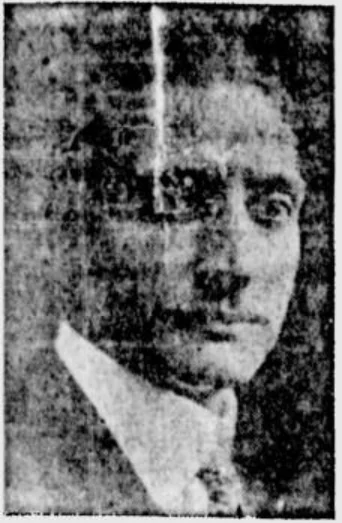
Born in Strasbourg, then part of Alsace-Lorraine, Rasso emerged from a rich lineage of theatrical artistry. His father achieved renown as a professional juggler and a prominent member of the famed "Rasso Trio," while his mother pursued a career as an opera singer. This dual exposure to high art and physical comedy shaped Rasso’s early development. In a revealing 1922 interview with The Herald, the performer recounted a childhood steeped in artistic instruction and unorthodox practice routines. Sent to Italy by his mother to study vocal performance under the celebrated maestro Ugulini, the young Rasso balanced his academic pursuits at an English convent school with an irrepressible urge to imitate his father’s dexterity.
Long before he ever stepped onto a professional stage, Rasso found his makeshift training grounds in some of history’s most unusual locations. He famously recalled practicing his early tosses using ancient Roman stones within the underground dungeons of the Colosseum. By the time he returned to Strasbourg to complete his formal education, his father had begun imparting structured juggling lessons. Rasso officially left school at the age of seventeen, boasting that he had successfully mastered the manipulation of virtually every loose object within his academic institution—including his own textbooks.
The Vaudeville Context and the Golden Age of Variety

To fully understand the significance of Rasso’s newspaper instructional columns, one must examine the cultural landscape of the 1920s. During this era, vaudeville and variety shows dominated North American and European entertainment. Touring performers were treated as bonafide celebrities, drawing massive crowds to urban theaters. Juggling, long regarded as an ancient physical discipline, experienced a renaissance on the Vaudeville circuit, as acts competed to introduce increasingly complex feats of dexterity, balance, and prop manipulation.
However, the barrier to entry for aspiring amateurs was exceptionally high. Without centralized training academies, modern instructional books, or digital video tutorials, prospective jugglers relied entirely on direct mentorship, traveling shows, or rare print guides. Recognizing the growing public fascination with the dexterity arts, major metropolitan newspapers—such as the Oakland Tribune and the Long Beach Telegram—frequently partnered with prominent performers to publish serialized guides. These columns served a dual purpose: they satisfied public curiosity while functioning as powerful promotional tools for touring acts. Rasso’s decision to publish a ten-part beginner’s guide represented a democratization of a traditionally secretive craft, translating elite theatrical skills into accessible pastimes for the American public.
Anatomy of the Craft: Rasso’s Foundational Lessons
The recovery of Rasso’s complete ten-part series provides a rare window into pedagogical methods of the 1920s. Rather than rushing into complex routines, Rasso emphasized meticulous foundational mechanics, patience, and spatial awareness. The first two lessons, originally printed in late 1921 and early 1922, establish a strict blueprint for beginner development.
Lesson One: The Single Vertical Throw

Published in the Oakland Tribune on March 12, 1922, the first lesson focused exclusively on the "single vertical throw" executed with a single ball. Rasso introduced the installment with a humorous anecdote from his childhood, recalling how his initial attempt to master the art in his family’s kitchen resulted in a stray ball shattering his mother’s prized porcelain china set—a mishap that promptly forced his practice sessions outdoors to the safety of the family barn.
For equipment, Rasso advised readers to visit local variety stores to purchase a hard rubber ball measuring roughly an inch and a half to two inches in diameter, noting that these mirrored the implements used by professionals. Crucially, he recommended purchasing three identical balls immediately, anticipating future lessons.
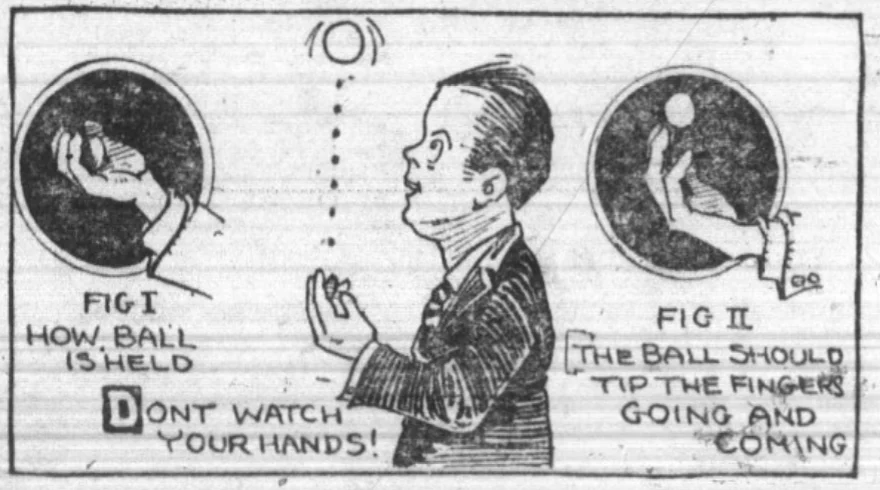
The mechanics of the single vertical throw were broken down into precise kinetic steps:
- The Grip: The ball is held loosely in the palm, secured gently by the fingers near the upper portion of the palm.
- The Release: The ball is tossed upward with a fluid motion, rolling smoothly out over the fingertips, which act as a physical guide to ensure a straight vertical path.
- The Catch: Rasso explicitly warned against catching the ball with a flat, rigid palm accompanied by a loud slap, which risks bouncing the object away. Instead, the hand must cushion the impact by allowing the ball to touch the fingertips first, rolling naturally into the palm as the fingers close around it.
- Height and Posture: Beginners were instructed to keep tosses modest—approximately twelve inches (30 centimeters)—and to practice symmetrically with both the right and left hands until the ball could be controlled along a strictly vertical line without requiring erratic hand shifts. Furthermore, Rasso stressed that the eyes must track the object rather than the hand, and that the arms must swing freely from the shoulder with relaxed elbows rather than remaining rigidly pinned to the sides.
Lesson Two: The Double Vertical Throw
Building directly upon the first lesson, the second installment—published in the Long Beach Telegram on November 29, 1921—introduced the challenge of managing two objects within a single hand. Rasso noted that this milestone was a major source of personal pride during his youth, achieved only after overcoming significant trial and error regarding hand positioning.

The core technique of the double vertical throw relies on a specific dual-grip configuration:
- One ball is nested deeply in the palm, secured securely by the ring and little fingers.
- A second ball is held forward, gripped tightly between the index finger, middle finger, and thumb.
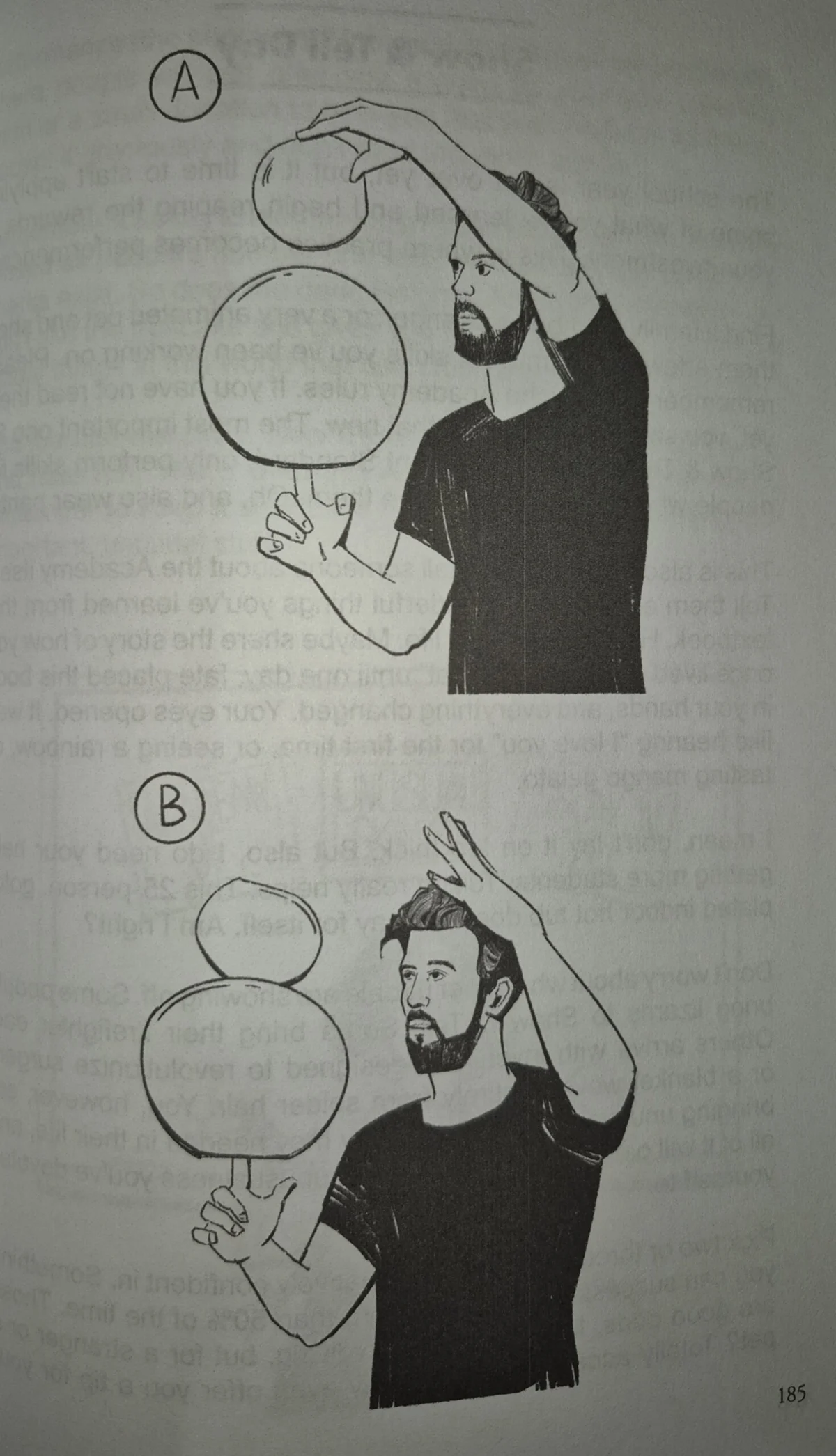
This configuration allows the juggler to release the front ball without disturbing the ball resting in the palm. Once the first ball (Ball A) is tossed approximately two feet into the air, it does not follow a purely linear path down; rather, it is angled slightly so that its downward descent occurs roughly two inches to the right of its upward trajectory. Just as Ball A reaches its apex and begins its descent, the second ball (Ball B) is tossed upward along Ball A’s original ascent line. This temporal and spatial offset prevents mid-air collisions. As Ball B reaches its highest point, the juggler catches the descending Ball A and immediately re-launches it, creating a continuous, wheel-like rotation.
Rasso also detailed a structural variation wherein Ball A travels in a strictly vertical line while the hand shifts slightly to the side to give Ball B its own distinct, non-overlapping up-and-down course.
Pedagogical Philosophy and Professional Realism
A remarkable aspect of Rasso’s instructional writing is his pragmatic realism regarding career aspirations. Unlike modern sensationalized guides that promise instant mastery, Rasso explicitly cautioned his readers against viewing his columns as a guaranteed pathway to professional stardom. In his concluding remarks to the first lesson, he offered a candid assessment of the entertainment industry: "Unless you are sure you have the talent as an actor, and talent as a juggler, I do not advise you to go in for professional juggling."

Instead, Rasso framed his lessons as a form of physical education and cultural appreciation. By learning the basic mechanics of a single- and double-ball throw, everyday citizens could better comprehend the immense physical discipline, timing, and dedication required by professional vaudeville performers. His columns sought to transform passive theatergoers into informed spectators who possessed a tactile understanding of physical dexterity.
Implications and Archival Significance
The rediscovery and compilation of Rasso’s complete ten-part newspaper series by historians like Esteban Vélez offer profound implications for the preservation of circus and variety history. These texts bridge the gap between oral traditions of the nineteenth-century circus and the mass-media dissemination of the twentieth century.
From an analytical standpoint, Rasso’s instructional columns demonstrate how early media utilized niche physical arts to engage readers. The step-by-step breakdowns, accompanied by early line drawings and photographic figures, represent an early form of serialized physical education that predated modern instructional video formats by decades. By examining these primary sources, contemporary jugglers and historians gain a clearer understanding of how foundational movement theories were standardized and communicated across international borders during the height of the variety era.
Ultimately, Rasso’s legacy extends far beyond his physical performances in the theaters of Europe and the United States. Through his willingness to translate the secrets of the stage into accessible newspaper columns, he ensured that the timeless joy of manipulation remained a shared human endeavor—inviting generations of amateurs to pick up a rubber ball, step away from the fragile household items, and discover the delicate balance of hand and eye.