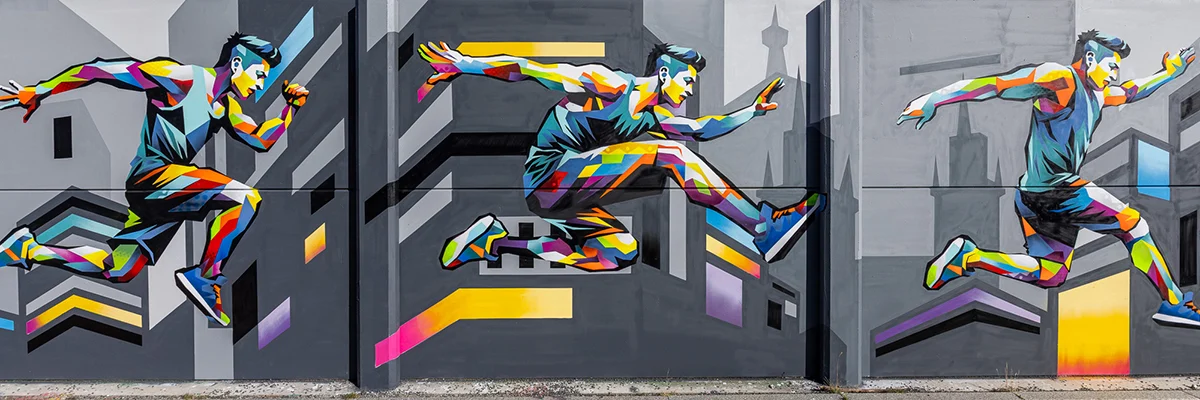
Prague’s urban landscape has long been characterized by its historic spires and baroque architecture, but a transformative shift is occurring within the city’s outer districts, where concrete infrastructure is being repurposed into one of Europe’s most ambitious public art installations. Stretching approximately 700 meters along Vlastina Street in the Ruzyně district of Prague 6, the Mural Ruzyně project serves as a sprawling, 1,800-square-meter canvas. It represents a significant departure from traditional, localized street art interventions, operating instead as a cohesive, curated sequence that integrates the work of 30 prominent Czech and international artists into a singular, flowing narrative of contemporary visual culture.

The Evolution of Urban Pictus
The project is the latest milestone for The Chemistry Gallery, an institution that has become a pivotal force in the Central European contemporary art scene. Under the stewardship of founder and artistic director Petr Hájek, the gallery has spent years advocating for the integration of high-concept street art into the public sphere. The Ruzyně initiative is the flagship centerpiece of the third edition of the Urban Pictus biennial, a platform established in 2022 to formalize the dialogue between urban environments and avant-garde muralists.

The trajectory of this movement can be traced back to the 2022 WALL STREET festival, which first experimented with the concept of long-form, site-specific mural installations. While that inaugural project laid the groundwork for large-scale public engagement, the 2026 Ruzyně project marks a maturation in scope. By bringing together 15 Czech artists alongside 15 international counterparts from countries including Spain, Austria, Romania, Italy, Ireland, France, Germany, and Poland, the organizers have effectively transformed a mundane stretch of commuter-facing concrete into an international gallery space.

A Curatorial Approach to Public Art
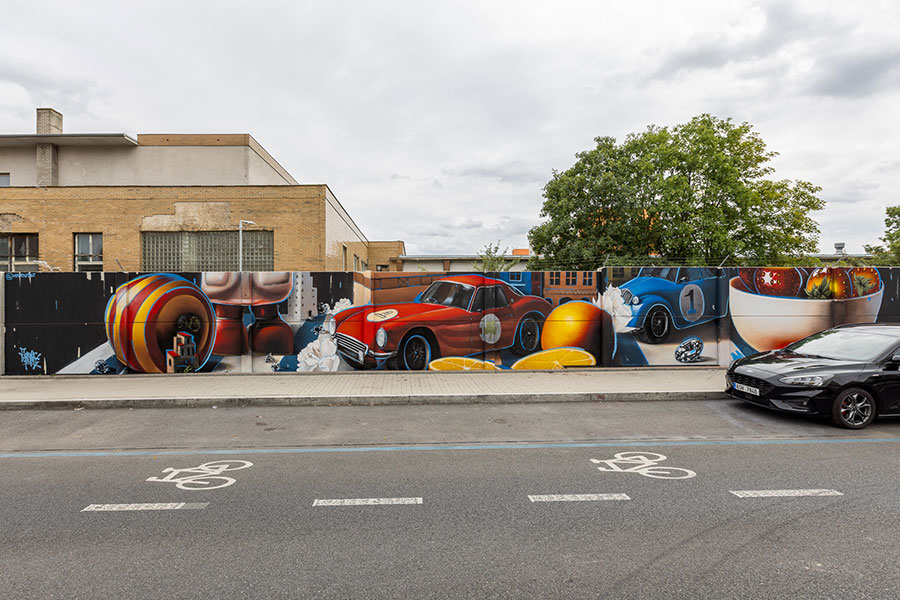
What distinguishes the Mural Ruzyně project from typical urban beautification efforts is its structural consistency. In many metropolitan areas, mural projects often suffer from aesthetic fragmentation, where individual commissions compete for visual dominance. Curatorially, the Ruzyně wall is managed as a continuous narrative. Each artist was not merely assigned a segment of the wall; they were tasked with participating in a hand-off of visual languages, ensuring that the transition from one stylistic approach to the next is fluid rather than jarring.

The theme, "City, Motion, Beauty," provides a conceptual tether for the diverse array of contributors. However, the execution remains remarkably varied, reflecting the current state of muralism as a medium that absorbs and reflects multiple disciplines.

Artistic Methodologies and Stylistic Diversity
The spectrum of artistic output displayed along Vlastina Street highlights the fluidity of modern street art. In the opening sections, viewers encounter the work of Dozy Doss, whose compositions merge hyper-realistic ornithological depictions with abstract graphic loops. This is contrasted by the work of RAME13, who opts for a more minimalist, illustrative economy, simplifying complex urban movements—such as cyclists and avian flight—into clean, symbolic forms.

Chemis, a well-known name in the Czech street art scene, takes a meta-textual approach, creating a trompe-l’oeil effect that mimics the cracking and degradation of the very concrete he is painting upon. This engagement with the physical substrate of the wall is mirrored by other contributors who explore different facets of the urban experience. YBR SHC utilizes the wall to construct a complex mechanical insect, suggestive of an integrated urban ecosystem, while MATE introduces a polished, airbrushed surrealism that distorts architecture and machinery, challenging the viewer’s perception of scale.
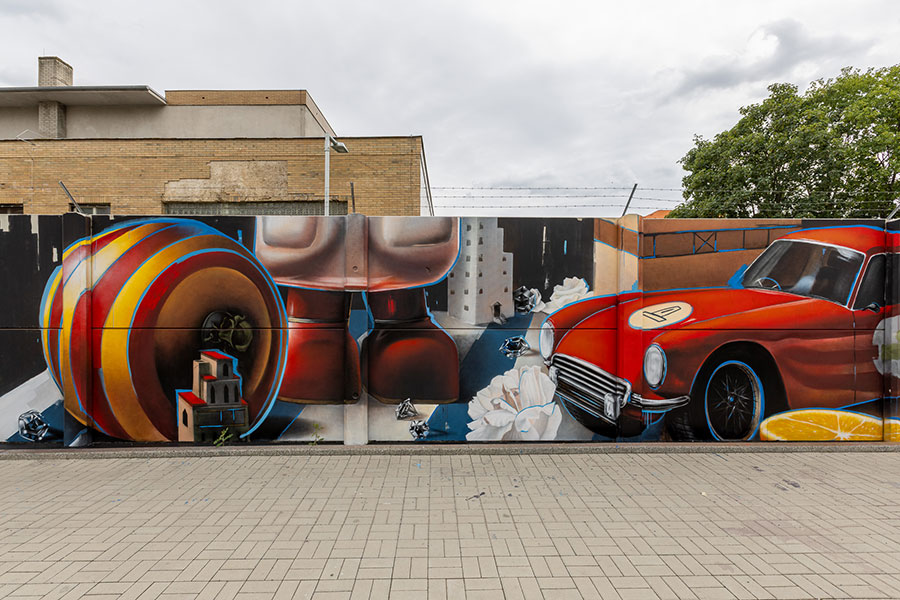
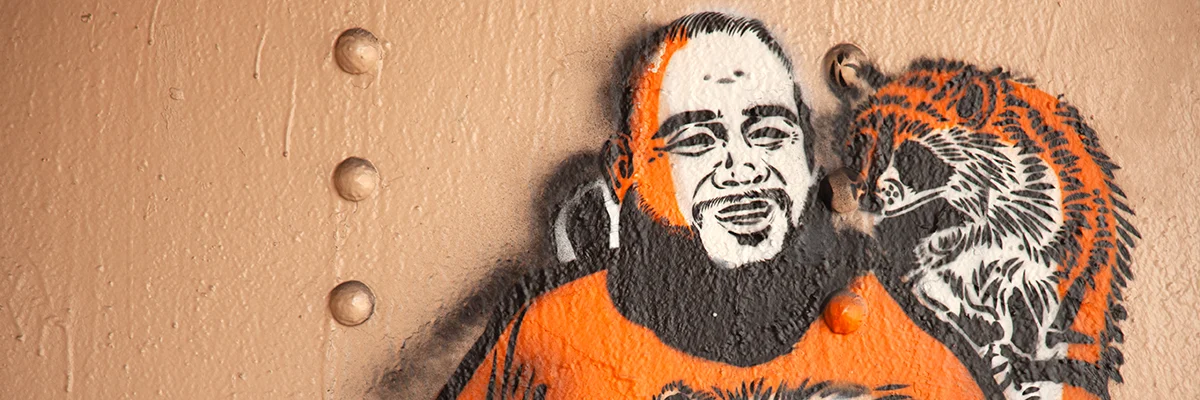
As the installation progresses, the stylistic divergence becomes more pronounced. Toy Box utilizes a narrative-heavy, graphic-novel style that feels inherently literary, contrasting sharply with the compact, symbolic, and comic-book-inspired iconography of Pauser. Further along, the Italian artist Luca Ledda creates a rhythmic, almost hypnotic sequence of hands, eyes, and botanical elements, while RUIN pivots toward hard-edged, modernist geometry. The interplay between these styles is intentional, as the curators sought to document the breadth of contemporary street art, which now seamlessly integrates elements of graphic design, traditional illustration, surrealism, and classical graffiti tags.
Strategic Significance and Urban Impact
The decision to utilize 700 meters of concrete in Ruzyně is not merely aesthetic; it is an exercise in urban renewal. In many post-industrial cities, long retaining walls and noise barriers serve as non-places—zones of transit that lack human connection or cultural identity. By investing in high-quality, professional-grade muralism, The Chemistry Gallery and the Prague 6 administration are attempting to improve the "psychological walkability" of the area.

Data from the Urban Pictus project suggests that such interventions reduce incidents of unauthorized graffiti and vandalism by instilling a sense of local pride and ownership among residents. Furthermore, the project serves as a permanent, open-air archive of the state of the art form in 2026. The logistical success of the project—coordinating 30 international artists to work on a single continuous surface—underscores the organizational capacity that The Chemistry Gallery has developed since its inception.

Official Stance and Future Implications
While the project is still in its first phase of public reception, early indicators from both the art community and local authorities suggest a positive reception. Petr Hájek has emphasized that the goal is not to force a specific style upon the public, but rather to provide a platform where the "clarity of intention" can be observed by the average pedestrian. The artists involved were provided with the necessary resources and logistical support to ensure that their works could be completed to a professional standard, avoiding the "hurried" appearance that often plagues less-supported public art projects.

The implication for future urban planning in Prague is clear: the success of the Ruzyně wall demonstrates that citizens are receptive to large-scale, challenging art when it is presented as part of a curated, high-quality narrative. As the city continues to expand, the integration of such "artistic infrastructure" may become a standard requirement for major public works projects.

Conclusion: A Living Canvas
As the Mural Ruzyně project continues to be a focal point for the 2026 Urban Pictus festival, it stands as a testament to the versatility of contemporary muralism. It is a project that refuses to be defined by a single aesthetic, instead embracing a fragmented, polyphonic approach to the "City, Motion, Beauty" theme. By bridging the gap between local Czech talent and international perspectives, the mural transforms 700 meters of concrete into a vibrant, living document of 21st-century visual expression. For the residents of Prague 6, the wall is no longer just a barrier—it is an evolving gallery that invites the public to move through history, design, and surrealism, one step at a time. The project is a clear indicator that the future of public art lies not in the solitary, competing mural, but in the collaborative, curated, and sustained transformation of the urban environment.