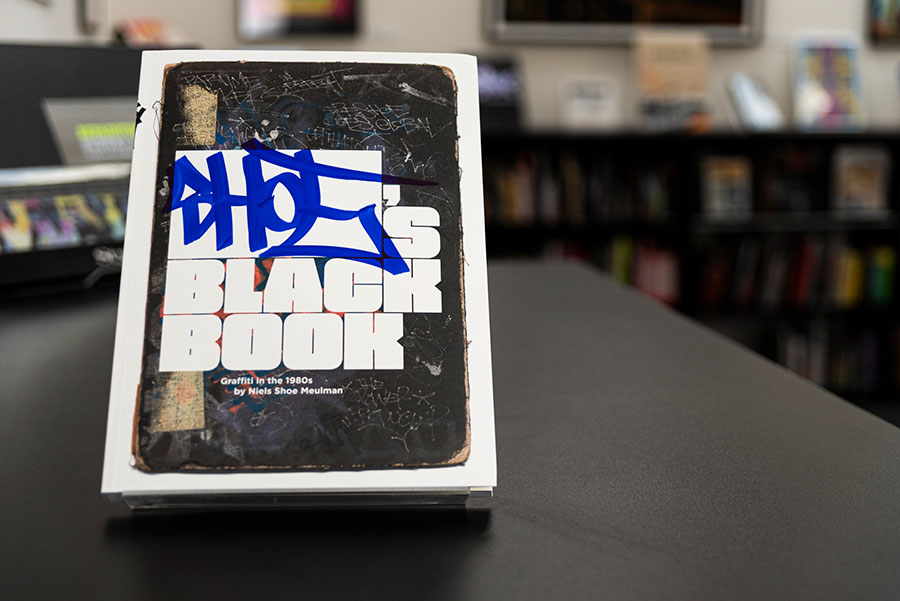
Published by Ryuzdael Publishing in 2024, this volume serves as a tactile, historical record of the work of Niels "Shoe" Meulman, a central figure in the evolution of modern typography and calligraffiti. Unlike curated archives that seek to sanitize the past, this collection presents the surviving pages of Meulman’s personal working black book from the mid-1980s—specifically spanning 1985 to 1987. The result is an oversized artifact that functions less as a museum piece and more as a window into the improvisational, high-stakes world of early European graffiti culture.
A Chronology of Subculture Formation
To understand the significance of this publication, one must situate the content within the broader timeline of European street art. In the early 1980s, graffiti in Europe was a nascent phenomenon, heavily influenced by the emergence of hip-hop culture in New York City. During this period, the movement was primarily underground, relying on clandestine networks and the physical exchange of information.
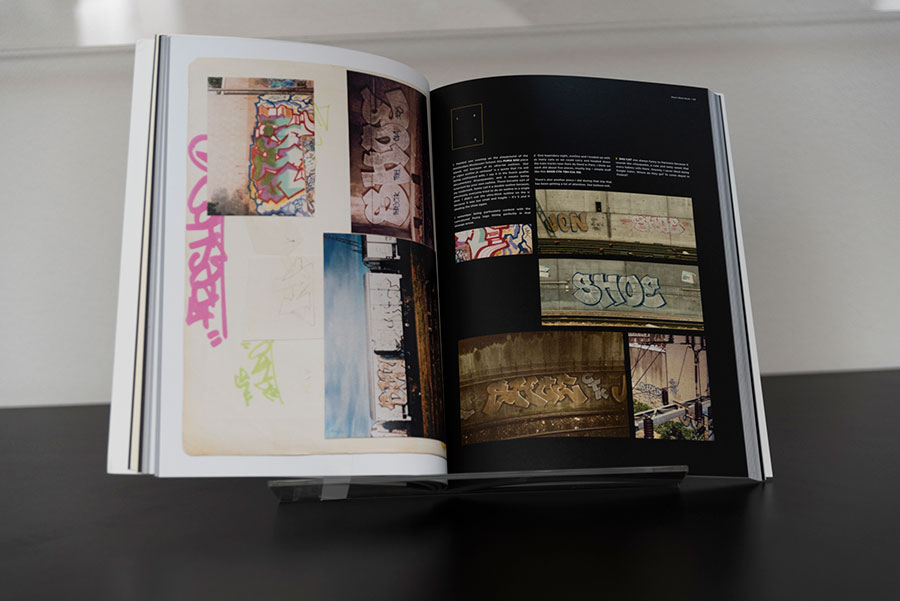
The years 1985 to 1987, the focal point of the book, represent a critical transition. It was a time when writers were moving beyond simple mimicry of American styles to develop indigenous European aesthetics. Meulman’s black book documents this shift through sketches, throw-ups, and evolving handstyles. The pages are not chronological; rather, they are associative, mirroring the chaotic, non-linear nature of the lifestyle. The book contains records of hotel-room meetings, technical observations on marker performance, and reflections on the geometry of letterforms—all captured in the ephemeral, frantic moments of a subculture in its infancy.

The Black Book as a Cultural Artifact
In graffiti culture, the "black book" is a repository of identity and skill. It is where writers refine their technique away from the risks of the street. In the context of Meulman’s work, the black book transcends its utility as a sketchbook. It becomes a record of movement—carrying the residue of train travel, the paranoia of police surveillance, and the camaraderie of peer review.
The documentation in the book highlights a key distinction: graffiti as an act of interpersonal behavior versus graffiti as a static aesthetic category. The repetitive nature of the sketches—specifically the obsessive reworking of the letter "S"—illustrates the discipline required to master the craft. This documentation provides a rare, candid look at the quiet competition that defined the scene. Writers were constantly observing, absorbing, and responding to the styles of their contemporaries. Before the advent of the internet and social media, this exchange was strictly "hand-to-hand," making the surviving physical documents of the era invaluable to art historians and cultural observers.
Supporting Data and Historical Context
The 1980s marked the dawn of the "writer era" in cities like Amsterdam, Paris, and Berlin. Data from the era, though difficult to quantify due to the illicit nature of the work, suggests a sharp increase in train-writing and public space intervention between 1984 and 1989. For many, including Meulman, the graffiti movement was a rejection of traditional gallery structures.
Meulman’s transition from a street writer to an internationally recognized contributor to typography and calligraffiti is a testament to the longevity of the skills developed in these early black books. The book demonstrates that the foundation of high-concept typography often lies in the aggressive, fast-paced practice of early tagging and wildstyle graffiti. The technical rigor required to produce clean lines under the pressure of potential arrest laid the groundwork for the professional design careers of many of that era’s most prominent figures.
Analytical Implications: Graffiti as Monument
Recent scholarship, including works by figures such as Rafael Schacter, has increasingly framed graffiti as a form of "living monumentality." While traditional monuments are built to be preserved, graffiti is an act of "doing." The publication of Shoe’s Black Book aligns with this academic shift, emphasizing that the value of the work is not merely in the final image but in the process of its creation.
By refusing to over-explain the anecdotes or romanticize the struggle, Meulman allows the accumulation of images to narrate the story. This choice avoids the pitfall of sentimentality, which often flattens the history of street art into a sanitized, consumer-friendly narrative. Instead, the book preserves the tension, the low-grade paranoia of cross-border travel, and the technical frustration inherent in the medium. It serves as a stark reminder that the culture was built on risk and relentless practice.
Official Responses and Perspectives
The release of the book has been met with significant interest from institutions like Urban Nation Berlin, which has highlighted the work as a vital contribution to the history of urban art. Observers note that the book’s publication is a timely intervention, as the generation that defined the 1980s scene begins to codify its history for posterity.
Critics and fellow artists have praised the decision to publish the book in its "raw" form. By including the wear and tear—the creased edges and the marks of time—the book invites the reader to engage with the object as a survivor of the era. It acts as a primary source document that challenges the perception of graffiti as mere vandalism, repositioning it as a sophisticated, if unrefined, system of visual communication and social networking.
Broader Impact on Modern Urban Art
The legacy of the 1980s graffiti movement is visible in contemporary design, fashion, and fine art. However, the connection between these modern expressions and their street-level origins is often obscured. Shoe’s Black Book serves as a corrective to this, grounding the high-art achievements of figures like Meulman in the grit of the original scene.
For the contemporary street artist, the book serves as both a manual and a cautionary tale about the importance of record-keeping. As digital archives replace physical ones, the tactile nature of a "black book" becomes even more significant. It represents an era where art was not "uploaded" but lived. The publication is not merely a retrospective; it is a pedagogical tool for a new generation of artists, demonstrating that the mastery of form is a byproduct of sustained, often obsessive, labor.
Conclusion: The Narrative of Accumulation
Ultimately, the narrative of Shoe’s Black Book is one of persistence. Whether discussing the muddy anecdotes of losing drawings beneath bridges or the precise geometry of a letterform, the book maintains a focus on the act of creation. It is a document of a time when the stakes were higher and the infrastructure of the art world was not yet prepared to accommodate such radical, unauthorized forms of expression.
By preserving these pages, Meulman provides a necessary counter-narrative to the institutionalized versions of street art history. It confirms that the most profound shifts in visual culture often occur in the margins, away from the public eye, in the pages of notebooks that were never intended for a public audience. In doing so, the book secures its place as an essential component of the canon of modern urban art, offering a grounded, honest, and technically rich account of a transformative decade. As the history of street art continues to be written, volumes like this will remain the standard by which we judge the authenticity and depth of the movement’s foundations.