
The evolution of juggling from a performance art into a discipline of complex mathematical theory has been rapid, fueled by the digital age and an interconnected global community. However, as the intellectual foundation of juggling expands, it has encountered a significant archival crisis. The Juggle Wiki, a primary repository for technical knowledge, is currently facing a systemic failure regarding the provenance of its information. An analysis of the “Theory” and “Notation” categories on the platform reveals that a lack of rigorous sourcing, combined with the volatility of internet-based hosting, threatens to erode the historical record of juggling’s most advanced concepts.
A Chronology of Digital Decay
The problem of "link rot"—the phenomenon where hyperlinks become non-functional over time—is particularly acute in niche fields like juggling. In the early 2000s, the community relied heavily on personal websites and independent databases such as JugglingDB. As these platforms aged or were shuttered, critical foundational documents were effectively orphaned.
Notable examples include the documentation for Denis Paumier’s Bodymove Notation and Varkor’s Rotation Notation. In their prime, these systems were well-circulated and considered standard pedagogical tools for advanced practitioners. Today, they exist primarily in fragmented references, with the original, definitive manuscripts largely inaccessible to contemporary researchers. This creates a "knowledge gap" where the terminology remains in active use, but the underlying logic—often articulated in the now-lost primary sources—is susceptible to misinterpretation.
Quantifying the Knowledge Gap
The scale of the documentation crisis is statistically significant. A survey of the 22 core pages within the “Theory” and “Notation” categories of the Juggle Wiki indicates that approximately 40 percent of these entries fail to cite an original source. This lack of attribution is not merely a technical oversight; it is an impediment to the advancement of the craft.
When a concept like "dual siteswaps" is presented without a clear lineage, it creates a discrepancy in definition. For instance, while Jack Boyce’s seminal paper, Longest Prime Siteswaps, provides a rigorous mathematical framework for the duality transform, the Juggle Wiki entry for the same topic applies a more restrictive definition. Without a direct link to the primary research, readers are left to guess whether the wiki’s variation is an intentional evolution of the theory or an accidental corruption of the original intent.
The Phenomenon of Wiki-Native Knowledge
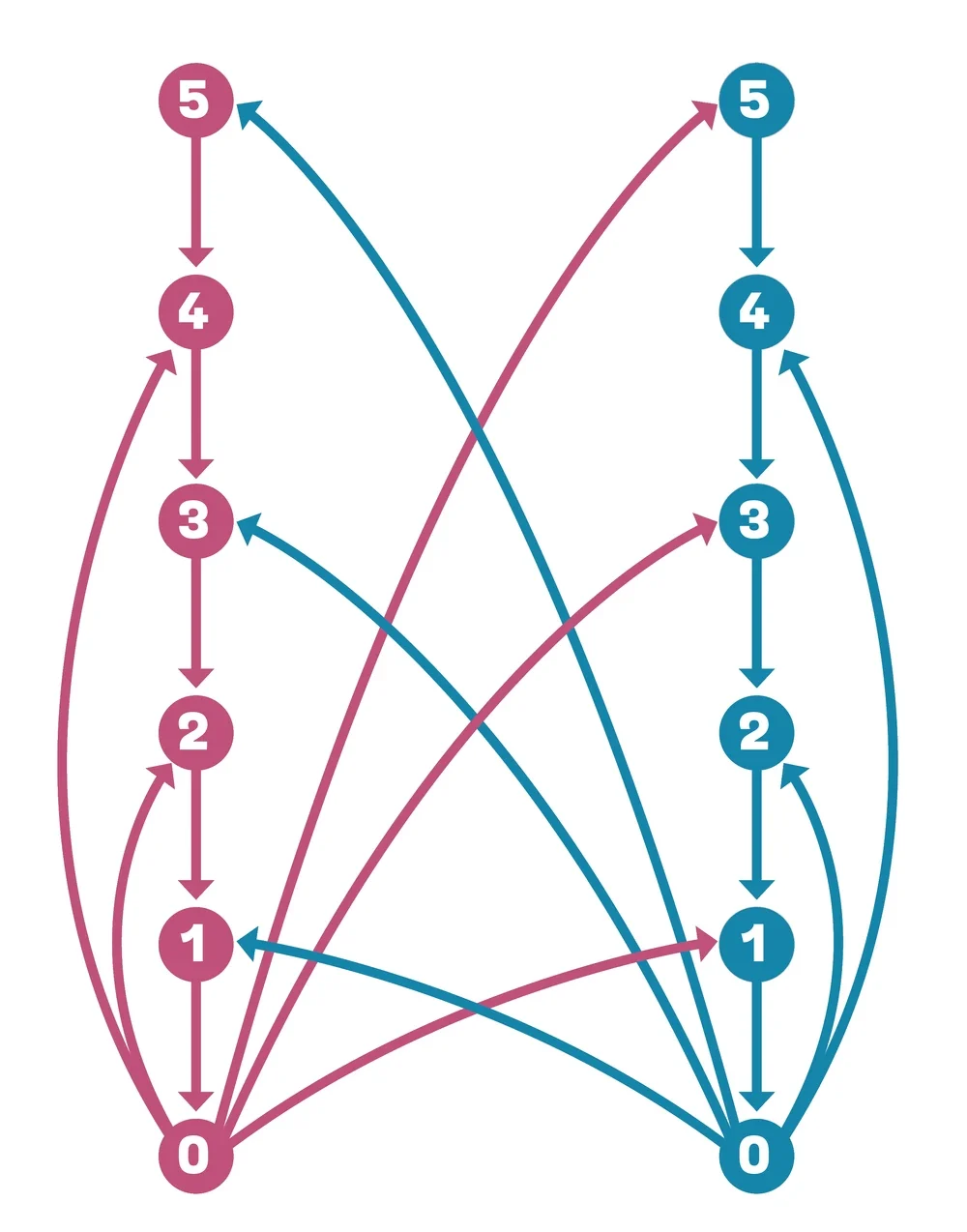
Perhaps the most complex challenge facing the community is the emergence of "wiki-native" information. Several pages, such as the entry for "state machines," appear to have originated directly within the wiki environment. These pages are often high-quality, featuring intricate diagrams and detailed explanations, yet they lack a creator, a date of origin, or a peer-reviewed source.
In this context, the wiki has transcended its original purpose as an encyclopedia and has become an ad-hoc publishing platform. While this allows for the dissemination of cutting-edge ideas, it also creates a dangerous feedback loop. As these pages are edited by various contributors over time, the original authorial intent is blurred, and the lack of external citation makes it impossible to verify the claims against established mathematical or physical principles. This leads to the "institutionalization of speculation," where unverified concepts become accepted as dogma simply by virtue of their continued presence on a recognized platform.

The Implications for Future Practitioners
The long-term implications of poor record-keeping are profound. For historians and future researchers, the inability to trace the development of notation systems makes it impossible to perform comparative analysis or to understand the shift in paradigms that occurred over the last three decades. If the "source code" of these theories is lost, the evolution of juggling notation will inevitably stagnate, as practitioners will be forced to "reinvent the wheel" rather than building upon the breakthroughs of their predecessors.
Furthermore, for the student of juggling, the lack of primary sources creates a pedagogical hazard. Learning a complex notation system from a wiki page that has undergone dozens of edits by anonymous users can lead to the mastery of flawed techniques. The authority of the document is assumed, yet the foundation is shaky, leading to a potential fracturing of standards across the global community.
Call for Structural Reform
Addressing this issue requires more than just a volunteer effort to update citations; it demands a shift in how the juggling community manages its intellectual assets. Industry experts and community leaders are increasingly suggesting the need for a formal, centralized repository—a digital library or archive that utilizes persistent identifiers (such as DOIs) to ensure that documents remain accessible even as the websites that originally hosted them disappear.
Proposed solutions include:

- Mandatory Citation Standards: Implementing strict guidelines for wiki contributors to provide links to original papers, videos, or archived versions of primary content.
- Digital Preservation Projects: Utilizing initiatives like the Internet Archive’s Wayback Machine to backlink all references, ensuring that even if a site goes down, the reference remains viable.
- Formal Peer-Review Outlets: Encouraging the creation of a formal journal or verified publication platform where new theories—such as those currently relegated to wiki pages—can be documented, reviewed, and preserved with historical integrity.
Expert Analysis of the Path Forward
The current state of juggling documentation is reflective of a community that has matured faster than its archival infrastructure. While the passion of the contributors is clear, the transition from a hobbyist-driven knowledge base to a structured academic or technical resource is incomplete.
“The history of any discipline is defined by its ability to preserve the work of those who came before,” notes one researcher familiar with the archive. “If we lose the ability to see the original diagrams, the original proofs, and the original intent behind the notation, we are not just losing data; we are losing the context that allows us to innovate further.”
The responsibility for this shift lies with both the maintainers of the platforms and the contributors themselves. As the community continues to formalize its theories, the need for academic rigor in documentation will become unavoidable. If the goal is for juggling to be taken seriously as a discipline—whether in the realm of performance or mathematics—the community must prioritize the preservation of its collective memory. The window of opportunity to recover these "lost" sources is closing as the original generation of online jugglers moves on and the servers hosting their work are decommissioned. By formalizing the archive today, the community ensures that the breakthroughs of the present remain the foundation for the innovators of tomorrow.