
The revolving door of the White House press office has once again captured the public’s attention following a weekend of unconventional political maneuvering. Following the high-profile departure of former Press Secretary Katie Zacharia, the administration found itself urgently searching for a new face to manage daily briefings and field inquiries from the White House Press Corps. However, rather than drawing from traditional pools of seasoned political communications professionals, diplomats, or campaign spokespersons, the administration’s inner circle dramatically shifted the conversation toward the entertainment industry. On Sunday, White House Communications Director Steven Cheung floated Grammy-nominated rapper and prominent conservative commentator Nicki Minaj as a potential candidate for the prestigious position, sparking intense debate across political and media landscapes.
The suggestion materialized in the public eye through social media channels, courtesy of Cheung, who shared footage from aboard Air Force One. In the video clip, Minaj is seen engaged in conversation with the communications director, offering effusive praise for President Donald Trump’s policies and leadership style—rhetoric that closely aligns with the administration’s messaging framework. Alongside the video, Cheung appended a caption that immediately set off speculation across Washington: "Ladies and gentlemen, I think we may have found the new White House Press Secretary!" While the remark was initially interpreted by some as a piece of political theater or social media engagement, it rapidly gained traction as subsequent events unfolded later that same day during a high-stakes campaign stop in Michigan.
The Chronology of the Weekend’s Events
The sequence of events leading to the public endorsement began over the weekend as the presidential entourage traveled to the Midwest. On Sunday morning, Minaj joined administration officials aboard Air Force One, signaling a deepening relationship between the recording artist and the highest levels of the executive branch. Her alignment with the MAGA (Make America Great Again) movement has evolved significantly over recent years, transitioning from vocal policy critiques on social media to direct, in-person participation in official administration events.
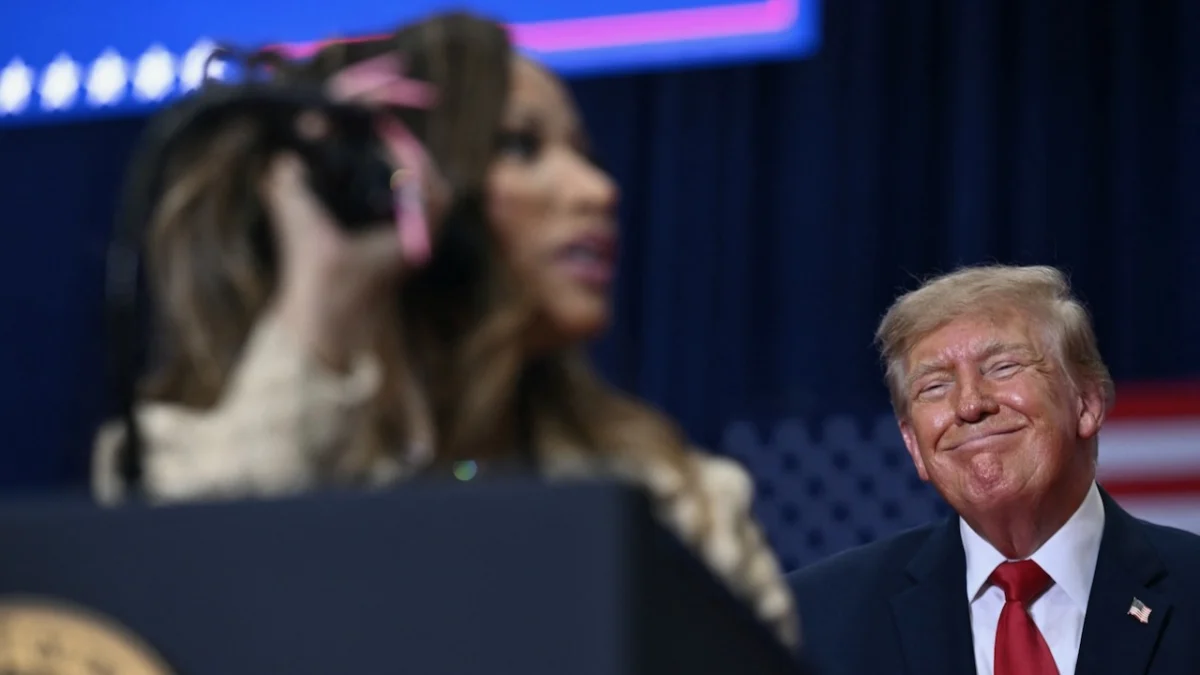
By Sunday afternoon, the journey culminated in a campaign rally held in Port Huron, Michigan. Minaj was in attendance, seated prominently near the stage as part of the administration’s ongoing strategy to leverage high-profile cultural figures to energize voter demographics. During his address to the assembled crowd, President Trump acknowledged the rapper’s presence. In typical unscripted fashion, the president departed from standard rally talking points to compliment Minaj physically, drawing global media attention by publicly marveling at her backside. "That’s hard to miss!" Trump declared from the podium, publicly encouraging Minaj to stand up and acknowledge the cheering crowd in a moment that was immediately captured by broadcast cameras and widely disseminated across digital platforms.
Contextual Background and the Role of the Press Secretary
To understand the weight—and the controversy—of floating a non-traditional candidate like Nicki Minaj for the position of White House Press Secretary, it is necessary to examine the historical gravity of the role. Established formally in its modern iteration under President Harry S. Truman, the press secretary serves as the primary spokesperson for the executive branch of the United States government. The occupant of the office is tasked with interacting with the media on a daily basis, representing the administration’s policies, defending executive actions, and managing crises in real time. Traditionally, the position demands exhaustive knowledge of domestic and foreign policy, legislative processes, and media relations, typically filled by individuals with extensive backgrounds in political journalism, government communications, or public policy.
The recent vacancy arose following the tenure of Katie Zacharia, whose departure from the post was marked by significant media scrutiny and political friction. Zacharia’s exit added to a historical trend of high turnover within executive communications teams across multiple administrations, underscoring the immense pressure and scrutiny associated with the briefing room podium. In times of administrative vulnerability or transition, communication teams frequently experiment with alternative messaging strategies to recapture the news cycle and pivot public attention toward favorable cultural alignments.
The Intersection of Politics, Pop Culture, and Social Media
The potential consideration of Minaj reflects a broader, ongoing evolution in American politics wherein traditional institutional boundaries between governance, entertainment, and digital media continue to dissolve. Over the past decade, political campaigns on both sides of the aisle have increasingly relied on celebrity endorsements, influencer partnerships, and viral social media moments to reach constituents who may tune out traditional news broadcasts.
Minaj, whose career in the music industry spans more than fifteen years with numerous chart-topping hits and a massive global fanbase, has increasingly utilized her platform to weigh in on socio-political issues. Her transition into the conservative political sphere, characterized by public debates with political figures and frequent commentary on economic and cultural policies, has made her a polarizing yet undeniably influential figure. By associating with an artist of Minaj’s stature, the administration taps into millions of digitally engaged followers, bridging the gap between traditional governance and modern internet culture.
Reactions and Industry Implications
The public suggestion that Minaj could step into the role of White House Press Secretary drew immediate and varied reactions from political analysts, media organizations, and public figures. Supporters of the administration viewed the move as a brilliant stroke of populist theater, arguing that Minaj’s formidable communication skills, massive platform, and fearlessness in media interactions would make her a formidable defender of the administration’s agenda against hostile questioning. Proponents often point out that modern political communication relies less on bureaucratic polish and more on the ability to capture public attention and command the digital narrative.
Conversely, critics and veteran communications professionals lambasted the suggestion as unserious, arguing it trivializes a critical constitutional office responsible for conveying vital governmental information to the public and the global community. Pundits raised questions regarding Minaj’s lack of formal experience in public administration, national security, or diplomatic protocol, asserting that the daily press briefing requires a deep technical understanding of complex policy matters that cannot be replaced by celebrity status. Furthermore, the colloquial manner in which the potential appointment was announced—paired with the president’s subsequent remarks at the Michigan rally—fueled ongoing debates regarding professionalism and gender dynamics within the highest tiers of American politics.
Broader Impact on Future Communications Strategies
Regardless of whether the floating of Nicki Minaj’s name evolves into a formal nomination or remains an ephemeral social media spectacle, the episode provides a clear window into the future of political communications. As media consumption habits shift definitively away from legacy print and television outlets toward decentralized digital platforms, political actors are compelled to adopt unconventional tactics to maintain visibility and narrative control.
The integration of cultural icons into the daily machinery of political messaging suggests that the traditional separation between Washington officialdom and Hollywood celebrity is permanently altered. Future administrations will likely continue to grapple with the tension between institutional decorum and the raw, attention-driven mechanics of digital populism. For now, the White House press office remains without a permanent, confirmed occupant, leaving the administration to weigh the demands of traditional governance against the undeniable political utility of viral culture.