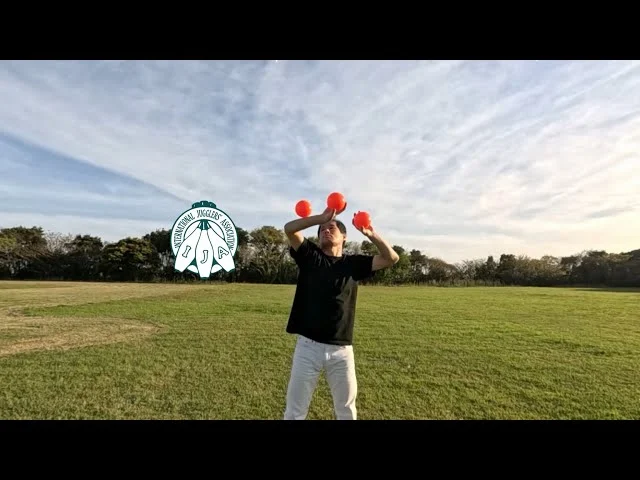

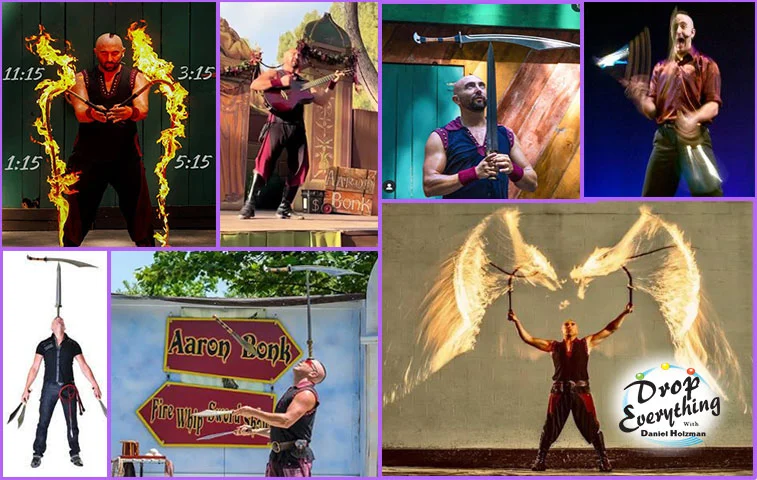
The world of professional variety arts is often defined by the specific, highly technical disciplines that performers master over decades of dedicated practice. In the latest installment of the Drop Everything podcast, host and veteran juggler Dan Holzman invites listeners into a deep-dive conversation with Aaron Bonk, a multifaceted entertainer renowned for his mastery of both object manipulation and the precision art of whip cracking. Released on September 28, 2026, the 78-minute episode provides an exhaustive look into the logistical, creative, and physical demands of maintaining a career in the specialized niche of Renaissance Faires and outdoor festival performance.
A Career Defined by Skill and Spectacle
Aaron Bonk has carved out a distinctive identity in the entertainment industry by blending traditional circus arts with the high-stakes precision of whip cracking. While many performers focus exclusively on juggling, Bonk’s trajectory involves a synthesis of skills that are rarely combined with such technical proficiency. His work, frequently seen on the Renaissance Faire circuit, requires more than just performance ability; it demands an understanding of crowd management, safety protocols, and the grueling physical requirements of outdoor touring.
Dan Holzman, an IJA life member and former champion who has spent 34 years in the industry as part of the legendary Raspyni Brothers, brings a unique perspective to this interview. By leveraging his own extensive experience, Holzman is able to extract technical nuances from Bonk regarding the evolution of prop manipulation and the shifting landscape of professional performance. Throughout the episode, the two discuss the transition from early-career aspirations to the realities of sustaining a professional livelihood in a field that is heavily dependent on public gatherings and seasonal event calendars.
The Renaissance Faire Economy and Performance Context
To understand the professional significance of Aaron Bonk’s career, one must examine the environment in which he operates. Renaissance Faires have evolved from localized historical reenactments into a massive, multi-million dollar industry in North America. According to industry reports from the mid-2020s, the festival circuit supports thousands of performers annually, ranging from musicians and actors to specialized circus artists like Bonk.
The logistical reality for these performers involves significant travel, equipment maintenance, and the constant need to adapt to variable weather conditions and stage limitations. Unlike stationary theater performers, outdoor variety artists must contend with the "theatre of the streets." Bonk’s ability to draw and maintain a crowd in these settings is a testament to the efficacy of his specific brand of entertainment. The conversation between Bonk and Holzman highlights that a successful "Ren Faire" act is not merely about the skill itself, but about the "patter"—the narrative structure and comedic timing that keeps an audience engaged for the duration of a set.

Chronology of a Professional Evolution
The dialogue explores the developmental stages of a modern variety performer. Bonk’s journey serves as a case study for the professionalization of circus arts.
- Foundational Training: Early in the podcast, the discussion focuses on the initial acquisition of skills. Both Holzman and Bonk emphasize that proficiency in whip cracking and juggling is not an overnight occurrence but a product of thousands of hours of repetition.
- Integration of Skills: As Bonk matured in his career, the focus shifted from technical mastery to the integration of complex props. This phase often involves the trial-and-error process of testing new routines in front of live audiences to determine which elements hold the highest entertainment value.
- The Renaissance Circuit Transition: The middle portion of the episode covers Bonk’s strategic pivot to Renaissance Faires. This move requires a distinct set of business skills, including networking with festival directors, understanding booking cycles, and refining an act to suit the thematic atmosphere of 16th-century-inspired events.
- Current Status and Mastery: As of late 2026, Bonk represents a cohort of performers who have successfully navigated the post-pandemic recovery of the live event industry. The discussion reflects on the stability of this career path and the necessity of constant innovation to remain relevant in a competitive market.
Technical Analysis: The Physics of Performance
One of the most compelling aspects of this installment of Drop Everything is the technical breakdown of whip cracking. From a physical standpoint, the crack of a whip is a supersonic event—the tip of the whip breaks the sound barrier, creating a localized shockwave. For a performer like Bonk, the mastery of this phenomenon requires not only physical strength but an acute awareness of air currents and timing.
Holzman probes the relationship between the physical toll of such performances and the longevity of the artist. In the variety arts, repetitive strain injuries are a common professional hazard. The conversation touches upon the importance of ergonomics in prop design and the necessity of conditioning routines that allow performers to sustain high-intensity sets for multiple seasons without incurring career-ending injuries. This segment provides valuable data for aspiring performers who may be unaware of the physiological rigor required to maintain a professional standard over several decades.
Broader Industry Implications
The implications of Bonk’s professional experience extend beyond the individual performer. As the live entertainment industry faces ongoing shifts in audience demographics and the proliferation of digital alternatives, the role of the "human element" in entertainment has become more pronounced.
Recent industry analysis suggests that audiences are increasingly seeking authentic, unedited performance experiences. The success of performers like Aaron Bonk in the Renaissance Faire space validates this trend. Unlike screen-based media, the art of the whip crack and the live juggling routine offer a tangible, immediate sensory experience that cannot be replicated digitally. This highlights the enduring value of traditional circus arts in an era dominated by high-end visual effects and virtual reality.
Furthermore, the podcast underscores the importance of mentorship and the preservation of institutional knowledge. By platforming veteran performers like Bonk, the Drop Everything podcast acts as a repository of oral history for the juggling and variety community. This is crucial for the survival of the art form, as it allows newer generations to learn from the successes and failures of their predecessors.

Official Perspectives and Commentary
While Drop Everything is an independent production, it occupies a significant space in the variety arts discourse. Dan Holzman’s involvement ensures that the content remains grounded in the realities of the IJA (International Jugglers’ Association) standards and the broader circus arts community.
In the episode, Holzman notes that the dialogue is intended to serve both as entertainment for the casual listener and as a resource for professional practitioners. By focusing on the specific mechanics of Bonk’s craft, the episode elevates the standard of conversation surrounding variety arts. Industry observers have noted that this type of granular, long-form content is becoming the primary way for niche communities to communicate, trade techniques, and foster a sense of professional identity in a fragmented media landscape.
Future Outlook for Circus and Variety Arts
As the 2026 performance season concludes, the insights shared by Aaron Bonk provide a roadmap for the coming years. The professionalization of niche acts, the importance of maintaining a diverse skill set, and the reliance on strong, community-focused touring circuits remain the pillars of success for variety performers.
Looking ahead, the integration of digital marketing and professional branding—which Bonk has navigated with success—will likely continue to play a larger role in how these artists secure bookings. However, the core of the profession remains the live, face-to-face interaction with the audience.
In summary, Episode 152 of the Drop Everything podcast is a comprehensive examination of what it takes to thrive in a demanding, highly specialized field. Through the lens of Aaron Bonk’s career, listeners are offered a glimpse into the dedication, technical precision, and business acumen required to succeed in the Renaissance Faire circuit and beyond. The episode serves as both a testament to the longevity of the variety arts and a practical guide for those looking to understand the nuanced mechanics of performance at the highest level. The conversation remains available for those interested in the technicalities of prop manipulation and the historical continuity of the circus arts, reinforcing the podcast’s role as a vital hub for the international juggling community.