
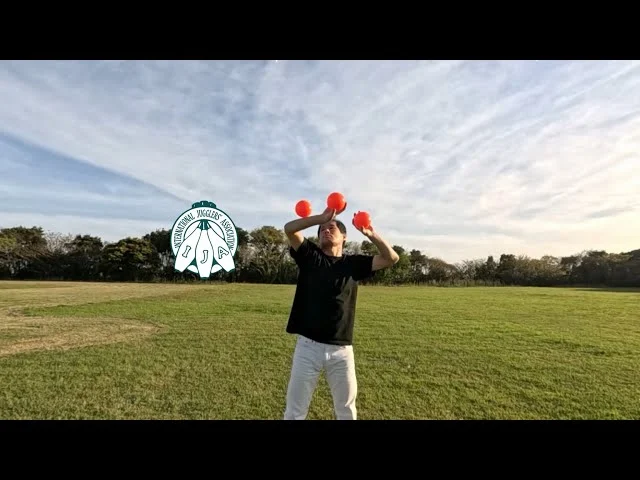
The International Juggling Association (IJA) has spotlighted Japanese artist Toru Kurei in its latest “Tricks of the Month” segment, showcasing the evolution of multi-ball contact juggling. Kurei, a practitioner based in Yamaguchi, Japan, has gained international attention for a distinct performance style that prioritizes full-body engagement over traditional hand-focused techniques. This feature, published as part of the IJA’s ongoing eJuggle digital resource initiative, provides a technical and philosophical look into how modern contact jugglers are expanding the physical limitations of the discipline.
The Evolution of Contact Juggling as a Performance Art
Contact juggling, which involves the manipulation of spheres across the surface of the body, has evolved significantly over the last three decades. Unlike toss juggling, which relies on the flight paths of objects through the air, contact juggling is defined by continuous physical interaction. Historically popularized in the late 1980s, the discipline was often categorized as a meditative, slow-paced art form. However, contemporary practitioners like Kurei are shifting the paradigm toward high-density, multi-object manipulation.
Kurei’s specific methodology involves the integration of the head, neck, chest, and legs into the flow of the juggling pattern. By utilizing his entire frame as a platform for movement, Kurei departs from conventional techniques that primarily utilize the palms and forearms. This transition from localized to systemic body control represents a broader trend within the global juggling community, where performers are increasingly looking to dance, acrobatics, and kinesiology to push the boundaries of their craft.
Chronology of Kurei’s Artistic Development
Toru Kurei’s trajectory in the arts began a decade ago when he first committed to his current style of contact juggling. His stage name, “Toru Kurei,” is a deliberate phonetic homage to the “cradle”—a foundational contact juggling technique that involves rolling a ball in a controlled, rhythmic fashion across the chest or neck. In Japanese kanji, his name is represented by characters that further emphasize this connection to his practice.
Over the past ten years, Kurei has transitioned from exploring single-ball isolation—a hallmark of early contact juggling—to the integration of multiple spheres. His current practice focuses on the geometric complexity of juggling patterns that occupy the limited surface area of the human body. Kurei describes this effort as an attempt to find “cosmic expansiveness” within the physical constraints of a human frame, a challenge he intends to pursue until he reaches his biological limits.
Technical Analysis: Multi-Ball Integration
The trick patterns demonstrated by Kurei in the IJA feature involve high-level coordination. In contact juggling, the difficulty increases exponentially with the addition of each ball, as the juggler must account for the friction, weight distribution, and momentum of multiple objects moving across shifting surfaces.
From an analytical perspective, Kurei’s performance demonstrates a mastery of “body mapping.” By utilizing the curvature of the neck and the planes of the chest, he creates a series of interlocking paths for the spheres. This requires an acute sense of proprioception—the body’s ability to perceive its own position in space—as the juggler must adjust the tilt of his shoulders and the tension of his core muscles to maintain the trajectory of the balls without the use of hands.
The Role of the IJA in Modern Juggling Promotion
The International Juggling Association, which serves as the primary governing body and resource hub for the global juggling community, utilizes its “Tricks of the Month” series to document technical advancements in the field. By providing a platform for artists like Kurei, the IJA facilitates the cross-pollination of techniques between regional scenes, such as the contact juggling community in Japan, and the wider international network.
The IJA’s broader digital strategy involves the maintenance of eJuggle, an online archive that includes tutorials, historical documentation, and practitioner profiles. This infrastructure is essential for the preservation of juggling knowledge. As the organization notes, the support of its membership base is critical to maintaining these programs. The revenue generated through IJA memberships directly funds the annual Juggling and Flow Arts Festival, which serves as the largest gathering of its kind, as well as the Youth Juggling Programs (YJA) and the IJA Regional Competitions (IRC).
Professional Recognition and Community Impact
Kurei has publicly credited the influence of other practitioners in the juggling community for his development. He specifically noted the support of his peers in Japan, who provided him with a sense of connection during his early years of solitary practice in Yamaguchi. This sentiment reflects the broader importance of mentorship and communal feedback in the juggling world.
In the digital era, the dissemination of juggling techniques has moved from physical workshops to social media platforms. Kurei maintains an active presence on platforms such as YouTube and Instagram, where he archives his ongoing experiments with multi-ball patterns. This visibility allows for a global dialogue regarding technique, where practitioners from different countries can analyze and adapt the movements developed by their peers.
Broader Implications for the Performing Arts
The focus on full-body contact juggling has implications beyond mere technical skill. As performance art becomes increasingly multidisciplinary, the integration of juggling with contemporary dance and physical theater is becoming more common. Kurei’s work serves as a case study in how a specialized craft can be expanded to utilize the entire body, thereby creating a more immersive experience for the audience.
Furthermore, the emphasis on “using as many balls as possible” reflects a competitive drive within the juggling community to continuously set new benchmarks. While traditional juggling records are often based on the number of objects caught in the air, the contact juggling community is establishing its own criteria for success, based on the complexity of the paths traversed and the difficulty of the body positions maintained.
Institutional Support and Future Outlook
The inclusion of Kurei in the IJA’s curated content underscores the organization’s commitment to diversity in juggling styles. By highlighting a practitioner whose work is deeply rooted in both Japanese tradition and modern contact techniques, the IJA provides a comprehensive view of the state of the art in 2026.
As the juggling community continues to grow, the need for centralized resources like the IJA becomes increasingly clear. The organization’s role in providing technical tutorials, supporting regional competitions, and promoting individual artists ensures that the art form remains vibrant and accessible to new generations of practitioners. With ongoing support from its membership, the IJA is positioned to continue its efforts in documenting the evolution of juggling from a niche hobby into a highly sophisticated, globally recognized discipline.
For aspiring jugglers, the trajectory of performers like Toru Kurei offers a roadmap for development: a combination of rigorous individual practice, engagement with the global community, and a commitment to pushing the physical limits of the human body. As Kurei continues to explore the intersections of geometry, gravity, and anatomy, his work will undoubtedly continue to influence the next wave of contact juggling innovations.
The IJA encourages interested parties to view Kurei’s full demonstration on their official eJuggle platform, where they continue to archive the most significant developments in the world of juggling. Through these efforts, the organization remains at the forefront of the juggling arts, ensuring that the legacy of masters and the innovations of newcomers are preserved for years to come.