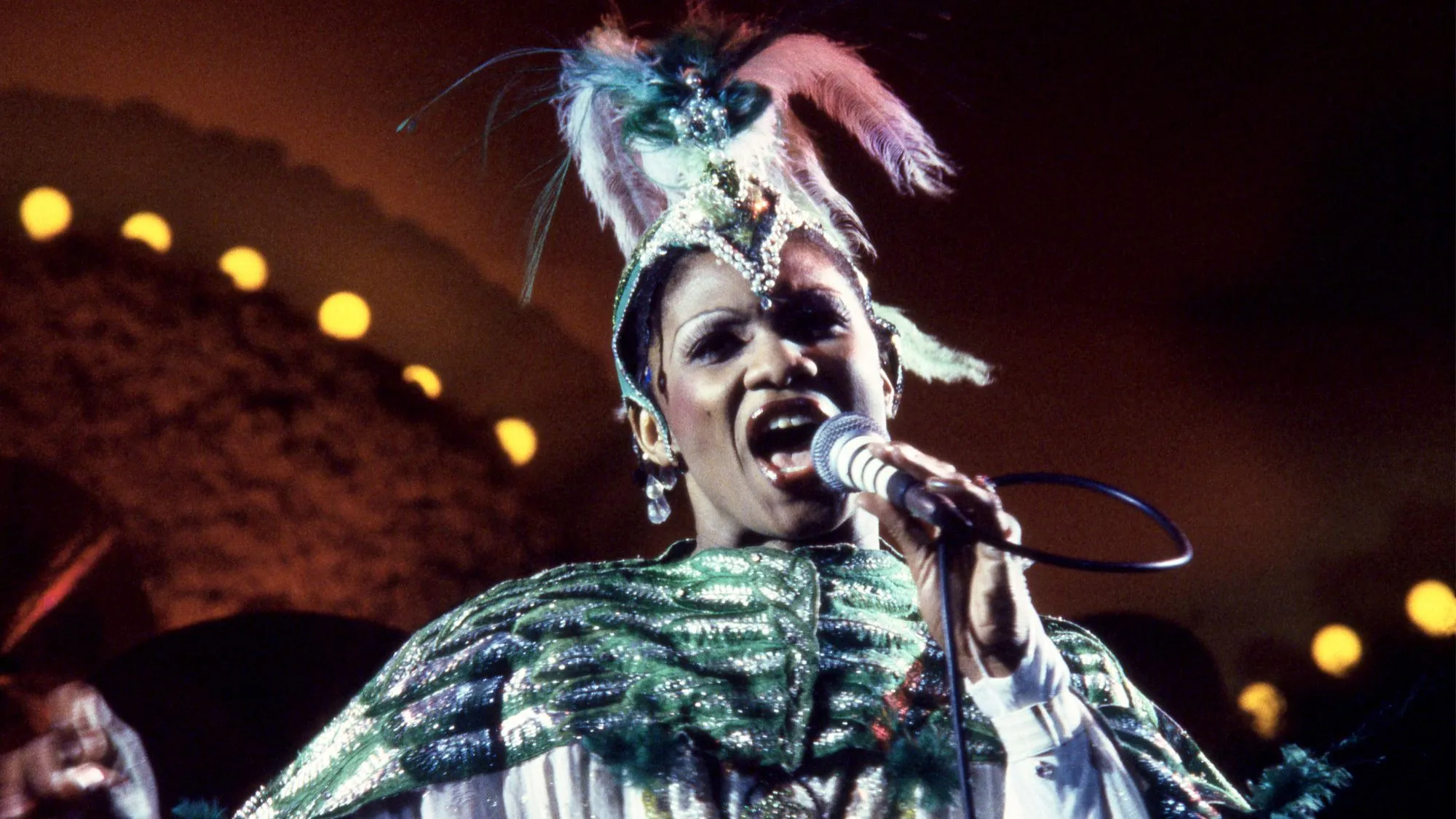
On October 14, 1948, Marcia Barrett was born in the tranquil parish of Saint Catherine, Jamaica, beginning a remarkable life journey that would eventually place her at the epicenter of the 1970s global music revolution. Decades later, her name remains inextricably linked to Boney M., the West German disco, funk, and reggae powerhouse that dominated international airwaves with iconic anthems like “Rasputin” and “Rivers of Babylon.” Beyond the glitter, mirrors, and high-energy dance routines of the disco era, Barrett’s trajectory is a testament to artistic resilience, international migration, and survival in the face of profound personal and medical adversity. From her early roots in the Caribbean to European stages and eventual solo artistry, Barrett carved out a unique space in pop music history.
Early Life and Migration to Europe
Marcia Barrett spent her formative years in Jamaica before immigrating to England with her family at the age of 13. The cultural transition from the vibrant sounds of the Caribbean to the dynamic urban landscape of the United Kingdom exposed her to a diverse array of musical influences. During her youth in England, Barrett found herself deeply drawn to the emotive vocal stylings and genre-defying artistry of performers like Dusty Springfield, Jimi Hendrix, and Shirley Bassey. These artists laid the groundwork for her eclectic musical palate, which would later seamlessly blend soul, pop, reggae, and rock elements.
In the late 1960s, Barrett’s ambitions took her across the English Channel to Germany after she accepted a professional dancing contract. The move proved to be a pivotal turning point in her career. Placed directly into the bustling European entertainment industry, she initially toured extensively alongside iconic Czech singer Karel Gott and German balladeer Rex Gildo. These early experiences honed her stage presence and vocal versatility. By 1971, her rising profile caught the attention of Metronome Records, with which she signed a recording contract. Under this banner, she recorded her first original solo single, “Could Be Love,” while continuing to tour across Europe as a solo act performing popular Top 40 covers, including Dusty Springfield’s “Son of a Preacher Man” and “Big Spender.”
The Genesis of Boney M. and Global Stardom
The defining chapter of Barrett’s career began to take shape in 1974. German singer, songwriter, and producer Frank Farian—who would later achieve global notoriety as the mastermind behind the pop duo Milli Vanilli—recorded a driving dance track titled “Baby Do You Wanna Bump.” Farian released the recording under the pseudonym Boney M., taking the name from an Australian detective television series.
When the track unexpectedly blossomed into a commercial hit in the Netherlands and Belgium, Farian faced a logistical dilemma: he needed a dynamic live ensemble to promote the record for discothèque appearances and television broadcasts. To solve this, he assembled a quartet of West Indian vocalists who were already working as session singers in Germany. The lineup brought together Marcia Barrett, Liz Mitchell, Maizie Williams, and Bobby Farrell.
With Barrett integrated into the fold, the phenomenon known as Boney M. rapidly captured the global imagination. The group pioneered a distinctive sonic fusion, injecting Caribbean reggae and funk rhythms into high-octane European disco. Barrett’s powerful vocals were instrumental to the group’s unprecedented chart success. She shared lead vocal duties with Williams on a string of international Top 10 hits, including “Daddy Cool,” “Ma Baker,” “Rasputin,” and “Gotta Go Home,” while taking sole lead on the haunting German chart-topper “Belfast.”
Geopolitical Resonance and Cultural Impact
The reach of Boney M.’s music transcended traditional Western markets, occasionally intersecting with complex geopolitical realities of the Cold War era. Their signature track, “Rasputin,” achieved massive, underground popularity in the Soviet Union despite official state attempts to ban the song and restrict the group’s records. Fans across the Eastern Bloc traded bootleg recordings, underscoring the universal appeal of the group’s danceable beats and theatrical presentation.
This cultural diplomacy culminated years later when Barrett, touring with her own iteration of Boney M., received an official invitation from Georgian President Mikheil Saakashvili in October 2007 to perform in the contested region of South Ossetia. Such engagements highlighted the enduring, cross-border diplomatic power of pop music, even in regions touched by political friction.
Solo Career, Health Battles, and Activism
Following the formal dissolution of Boney M. in 1990, Barrett transitioned into a dedicated solo career, refusing to let the end of the group curtail her artistic output. She released her debut solo album, Survival, in 1999, followed by Come Into My Life in 2005. The latter project showcased her continued reverence for her musical roots, featuring a dynamic cover of Jimi Hendrix’s “Hey Joe,” a fresh studio rendition of her signature Boney M. track “Belfast,” and a unique vocal adaptation of Fleetwood Mac’s instrumental classic “Albatross,” for which she secured personal permission from composer Peter Green to write and perform her own lyrics.
Barrett’s resilience was tested profoundly away from the recording studio, as she twice battled cancer during the 1990s and early 2000s. Despite the significant physical and professional disruptions caused by her diagnoses and treatments, she persevered, maintaining her commitment to the craft. In 2009, she further asserted her creative independence by founding her own independent record label, Xoah Records.
In addition to her musical pursuits, Barrett has utilized her public platform for philanthropic and political advocacy. As a vocal opponent of military intervention, she released the 2003 benefit EP “No War! Peace and Love,” directing all financial proceeds toward the War Child charity to support minors affected by global conflicts.
Chronology of Key Milestones
- October 14, 1948: Marcia Barrett is born in Saint Catherine Parish, Jamaica.
- Late 1950s/Early 1960s: Emigrates to England with her family at age 13, absorbing British and American musical influences.
- Late 1960s: Relocates to Germany on a dancing contract, touring with Karel Gott and Rex Gildo.
- 1971: Signs with Metronome Records and releases her debut solo single, “Could Be Love.”
- 1974: Frank Farian creates the studio moniker Boney M.; Barrett joins the official touring lineup alongside Liz Mitchell, Maizie Williams, and Bobby Farrell.
- Mid-to-Late 1970s: Boney M. achieves global superstardom with multi-platinum hits including “Daddy Cool,” “Rasputin,” and “Rivers of Babylon.”
- 1990: Boney M. officially disbands, prompting Barrett to launch her solo career.
- 1990s–Early 2000s: Successfully undergoes treatment for cancer on two separate occasions.
- 1999: Releases her debut solo album, Survival.
- 2003: Releases the anti-war benefit EP “No War! Peace and Love” in support of the War Child charity.
- 2005: Releases her second solo album, Come Into My Life.
- 2007: Performs in the Republic of Georgia at the invitation of President Mikheil Saakashvili.
- 2009: Establishes her independent record label, Xoah Records.
Analysis of Implications and Legacy
The trajectory of Marcia Barrett’s career reflects the broader structural shifts in the global music industry during the mid-to-late 20th century. As part of Boney M., Barrett helped break down rigid genre boundaries, proving that Caribbean musical sensibilities could successfully merge with European electronic and disco production frameworks. This cross-pollination anticipated the modern era of borderless, globally collaborative pop music.
Furthermore, Barrett’s longevity in the industry—marked by her successful navigation of the transition from a group member in a producer-driven pop ensemble to an independent singer-songwriter and label founder—demonstrates a remarkable degree of artistic agency. Her ability to reclaim her narrative through solo recordings, independent releases, and live touring cements her status as a resilient pioneer of dance and pop music. Today, as her foundational tracks continue to resonate on dance floors and streaming platforms worldwide, Barrett’s contributions to the global soundtrack of the late 20th century remain profoundly secure.