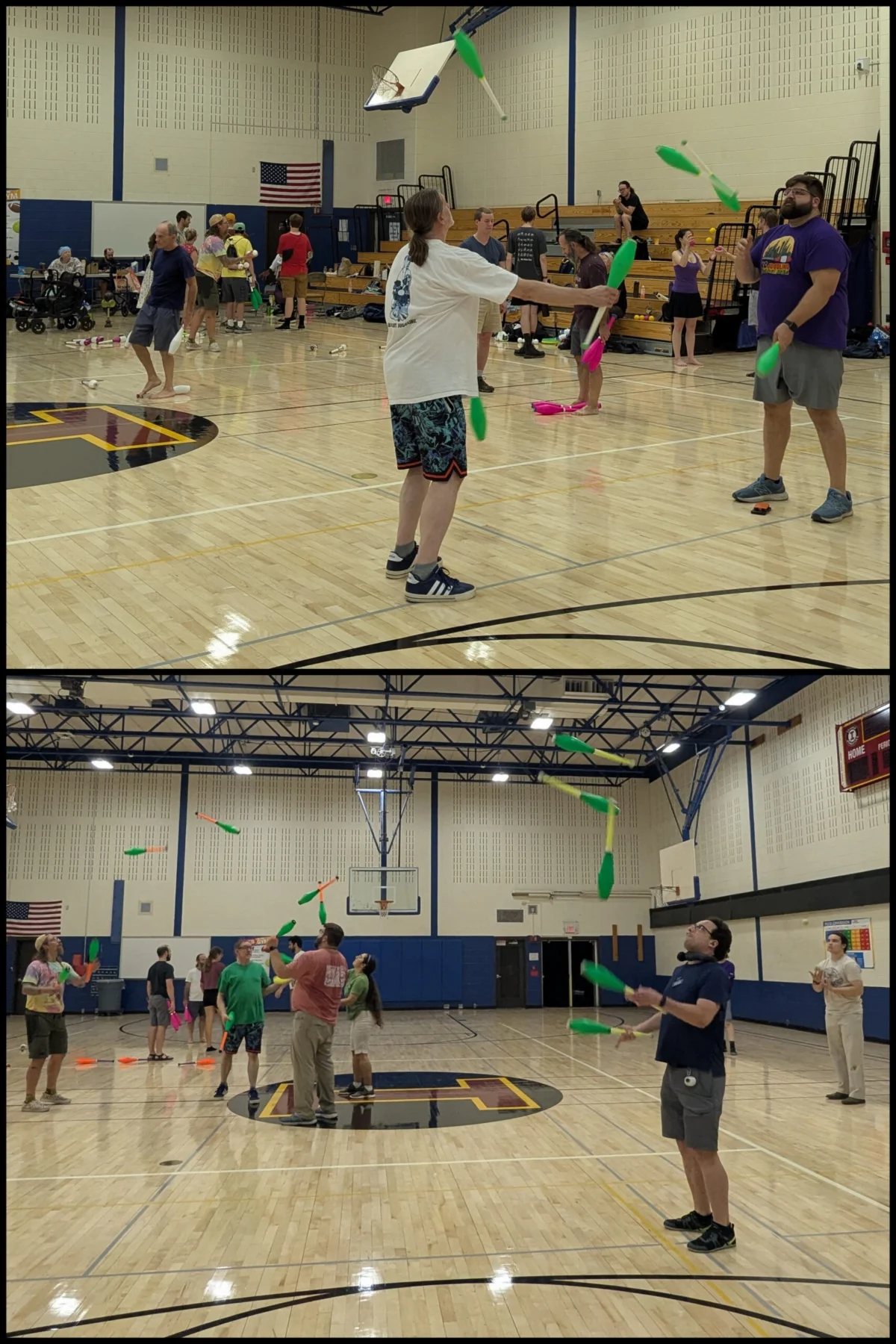

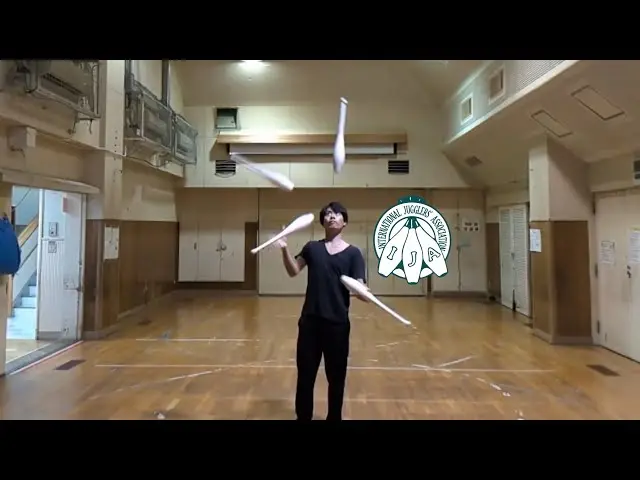
The global juggling community continues to push the boundaries of object manipulation, spatial awareness, and visual artistry through digital showcases. In the latest edition of the International Jugglers Association (IJA) Trick of the Month series, Japanese juggler Motoki Date takes center stage, presenting an intricate display of club manipulation that emphasizes geometric precision, wall-plane dynamics, and aesthetic refinement. Published through eJuggle, the digital arm of the IJA, Date’s feature highlights a growing movement within contemporary juggling that prioritizes visual elegance and architectural movement over mere repetition and speed.
The release of Date’s video adds to a long-running tradition of international collaboration and skill-sharing facilitated by the IJA. As organizations within the performing and flow arts sectors increasingly rely on digital platforms to foster community engagement, the Trick of the Month series has evolved into a vital archive of cutting-edge technical innovation. By spotlighting artists from diverse geographic backgrounds, the IJA bridges cultural gaps and provides a global stage for practitioners who view object manipulation not merely as a physical feat, but as a discipline deeply intertwined with geometry, physics, and visual design.
Main Facts and Technical Breakdown
Motoki Date’s featured performance centers on complex club manipulation patterns executed primarily within the wall plane—a flat vertical plane parallel to the juggler’s body. Unlike traditional club juggling, which often focuses on high-volume throws, rapid rotations, and cascading patterns operating in the wheel plane or sagittal plane, Date’s choreography is deliberately structured to highlight the physical silhouette, trajectory, and rotational geometry of the props themselves.
In the accompanying artist statement, Date revealed that he began his juggling journey in 2014, steadily developing a distinct personal style. "I like visually refined juggling, regardless of the type of props," Date explained. "In this video, I’m sharing club patterns, especially in the wall plane, that showcase the shape and trajectory of the clubs."
The performance utilizes specialized club patterns that require immense wrist dexterity, spatial calculation, and micro-adjustments. Operating within the wall plane restricts the margin of error significantly, as any deviation in depth can cause the clubs to collide mid-air or fall out of alignment. By maintaining strict geometric boundaries, Date creates an optical illusion where the spinning clubs trace precise lines, arcs, and intersecting vectors against the backdrop. This approach aligns with modern object manipulation trends that draw inspiration from contact juggling, poi spinning, and minimalist performance art.
Chronology and Evolution of the IJA Trick of the Month
The International Jugglers Association, founded in 1947, has spent nearly eight decades adapting to the changing needs of the global juggling community. Originally established as a networking hub for vaudeville and variety show performers, the organization has continuously expanded its educational and promotional offerings to encompass youth programs, regional competitions, and digital media.
The genesis of the eJuggle platform and its serialized video features marked a pivotal turning point in how juggling knowledge is disseminated. Prior to the digital era, juggling techniques were largely passed down through face-to-face instruction at annual festivals, instructional books, or hard-to-find VHS tapes. The introduction of online video sharing in the mid-2000s democratized access to high-level instruction, allowing artists from remote regions to share their innovations with a worldwide audience.
Over the past decade, the IJA Trick of the Month series has systematically documented the evolution of prop manipulation. The timeline of the series reflects broader technological and artistic shifts within the community:
- 2010–2014: The early digital phase of online showcases, primarily focused on high-difficulty endurance feats, traditional toss juggling, and basic prop passing.
- 2015–2018: A surge in the popularity of contact juggling, flow arts, and object manipulation hybrids, leading to greater diversity in the types of props featured in digital media.
- 2019–2023: The integration of sophisticated camera angles, slow-motion analysis, and conceptual choreography, transforming short clips into polished artistic statements.
- 2024–Present: A heavy emphasis on cross-cultural digital exchanges, allowing artists from Asia, Europe, and the Americas to showcase localized styles, such as Japanese wall-plane club manipulation and European contact staff techniques.
Motoki Date’s feature in late October fits seamlessly into this modern era of the series, representing the pinnacle of technical refinement made possible by decades of accessible digital education.
Supporting Data and Organizational Infrastructure
The operational capacity of the IJA and its ability to produce high-caliber resources like the Trick of the Month series rely heavily on institutional membership structures and community contributions. Operating as a non-profit organization, the IJA channels resources into several core pillars designed to sustain the juggling arts ecosystem globally.
According to organizational data, the IJA supports four primary programmatic areas through membership dues and donations:
- The Annual IJA Festival: A weeklong gathering that serves as the premier convention for jugglers, unicyclists, flow artists, and variety performers. The festival features workshops, stage shows, youth showcases, and world-class competitions.
- Long-Form Digital Content: Ongoing production of eJuggle articles, the Trick of the Month series, instructional podcasts, and deep-dive technical tutorials that serve as a permanent educational library.
- Youth Juggling Programs (YJA): Targeted initiatives designed to introduce school-aged children and young adults to juggling, emphasizing motor skill development, cognitive coordination, and self-confidence.
- IJA Regional Competitions (IRC): Competitive events held across various geographic regions to provide local performers with competitive experience and foster tighter regional networks outside of the main annual festival.
The financial sustainability of these initiatives depends entirely on active engagement from the global community. By leveraging platforms like YouTube, Facebook, Instagram, and X (formerly Twitter) under the handle @ijajugglers, the organization maintains a continuous feedback loop between digital viewers and physical event participants.
Industry Perspectives and Expert Analysis
The inclusion of intricate, plane-specific juggling in mainstream instructional resources highlights a broader shift in how performance arts are evaluated. Movement analysts and veteran performers note that contemporary juggling has increasingly blurred the lines between circus arts, dance, and kinetic sculpture.
Industry observers suggest that artists like Motoki Date are redefining what audiences expect from club manipulation. Traditionally viewed as a prop designed primarily for high-throw vertical cascades and complex passing networks between multiple people, juggling clubs are now being re-evaluated for their sculptural qualities. The curved body of a juggling club, when manipulated close to the body or along strict spatial planes, creates dynamic visual silhouettes that stationary objects cannot replicate.
Furthermore, the emphasis on wall-plane manipulation reflects a growing intersection between juggling and poi or hoop spinning, disciplines traditionally rooted in the flow arts community. Flow arts place a high value on geometry, body tracing, and continuous momentum rather than traditional catches and throws. Date’s ability to merge traditional club handling with flow arts principles demonstrates the ongoing synthesis of disparate prop manipulation subcultures.
From an educational standpoint, experts emphasize that featuring technical variations like those demonstrated by Date provides immense value to intermediate and advanced practitioners. By breaking down the geometry of the pattern, viewers gain insight into spatial awareness, hand-eye coordination, and the importance of posture and alignment in maintaining complex patterns without fatigue.
Broader Impact and Implications for the Juggling Community
The publication of Motoki Date’s performance underscores the growing globalization and interconnectedness of the modern juggling community. Geographic boundaries no longer serve as barriers to stylistic exchange. A technique developed in a studio in Japan can be analyzed, appreciated, and replicated by practitioners in North America, Europe, and beyond within hours of publication.
This rapid dissemination of skill fosters a healthy, highly collaborative global ecosystem. It encourages continuous self-improvement among artists who view international showcases as benchmarks for technical and artistic excellence. For younger generations of jugglers discovering the art form through digital platforms, seeing diverse practitioners featured by established institutions like the IJA validates their creative pursuits and broadens their understanding of what is possible with simple props.
As the IJA continues to expand its digital footprint through eJuggle and the Trick of the Month series, the organization reinforces its historical mission: to preserve the traditions of the past while aggressively charting the artistic future of object manipulation. Through the careful curation of artists like Motoki Date, the global juggling community gains not only a masterclass in technical execution, but a compelling vision of how precision, geometry, and artistry can elevate a traditional discipline into a modern visual art form.