
The history of 20th-century performance art is often punctuated by the careers of figures who commanded massive global audiences yet faded from the public consciousness as the eras that defined them passed. Among these figures stands Rasso, a virtuoso juggler whose influence spanned the United States and Europe during the early 1920s. Though he performed in major venues across Italy, Germany, France, and the United States, his most enduring contribution to the craft may not be his stage performance, but rather the pedagogical legacy he left behind in the form of a ten-part instructional series published in American newspapers. Through an extensive archival recovery project, the foundational techniques of this legendary performer have been preserved, offering a rare glimpse into the technical standards of professional juggling during the Vaudeville era.
A Pedigree of Performance
Rasso’s career was rooted in a deep, multi-generational tradition of artistry. Born in Strasbourg, Alsace-Lorraine, he was the son of a renowned juggler who performed as a key member of the celebrated “Rasso Trio.” His domestic environment was one of constant performance; his mother was a distinguished opera singer, ensuring that Rasso’s childhood was steeped in the demands of stage presence and musical timing.
In a 1922 interview with The Herald, Rasso provided a rare autobiographical account that contextualizes his formative years. He noted that his mother took him to Italy to study under the renowned maestro Ugulini, a move that placed him in the heart of Europe’s cultural center. His early education at an English convent school allowed him to master multiple languages, but his true obsession lay in the physical mechanics of objects. Rasso famously recounted that he spent his youth in the underground dungeons of the Roman Colosseum, practicing his craft by juggling ancient stones—a testament to the resourcefulness and dedication that would later define his professional style. By age seventeen, he had mastered the art of juggling virtually every object within his academic institution, including his own textbooks, signaling his transition from an amateur enthusiast to a disciplined practitioner.

Archival Recovery: The Newspaper Lessons
The early 20th century served as a golden age for the dissemination of physical culture through print media. As newspapers sought to provide utility to their readers, they frequently commissioned experts to write instructional columns. Rasso’s series, which appeared in various publications such as the Oakland Tribune and the Long Beach Telegram between 1921 and 1922, represents a significant historical artifact. These columns served as a bridge between the exclusive, secretive world of professional circus performers and the burgeoning interest in amateur juggling among the general public.
The recovery of these ten lessons, led by researcher and practitioner Esteban Vélez, provides a comprehensive look at the curriculum of a master. The methodology emphasizes a transition from basic coordination to complex, multi-object manipulation, prioritizing safety, hand-eye coordination, and the development of a graceful aesthetic.
Lesson One: The Physics of the Single Vertical Throw
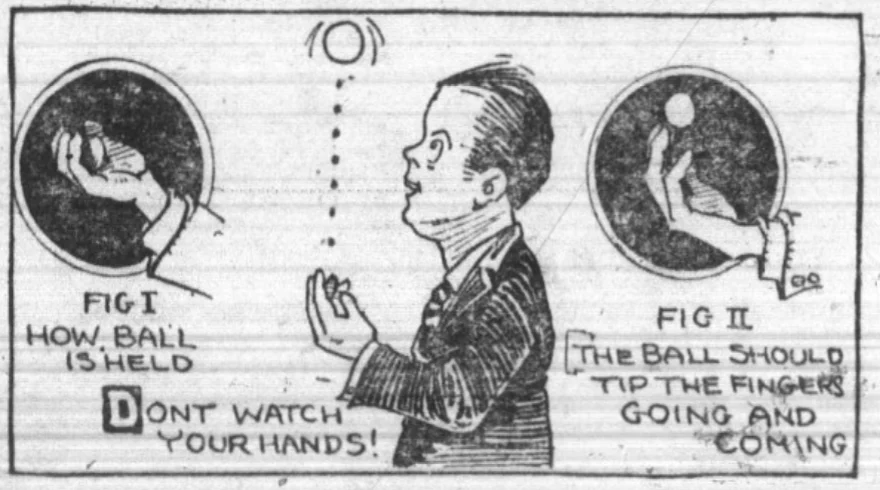
The initial installment of Rasso’s series, published on March 12, 1922, focused on the "single vertical throw." Rasso’s approach was grounded in the reality that most novices attempt to learn in unsuitable environments. He famously remarked on his own disastrous start in his family’s kitchen, where his early practice sessions resulted in the destruction of his mother’s fine china, leading to his relocation to the family barn.
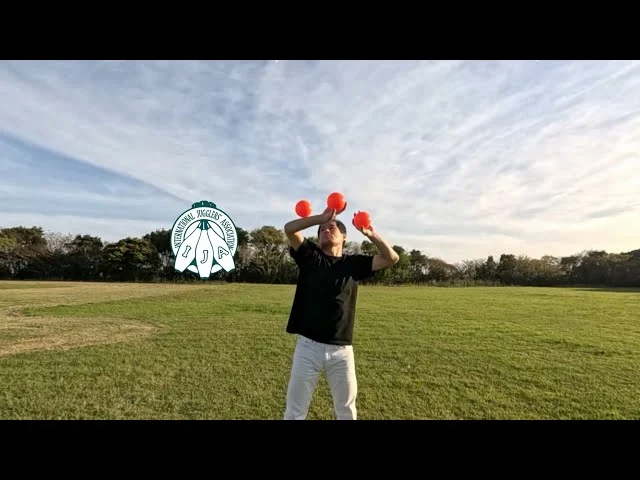
Technically, Rasso insisted on the use of high-quality rubber balls, approximately one and a half to two inches in diameter. He emphasized the "looseness" of the grip, arguing that the fingers must act as guides rather than anchors. A critical insight offered by Rasso was the importance of the ball’s rotation and the specific method of catching. He warned against the "flat palm catch," which often results in the ball bouncing out of the hand. Instead, he advocated for a fluid motion where the fingers tip the ball and allow it to roll into the palm, a technique that minimizes impact and maximizes control. His instruction to "watch the ball and not your hand" remains a cornerstone of modern juggling pedagogy.

Lesson Two: The Progression to Double Vertical Throws
The second lesson, appearing in the Long Beach Telegram in November 1921, introduced the "double vertical throw." This progression marked the threshold where a student moved from mere coordination to actual juggling. Rasso’s description of this technique reveals a sophisticated understanding of spatial awareness.
He outlined a two-tiered method for holding two balls simultaneously: one secured in the palm by the ring and little fingers, and the other held by the index, middle finger, and thumb. The logic was simple but effective: the ball held by the fingers is released first, while the palm ball remains secure. As the first ball completes its arc, the second ball transitions into the fingers, creating a continuous cycle.
Rasso’s analysis of the double throw also touched upon the necessity of varying the trajectory to avoid collisions. He taught that the balls should follow a "wheel" pattern, where the downward path of the first ball is intentionally offset by approximately two inches from its upward path. This creates the clearance necessary for the second ball to occupy the same vertical space without interference. This level of precision, while presented for amateurs, reflects the high-level spatial geometry required for the complex patterns performed by professionals of his caliber.
The Broader Impact and Pedagogical Philosophy
The implications of Rasso’s lessons extend beyond the individual tricks. They represent a philosophy of self-discipline that was common among performers of the era. Rasso was explicit in his warnings to his readers: he did not intend to create a generation of stage performers. Instead, he argued that juggling was an essential exercise for the mind and body, a way for the layman to develop a heightened appreciation for the labor and talent involved in professional performance.

From a historical standpoint, the dissemination of these lessons suggests that juggling in the early 20th century was viewed as a legitimate form of physical education. By making his techniques public, Rasso helped to demystify a craft that had long been shrouded in the insular traditions of the circus and the Vaudeville circuit. His insistence on posture—specifically the free movement of the arms and the avoidance of stiff, "stimy" elbows—underscores the transition of juggling from a feat of raw strength to an art form centered on grace and fluid motion.
Chronology of the Rasso Series
- Pre-1921: Rasso tours extensively across the United States and Europe, solidifying his reputation as a master of the craft.
- November 29, 1921: The Long Beach Telegram publishes the second lesson, focusing on the double vertical throw.
- March 12, 1922: The Oakland Tribune publishes the first lesson, focusing on the single vertical throw, initiating the ten-part series.
- 1922: Rasso grants an interview to The Herald, detailing his upbringing in Strasbourg and his early training in Italy.
- 2026: Archival recovery efforts by historians such as Esteban Vélez culminate in the systematic cataloging of all ten published lessons.
Implications for Modern Juggling
The rediscovery of Rasso’s work provides modern historians with a valuable data set regarding the technical evolution of juggling. While modern equipment has become more sophisticated, the fundamental principles of weight distribution, finger placement, and trajectory control advocated by Rasso remain fundamentally sound.
Furthermore, the existence of this series highlights a unique moment in media history where newspapers acted as the primary vehicle for the transmission of specialized, non-academic skills. In today’s digital landscape, such information is disseminated through high-definition video tutorials. However, the pedagogical structure used by Rasso—starting with basic, repetitive motion and progressing through specific variations—remains the gold standard for skill acquisition.
As the archival research continues, the recovery of the remaining eight lessons promises to further clarify the training regimen of a performer who was, in his time, a household name. By grounding his teachings in the practical realities of the everyday learner, Rasso ensured that his influence would outlive his stage appearances. His story serves as a reminder that the true masters of any craft are often those who are most willing to share the secrets of their success, thereby ensuring the longevity of the art form for future generations.