
The preservation of performing arts history often relies on the painstaking recovery of ephemera scattered across decades. For the global juggling community, a treasure trove of lost history has recently been brought to light through the relentless decade-long archival efforts of professional juggler, historian, and museum curator David Cain. By tracking down, compiling, and closely examining a complete run of the International Jugglers Association (IJA) Newsletter spanning from its inception in 1949 to 1981, Cain has unlocked a wealth of forgotten lore, rare performance descriptions, and historical corrections that reshape our understanding of the golden age of vaudeville and the pioneers who defined the craft.
The Historical Scope and Significance of the IJA Newsletter Archives

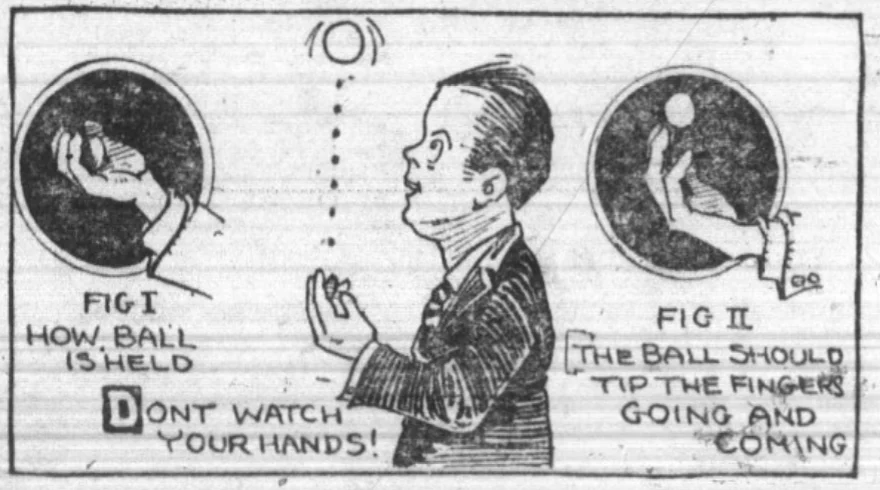
Published continuously for more than three decades, the IJA Newsletter served as the vital connective tissue for jugglers worldwide before the advent of the digital age. In an era when performers traveled extensively across international vaudeville and variety circuits, the newsletter functioned as a communal bulletin board. Its pages were routinely filled with news of local juggling sessions, member travels, working dates and venues, notices of convalescing members, address changes, obituaries, official association business, convention announcements, and detailed officer reports.
However, the true historical gems hidden within these fragile, yellowed pages were the firsthand recollections of seasoned veterans recounting the acts they witnessed during the late 19th and early 20th centuries. Despite their immense value to performing arts history, these historical editions remained largely inaccessible. With the exception of a brief digitization project covering the 1976 through 1978 volumes, the vast majority of the early newsletters existed only in physical format—often deteriorating, poorly preserved, and barely legible.
Recognizing the imminent threat of historical loss, David Cain embarked on a comprehensive, decade-long quest to hunt down a complete, pristine set of the newsletter. Reading through fragile issues dating primarily to 1964 and 1965, Cain has begun systematically cataloging monumental discoveries of interest not only to the general juggling community, but to historians of circus and variety arts worldwide.

Shedding Light on George H. Fielding: A 19th-Century Pioneer
Among the most compelling figures brought back into sharp focus through Cain’s archival recovery is George H. Fielding. Widely cited by his 1890s contemporaries as the historic first juggler to successfully perform a six-ball routine, Fielding has long remained an enigmatic figure. Aside from the bold claim regarding six-ball manipulation and a single surviving photograph, historians possessed frustratingly little documentation regarding his life, career, or specific performance repertoire. While subsequent research by Esteban Valez uncovered tragic details concerning Fielding’s later mental health challenges, his actual stage acts remained shrouded in obscurity.
That historical void was significantly narrowed thanks to an account discovered in the May 1965 IJA Newsletter, written by veteran vaudeville performer Horace Morton Lorette. Professionally known as the "Original Dancing Juggler," Lorette offered a vivid, eyewitness description of Fielding’s mastery during the height of the 1890s variety boom.

According to Lorette’s account, he first witnessed Fielding around 1890 featured in "The Black Crook," a landmark theatrical extravaganza staged at Gilmore’s Auditorium in Philadelphia. Performing in full clown makeup and costume, Fielding executed sophisticated routines utilizing a cane, high hat, and gloves. His repertoire included intricate hat and cigar manipulations—such as catching a hat in various orientations and flipping a cigar from one side of his mouth to the other—alongside a refined routine featuring a metal tube and two silvered balls.
Crucially, Lorette documented Fielding’s execution of a six-ball pattern, marking the earliest firsthand record of the feat, noting that seven balls remained a "trick for the future." Furthermore, Fielding’s manipulation of two champagne bottles was described as singularly peerless, a standard of dexterity Lorette claimed never to have seen matched in his lifetime. Fielding also performed an advanced three-ball routine, executing a wide-spread split formation known as the "two and one spread wide apart." This specific geometric arrangement laid the foundational choreography for modern multi-object manipulation, which contemporary jugglers now execute using everything from clubs and plates to hoops and balls with various object counts.
Fielding’s historical footprint is further amplified by his incorporation of early contact juggling and bounce juggling. Historical analysis places Fielding alongside William Everhart and Kara as the true vanguard of ball-bounce manipulation, bridging the gap between traditional toss juggling and physical object balancing.

Expanding the Timeline of Contact Juggling: The Toscanelli Discovery
The archival project has also yielded groundbreaking revelations regarding the history of contact juggling—an artistic discipline characterized by rolling spheres smoothly across the contours of the body. In the August 1964 IJA Newsletter, contributor Joe Marsh provided fresh biographical and technical insights concerning the German-born juggler Toscanelli, who later relocated to the United Kingdom after starting his professional career as a school teacher in Germany.
Most significantly, Marsh reported that Toscanelli was actively executing complex ball-control movements utilizing a glass ball. Surviving archival footage of Toscanelli demonstrates advanced contact juggling techniques that predate the modern popularization of clear-ball manipulation by master performer Michael Moschen by roughly two decades. This discovery forces a chronological reassessment of the evolution of contact juggling, demonstrating that transparent sphere manipulation has deeper historical roots in European variety traditions than previously acknowledged.

Mentorship Networks and Vaudeville Lineage: The Case of Diane Shelton
The newsletters also illuminate the vital pedagogical lineages that sustained vaudeville arts across generations. Numerous notes compiled throughout the 1964 editions document the formative training of Diane Shelton, who was mentored by the renowned vaudeville tramp juggler Homer Stack (1891–1987). Stack, a pillar of classic American tramp juggling, passed down traditional physical comedy and prop-handling techniques to Shelton, whose multifaceted career bridged traditional baton twirling, advanced technical juggling, and scientific veterinary pursuits. The documentation of this mentor-student relationship offers valuable data on how specialized performance skills were orally and practically transmitted within the tight-knit community of early 20th-century specialty acts.
Acrobatic Innovation and Complex Repertoire: Josef Blank and Charles Charlene

Beyond traditional toss juggling, the newsletters preserve records of extraordinary specialty stunts that pushed the boundaries of physical coordination. In the October 1964 edition, fellow performer Tommy Breen recalled witnessing German juggler Josef Blank execute a staggering apparatus routine in 1908. Utilizing seven large wooden disks harvested from the backs of Bentwood chairs, Blank initiated a complex sequence starting with two disks in his right hand, one in his left hand, one tucked under each arm, and one secured beneath each side of his chin. From this precarious configuration, Blank launched all seven disks simultaneously into the air, successfully catching and returning every single disk to its precise starting position.
In the same issue, historical reports detailed the remarkable 1909 performance of Charles Charlene, professionally known as Charles Jee. Charlene balanced a top hat on his nose, executing half-turns and full rotations between his nose and forehead entirely synchronized with the tempo of a violin piece he was simultaneously performing live.
Broader Impact, Methodological Implications, and Archival Future

The systematic recovery and publication of these archival fragments by David Cain carry profound implications for modern circus and juggling historians. For generations, the history of variety arts has suffered from anecdotal gaps, undocumented claims, and the permanent loss of primary-source materials. By rescuing the 1949–1981 IJA Newsletters from physical degradation and obscurity, historians gain a rigorously documented baseline of performance dates, technical innovations, and biographical linkages.
This ongoing research project underscores the critical importance of specialized archival preservation. As these historical tidbits continue to be shared with the broader public, they challenge contemporary performers and scholars to reconsider the historical depth of modern manipulation techniques. Far from being recent innovations, disciplines such as contact juggling, bounce juggling, and complex apparatus balancing are revealed as the evolutionary products of late 19th- and early 20th-century pioneers who pushed the limits of human dexterity long before the modern era of recorded media. Through the dedication of historians like David Cain, the foundational architects of the juggling arts are finally receiving the documented legacy they earned on the vaudeville stages of the past.