
The late 1960s represented a pivotal apex in the evolution of mainstream popular music, characterized by unprecedented advancements in studio arrangements, cross-genre experimentation, and extraordinary vocal talent. As the countercultural movement peaked and societal shifts influenced artistic expression, the year 1968 delivered a collection of vocal performances that continue to define the era’s auditory landscape. Across soul, country, hard rock, and blues-infused rock, artists pushed the boundaries of their respective genres, utilizing their voices not merely as melodic instruments, but as vehicles for profound emotional resonance, social commentary, and aggressive sonic disruption.
A retrospective analysis of the musical landscape of 1968 reveals a tapestry of tracks that transcended commercial success to become enduring cultural artifacts. Examining iconic recordings by Aretha Franklin, Johnny Cash, The Beatles, and Janis Joplin offers a comprehensive overview of how vocal delivery evolved during a tumultuous year in global history.
The State of Popular Music in 1968: A Backdrop of Cultural Upheaval
To understand the weight of the vocal performances captured in 1968, one must contextualize the socio-political environment in which they were recorded and released. The year was marked by profound global turbulence, including civil rights movements, anti-Vietnam War protests, political assassinations, and sweeping generational shifts. Popular music served as both a mirror and an escape for a public grappling with uncertainty.
Recording technology was also undergoing a rapid transformation. The transition from four-track to eight-track recording equipment allowed producers and artists to experiment with multi-layered vocal tracks, distortion, and expansive dynamic ranges. Consequently, vocalists were no longer confined to traditional pop structures; they were encouraged to push their instruments to the absolute breaking point, resulting in raw, uninhibited performances that captured the anxieties and passions of the decade.
Aretha Franklin and the Soulful Supremacy of Chain Of Fools
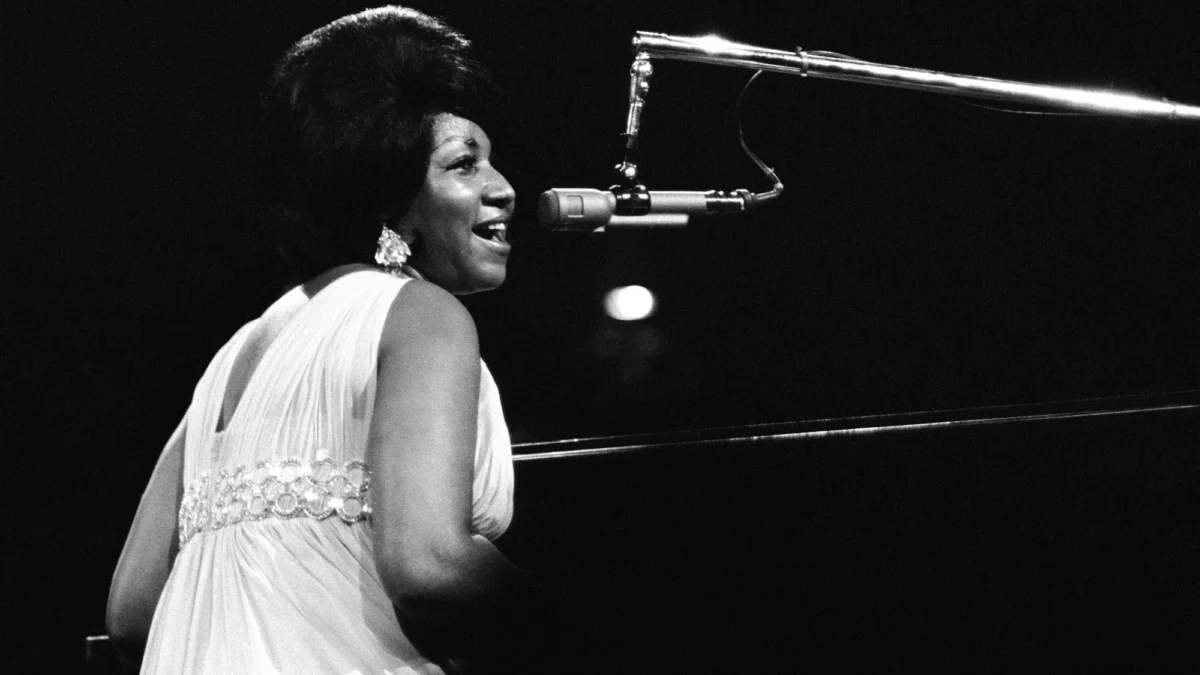
Opening any examination of 1968’s vocal achievements requires acknowledging Aretha Franklin, whose cultural dominance during this period earned her the enduring moniker "The Queen of Soul." Although "Chain Of Fools" was initially released as a commercial single by Atlantic Records in late 1967, its inclusion on her landmark February 1968 studio album, Lady Soul, cemented its legacy within that calendar year.
Written by Don Covay and originally intended for Otis Redding, "Chain Of Fools" found its ultimate vessel in Franklin. Her performance on the track is a masterclass in vocal control, timing, and emotional delivery. Franklin operated at the absolute height of her vocal capabilities on Lady Soul, seamlessly bridging the gap between traditional Sunday morning gospel fervor and secular rhythm and blues.
Vocal Technique and Arrangement
The brilliance of Franklin’s delivery on "Chain Of Fools" lies in her ability to maintain a sharp, driving rhythm that matches the intense, syncopated groove of the backing band, which featured Muscle Shoals session guitarist Cornell Dupree and pianist Teddy Sannin. Franklin’s timbre—characterized by a rich lower register and soaring, controlled upper belts—brought a fierce independence to the song’s themes of subjugation and resilience. Musicologists often point to this recording as a defining moment when soul music crossed over into mainstream pop consciousness with its artistic integrity entirely intact, proving that commercial viability did not require the dilution of Black American musical traditions.
Johnny Cash and the Raw Empathy of At Folsom Prison
While soul and rock and roll frequently dominated conversations regarding vocal swagger, country music delivered one of the most culturally significant and emotionally arresting live vocal performances of the decade. In January 1968, Johnny Cash stepped onto the stage inside the maximum-security Folsom State Prison in California, recording what would become his career-defining live album, At Folsom Prison.
The focal point of the record was Cash’s blistering rendition of "Folsom Prison Blues," a song he had originally released in a much milder studio version a decade prior in 1955. The 1968 live recording, however, introduced a stark, urgent reality that transformed the track into a legendary piece of American folklore.
The Power of Narrative Authenticity
The impact of Cash’s vocal performance on At Folsom Prison is rooted less in technical vocal dexterity—such as multi-octave ranges or complex runs—and far more in the profound authority of his baritone delivery and empathetic messaging. Cash, an artist who famously cultivated an outlaw image despite never serving hard time for a felony, understood the delicate social dynamics of performing for an incarcerated audience.
Rather than adopting a condescending tone or romanticizing criminal behavior, Cash sang directly to the inmates, acknowledging their humanity. The famous opening line, "I hear the train a-comin’, it’s rollin’ round the bend," delivered with a dry, gravelly resolve, elicited an immediate roar of recognition from the prisoners. Music historians note that this performance revitalized Cash’s flagging career and established a blueprint for socially conscious, immersive roots music that bridged demographic divides.
The Beatles, Paul McCartney, and the Birth of Heavy Metal Aggression on Helter Skelter
By 1968, The Beatles were actively fracturing as a cohesive unit, navigating internal tensions, business disputes, and divergent artistic paths. These growing pains culminated in the recording of their self-titled double album, commonly known as the "White Album." The record’s sprawling tracklist showcased a band stretching its creative boundaries to the absolute limit, resulting in a stylistically fragmented yet endlessly fascinating collection of songs.
Among the album’s most startling contributions was Paul McCartney’s aggressive hard-rock anthem, "Helter Skelter." Hidden near the end of the second vinyl’s A-side, the track represented a radical departure from the melodic pop sensibilities that had initially propelled the Fab Four to global fame.
Origins and Studio Execution
The impetus behind "Helter Skelter" was famously competitive. After reading a magazine review in which Pete Townshend claimed that The Who’s recent single "I Can See for Miles" was the loudest, rawest, and dirtiest rock record ever made, McCartney set out to write a track that would claim that specific title.
McCartney’s vocal performance on "Helter Skelter" is a tour de force of unbridled rock-and-roll screaming. Pushing his voice to the very edge of distortion, McCartney delivered lines with a throat-shredding intensity that anticipated the heavy metal and punk movements by nearly a decade. Studio lore dictates that the band recorded several increasingly chaotic takes, with McCartney screaming until his throat bled, completely shedding his clean-cut pop persona in favor of primal, cathartic noise. The resulting track remains a testament to the versatility of The Beatles’ vocalists during their final years together.
Janis Joplin and the Blues-Operatic Transformation of Summertime
Few vocalists in the history of popular music possessed the earth-shattering power and emotional vulnerability of Janis Joplin. As the frontwoman for Big Brother and the Holding Company, Joplin captured the countercultural zeitgeist of the late 1960s with her blues-drenched delivery. Her definitive 1968 recording of "Summertime," featured on the band’s sophomore studio album Cheap Thrills, stands as one of the most remarkable vocal reinventions of the twentieth century.
From Opera House to Psychedelic Ballroom
Originally composed by George Gershwin with lyrics by DuBose Heyward and Ira Gershwin, "Summertime" was introduced as an operatic aria and lullaby in the 1935 folk opera Porgy and Bess. Over the subsequent decades, the composition became a standard for jazz and traditional pop vocalists, typically interpreted with gentle, sweeping sophistication.
Joplin and Big Brother and the Holding Company completely dismantled this traditional approach, injecting the composition with the grit of Delta blues and the volume of psychedelic rock. Joplin’s vocal performance on the track serves as both a melodic instrument and a piercing emotional weapon. She transitions effortlessly from low, raspy whispers of yearning to soaring, high-register wails that critics often likened to the sound of a violin bow aggressively scraping across un-rosined strings. Released in the summer of 1968, Cheap Thrills topped the Billboard 200 chart, and Joplin’s performance on "Summertime" permanently etched her name into the pantheon of rock history as a singular vocal force.
Chronology of Releases: The 1968 Musical Timeline
To fully appreciate the concentration of talent during this twelve-month period, reviewing the chronological rollout of these defining recordings highlights the rapid pace of musical innovation in 1968:
- January 1968: Johnny Cash records and subsequently releases At Folsom Prison, bringing raw, empathetic storytelling directly to an incarcerated audience.
- February 1968: Aretha Franklin releases Lady Soul, featuring the enduring soul standard "Chain Of Fools."
- August 1968: Janis Joplin and Big Brother and the Holding Company release Cheap Thrills, showcasing her transformative blues interpretation of "Summertime."
- November 1968: The Beatles release the "White Album," introducing the screaming, proto-metal vocal stylings of Paul McCartney on "Helter Skelter."
Broader Impact and Industry Implications
The vocal performances of 1968 left a permanent imprint on the trajectory of the music industry. They proved that commercial success was no longer tethered to pristine, middle-of-the-road vocal styling. Instead, audiences in 1968 craved authenticity, whether found in the gospel-infused defiance of Aretha Franklin, the sobering narrative empathy of Johnny Cash, the unhinged aggression of Paul McCartney, or the agonizing heartbreak of Janis Joplin.
These recordings challenged record executives, producers, and future generations of artists to view the human voice not merely as a tool for pitch-perfect melodic delivery, but as a primary medium for social commentary, psychological exploration, and raw human expression. Decades later, the benchmark set in 1968 continues to influence how vocalists approach the microphone in pursuit of timeless artistic resonance.