
Gregory Popovich, a figure synonymous with elite-level juggling and the art of animal performance, has officially released a comprehensive new memoir detailing his formative years within the legendary Soviet circus system. The volume, spanning nearly 400 pages and enriched with over 130 archival photographs, provides an intimate look at the rigorous training, cultural significance, and eventual transition of one of the world’s most accomplished variety performers. Beyond a mere autobiography, the work serves as a historical document, capturing a vanished era of theatrical performance that defined the international reputation of the Soviet arts.

A Legacy Rooted in Circus Tradition
The narrative of Gregory Popovich is inextricable from the history of the circus itself. Born into a multi-generational performance dynasty, Popovich’s early life was defined by the demanding standards of his predecessors. His father, Aleksei Popovich, was a celebrated salon and gentleman juggler, while his mother, Tamara Alexandrova, cultivated expertise in both juggling and animal training. His lineage extends further back to his grandparents, who were specialized foot jugglers.
This environment was not merely a family business; it was a disciplined institutional culture. In the Soviet Union, circus performers were state-supported artists, trained in specialized academies that emphasized technical precision, balletic grace, and endurance. The memoir details how this environment fostered a unique blend of athleticism and performance art, allowing individuals like Popovich to master complex, high-stakes routines that remain the gold standard in the variety circuit today.

The Soviet Circus: A Historical Context
The Soviet circus, or "GosTsirk," was more than an entertainment vehicle; it was a state-sanctioned instrument of cultural diplomacy. During the Cold War, the Moscow Circus served as a primary export of Soviet soft power, touring internationally to demonstrate the "superiority" of socialist physical education and artistic discipline.
Popovich’s account provides rare insight into the inner workings of this machine. He details the transition from the highly structured, centralized training camps of his youth to the logistical challenges of international touring. The book covers the period during which the Soviet Union’s circus arts were at their peak, characterized by massive, elaborate productions that were exported to Western audiences, including North America, throughout the latter half of the 20th century.

Chronology of Influence: From Russia to the World Stage
The memoir tracks the trajectory of the Soviet circus’s influence in North America, anchored by a detailed pictorial timeline covering the years 1962 to 1997. This era marked a significant shift in how Western audiences perceived circus arts, moving from the traditional three-ring tent structure to the more refined, character-driven performances popularized by the Moscow Circus troupes.
- 1962–1975: The Establishment of Cultural Exchange. This period saw the first major tours of Soviet troupes in the United States, which shocked audiences with their high-level technical skills.
- 1976–1985: Peak Influence. Popovich’s own development occurred during this window, where the focus shifted toward integrating narrative elements with technical juggling.
- 1986–1997: The Transition and Decline. The memoir chronicles the final decade of the Soviet Union and the subsequent decentralization of the circus industry, which forced many performers to emigrate and seek opportunities in the West.
Technical Mastery and Artistic Evolution
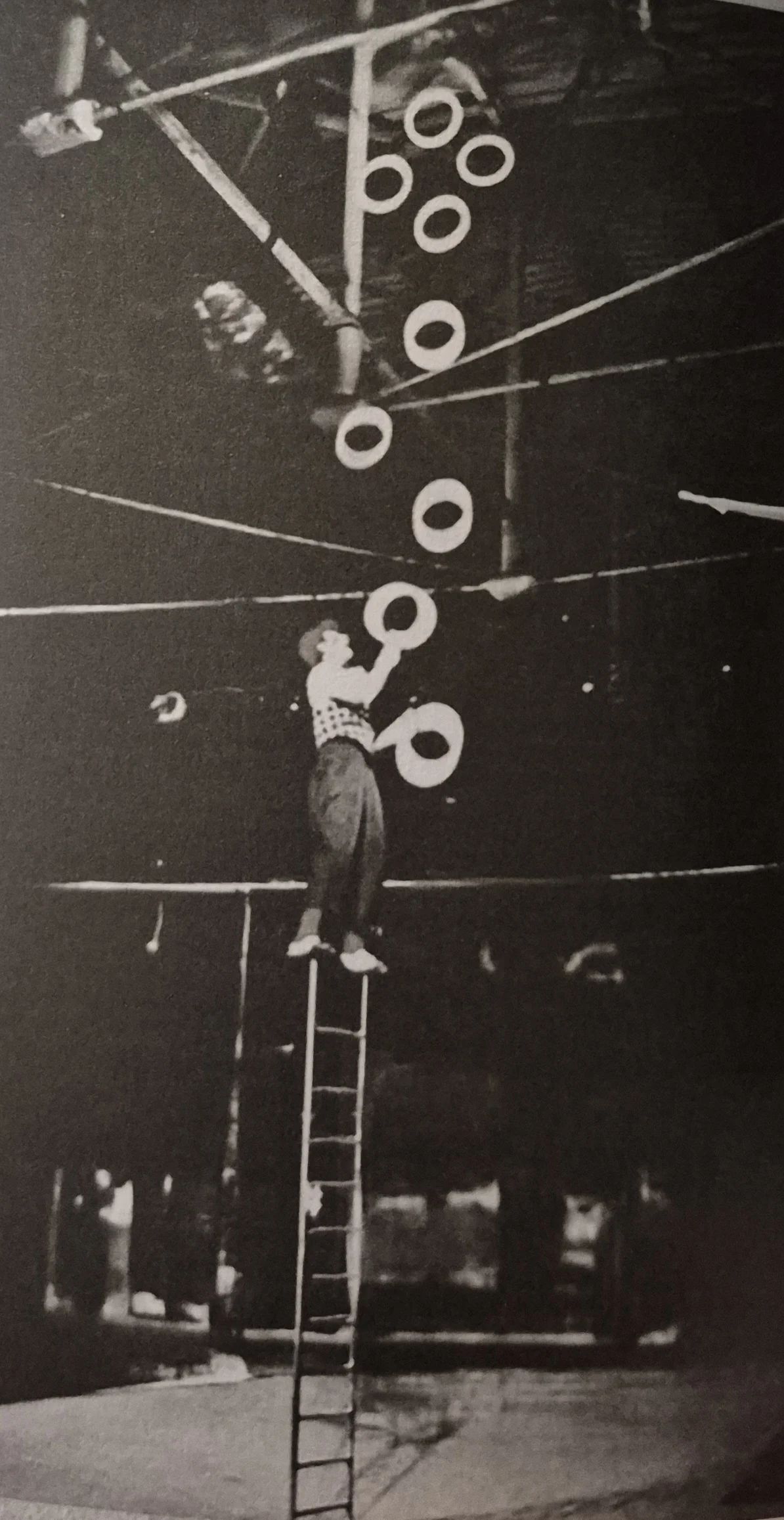
A significant portion of the work focuses on the technical evolution of Popovich’s craft. Readers are given a behind-the-scenes look at the development of his signature acts, including his record-setting nine-ring juggling on a freestanding ladder—a feat of balance and coordination that demands extreme physical conditioning.

Furthermore, the book addresses the transition from pure juggling to the integration of animal performance and clowning. In the world of modern variety, this versatility is essential for commercial viability. Popovich explains the ethical and training-based methodologies involved in working with animals, emphasizing the bond required to execute complex, non-coercive performances. This shift in his career path highlights a broader trend in the circus industry: the movement toward intimate, character-driven variety shows that prioritize the relationship between the performer and the audience over the spectacle of sheer danger.
Institutional Impact and Cultural Preservation
David Cain, a professional juggler, Guinness World Record holder, and proprietor of the Museum of Juggling History, notes that the publication of this memoir fills a critical gap in circus literature. "The history of the Soviet circus is often romanticized, but rarely documented with this level of personal detail," says Cain. "Popovich’s work provides a necessary bridge between the history of the art form and the personal reality of those who lived through the transition from state-backed performers to independent international icons."

The preservation of this history is essential for modern circus arts. As the industry continues to evolve into new forms—such as the contemporary "nouveau cirque" movement—the technical foundations established in the Soviet era remain the baseline for professional proficiency. By documenting his experiences, Popovich ensures that the methodologies of the past are not lost to future generations of performers.
Implications for the Modern Variety Circuit
The publication of this volume arrives at a time when the circus industry is undergoing a period of intense reflection regarding its future. With the decline of large-scale animal-based traveling shows in North America, performers are looking back at historical models to determine which elements of the craft can be modernized.

Popovich’s memoir acts as a case study for this transition. By detailing his own journey, he demonstrates that success in the industry is not just about the technical mastery of an apparatus, but about the ability to adapt to changing cultural tastes. His success in moving from a traditional Soviet circus environment to becoming a staple of the Las Vegas variety scene is a roadmap for how specialized skills can be repurposed for modern entertainment markets.
Availability and Academic Value
The memoir is currently available for purchase through the Comedy Pet Theater store and at the Museum of Juggling History in Middletown, Ohio. Priced at $15.00, it is positioned as an accessible resource for both casual fans and serious students of performance art.

Beyond its entertainment value, the book is expected to become a primary source for researchers studying the intersection of state-funded arts and international migration during the late 20th century. Its reliance on firsthand accounts, combined with the visual evidence provided by the 130+ photographs, creates a comprehensive record of a life spent in the pursuit of perfection.
Future Projections
While this volume focuses on the first half of his career, there is significant anticipation for a potential second installment. The circus world continues to evolve, and the final chapters of the Soviet influence on global entertainment remain a subject of ongoing historical interest.

For now, this first volume stands as a definitive record of the "Golden Age" of the Soviet circus. It offers a sober, analytical, and deeply personal account of a life defined by the pursuit of excellence under some of the most rigorous training conditions in the world. As the circus industry looks toward the next century, the lessons contained within these pages regarding discipline, technical mastery, and the necessity of artistic evolution will likely remain relevant.
The publication of this memoir serves as a reminder that the circus is not merely a collection of acts, but a living tradition that carries the weight of history, culture, and the individual human spirit. Through the eyes of Gregory Popovich, readers are invited to witness the fading lights of the Soviet ring and the enduring spark of a performer who helped carry that legacy into the modern era.