
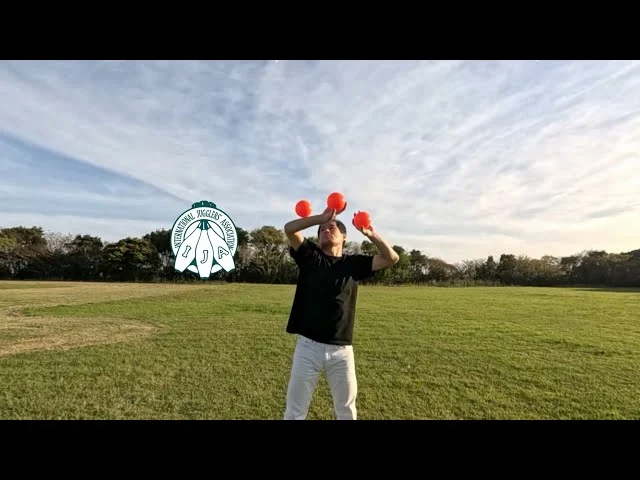
The International Jugglers’ Association (IJA) has officially unveiled its "Tricks of the Month" (TOTM) feature for September 2026, spotlighting the innovative work of Yamaguchi-based artist Toru Kurei. The showcase, distributed through the IJA’s eJuggle digital platform, highlights Kurei’s unique approach to contact juggling, a discipline that emphasizes the rolling and balancing of objects across the body rather than the traditional aerial tossing associated with conventional juggling. Kurei’s performance, which explores multi-ball manipulation across multiple points of contact, serves as a focal point for the organization’s ongoing effort to document and archive contemporary trends in object manipulation.
The Evolution of a Discipline: Contact Juggling
Contact juggling, while having roots in ancient performance arts, gained modern prominence in the late 20th century, largely due to the integration of magic and theatrical movement. Unlike toss juggling, which relies on the physics of parabolas and precise timing, contact juggling—often referred to as "ball manipulation"—focuses on the fluidity of motion and the seamless interaction between the object and the performer’s musculature.
Toru Kurei, whose stage name is a direct homage to the "cradle," a foundational technique in the craft, has spent the last decade refining a methodology that moves beyond the palm-centric limitations of the style. In Japanese, his chosen name is represented by the kanji 弧玲, a symbolic nod to his artistic philosophy. His approach involves a holistic utilization of the body, extending the contact surface to include the neck, chest, head, and lower limbs. By integrating these unconventional contact points, Kurei challenges the aesthetic boundaries of the art form, attempting to achieve what he describes as "cosmic expansiveness" within the limited spatial constraints of a performer’s physical frame.
Chronology of the IJA Tricks of the Month Series
The IJA, founded in 1947, has long acted as the primary steward for juggling history and technical development. The "Tricks of the Month" series was established as a digital extension of the association’s mandate to share knowledge across international borders.
- 1947: The IJA is established in Jamestown, New York, to foster the art of juggling through competition and community engagement.
- 2010s: With the rise of high-definition video platforms, the IJA shifts its educational strategy toward digital content, launching eJuggle to house tutorials, interviews, and performance showcases.
- 2024–2025: The organization sees a marked increase in submissions from the Asia-Pacific region, prompting a more concerted effort to feature artists from Japan, South Korea, and Southeast Asia.
- September 2026: Toru Kurei is selected for the TOTM feature, representing a shift toward showcasing niche, high-level technical skills in contact manipulation.
Technical Analysis: The Multi-Ball Paradigm
Kurei’s performance, featured in the September 2026 video, utilizes multiple spheres simultaneously. In technical terms, the complexity of contact juggling increases exponentially with the addition of each ball. When a performer introduces three or more balls, the kinetic energy required to maintain balance and movement requires a high degree of core stability and proprioception.
Data from recent juggling conventions suggests that while toss juggling remains the most popular form of the art, the "flow arts" sector—which includes contact juggling, poi, and staff spinning—has seen a 15% year-over-year increase in interest among younger demographics. Kurei’s work is significant because it bridges the gap between traditional technical manipulation and the improvisational, dance-like qualities of modern flow arts. By moving away from a stationary base and incorporating the entire body, he minimizes the "dead time" often associated with resetting after a drop or a transition, thereby maintaining a continuous flow of movement.
Perspectives from the Juggling Community
The international reach of the IJA has facilitated a feedback loop between solitary practitioners and the broader community. Kurei, who practices primarily in Yamaguchi, acknowledges that his isolation was a catalyst for his internal development, yet he credits the network of Japanese jugglers for providing the social and cultural context necessary to sustain his craft.
"Practicing alone can be a rigorous, sometimes solitary pursuit," Kurei noted in his correspondence with the IJA. "The support from the domestic community in Japan helped me understand that while juggling is a personal expression, it is also a vessel for human connection."
Industry observers note that platforms like eJuggle play a critical role in mitigating the isolation of practitioners. By providing a global stage, the IJA allows artists in remote or non-metropolitan areas to contribute to the global lexicon of tricks, effectively crowdsourcing the evolution of the sport.
Broader Impact and Organizational Significance
The inclusion of specialized artists like Kurei in the IJA’s official content has broader implications for the organization’s growth and the professionalization of juggling. Membership-funded initiatives such as the IJA Festival and the Youth Juggling Programs (YJA) rely on the visibility of these high-level trick demonstrations to attract new participants.
The IJA’s current strategic focus includes:
- Digital Archiving: Preserving the techniques of masters and contemporary innovators.
- Regional Competitions (IRC): Decentralizing the competitive circuit to encourage local talent development in diverse regions.
- Educational Accessibility: Providing free, high-quality tutorials that lower the barrier to entry for beginners.
Financial support for these initiatives is largely driven by membership dues, which grant access to exclusive tutorials, podcasts, and voting rights within the organization. As the IJA moves further into the 2026 calendar, the emphasis on diverse, international voices is expected to continue, reflecting a broader trend of globalization within the performing arts.
The Intersection of Art and Physics
The "cosmic" quality Kurei refers to in his work is a subjective interpretation of a physical reality: the ability of a human body to create a sequence of movements that defy standard anatomical expectations. By reducing the reliance on the hands, Kurei forces the audience to rethink what constitutes a "juggling surface." This expansion of the definition of the art form is essential for the continued relevance of juggling in the 21st century.
As the IJA continues to document these developments, the collaboration with artists like Kurei underscores the importance of the organization as a repository of technical knowledge. Whether through the lens of a beginner learning their first pattern or an expert pushing the limits of multi-ball contact, the Tricks of the Month series serves as a critical bridge between the individual’s private practice and the public appreciation of the craft.
For those interested in following Kurei’s progress, his work is currently being archived across multiple platforms, including his YouTube channel, @sukebiyori, and his Instagram profile. These digital footprints serve not only as a portfolio for the artist but as a vital part of the contemporary record of juggling, ensuring that the innovations of today are available to the practitioners of tomorrow.
The International Jugglers’ Association continues to invite its members and the public to engage with these resources, emphasizing that the strength of the community lies in the shared exchange of technique and the support of artists who dedicate their lives to the pursuit of physical mastery. The September showcase serves as a testament to the fact that even in the most solitary of practices, the reach of a well-executed trick can span the globe.