
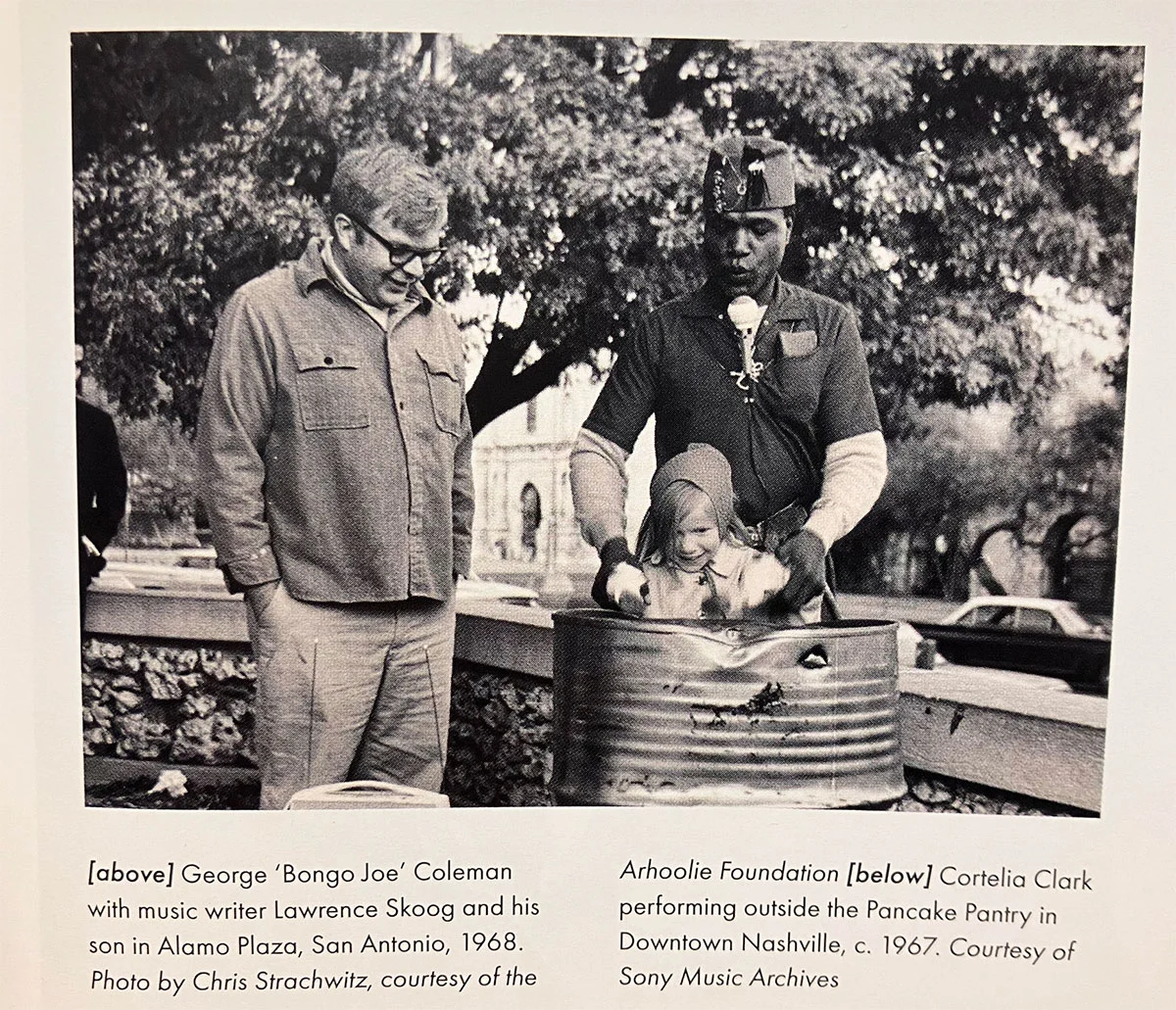
The vibrant tapestry of American street music, often a crucible for raw talent and unfiltered expression, features few figures as idiosyncratic and compelling as George "Bongo Joe" Coleman. A true American primitive, Coleman transformed an ordinary 55-gallon oil drum into a percussive powerhouse, captivating audiences with his unique blend of song, spoken word, whistling, and witty banter. His story, a testament to resilience, improvisation, and the enduring power of street performance, is highlighted in Cary Baker’s recent book, Down on the Corner; Adventures in Busking & Street Music, a collection celebrating the diverse world of street musicians. Baker’s work, which includes interviews with both celebrated figures like Billy Bragg and Grandpa Elliott, and lesser-known legends like Coleman, offers a rich biographical and historical lens into the lives of those who make music on the public stage. While the book focuses less on the intricate politics of busking, it masterfully curates an eighty-year span of street music history, making Coleman’s contribution particularly resonant.
The Genesis of a Street Legend
Born on November 28, 1923, in Haines City, Florida, George Coleman’s early life was marked by adversity. Orphaned at a young age, he found his way to Detroit, a city known for its rich musical heritage, where he first delved into music. His formative years even included a stint performing alongside the legendary Sammy Davis Jr., an early indicator of his innate showmanship and musical aptitude. By the 1940s, Coleman had relocated to Houston, Texas, where he honed his percussive skills within a local ensemble. However, it was the call of the streets that truly defined his career. Faced with the inability to afford a conventional drum kit for a job opportunity in the early 1950s, Coleman demonstrated remarkable ingenuity. As he recounted in an interview with San Antonio musicologist Larry Skoog for the Arhoolie Foundation’s website, he "tried to make a loan from several sources to buy drums… my first job, and couldn’t get the money so I got some cans and fixed them up like drums and started playing on street corners in Houston." This pivotal moment marked the birth of Bongo Joe, transforming a limitation into a signature style.
From Houston, his peripatetic journey led him through Galveston before he ultimately found his enduring stage in San Antonio. Here, he cultivated a substantial following, becoming an indelible part of the city’s cultural landscape. His primary performance locales included the bustling RiverWalk, the environs of HemisFair ’68—a significant international exposition that drew global attention to San Antonio—and the vicinity of the now-defunct Joske’s department store, once a prominent downtown retail landmark. Coleman’s performances were a sensory spectacle. Beyond the rhythmic thumping of his 55-gallon oil drum, he delivered a vocal style that was, in many ways, a precursor to modern rapping, characterized by its witty, often bawdy, and always engaging turns of phrase. His voice was amplified through a pickup microphone connected to a small amplifier, powered by car batteries, a testament to his resourceful adaptation of technology for his craft.
An Unconventional Showman: Observations from San Antonio
Jim Beal Jr., who served for nearly a quarter-century as the esteemed music reporter for the San Antonio Express-News, frequently encountered Bongo Joe during his teenage years. Beal’s recollections paint a vivid picture of Coleman’s larger-than-life persona. "He was outrageous, loud and sometimes reminded me of the classic rodeo clown with mismatched kind of clothing," Beal observed, emphasizing Coleman’s deliberate theatricality. "He was a statement of something. He was a showman – and he was pretty darn good percussionist." A particularly insightful observation from a bandmate of Beal’s revealed Bongo Joe’s nuanced musicality: "You know, Bongo Joe always whistles in a minor key." This detail underscores that beneath the flamboyant exterior lay a musician with an intuitive understanding of harmony and mood, capable of injecting a subtle melancholy or complexity into his seemingly simple street performances.
Coleman’s unconventional approach extended beyond his musical instrumentation and stage presence to his daily commute. Rather than arriving by car or van, he traversed San Antonio’s streets on a modified moped. "He had all that stuff on a small motorcycle, almost like a moped," Beal recounted. "It wasn’t a Harley Davidson and it wasn’t a bicycle; it was somewhere between. And somehow he jerry-rigged his moped to carry his oil drums." This image of Bongo Joe, with his makeshift drum kit strapped to his customized two-wheeler, became an iconic sight, further cementing his unique place in the city’s folklore. His living situation, too, was in keeping with his independent spirit. He resided in "tourist courts," a type of stand-alone motel common in mid-century America, complete with kitchenettes. Though the specific wooden building he inhabited is long gone, its location, just ten to fourteen blocks from his downtown performance spots, allowed him to bike nightly to his stage.
Beal likened Bongo Joe’s presence to other quintessential street attractions: "He was like a living tourist attraction almost like, uh you know, the guy with the parrots on Fisherman’s Wharf or, or the, the gutter punks on street in New Orleans with the boa constrictors." However, unlike static attractions, Bongo Joe was an ephemeral, dynamic encounter. "But it wasn’t the kind of thing where you would go and hang around and listen to Bongo Joe play all night. You would encounter him on the way to a river block bar or tourists walking around, back and forth from the Alamo to their hotels, and that part of town was a big tourist attraction. So you would see him. He was just there." He was an integral, almost architectural, feature of the San Antonio downtown experience, an ambient yet unforgettable sound and sight for locals and tourists alike.
A Deeper Dive into Musical Influences and Documentation
Despite his "outsider artist" veneer, Bongo Joe possessed a profound connection to the jazz tradition. His list of musical heroes, shared during the Skoog interview, revealed a sophisticated palate: "Dave Brubeck, Stan Kenton, Erroll Garner, Fat Wallace, Chick Webb, Gene Krupa, Stan Kenton, Duke Ellington, Johnny Hodges, Flip Phillips, Dizzy Gillespie, and this Mexican guy… I can’t think of his name right now." This pantheon of jazz greats, from innovators of cool jazz to big band legends and bebop pioneers, provided a lucid context for the seemingly primitive rhythms he conjured from his oil drum. His street performances, while rooted in improvisation and immediate audience engagement, were undoubtedly informed by the complex harmonic and rhythmic structures of these jazz masters, manifesting in his unique vocal phrasing and percussive accents.
The year 1968 proved to be a pivotal moment for Bongo Joe’s legacy. Chris Strachwitz, the visionary founder of Arhoolie Records—a legendary label renowned for documenting blues, folk, and roots music—journeyed to San Antonio specifically to record Coleman. The resulting album, his only full-length recording, captured the raw energy and distinctive artistry that defined his street performances. AllMusic critically described the album as both "hilarious" and "edgy," highlighting its unique blend of humor and intensity. One track, "Innocent Little Doggie," transcended its origins to become an underground radio classic, resonating with listeners not only in Texas but also across the Atlantic in the United Kingdom, solidifying Bongo Joe’s unexpected reach. Strachwitz, reflecting on the recording years later in a 2022 feature for the San Antonio Current, asserted, "Nobody took him seriously. He was just a street entertainer. But he was absolutely brilliant." Jim Beal Jr. corroborated the album’s authenticity, stating, "The melody line was his vocals. And he was just banging on the drums, and whistling and then some singing. What you heard on that here on that record is exactly what he did. He was what you might have called an American primitive." This term, "American primitive," captures the essence of an artist who, unburdened by formal training or traditional instruments, created a deeply authentic and impactful musical expression.
From Local Icon to National Spotlight and Street Justice
Bongo Joe’s unique artistry, particularly following the intrigue generated by his Arhoolie album, occasionally propelled him beyond the confines of San Antonio. Notably, he became a recurring fixture at the prestigious New Orleans Jazz & Heritage Festival, performing for an impressive nine years. In a truly astonishing turn of events, he once even accompanied none other than Dizzy Gillespie, one of his jazz heroes, on piano. Jim Beal Jr. recounted his surprise at this encounter: "What the heck, I travel all the way from San Antonio to New Orleans. And there’s Bongo Joe playing at New Orleans JazzFest!" These engagements underscore that while he was primarily a street performer, his talent was recognized on larger stages. In 1976, his public profile even led him to perform at several stops during Gerald Ford’s presidential campaign, an unlikely but intriguing chapter in his career.
Coleman’s life, however, was not without its dramatic, and sometimes dangerous, street-level incidents. Two years after his political performance, in 1978, Bongo Joe unexpectedly found himself playing a role in law enforcement. A story by Josh Baugh in the San Antonio Express-News (December 3, 2017), referencing an April 1, 1978, article from the same paper, details an incident where Bongo Joe helped local authorities capture an alleged shoplifter. The suspect, after stealing jewelry and sunglasses and threatening a store worker, fled past Bongo Joe. Coleman, pulling up on his moped next to a patrol car, inquired about the commotion. Upon learning the man was a robbery suspect, Bongo Joe ingeniously offered the breathless suspect a ride, inviting him onto his moped and feigning an offer for coffee. As they rode, trailing officers observed the interaction. Finally, at Fourth Street and Broadway, Bongo Joe halted, and the officers apprehended the suspect as he attempted to flee. Later that night, Bongo Joe was back at his customary spot, banging on his drums, a testament to his unflappable dedication to his art and perhaps, his civic duty.
A more serious incident occurred in 1987 when a heckler brandished a knife at the street percussionist. In an act of self-defense, Coleman shot the heckler in the shoulder. Beal drew a parallel to a similar self-defense shooting by Texas Outlaw country singer Billy Joe Shaver, highlighting the often-gritty realities faced by performers in public spaces. Baugh’s San Antonio Express-News story further elaborates on this event: "In the mid-1980s, Bongo Joe found himself on the wrong side of the law after he shot a heckler at point-blank range with a .44-caliber handgun. In April 1983, Bongo Joe was playing to a crowd of about 30 people, including the heckler. According to a police sergeant quoted in a newspaper article about the incident, the heckler ‘made a threatening motion which Joe interpreted as an attack’." The victim, despite being shot, reportedly walked to a nearby McDonald’s before being transferred to a hospital. Bongo Joe was initially jailed on a third-degree felony charge but was released on his own recognizance or on a $5,000 bond. Ultimately, he received five years’ probation for the incident, a stark reminder of the unpredictable nature of life on the streets.
Community Support and Enduring Philosophy
At one point, Coleman’s home along the San Antonio River was threatened with demolition, prompting him to consider leaving San Antonio for Corpus Christi, a city he had previously inhabited. However, by this time, Bongo Joe had become such a significant and cherished phenomenon within San Antonio that a dedicated group of local supporters rallied to his aid, successfully securing new living quarters for him within the city. This collective effort underscored his status not just as an entertainer, but as an integral part of the community’s identity.
Coleman’s philosophical outlook on life and art was eloquently captured in George Nelson’s 1972 20-minute documentary film, Bongo Joe. In the film, he articulated a profound belief in continuous evolution and action: "If a thing is not elevating or progressing, it ain’t alive. You ain’t living if you ain’t doing… and if you ain’t progressing, you ain’t living. And, of course, if you ain’t doing, you’re dead. You’d be surprised at the walking dead we stumble across daily." These words reveal a man driven by an inner imperative to create, to move forward, and to engage with life actively, a philosophy that undoubtedly fueled his persistent and innovative street performances.
The Twilight Years and Lasting Legacy
Bongo Joe’s remarkable career concluded in the early 1990s when he was diagnosed with diabetes and kidney disease, health challenges that ultimately forced him to retire from performing. George "Bongo Joe" Coleman passed away in 1999 at the age of 76, leaving behind a legacy that continues to resonate. His memory is fondly preserved in popular culture; Texas country singer Gary P. Nunn paid homage to Bongo Joe in his 2008 anthem, "What I Like About Texas," ensuring his name lives on in the state’s musical narrative.
Beyond his individual impact, Bongo Joe’s presence significantly influenced the legal landscape for street performers in San Antonio. According to Jim Beal Jr., "After Bongo Joe, a couple of local singer songwriters were trying to get busking legalizing and they did it." This advocacy led to the current regulations governing busking in downtown San Antonio. The city’s website outlines the permissible areas: "All City of San Antonio controlled downtown public pedestrian spaces on sidewalks in public right of way and City owned parks will be available for busking with the following exceptions: River Walk, Alamo Plaza, (bounded by Alamo Street from Commerce to Houston, and east to Crockett and Blum – to include sidewalks on both sides of the street and the Plaza itself), Main Plaza, and the outdoor spaces owned and controlled by the City of San Antonio." The city maintains the right to "adopt further regulations and restrictions to protect the free flow of vehicular and pedestrian traffic and to preserve the historic and aesthetic ambiance of City of San Antonio resources." While Beal celebrates the legalization of busking, acknowledging how it has "enlivened the city’s public spaces," he offers a cautious perspective: "This ain’t Royal Street in New Orleans where you can make a living, you know." This statement underscores the economic realities and challenges that persist for many street performers, even in cities where their art is officially sanctioned.
George "Bongo Joe" Coleman remains an indelible figure in the annals of American street music. His journey from an orphaned child to a celebrated "American primitive" who revolutionized the oil drum as a musical instrument, influenced city policy, and even assisted in a citizen’s arrest, paints the portrait of an extraordinary individual. His legacy is a vibrant reminder of the power of improvisation, resilience, and the sheer force of personality in carving out a unique space in the cultural consciousness. His story, as captured in Down on the Corner and the collective memory of San Antonio, serves as an enduring testament to the profound and often overlooked contributions of street artists to our shared cultural heritage.