
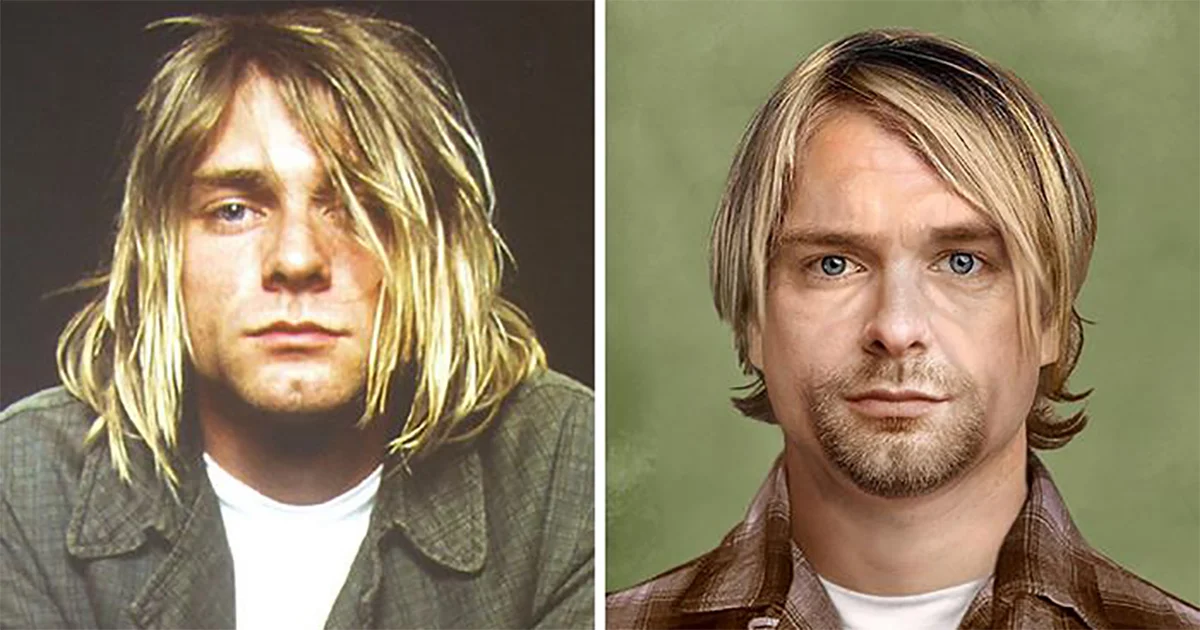
The intersection of digital technology, artificial intelligence, and cultural nostalgia has once again produced a striking visual experiment, prompting widespread public discourse regarding legacy, mortality, and the passage of time. Sachs Media Group, a prominent public relations and strategic communications firm based in Florida, partnered with the digital photo restoration and manipulation specialists at Phojoe to execute an ambitious visual project. The resulting gallery, titled Rock & Roll Heaven, digitally ages several of music history’s most influential figures who died at the height of their youth or the peaks of their respective careers. By applying advanced age-progression techniques to iconic portraits, the collaboration offers viewers a glimpse into an alternate reality: one where artists such as John Lennon, Jimi Hendrix, Kurt Cobain, Janis Joplin, and Elvis Presley survived into their twilight years.
While age-progression software is frequently utilized in law enforcement to locate missing persons or in forensic pathology to estimate the natural aging of unidentified remains, its application to pop culture icons transforms a technical tool into a deeply emotional artistic statement. The digital project revives the eternal cultural question of what artistic contributions these musical pioneers might have made had their lives not been cut short by tragedy, illness, or accident. The gallery has sparked extensive dialogue among art critics, technology experts, and devoted fans worldwide, balancing a fascination with the capabilities of modern photo manipulation against the inherent melancholy of contemplating lives unlived.
The Genesis of the Digital Aging Project
The collaboration between Sachs Media Group and Phojoe began as an exploration of how digital rendering could interact with cultural memory. The project coordinators sought to honor the enduring legacies of musicians who profoundly shaped the sonic landscape of the 20th century by visualizing their natural aging process. To achieve this, the restoration artists at Phojoe did not rely solely on automated software filters; instead, they conducted meticulous forensic analyses of each subject’s underlying bone structure, familial aging patterns, lifestyle factors, and chronological reference points.
Each portrait required hours of painstaking digital manipulation. Artists studied photographs of the subjects’ parents and older relatives to project realistic skin texture changes, hairline recisions, and facial structural shifts. The objective was to maintain the core identity and recognizable features of the youthful icon while realistically superimposing decades of lived experience onto their faces. The resulting images present John Lennon with silver-streaked hair and gentle wrinkles around his eyes at age 73, Kurt Cobain with weathered features and thinning blonde hair at age 50, and Elvis Presley carrying the distinguished weight of advanced maturity in his seventies.
Chronology of Tragic Losses: The 27 Club and Beyond
To fully contextualize the visual project, it is necessary to examine the premature departures of the artists featured in the gallery. The untimely deaths of these musicians not only devastated the global music community but also crystallized their images as eternally youthful, rebellious, and untainted by the physical decline associated with old age.
The historical timeline of these losses underscores the profound impact these individuals had within remarkably compressed timeframes. Robert Johnson, a foundational figure in Delta blues whose stylistic innovations heavily influenced rock and roll, died in 1938 at the age of 27, becoming the foundational member of what cultural mythos later dubbed the "27 Club." Decades later, the countercultural explosion of the late 1960s and early 1970s claimed several more luminaries. Jimi Hendrix, whose revolutionary guitar technique redefined the electric guitar, died in London in September 1970 at age 27. Just over two weeks later, blues-rock powerhouse Janis Joplin passed away at the same age. Jim Morrison, the enigmatic frontman of The Doors, joined them in July 1971, also at age 27.
Moving further into the late 20th century, the project also examines artists who died slightly later in life but still far short of their natural life expectancy. John Lennon was assassinated outside his Manhattan apartment in December 1980 at the age of 40, a moment that stunned the world and ended an era of unprecedented peace activism and musical reinvention. Elvis Presley, the undisputed King of Rock and Roll, died of heart failure at Graceland in August 1977 at the age of 42. Decades later, the alternative rock revolution was similarly shattered when Kurt Cobain died by suicide in April 1994 at age 27, closing a monumental chapter in modern music history.
Technical Methodology and Supporting Data in Digital Forensics
The creation of the Rock & Roll Heaven gallery relies heavily on the evolution of digital imaging and forensic aging science. Phojoe, a company traditionally recognized for restoring damaged historical photographs and aging missing children for law enforcement agencies, applied strict analytical protocols to the project.

Forensic aging, or age progression, is based on established anthropological and dermatological data. According to data from the National Center for Health Statistics and anthropological studies on human facial morphology, the human face undergoes predictable changes over decades. Cartilage in the nose and ears continues to grow throughout a person’s life, skin loses elasticity due to the breakdown of collagen and elastin fibers, and subcutaneous fat redistributes away from the cheeks toward the lower jaw and neck.
However, applying these biological principles to celebrities introduces complex variables. Lifestyle factors—such as touring schedules, substance use, sun exposure, and stress—frequently accelerate the physical signs of aging. In the case of rock icons who struggled with addiction or high-stress environments, the digital artists had to balance scientific aging baselines with speculative adjustments reflecting each artist’s unique life history. For instance, portraits of artists known for high-energy lifestyles were rendered with slightly more pronounced weathering, while those imagined into their seventies and eighties incorporated realistic signs of natural geriatric progression.
Industry and Public Reactions
The release of the digital gallery elicited a spectrum of emotional and intellectual responses from the public, media outlets, and cultural commentators. Supporters of the project praised the sensitivity and technical precision with which the artists approached the subjects. For many fans, seeing their idols depicted as senior citizens offered a poignant, comforting sense of closure—a visualization of the peaceful, productive retirements these musicians were denied.
Cultural critics noted that the project speaks to a broader societal obsession with youth and aging in the entertainment industry. By forcing viewers to confront the physical realities of aging in individuals who were otherwise frozen in perpetual youth, the gallery challenges cultural constructs of beauty and legacy. In interviews following the project’s launch, representatives from Sachs Media Group emphasized that the initiative was designed out of deep reverence, intended to prompt reflection on how these artists might have continued to mentor subsequent generations, evolve their musical styles, and participate in contemporary society.
Conversely, some commentators and family members of deceased artists have historically expressed unease regarding the digital resurrection of deceased individuals. Ethical debates surrounding post-mortem digital manipulation—ranging from deepfake technology in cinema to photo restoration—often touch upon questions of consent, commodification, and the sanctity of personal legacy. While the Sachs Media project was widely received as a respectful artistic tribute rather than a commercial exploitation, it nevertheless underscored the complex ethical landscape that digital artists navigate when interacting with cultural history.
Broader Implications for Art, Technology, and Cultural Memory
The intersection of advanced digital manipulation and cultural preservation holds significant implications for the future of entertainment and public memory. As artificial intelligence and image-rendering technologies continue to advance at an exponential rate, the ability to generate hyper-realistic depictions of historical figures will only become more sophisticated.
This technological trajectory raises important questions regarding authenticity and the curation of history. Projects like Rock & Roll Heaven demonstrate that digital tools can be harnessed to stimulate educational engagement, emotional connection, and historical inquiry. When younger generations, who may only know these legendary musicians through static black-and-white photographs or pristine 1970s footage, are presented with images of these artists as elders, it humanizes them in a new dimension. It bridges the gap between myth and reality, transforming distant historical icons into relatable human beings who experienced the universal trajectory of aging.
Ultimately, the digital aging project serves as a mirror reflecting humanity’s complex relationship with mortality. By visualizing the unwritten chapters of rock and roll royalty, Sachs Media Group and Phojoe created more than just an internet curiosity; they constructed a visual meditation on time, loss, and the immortal nature of true artistic genius.