
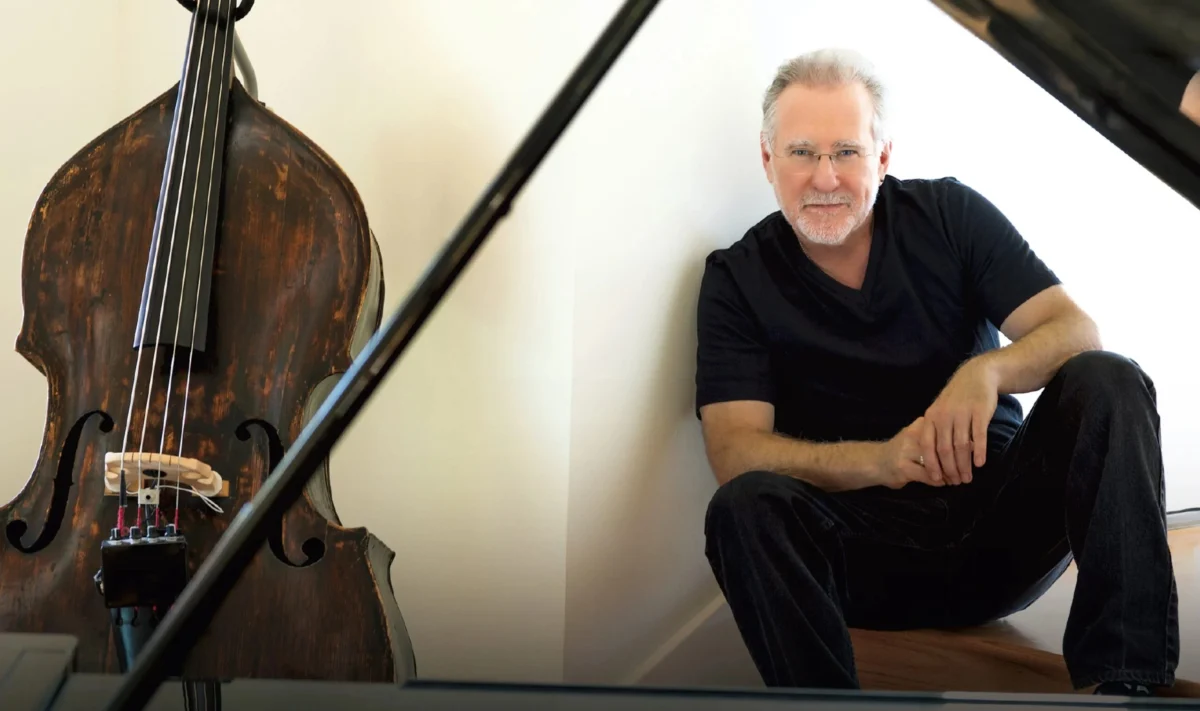
For five decades, Brian Bromberg has stood as a titan in the world of jazz, defined not just by his technical mastery of the acoustic and electric bass, but by his chameleonic ability to inhabit the spirits of his inspirations. From his poignant tribute to Jaco Pastorius in 2002 to his exploration of the Hendrix catalog and his recent deep dive into the compositions of Scott LaFaro, Bromberg has consistently used his instrument as a bridge to history. However, his 30th album as a leader, Awakening, released on Shanachie in 2026, marks a fundamental departure from his previous work. It is not an exploration of an external muse, but a raw, deeply personal response to a catastrophic series of events that nearly ended his career—and his life.
The Catalyst: A Winter of Discontent
The genesis of Awakening can be traced back to the final four days of 2023. During this brief window, Bromberg’s life underwent a total structural collapse. The dissolution of a long-term relationship with his fiancée forced him to leave his home, effectively separating him from his beloved pets, his extensive collection of custom basses, and the home studio that served as his creative sanctuary.

This emotional upheaval was compounded by a severe physical trauma. Following a scheduled eye surgery, Bromberg experienced a vision-related fall in an unfamiliar, temporary living space. The impact was catastrophic: he sustained multiple fractures to his back and suffered deep lacerations to the fingers of his right hand. For a musician whose entire career is predicated on the delicate, high-velocity movement of his fingers across a fretboard, the injury to his hand posed an existential threat. The path to recovery was not merely a physical regimen; it was a psychological endurance test that required him to re-evaluate his relationship with the instrument that had defined his identity for over 50 years.
Chronology of Recovery and Creation
The recording of Awakening did not begin in a traditional studio environment; it began in the silence of convalescence. As Bromberg navigated the months of physical rehabilitation, he began to document his healing process through music. The project shifted from a therapeutic outlet into a full-scale production during the first half of 2025.
By mid-2025, the material had coalesced into a defined soundscape. Recognizing the need for a collaborative partner who could bridge his vision with contemporary sensibilities, Bromberg turned to long-time friend and collaborator Paul Brown, a renowned producer and guitarist. The two are bandmates in the trio BPM, which also includes saxophonist Michael Paulo. Under Brown’s guidance, and following a successful negotiation with Shanachie, the project transitioned into a high-fidelity production. The recording process itself became a modern logistical feat: Bromberg and Brown worked across multiple home studios, exchanging tracks and edits with a roster of guest luminaries including saxophonists Dave Koz, Everette Harp, and Marion Meadows, as well as keyboardist David Benoit.

Technical Versatility and the Piccolo Bass
At the heart of the 13-track record is Bromberg’s signature use of the piccolo bass. By tuning his basses an octave and a fourth higher than standard—effectively placing them in the register of a lead guitar—Bromberg has spent years blurring the lines between rhythm and melody. On Awakening, this choice is more deliberate than ever.
Bromberg’s setup for the record highlights his long-standing relationship with Kiesel and Dean instruments. He utilizes his signature Kiesel B2-5 and B2-4 models, alongside Dean Exotica and Stylist piccolo basses. A key technical detail of this release is the strict adherence to fingerstyle playing; despite the "guitar-like" sounds he achieves, Bromberg eschews the use of a pick entirely. By recording the basses direct at his home studio and utilizing Brown’s expertise in analog preamps and reverb processing, the album achieves a warm, intimate texture that highlights the frequency separation between the 5-string sub-bass foundations and the piccolo melody lines.
Industry Impact and Market Reception
The release of Awakening comes at a time when the "smooth jazz" and "contemporary jazz" formats are experiencing a resurgence in digital streaming metrics. The lead single, "Apparently Not," has already signaled a shift in radio playability. Sirius XM’s Watercolors channel added the track to its rotation immediately upon release, noting the inclusion of a complex, funky 5-string bass solo—a move that industry analysts view as a significant departure from the traditionally "safe" melodies of the genre.

Bromberg’s ability to maintain his status as a "smooth jazz superstar" while simultaneously pushing the boundaries of what is expected from a bassist has been a defining trait of his career. His success in the 1980s and 1990s helped pave the way for other bass-centric artists like Marcus Miller and Nathan East to gain mainstream airplay. With Awakening, he continues to advocate for the bass as a primary melodic voice, proving that technical virtuosity and emotional accessibility are not mutually exclusive.
Reflective Themes and Global Influences
The thematic depth of the album is evident in tracks like "The Dancer" and "Salutations." The former, co-written with bassist Buddy Jordan, employs a subtle swing and bebop-inspired 16th-note runs that challenge the listener’s expectations of a standard smooth jazz groove. The latter, "Salutations," incorporates Middle Eastern melodic influences that morph into a sophisticated R&B soundscape, illustrating Bromberg’s desire to draw from global musical vernaculars.
The closing track, "So In Love, So Alone," serves as the album’s emotional anchor. Composed in a single stream-of-consciousness take, the song captures a sense of solitude that echoes the personal hardships Bromberg endured throughout 2024. The composition process mirrored the improvisational spirit of jazz legends like Michel Legrand, relying on an immediate, unfiltered emotional release rather than meticulous, pre-planned structure.

Future Implications: The "2.0" Chapter
As Brian Bromberg moves into this new phase of his career, the implications of his survival and creative output are clear. He has successfully transitioned back to the Los Angeles music scene, balancing production work for other artists with the continued development of his own brand. The success of the BPM trio and the critical reception of Awakening suggest that his influence on the genre remains potent.
For Bromberg, the "2.0" chapter of his life is defined by a heightened sense of intentionality. He speaks of his current career stage with a gravity that acknowledges the precariousness of his recent past. "I’m at that age where everything you do has to mean more," he noted on the eve of the album’s release. "Relationships have to mean more, the music has to mean more, the notes have to mean more. It all has to count."
Awakening stands as a testament to this philosophy. It is a record that manages to be simultaneously melancholy and optimistic, technical and soulful. By channeling his trauma into a project that prioritizes melodic clarity, Bromberg has managed to create a piece of work that serves both as a personal catharsis and a contribution to the broader jazz landscape. Whether through the Americana-infused duet "Ojai" or the R&B-tinged "Candlelight," the album invites the listener on a journey that, while rooted in the darkest moments of a man’s life, ultimately celebrates the resilience of the human spirit. As the jazz world processes this latest effort, it is evident that Brian Bromberg has not only recovered his ability to play but has rediscovered his purpose as a storyteller.