

In the high-stakes world of professional variety arts, juggling, and physical performance, mistakes are an inevitable reality of the stage. Whether driven by fatigue, complex choreography, or unpredictable performance environments, dropping a prop can instantly disrupt the rhythm of a production. However, according to veteran entertainer Steve Rawlings—a performer with a career spanning 42 years across street venues and major international cruise lines—how an artist handles a drop frequently dictates whether a show succeeds or collapses. Rawlings, who holds eight Guinness World Records, has outlined a comprehensive operational framework for managing stage errors, controlling performance anxiety, and leveraging mistakes to enhance audience engagement.
Anxiety Management and Pre-Show Protocol
Stage fright and performance anxiety are widely recognized as primary catalysts for technical errors during live routines. To mitigate these physiological responses, industry veterans emphasize structural mental and physical preparation rather than exhaustive last-minute repetitions. Rawlings notes that excessive pre-show practice often induces muscle fatigue, which physically compromises coordination and increases the likelihood of drops.
Instead of heavy physical rehearsals immediately prior to going on stage, performers are advised to rely on mental visualization and light physical walk-throughs to warm up safely if backstage space and time are constrained. Furthermore, understanding the foundational trust between the event organizer and the performer is crucial. Professional bookers select acts based on confidence in their established repertoire and audience compatibility. Consequently, performers are encouraged to open their sets with accessible, high-confidence material, gradually increasing the technical difficulty as their comfort level and rapport with the audience solidify.
Strategic Incident Planning and Audience Psychology

A central tenet of modern stagecraft is that technical execution must be paired with structured contingency planning. Professional stage instruction dictates that artists should not merely practice to execute tricks flawlessly; they must explicitly rehearse their reactions to failure.
Audience perception during a live mishap is almost entirely dictated by the performer’s non-verbal cues. Spectators instinctively look to the artist’s facial expressions and body language immediately following a dropped prop. Overt displays of frustration, disappointment, or embarrassment instantly transfer negative energy to the crowd, creating communal discomfort. Conversely, if an artist maintains composure, incorporates humor, or seamlessly integrates the error into the ongoing narrative of the show, the audience will often interpret the incident as a planned theatrical element. Given that spectators are unfamiliar with the precise choreography of an isolated act, swift and confident recovery preserves the illusion of seamless professional execution.
Structured Recovery and the Rule of Repetition
Establishing strict operational limits for difficult maneuvers prevents a single mistake from derailing an entire production. When a complex trick fails, performers must evaluate whether their preceding efforts have already achieved the desired dramatic impact. For instance, if an artist executes a significant portion of a multi-phase routine—such as a series of complex throws involving heavy props—stopping to repeatedly attempt a failed recovery can kill the momentum and energetic flow built with the audience.
For high-priority routines deemed essential to the performance narrative, professional standards often recommend a strict threshold: maximum three attempts before moving forward. Alternatively, persistent challenges can be transformed into running gags or recurring comedic motifs. This approach maintains comedic timing, prevents audience fatigue, and ensures the overarching production schedule remains intact.
Adaptability, Musical Timing, and Environmental Factors

Integrating physical errors smoothly requires considerable adaptability, particularly for acts synchronized with recorded music. When a drop occurs during a music-driven routine, performers face a critical timing dilemma. Continuing immediately to the next sequence may disrupt synchronization, whereas attempting to repeat the failed maneuver often requires cutting subsequent material to stay on beat with the audio track.
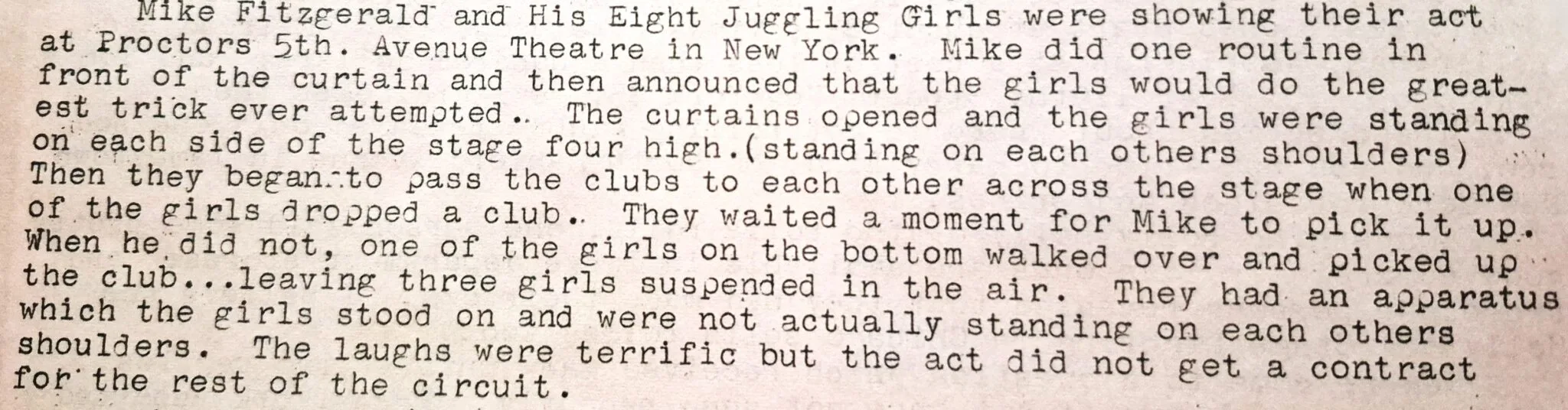
To offset potential technical vulnerabilities, directors frequently recommend structuring longer programs to incorporate diverse performance disciplines, such as sustained balance routines, comedy, or magic segments. These disciplines act as structural safety nets, providing extended periods of high-engagement entertainment that do not rely on high-risk prop manipulation. Additionally, physical resourcefulness plays a critical role in rapid recovery. Performers trained in multi-disciplinary arts can seamlessly incorporate alternative props—such as kicking a stray shoe into an active juggling pattern while retrieving a dropped item—or rely on collaborative troupe dynamics where supporting cast members feed replacement props from offstage.
Humanizing the Performer and Elevating Production Value
From a broader analytical perspective, theatrical imperfections serve a distinct psychological function. Audiences frequently respond positively to visible human vulnerability, as it underscores the genuine physical danger and high skill level required to execute the performance. Deliberate misdirection and controlled vulnerability can fundamentally alter audience dynamics.
Extreme examples of this methodology include specialized acts where performers intentionally orchestrate repeated failures during high-difficulty tricks—such as multi-club pirouettes—taking spectators through a calculated roller coaster of tension, doubt, and eventual triumph. While such advanced psychological staging is not recommended for all performers, it highlights the potential for technical errors to be repurposed as dramatic narrative devices. Ultimately, technical perfection is often secondary to audience connection; when performers remain relaxed, prioritize audience rapport, and maintain their unique theatrical character, mistakes cease to be liabilities and become valuable assets in live entertainment.