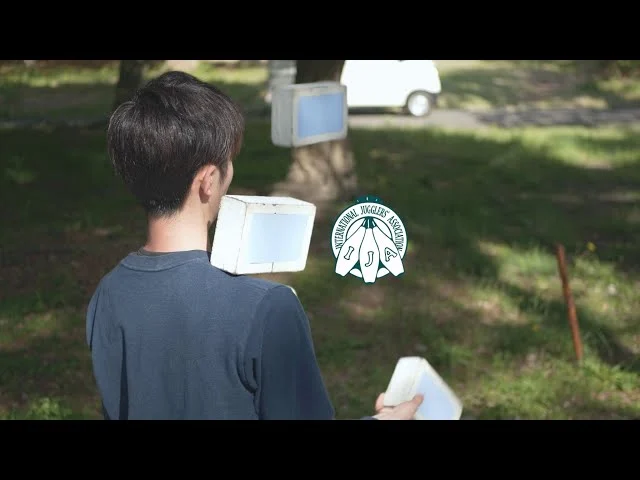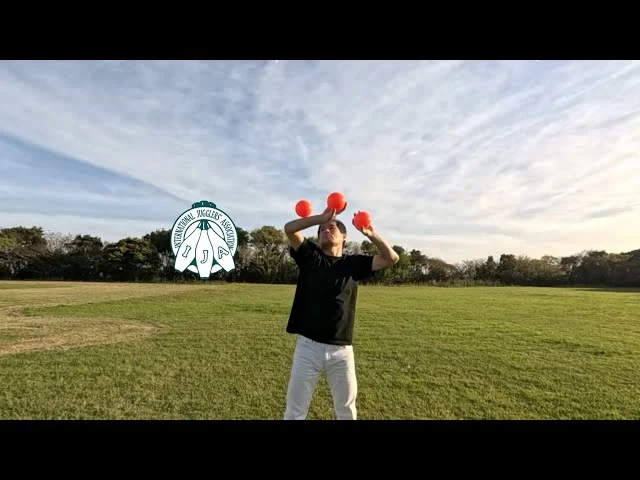
The International Juggling Association (IJA) has officially unveiled its "Trick of the Month" for September 2026, featuring a mesmerizing display of multi-ball contact juggling by Japanese artist Toru Kurei. The showcase, hosted on the IJA’s digital platform, eJuggle, provides a rare, in-depth look into a highly specialized performance discipline that bridges the gap between traditional circus arts and modern kinesthetic expression. Kurei, based in Yamaguchi, Japan, has utilized this platform to demonstrate the complex, multi-point contact techniques that have come to define his decade-long career.
The Art and Technique of Multi-Ball Contact
Contact juggling is a discipline characterized by the manipulation of one or more balls, keeping them in constant contact with the performer’s body. Unlike traditional toss juggling, which relies on the kinetic energy of projectiles in flight, contact juggling is rooted in principles of physics—specifically friction, momentum, and the geometry of the human form.
Toru Kurei’s approach, as demonstrated in the latest IJA feature, goes beyond the standard "cradle" technique from which he derived his professional stage name. While many practitioners focus primarily on hand and arm isolations, Kurei’s methodology seeks to utilize the entire surface area of the body. By incorporating the neck, chest, head, and legs into his patterns, he achieves what he describes as "cosmic expansiveness."
Technically, Kurei’s routine challenges the conventional limits of a performer’s physical space. He notes that the patterns he executes, which involve multiple spheres moving in complex, interlocking orbits, appear to defy the constraints of the relatively small physical footprint he occupies—a surface area he metaphorically equates to a single Japanese tatami mat. This spatial efficiency is a hallmark of high-level contact juggling, requiring a mastery of proprioception that few performers ever fully attain.
A Decade of Evolution: A Chronology of Practice
The path to this level of proficiency for Kurei began ten years ago. His development mirrors a broader trend in the global juggling community, where performers are increasingly shifting from recreational skill-building to intentional artistic inquiry.
- 2016–2018: Foundation Building. During his initial years, Kurei focused on the fundamental isolations of contact juggling, mastering the "cradle" and standard body-rolling techniques.
- 2019–2022: Expansion of Anatomy. Kurei began incorporating non-traditional contact points, moving beyond the hands to include the torso and legs, effectively treating the body as a holistic canvas for the spheres.
- 2023–2025: Advanced Multi-Ball Integration. The shift toward using higher counts of balls necessitated a transition from simple body-rolling to complex, multi-pathway manipulation. This period saw the crystallization of his signature style.
- 2026: Public Documentation and Advocacy. Through his collaboration with the IJA, Kurei has transitioned from a localized practitioner in Yamaguchi to an international voice for the craft, sharing his technical insights with a global audience.
Data and Physicality in Contemporary Juggling
The discipline of contact juggling has seen a surge in popularity, driven largely by the proliferation of digital content sharing. According to data from the International Juggling Association, interest in "flow arts" and specialized contact disciplines has grown by approximately 15% annually over the last five years.
The physical demands of Kurei’s style are significant. Unlike toss juggling, which is high-impact and aerobic, contact juggling requires extreme isometric strength and fine motor control. The biomechanical load on the neck and cervical spine, in particular, is a subject of ongoing study among performance artists who utilize "head-balancing" techniques. Kurei’s commitment to "pursuing this theme until my body reaches its limits" underscores the athletic intensity required to maintain these delicate, rolling patterns under the stress of gravity and physical fatigue.
The Role of the IJA in Global Juggling Development
The International Juggling Association continues to play a pivotal role in standardizing and promoting such techniques through its "Tricks of the Month" series. By highlighting artists like Kurei, the IJA provides a structural framework for skill acquisition, offering high-quality visual references that serve as educational tools for practitioners worldwide.
Beyond individual tricks, the IJA acts as a nexus for the global community. The organization’s support system includes the annual IJA Juggling and Flow Arts Festival, regional competitions (IRC), and dedicated youth programs (YJA). These initiatives are critical in preventing the isolation of practitioners. Kurei himself noted the importance of this network, expressing gratitude to his fellow jugglers in Japan who provided a sense of connection during his long, solitary hours of practice in Yamaguchi.
Implications for the Future of Juggling Arts
The emergence of performers who prioritize artistic "cosmic" expression over pure technical endurance marks a shift in how juggling is perceived by the public. Historically, juggling was viewed as a variety act or an entertainment-first skill. Today, it is increasingly analyzed through the lenses of choreography, physics, and performance art.
The implications for the industry are two-fold. First, there is an increased demand for digital documentation—tutorials, high-frame-rate videos, and detailed breakdown analyses—which the IJA is actively facilitating. Second, there is a professionalization of the craft. Artists who can articulate the "why" and "how" of their movements, such as Kurei, are finding greater success in digital spaces like YouTube and Instagram, where they can build niche but global audiences.
The IJA’s continued investment in the "Tricks of the Month" initiative serves to validate these individual journeys. By providing a platform for performers from different regions—such as Kurei from Japan—the organization ensures that the evolution of juggling remains diverse and cross-pollinated.
Community Impact and Membership
The IJA operates on a model of collective support. The resources provided through eJuggle are sustained largely by the contributions of its members. As the juggling community expands to include more specialized disciplines, the need for centralized resources like podcasts, tutorials, and competition infrastructure becomes more acute.
For aspiring jugglers, the trajectory of artists like Toru Kurei serves as a roadmap. It highlights that even in a digital age, the core of the art form remains rooted in repetitive, disciplined practice and the willingness to explore the limits of the human body. As Kurei continues his work, his influence on the community is expected to grow, particularly among those who seek to push the boundaries of what is possible with a handful of spheres and a focused, creative mind.
For those interested in following Kurei’s continued exploration of contact juggling, his documentation is available via his YouTube channel, @sukebiyori, and his Instagram handle, @toru_kurei. The IJA encourages enthusiasts to support these artists and the broader community by engaging with official membership programs, which directly fund the festival, regional competitions, and the ongoing production of educational content that sustains the juggling ecosystem worldwide. Through these collaborative efforts, the art of juggling continues to evolve, moving from simple physical play to a sophisticated, globally recognized art form.